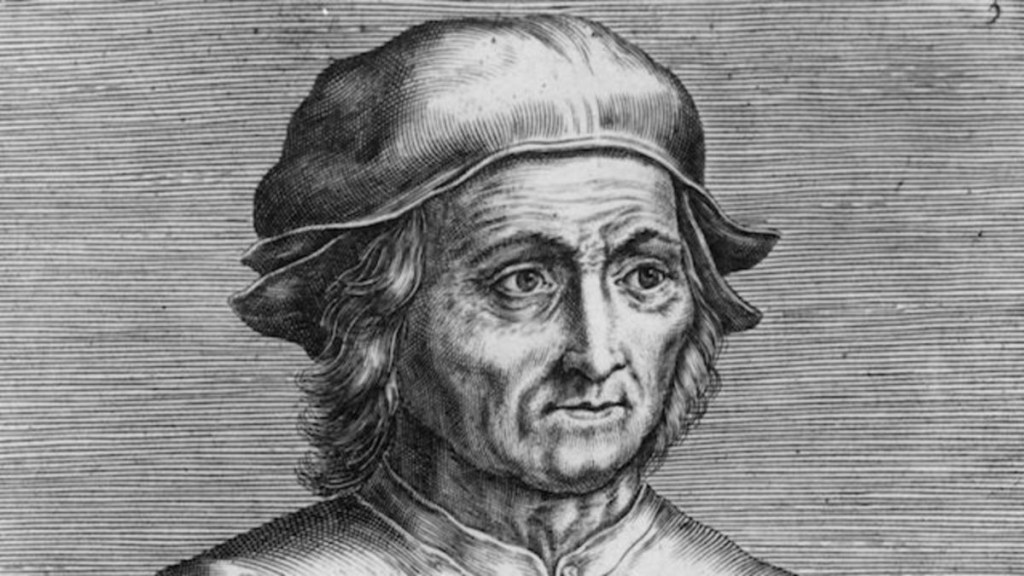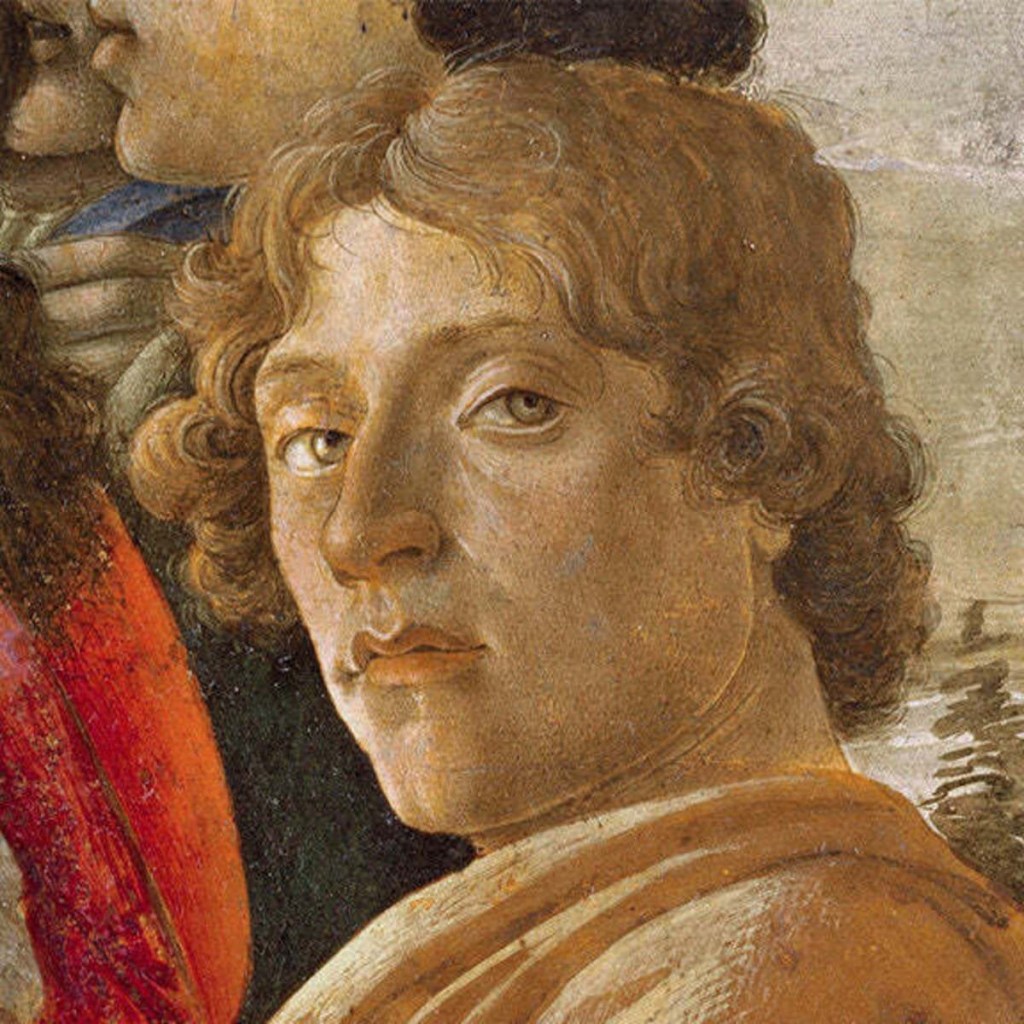
Probable Self-Portrait Found in the “Adoration of the Magi.” (1475-1476)
Sandro Botticelli
Alessandro Filipepi was born in 1445… the perfect time to be an artist. For the first time in hundreds of years, writers, poets, sculptors, and painters were once again admired and respected. Culture was returning, and young Alessandro had the opportunity to spend an inordinate amount of time with the artists who frequented his brother’s workshop. Botticello, Alessandro’s older brother was a gold pounder. He “pounded” gold onto picture frames, and he added gold to the paintings of other (halos and angel wings). As he worked, Alessandro watched, learned, and then began his own experimentation in the world of art.
As a young teenager, Alesandro was sent to apprentice in the workshop of master painter, Fillipo Lippi. It was there that he assisted Florence’s greatest artist, and in turn, learn to mix colors, clean brushes, and prepare walls (frescos) for painting. He learned to draw, he learned to paint, and through imitation he eventually discovered his own artistic niche. His paintings evolved from looking very similar to Lippi’s own, to becoming the paintings of someone who’d earned both his own name and his own glory. It was in this way that Alessandro Filipepi became Sandro Botticelli.
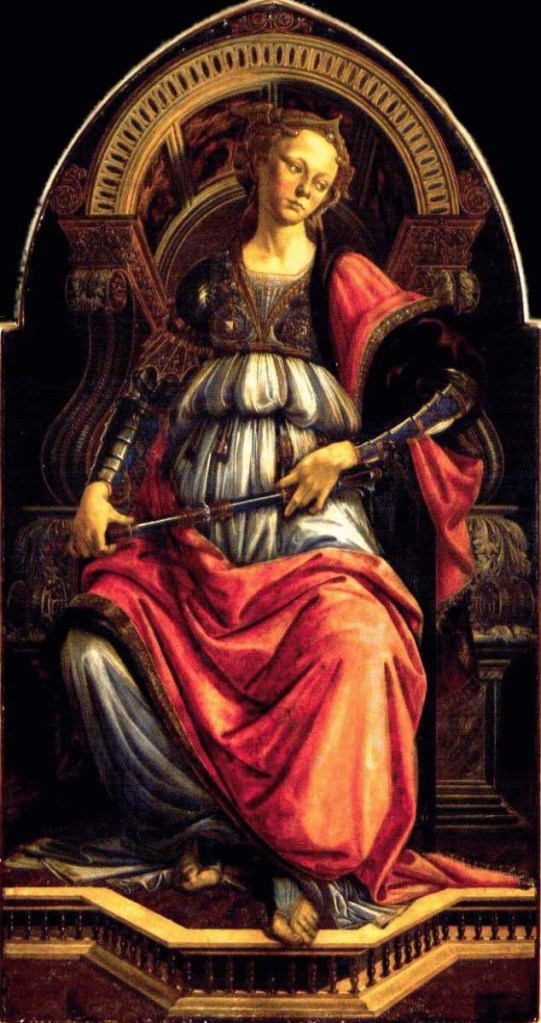
Fortitude
The Renaissance was a time of discovery and exploration, and it was Botticelli’s time in Lippi’s workshop that allowed him the chance to do both. He explored, and through that exploration he discovered. Influenced greatly by his teacher, Botticelli’s early artwork mirrored his master’s. The colors, pale and muted; the meticulous flow of a garment; the faces full of life and beauty. All of these techniques were similar to Lippi’s, but as time went on, they became his own. He became an individual, and he became a true artist.
Florence was home to many artists, and Botticelli studied and learned from each and every one of them. He was surrounded by greatness, and he spent hours earning his own. At the age of twenty-five, he completed one of his first paintings that he was actually paid to create, a panel that would reside in a meeting room frequented by the most important men in Florence… the painting was called “Fortitude,” and before long, Botticelli would become Florence’s most sought-after artist. He had no equal in his talent for mixing colors. He is, in fact, one of the greatest colorists of all time. He was also a master of the rhythmic line, using his paintbrush to outline the figures in his paintings. In doing this, he used his paintbrush in the same way that you or I would use a pen or pencil, and he believed these lines added a feeling of fluidity and movement to his work.
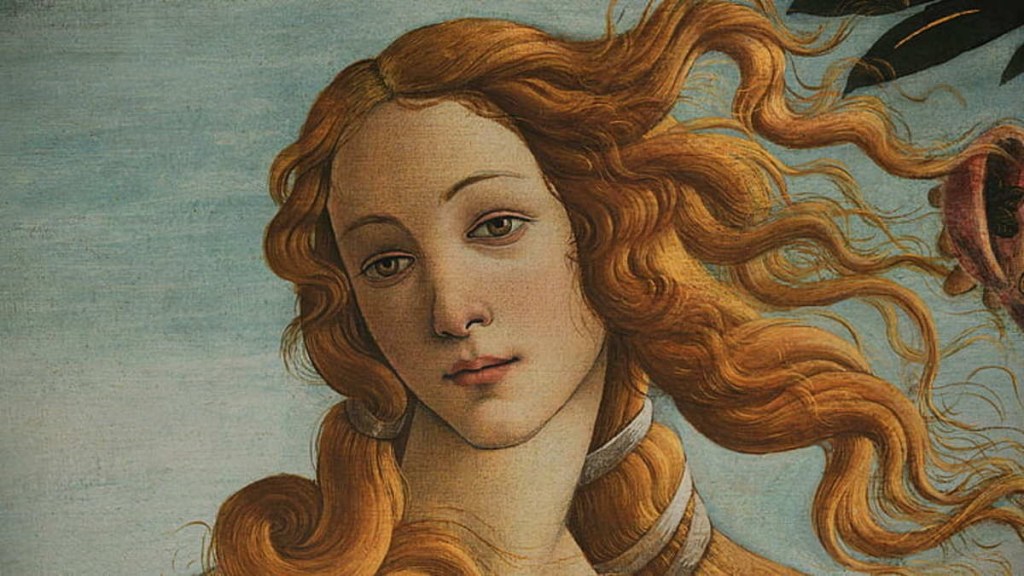
“The Birth of Venus” commissioned by Lorenzo de Medici
Lorenzo de Medici was one of Botticelli’s most famous and wealthiest patrons. Medici showed great interest in Botticelli and encouraged his friends to do the same. Because of Medici’s patronage, Botticelli had more work than he could handle, and it wasn’t long before he found himself hiring other artists to help him keep up with the demand. His assistants not only helped add the finishing touches but would sometimes make copies of them as well. Unfortunately, some of his assistants took their copying a bit further than they should have by copying and selling Botticelli’s work without his permission. Today, even experts find it hard to tell the originals from the forgeries. From this, we can infer that he was an excellent teacher.
Botticelli separated himself from his peers in that his art took on what he imagined to be “ideal.” Other painters of the Renaissance looked to the ancient Greeks and Romans for inspiration. They studied science, nature, and the human body, so that their paintings would be as realistic as possible. Rafael, Leonardo, and Michelangelo used perspective in their paintings, something that gave their artwork a three-dimensional feel. Botticelli had no use for perspective, and he placed his own focus on that special kind of beauty seen through the imagination… the beauty of fantasy. His work may at times seem flat, and his portrayals may not always seem as realistic as the next master, but a master he was, and his paintings are beautiful.
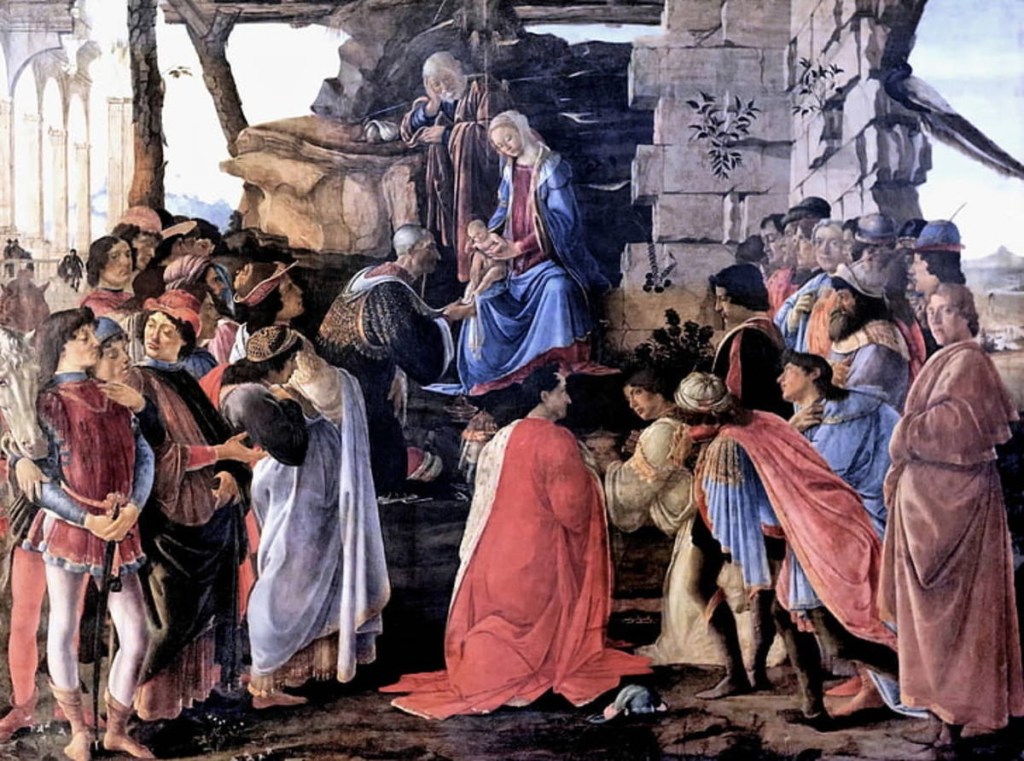
“The Adoration of the Magi”
Religion
During the Renaissance, rulers and families of importance enjoyed showing off their wealth through their possessions, their homes, their clothing, and the people they chose to associate with. Sometimes, families even competed with each other to be the patrons of the best painters, architects, and sculptors of the time. Ironically… some things never change.
Most Renaissance art depicts religious scenes, stories from the Bible, and other Christian ideas. Botticelli created many religious paintings for the churches in Florence, and for other Italian cities as well. It is important to note, however, that the paintings are sometimes as much about the patrons of the artist, as they are about the scenes they depict. If you look closely at the “Adoration of the Magi”, it is easy to see that the painting is focused on the newborn baby Jesus and his mother, Mary. What you wouldn’t know (fast fact) is that most all of the visitors in the scene are in fact all members of Lorenzo de Medici’s family, a statement to the family’s importance and wealth, and anyone who’d seen the painting at the time of its conception would have seen that power for what it was. Even Botticelli finds his way into the far-right hand corner of the painting… we glimpse the man, as he gazes back at us from the canvas.
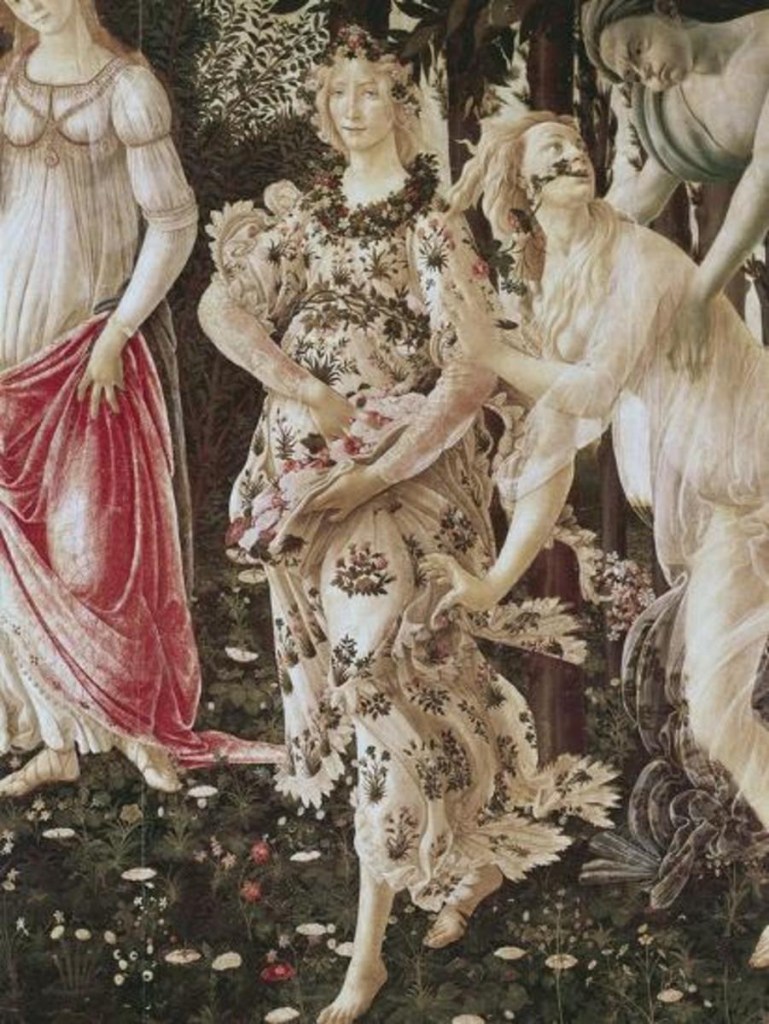
La Primavera
The Birth of Venus
Mythology
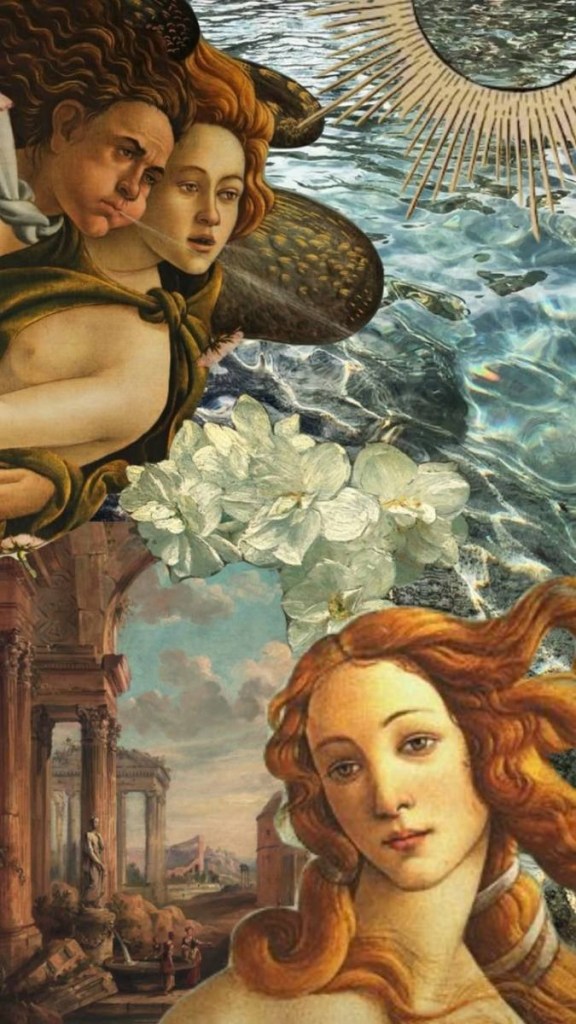
Botticelli was well known for his paintings of mythological creatures and gods from the ancient Greek and Roman cultures. He loved depicting the fantastical images of the otherworld, and the people of the Renaissance were interested in all of the stories he had to tell. The paintings, “La Primavera” and “The Birth of Venus” are perfect examples of Botticelli’s lighter side. They’re like poetry, and all we have to do is sit back, relax, and enjoy his visions. “La Primavera” belongs to Venus, the goddess of love, as she celebrates the coming of spring with Cupid and the host of nymphs and gods who surround them. “The Birth of Venus” once again finds what seems to be Botticelli’s favorite goddess balanced on the tip of a seashell as she’s blown towards the shore, and the other characters in the painting seem to be floating as they assist her on her way, seeing her safely to wherever it is she wants to be.
The Sistine Chapel
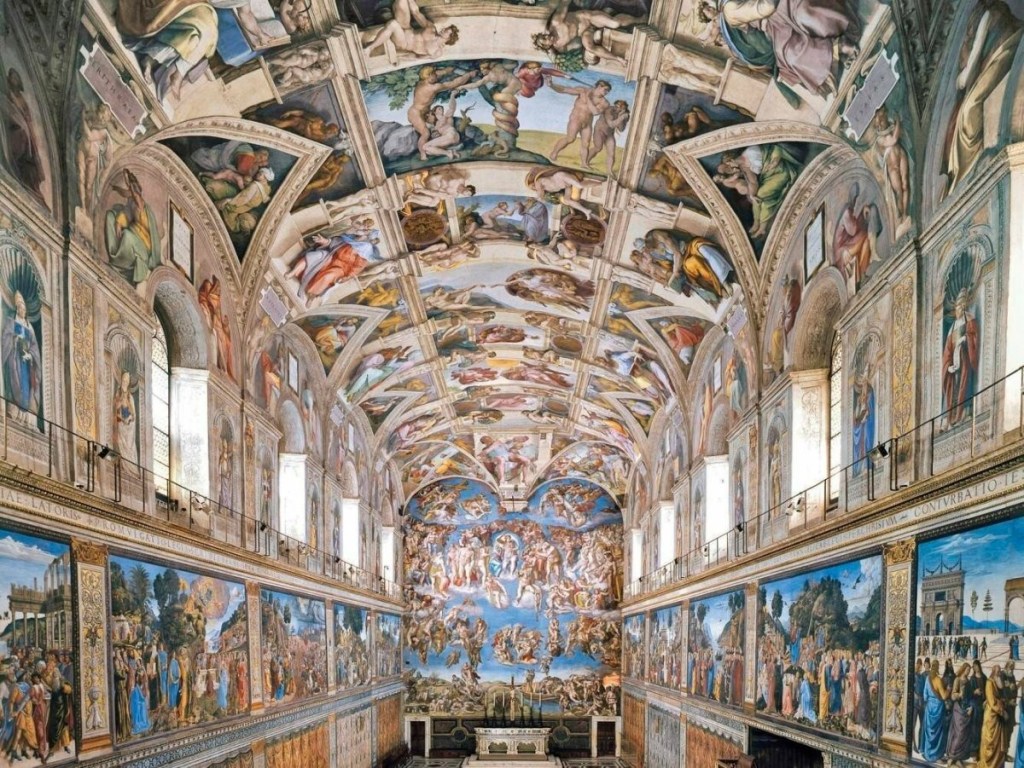
Botticelli was a Florentine, and the love he had for his home can be seen in the fact that in all of his lifetime he left the city once, and that was to visit the city of Rome. His stay in the city was brief, but what he accomplished during his time there has and will live on throughout history.
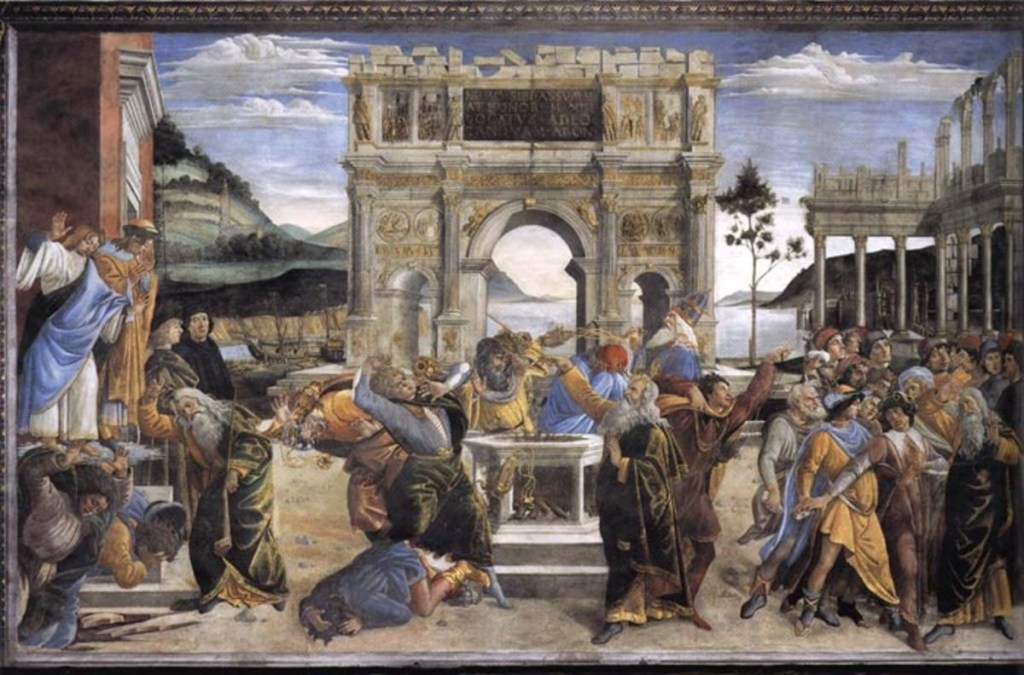
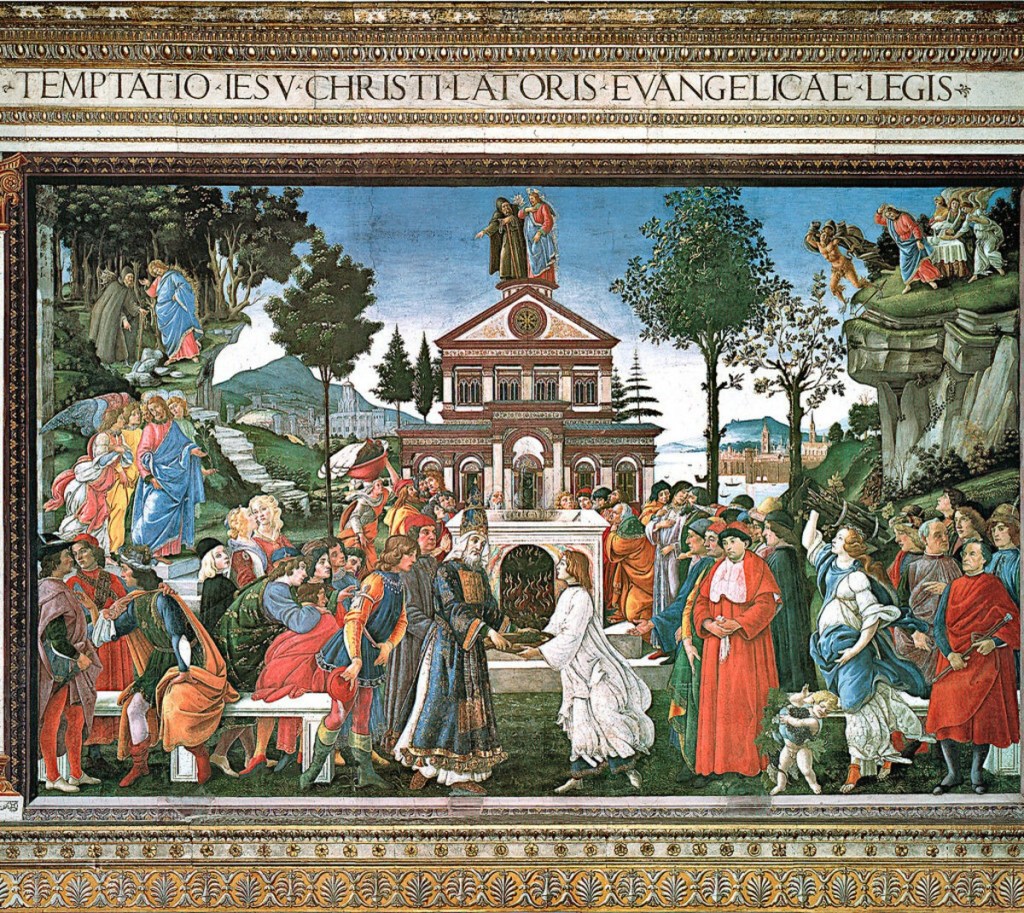
In 1481, Pope Sixtus IV requested Botticelli’s presence in the city. While there, Botticelli joined a number of other Florentine and Umbrian artists, who like him, had been summoned to fresco the walls of the Sistine Chapel. Botticelli was denied any input as to the content of his artwork, but before leaving the Vatican a year later, he had completed three frescoes: “The Youth of Moses”, “Punishment of the Sons of Corah”, and the “Temptation of Christ.” Aside from these three very important works, he also completed at least seven papal portraits which were hung in what was called the “window zone.”
The Later Years
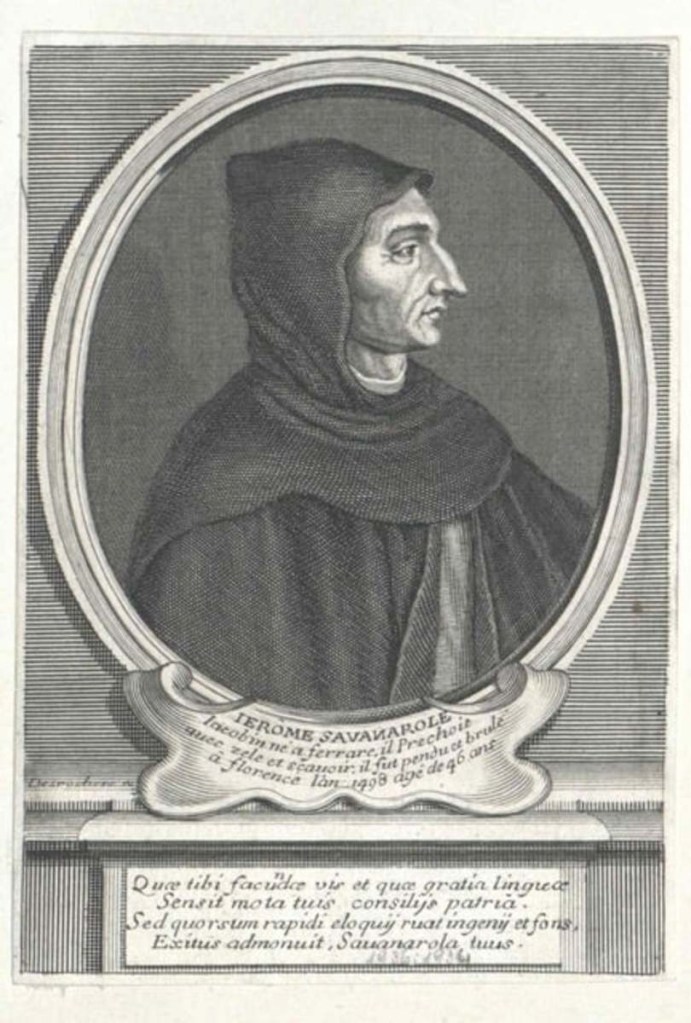
Dominican Priest Savonarola
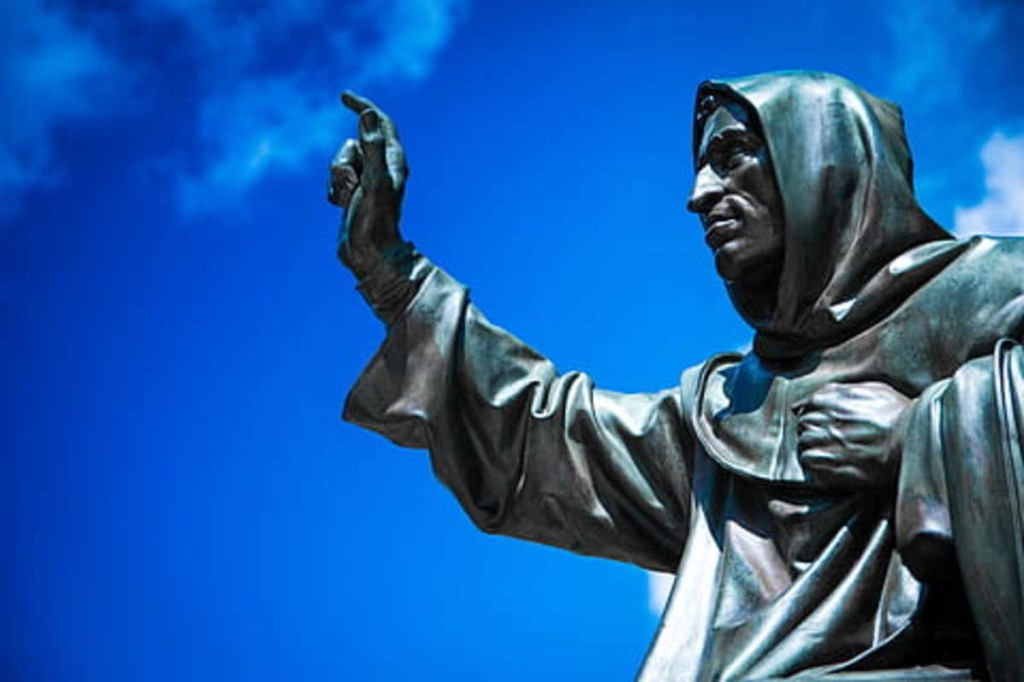
Savonarola ~ Florence, Italy
During Botticelli’s lifetime he created a multitude of religious paintings, but as I’ve already stated, there was a part of his artistry that leaned towards tales of mythology and the mysteries of the imagination. In the 1490s, things in Florence changed dramatically, as did Botticelli.
In his later years, Botticelli became a follower of the Dominican Priest, Savonarola, and the priest’s influence transformed his life. Savonarola vehemently preached against the corruption of the clergy, encouraged book burning, and destroyed what he considered to be immoral paintings. He became a leader in Florence, preaching against worldliness and excess. Botticelli embraced Savonarola, his teachings, and his beliefs to the extent that he destroyed much of his own artwork, burning his own paintings… disgusted by their pagan themes. For a time, he focused solely on religion, glorifying the creator through his art, but sadly, the time would come when he abandoned his painting completely.
Botticelli died in the year, 1510, at the age of sixty-five, but he lives on through the legacy he let behind, and it’s quite a legacy.
Re-Discovery
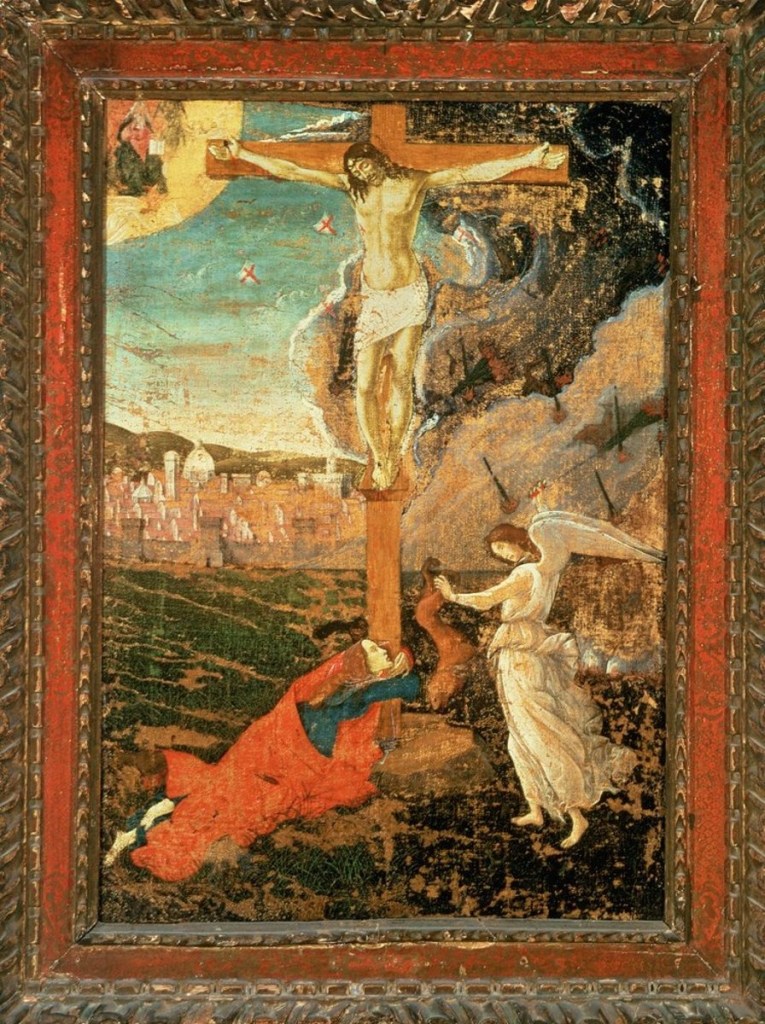
“The Crucifixion”
Botticelli’s paintings were forgotten for hundreds of years before they were rediscovered during the late 1880s. Today, the newfound interest in his work has given us a beauty we’d never have seen without the intricate removal of dirt and extensive cleaning that his paintings have endured. How many artists have been forgotten, and how many have never been heard of? Botticelli? He may have been forgotten once, but I doubt he’ll be forgotten again. I, for one, am glad he’s back.
© 2026 J.R. Watkins