What is Art?
If we were to randomly poll a group of people on a city street as to their definitions of the term “art”, we would in all likelihood receive a variety of meanings. The word “art” is in itself many things to different people. For some, it’s viewing paintings in the local museum, for others, art can be found in the beating of a drum, the flowers in a garden, the thrill of the hunt, the weaving of a rug. It can also be found in the movement of dance, the performance of a play, the reading of poetry, the sounds of music, the chirping of birds, the branches of a tree, a breathtaking landscape, and even the simple finger paintings of small children.
What an amazing experience it would be to see the faces of our ancestors, those ancient peoples who crafted the first musical instruments… to see the widening of their eyes the first time they heard the sound of a flute, the first time they realized that plants could be made into paint, or even the first time that a group of people raised their hands in unison, partaking in the joy of dance. Art is everywhere; beauty is all around us. All we have to do is take the time to look, to smell, to experience, to touch… take the time to be awed by the simple things like a bird in flight, the dancing of leaves, the reflection of the sun’s rays in the puddles on a sidewalk. There are those who are forever distracted by the beauty humanity has been blessed with, and there are those who will one day leave this Earth thinking it never really existed at all because they are too busy to allow themselves that distraction. Me? I choose to be distracted.
Lascaux Cave Paintings
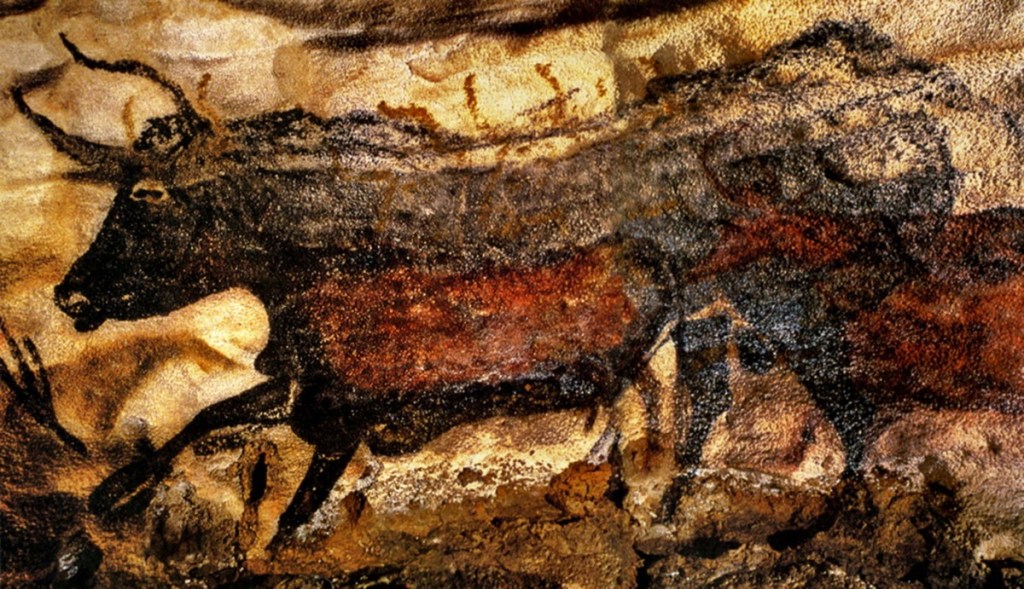
The First Artists
Prehistoric Art is a term used to describe the artistic depictions of a people who hadn’t yet implemented writing into their culture. The appearance of the written word dates back to the Sumerians (3250 BC) and their use of pictographs, small pictures that tell their stories, describes their lives, and record the data they used to keep track of business details. All of these things allow us a glimpse into history and supply us with knowledge of times we’d know nothing about without the things they’ve left behind. Cave paintings enable us to envision the past. They depict daily life, religion, superstition, and magic.
Art was believed to be magical ~ pictures were believed to have special powers. It is said that the artists themselves were seen as spiritual beings, that they were revered, and that their artistic portrayals were capable of keeping a people safe from the forces of nature and angry gods. Some of the artwork that has been found is believed to have been created for the sole purpose of pleasing the gods or asking otherworldly spirits to bless these groups with fertility and successful hunts. Other pictures are believed to be instructional, prehistoric how-to-manuals. Here’s the deer; here’s the heart; this is where you aim the spear.
Over the years, archaeologists have studied cave paintings and found that many actually cover earlier artwork, and some have concluded that those paintings, which were never reworked, had been considered lucky and left untouched. On the other hand, many feel that walls that were used over and over again may have been re-worked because the walls themselves were lucky. I guess we’ll never know.
Cavern de Niaux
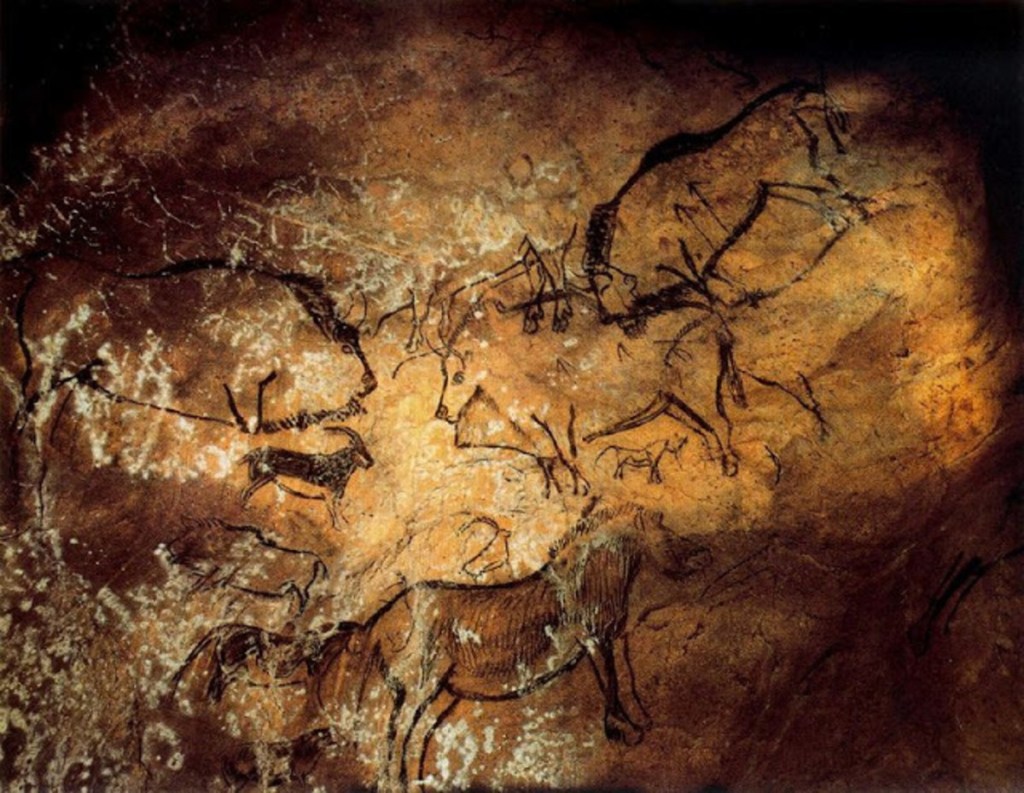
This painting has been discovered to be layered over others.
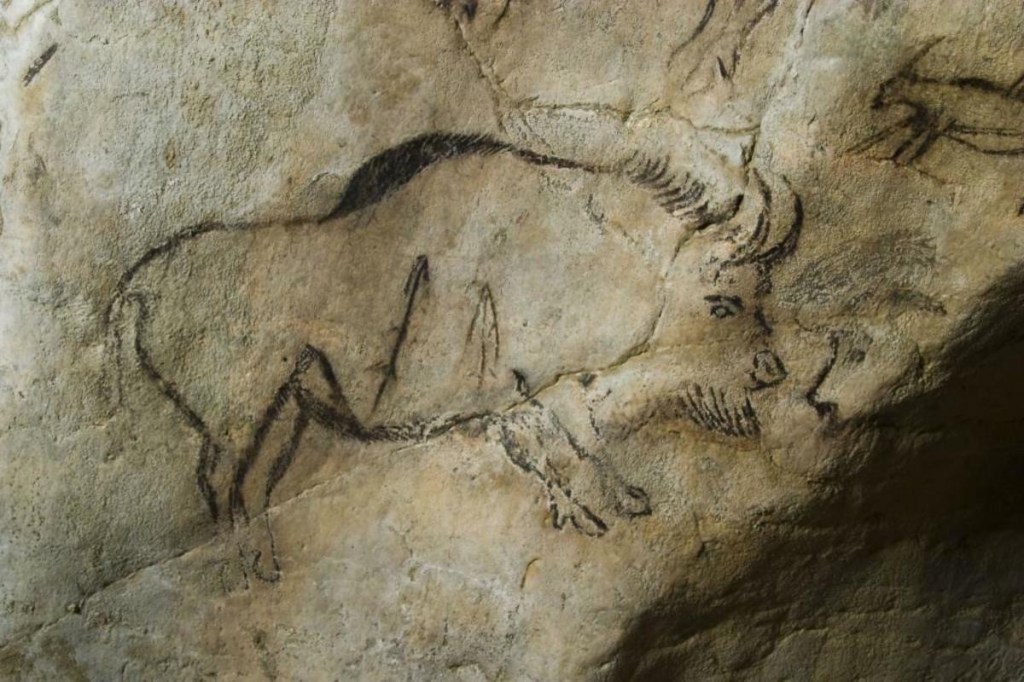
Methods and Mediums
Modern man wasn’t the first to perfect his craft, experiment with different mediums, or to explore the use of various tools that caught both his eye and imagination. Trial by error is not owned by the modern era, and the prehistoric artist is believed to have spent a lifetime looking for perfection… an artist is an artist. Evidence of the belief that “practice makes perfect” can be seen is corrected drawings, in sketches found near or next to the final product. It is also believed that older artists mentored the next generation, apprenticed them long before the term became popular among the artisans we read about in our history books.
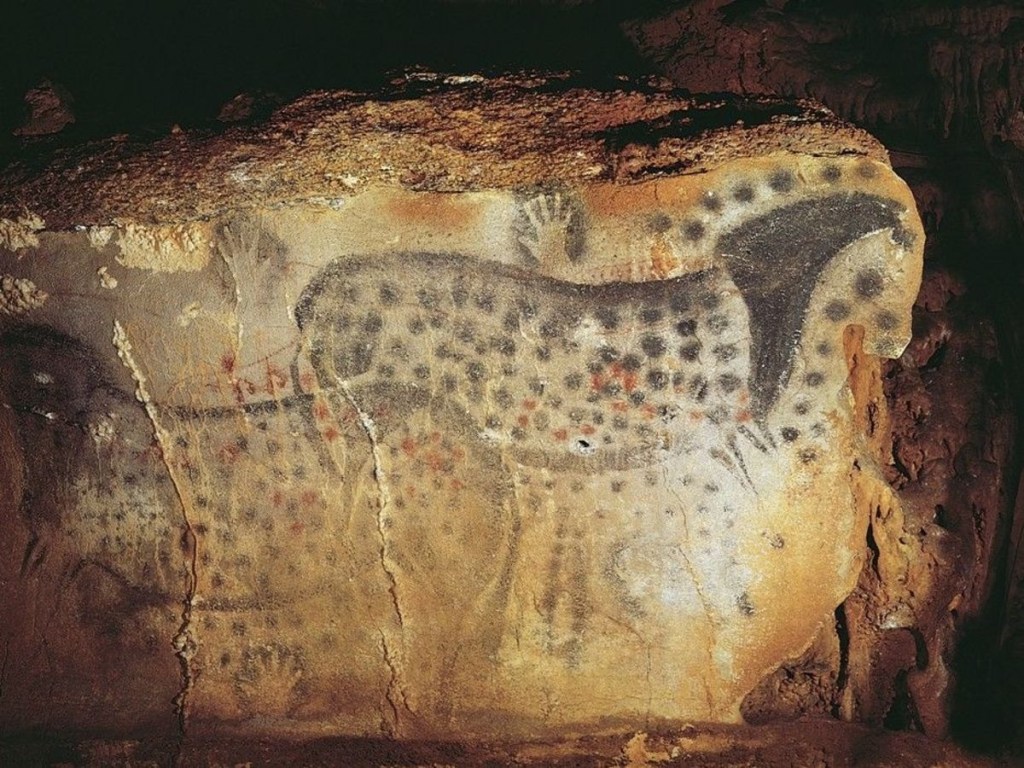
Some of the earliest images that have been discovered are rudimentary, simple handprints. Today, we create prints by dipping our hands in ink or paint. These prints can be found hanging on our refrigerators or marking our walls. Some can even be found safely tucked away in case of an emergency (fingerprinting children for identification). Unlike the prints we envision today, prehistoric handprints were made in a completely different way. The hands themselves were used as stencils, and pigments blown through hollow sticks created a lasting outline. The hand was a symbol of power. Hands could create, perform tasks, and be used for communication. Hands fashioned the bone tubes used to distribute the pigments that made these prints possible, hands were also necessary to create the pigments themselves; the stained tubes which survived thousands of years on the floors in caves contained powder… and the powder didn’t get there by itself.
Basic finger painting was the artist’s best friend, and the images left behind denote a masterful beauty. Over the years, new mediums of application were implemented ~ fur, sticks, feathers, and leather became desirable tools. Funny, many people using these same tools while painting their walls as a modern discovery. They would be wrong!
Paint itself was created in a variety of different ways. Minerals were crushed and applied to wet surfaces. Crushed rock, clay, soil, chalk, and the charcoal that remained after the burning of wood and bones supplied new color to the artist’s palate. Experiments were conducted with wax and oils in order to change consistency, which enabled the artist to paint on new surfaces such as animal skins and wood. The hollow bones used for the application of pigments were also used to store them. The artist had supplies, but each artist could only work with the supplies that the environment gave them. All materials were not readily available. They used what they had, and that is one of the reasons that the cave paintings, which have been found all over the world, are so different in appearance. Some areas were abundant in the greens and blues found in specific rocks, others in the magnificent purples produced by manganese. How wondrous the imaginations of these artists. How wondrous the legacy they’ve left behind.
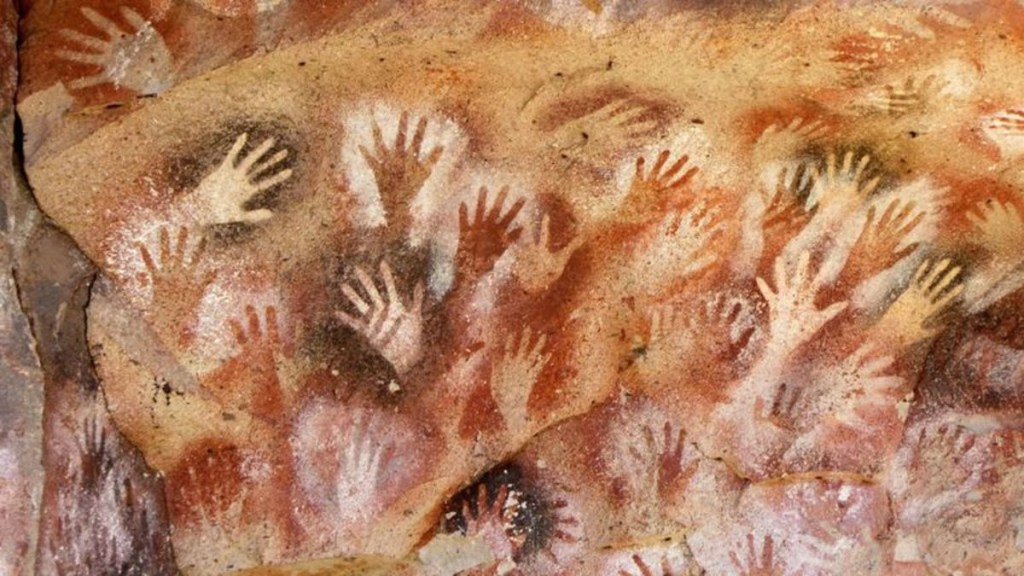
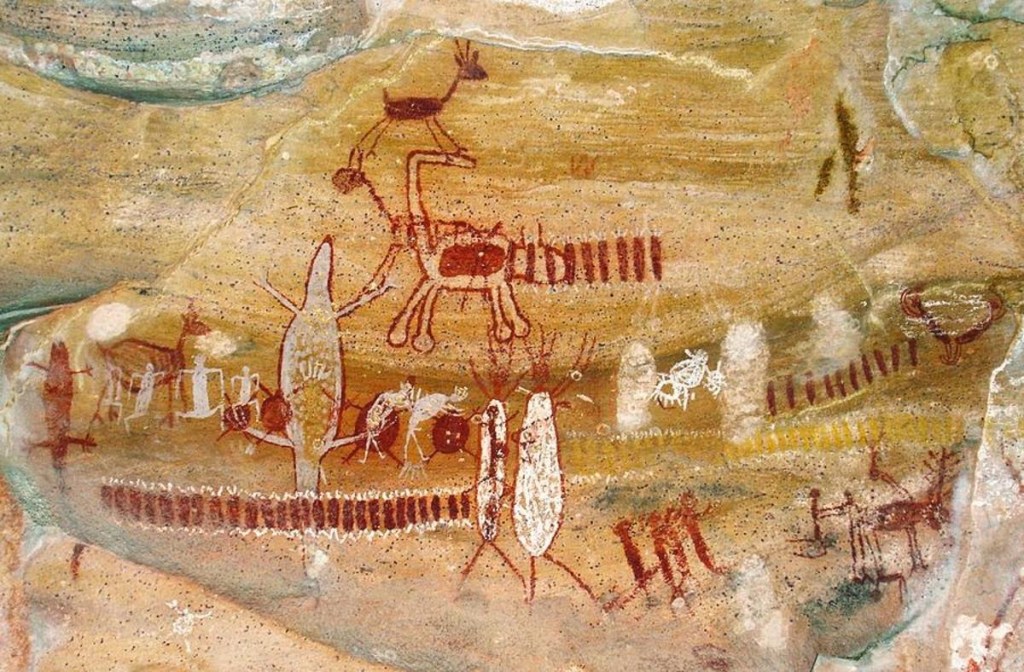
Simplicity ~ Serra da Capivara in Brazil
Origins
The oldest known art was created in the Old Stone Age. During this time period the extensive movement of the hunter-gatherer society was based on survival, warming trends, and the availability of food sources. Animal migration was a factor, as was the ability to gather the nuts, berries, and roots needed for sustenance. People didn’t move from desire, they moved from place to place out of necessity, and through their early artwork they tell us their stories… something we’d never have experienced without the symbols they’ve left behind for us to decipher.
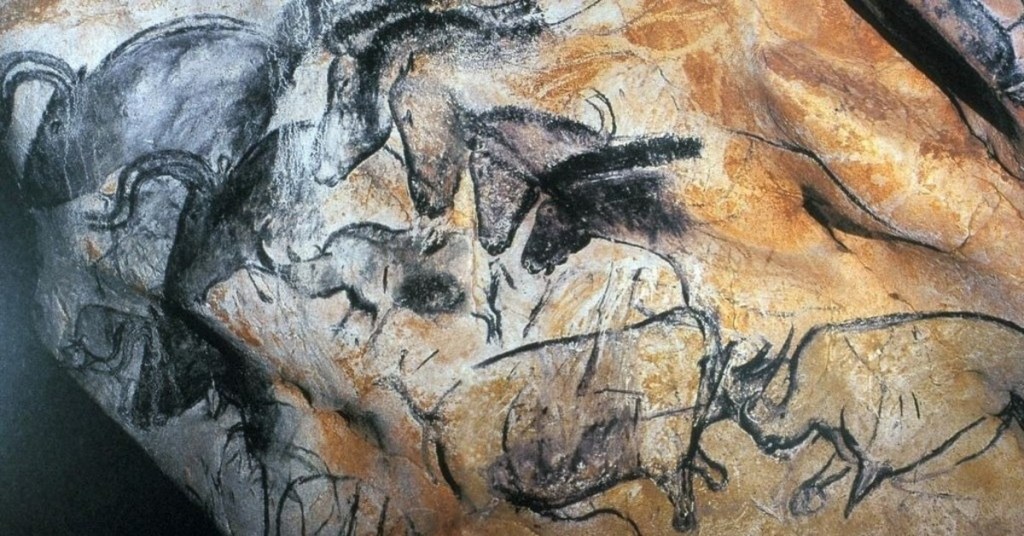
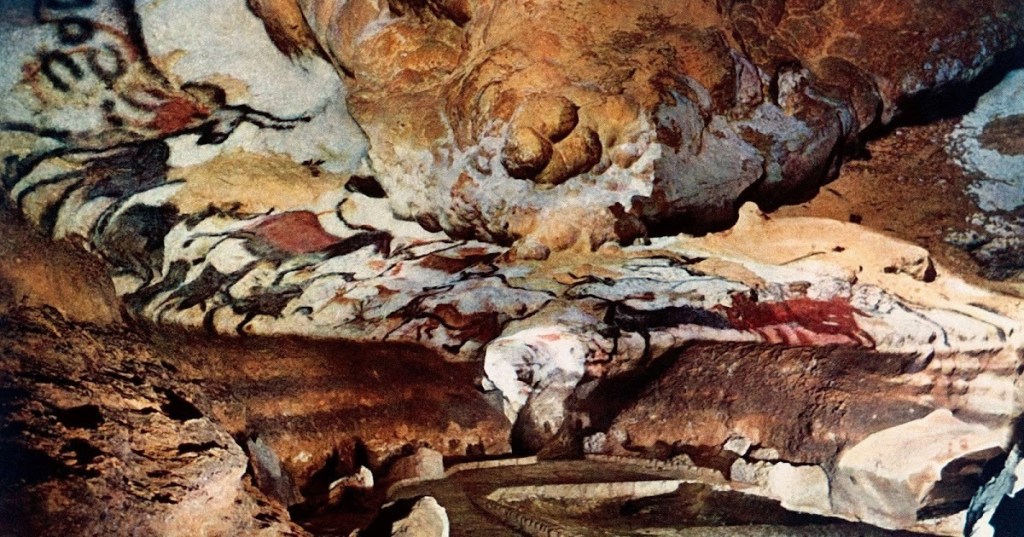
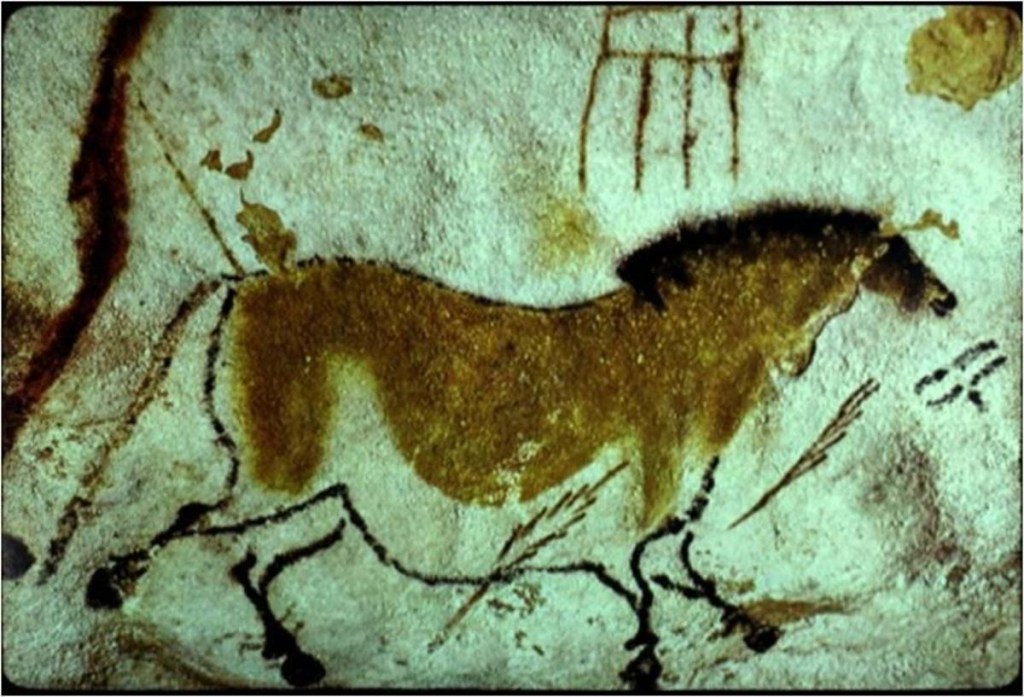
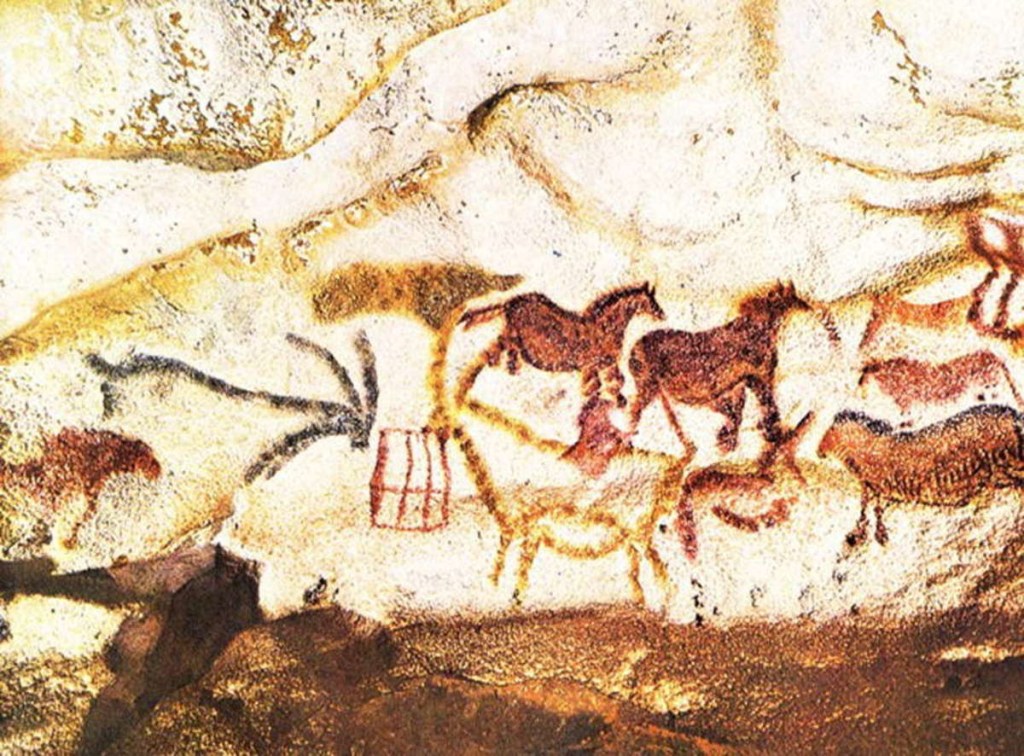
The first Paleolithic cave paintings were found in France and Spain. Artists show us the hunt and the animals they hunted; bison and bulls, animals we’re well acquainted with, and the fearsome wooly mammoth we can only envision through pictures or the incomplete remains displayed at the exhibits in modern day museums. Did the artists really believe that to paint an animal was to capture its soul? Why would the artists isolate themselves deep within the caves that would have been devoid of natural light? Who was the first to discover that a lamp could be created by filling a hollow rock or the smooth shell of a skull with animal fat and locks of hair for burning? Who discovered that wicks could be created from pieces of dried moss? Did they truly believe themselves to be working some ancient form of magic, or were they merely men entranced by the realities of their own lives? We’ll never know. We can look for the symbols of things we’ll never understand, we can imagine their purposes, and through them we can see a world that no longer exists outside of the paintings that have miraculously escaped the passing of time.
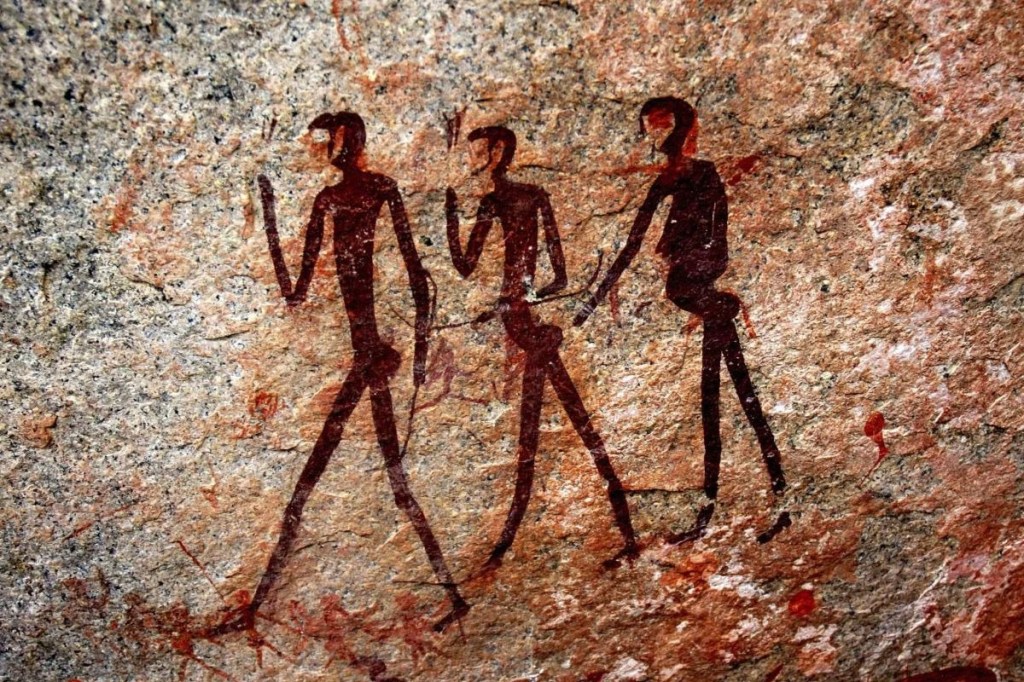
Lascaux Cave Painting
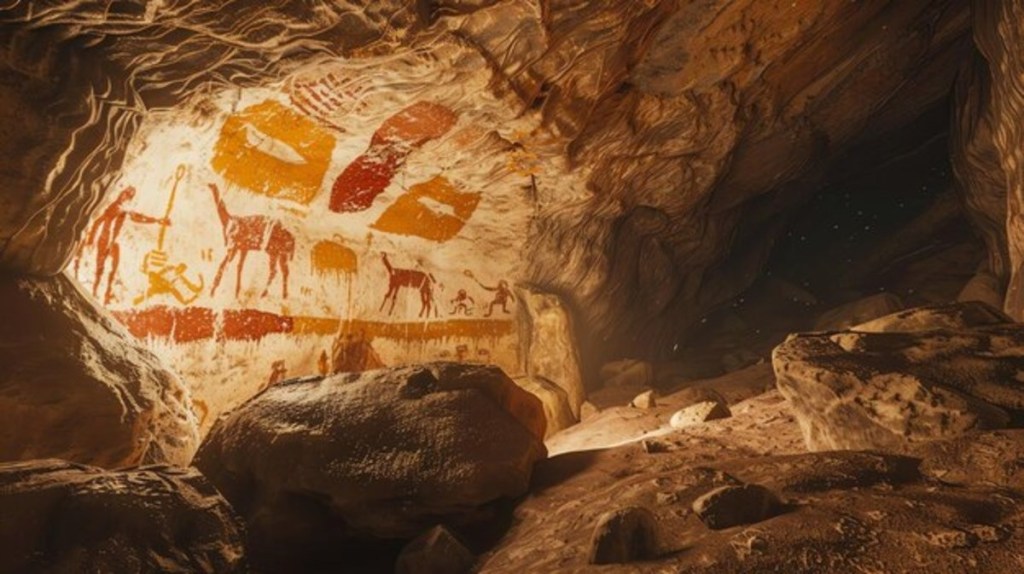
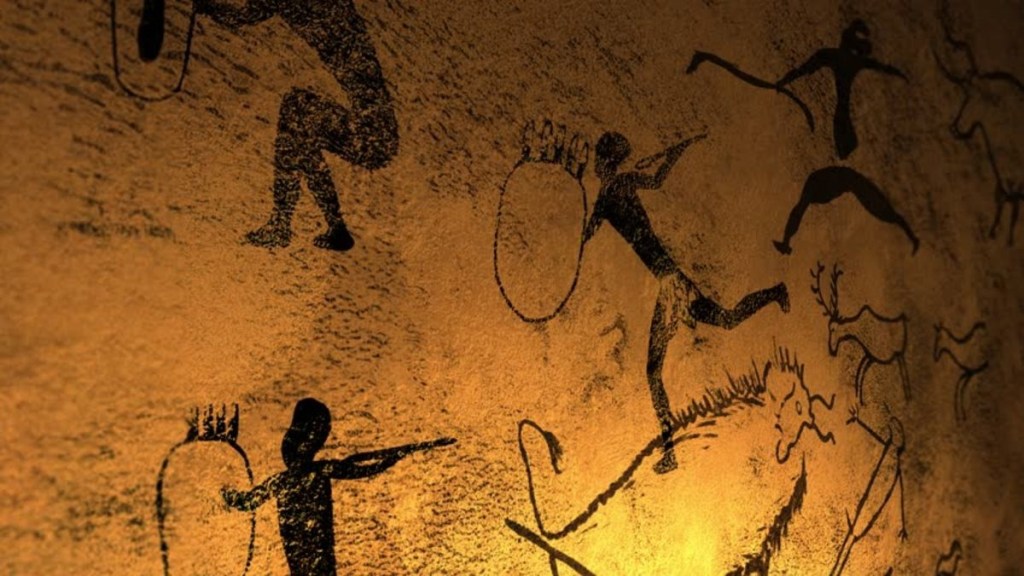
Human Depiction
Prehistoric cave paintings are virtually devoid of any human portrayal beyond that of the hunter, and he is seldom seen as more than a shadow, a part of the landscape. For years, it seems that the artists’ superstition that painting an animal robbed it of its soul also applied to humans. Therefore, individuals were not portrayed in that way. To paint was to do magic, to accurately depict an individual’s image would rob them of their soul. Superstitions originated in fear, and think about it… who would want to carry the fear of having stolen someone’s soul? Who would have believed themselves powerful enough to take on that responsibility or to test the anger of the gods? Who walked without fear.
As the Paleolithic Era came to a close, new eras would move beyond those fears and dabble in forms of portraiture… but we will save that for another day.
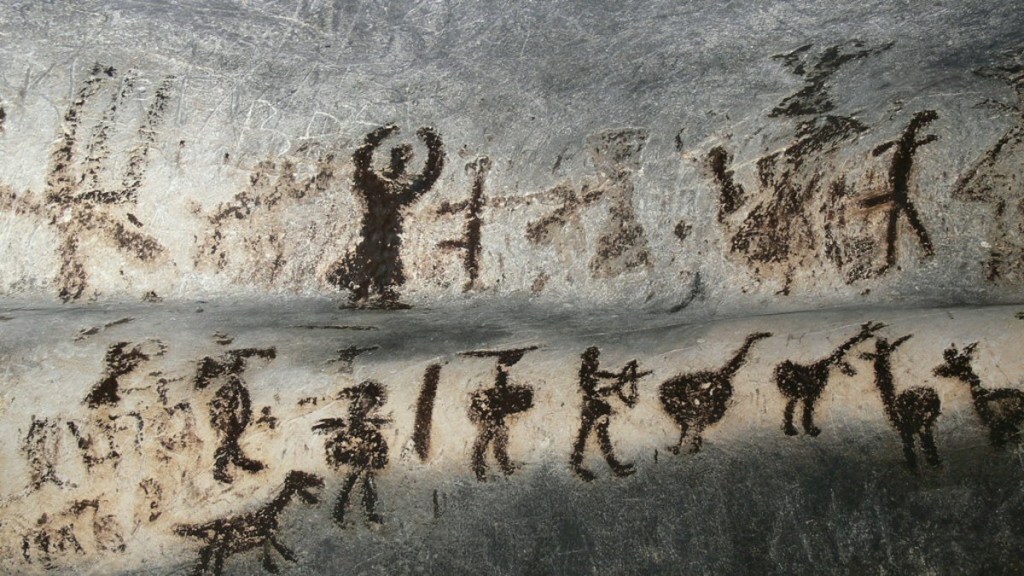
Magura Cave ~ Bulgaria
 History Belongs To Us
Leave a comment