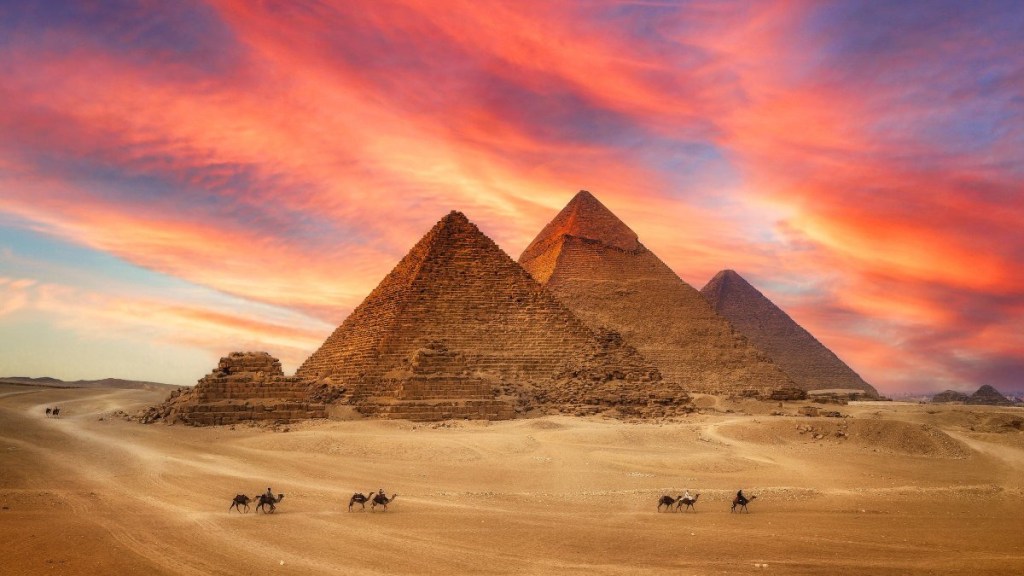
Egypt is studied as one of the world’s earliest civilizations. Civilizations, as defined today, are made up of governments, religion, achievement, population, economy, social structure, and specialization, and if we look carefully at the civilizations in which we live today, it is easy to point out the similarities… the world has changed dramatically, and yet, we as humans continue to live in a world where all of these components, though transformed over the years, remain virtually unchanged.
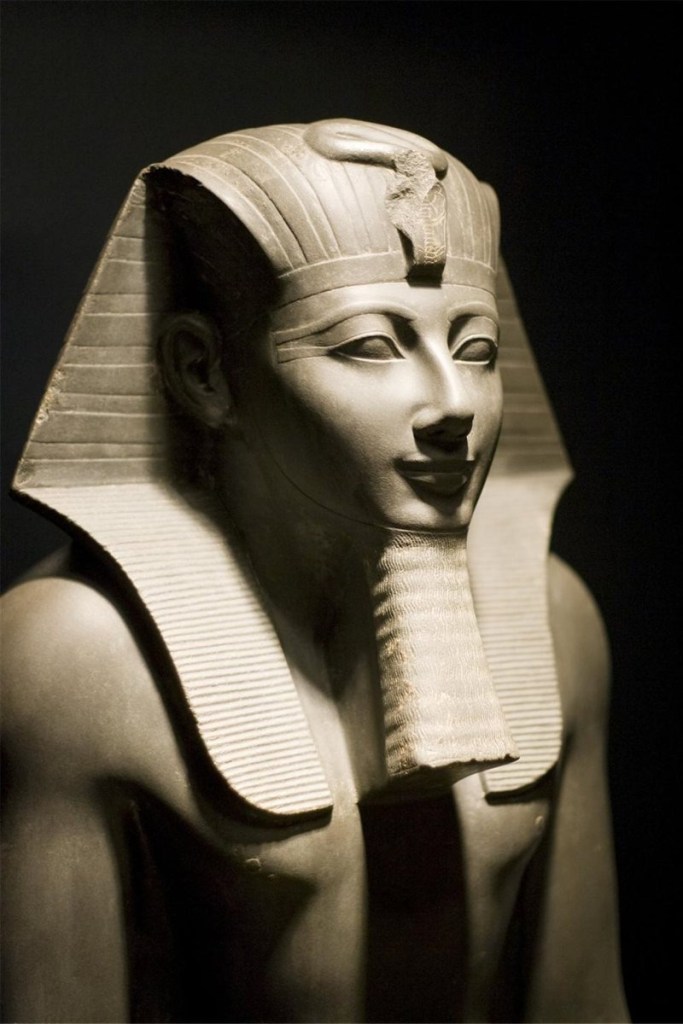
King Thutmose III
Thutmose III, The Napoleon of Ancient Egypt
Thutmose III, the sixth king of Egypt’s 18th Dynasty and a lauded military commander, is often referred to as “The Napoleon of Ancient Egypt”. As a warrior, he would conquer Syria, Canaan, and Nubia, expanding Egypt’s boundaries. As a king, he would enact major reforms that supported centralized power. Trade became all important, and with it, the fostering of peaceful interactions between regions, as well as a distinct focus on diplomacy. Expansion required a plan, it required growth, and most importantly, it required a prosperous economy. Thutmose’s dreams for an improved infrastructure required goods and labor. Trade routes didn’t establish themselves. Roads, canals, and bridges were erected to aid in the efficiency of transportation, travel, and communication. Without these things, governance would be difficult if not impossible.
Thutmose III, however, didn’t merely focus on his own ability to rule. His patronage was essential to not only the building of temples for the many Egyptian gods, but the restoration of existing temples as well. A well-known example of this can be seen in the restoration and expansion of the Temple of Amun, where Thutmose III oversaw the construction of additional buildings and courtyards, which were adorned with intricately carved reliefs and inscriptions.
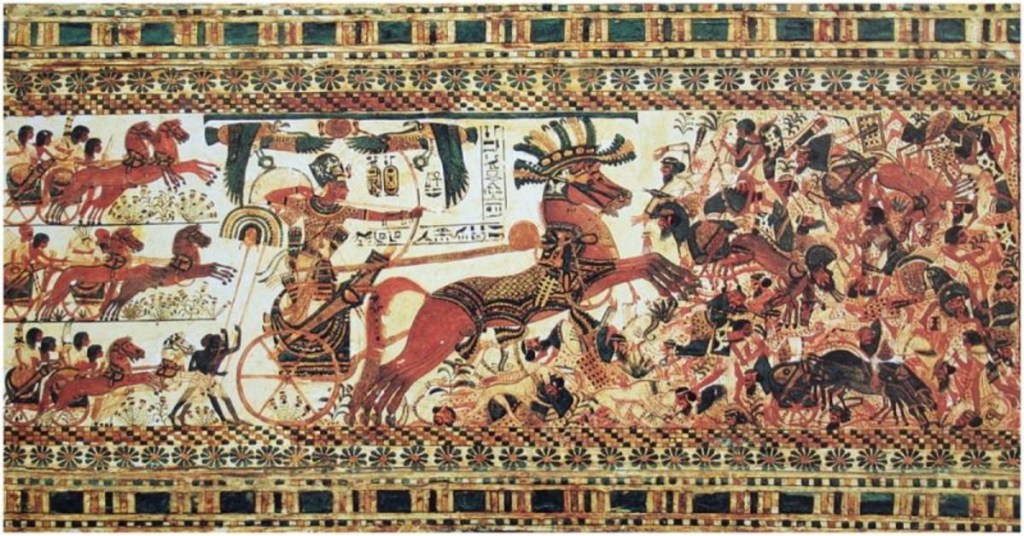
Pharaoh Thutmose III and the Battle of Megiddo
Ancient Egypt Under Thutmose III’s Rule
As a patron of the arts, Thutmose III would support the work of Egyptian artists in their creations of exquisitely designed masterpieces using the mediums of stone craft, painting, and glass making. Many of these designs commemorated the king, portraying his (Thutmose’s) power and military conquests. Other artistry was centered around religion, the gods, and various mythological tales that have been passed down through the centuries. Art, like hieroglyphics, was used to tell stories, record history… to inform and preserve.
If we set our sights beyond King Thutmose III, however, looking past his kingship, his conquests, his patronage, and his governance… we see the people. The Egyptians living under the rule of King Thutmose III were very much like the people we see around us today. These people, like us, had needs and wants… things that were necessary for survival, and things they dreamed of… sometimes attaining their dreams and sometimes not.
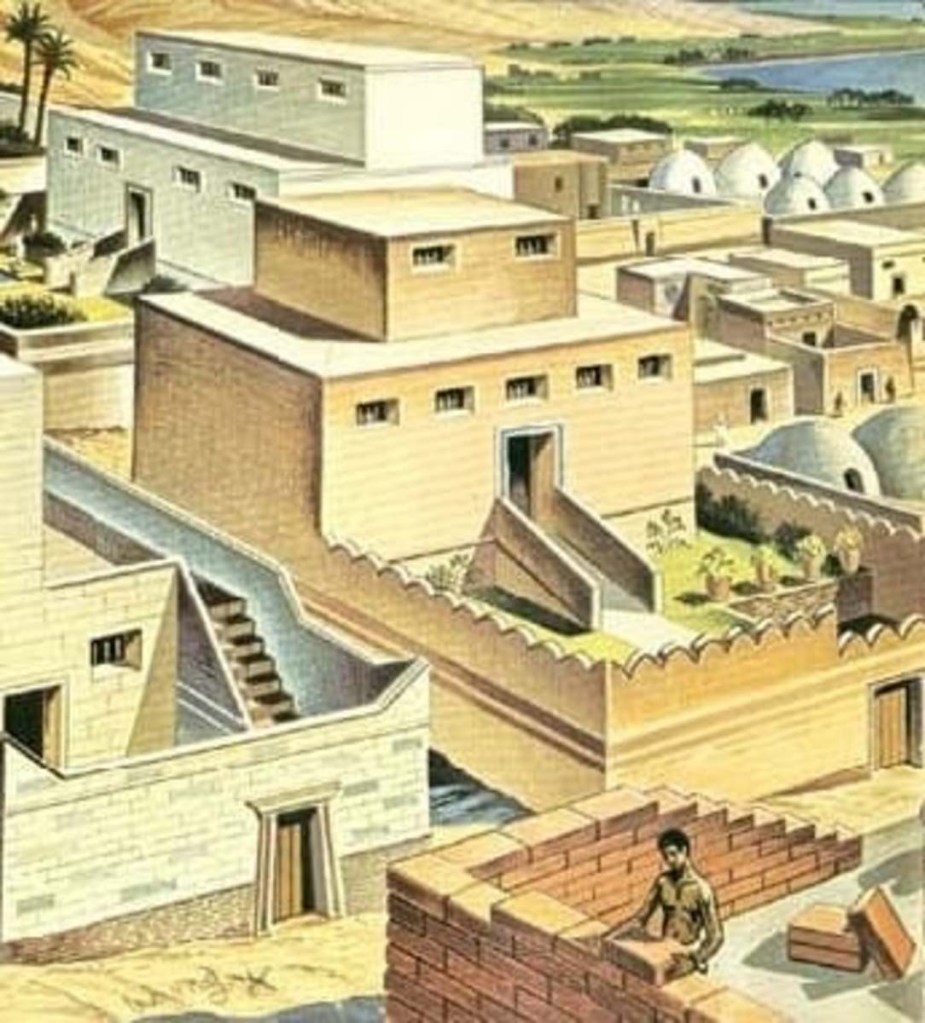
The Opulent Homes of Wealthy Egyptians
Lifestyles of the Rich and Powerful
Just like today, the wealthy lived in what were seen to be large, opulent homes that were often surrounded by gardens filled with flowers, vegetation, and trees surrounded by high walls. Built with sunbaked brick and wood, the bright, spacious rooms filling these homes were decorated throughout. Murals adorned the walls, and the ceilings were often painted to mirror the night skies; floors were painted with the intention of bringing the landscape indoors…. a pool here, grass there… art was everywhere, found even in the heavy floor mats and rugs that were woven with reeds and rushes.
For the wealthy, food was abundant. If you had money, there was no limit to the fresh food, vegetables, and types of meat (regional) available to the household. Meal times were a time of family socialization but a bit messier than we’re used to. Where we use plates, the Egyptians utilized large portions of bread to hold their food. Where we use utensils, they used their fingers, wiping their fingers on their plates (bread), nothing was wasted.
Ancient Egyptian Fashion
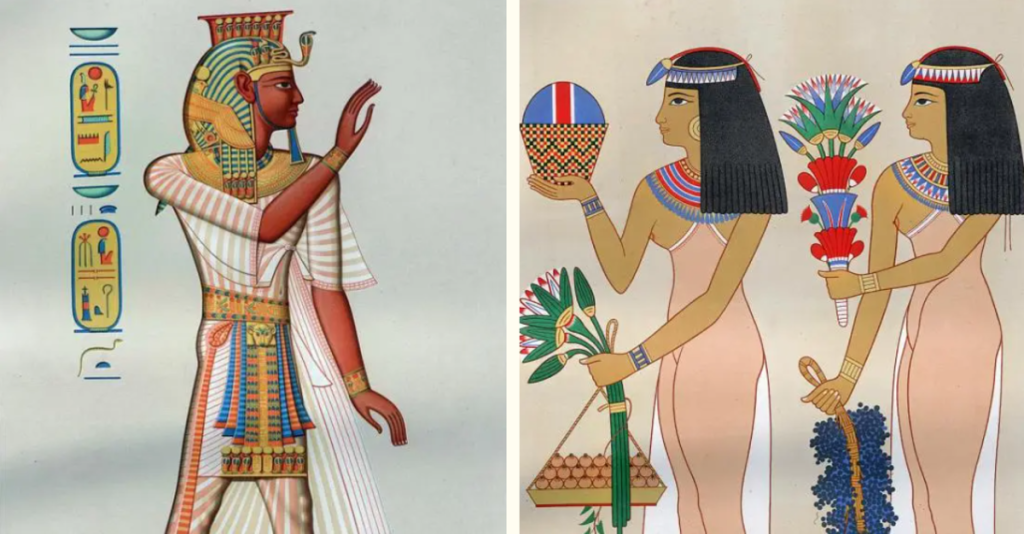
In addition to a wide array of food, the wealthy enjoyed well made clothing. Both women and men dressed with care, focusing on their appearance. Women wore floor length dresses with shoulder straps, covered by loose garments made from fine linen. Men dressed in skirts, short or long to suit their individual preferences, often adding a cape that was worn over their shoulders. Both men and women adorned themselves in white, which was often embellished with brightly colored, detailed embroidery.
Slavery in Ancient Egypt
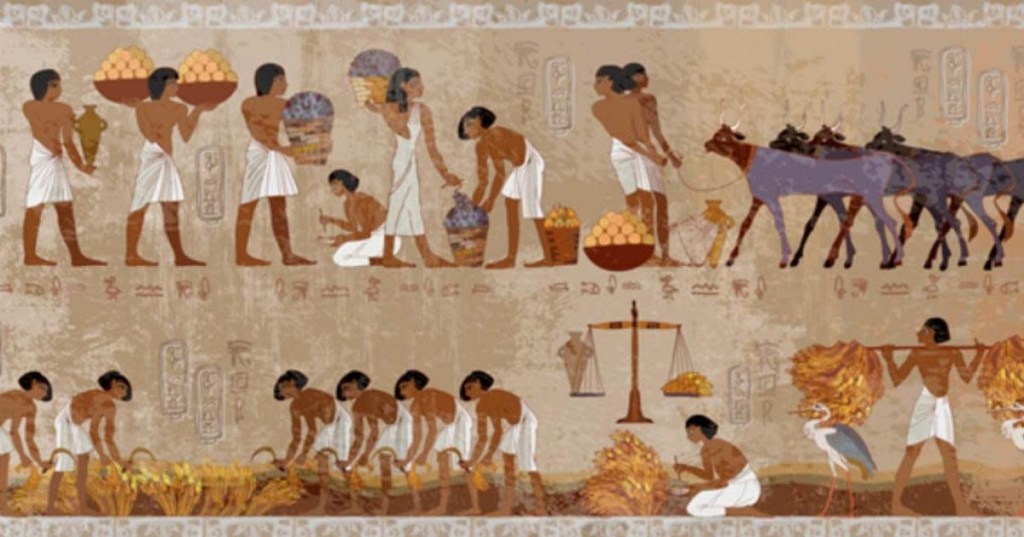
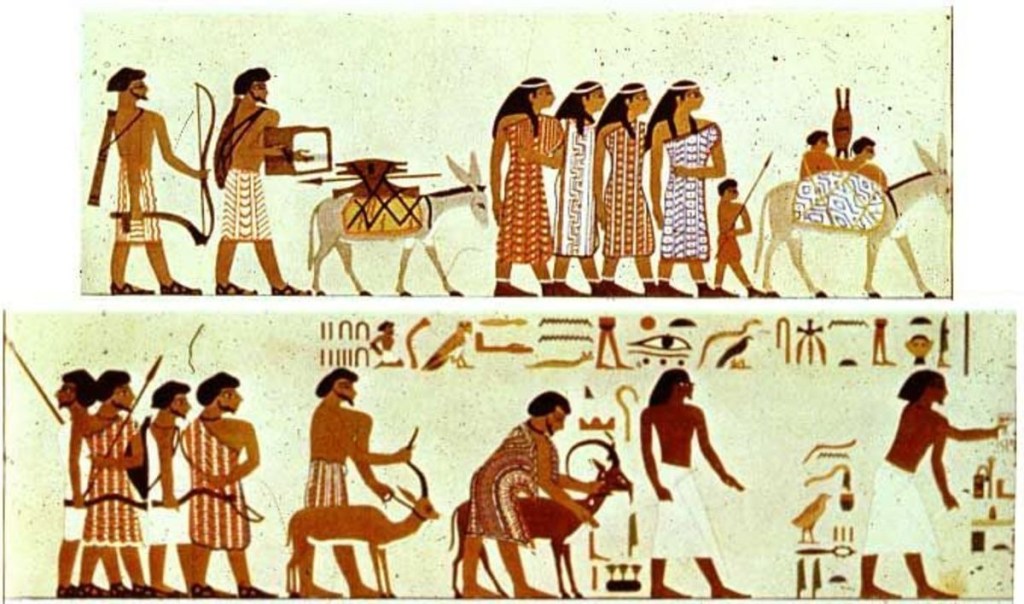
As evidenced, wealthy Egyptians enjoyed lives of leisure. In addition to their beautiful homes, the wealthy also owned slaves. They were continuously waited on, fanned to keep cool on hot days, and entertained by those they held within their households. Food was prepared, laundry was washed, gardens were tended, and houses were cleaned… not by their owners, but rather, by their human property, property that was procured by both force and choice.
Slavery, has without doubt, existed in one form or another since the beginning of civilization. The conquered were enslaved by their conquerors (prisoners of war), children were born into slavery via the circumstances of their mother. People, by choice, would sell themselves (or members of their family) into bondage in order to pay off their debts, many others were abducted and sold for profits, and yet still others, at the lower scales of the social hierarchy, would sell themselves in exchange for food and shelter. Sometimes, the thought of shelter and a good meal makes people do things they would never otherwise have done.
Life in Ancient Egypt
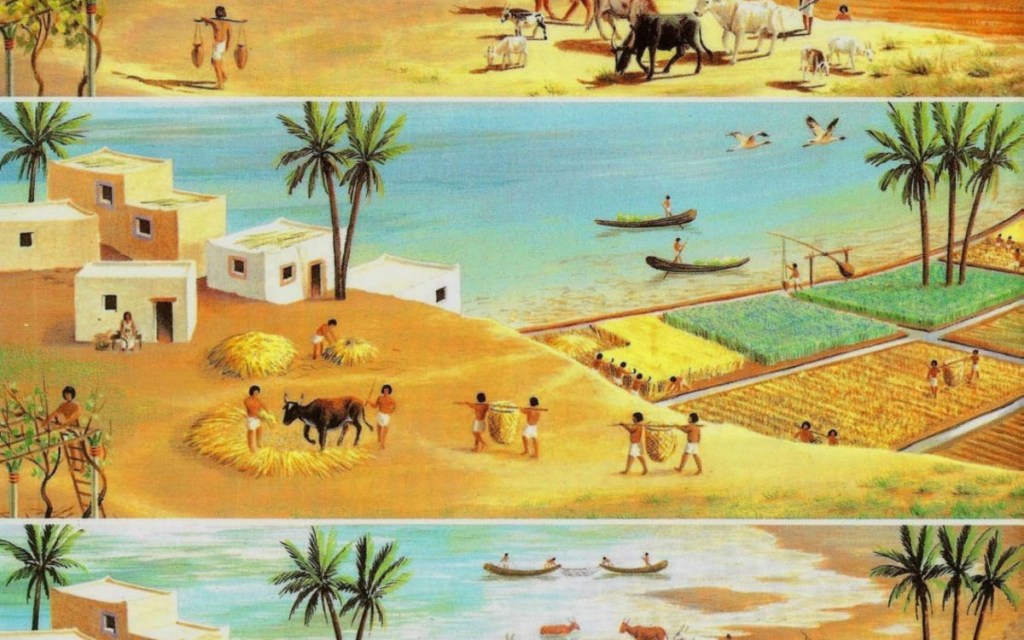
The majority of the people living in Egypt were poor peasants. They lived on land belonging to the nobles in simple, one room mud houses thatched with the abundant grasses flourishing near the Nile River. Furniture was sparse, beds were simple mats laid out on the floor (dirt), and meals usually consisted of nothing more than a few barley cakes, dried fish, and goat’s milk. Clothing was simply made. Men wore trousers and shirts; women wore dresses made of coarse linen. Everyone worked… long, difficult, and likely what seemed to be endless hours of labor. In the end, however, the progress made by the Ancient Egyptian civilization would provide for more and more opportunities for the peasantry to better their lives.
Education in Ancient Egypt
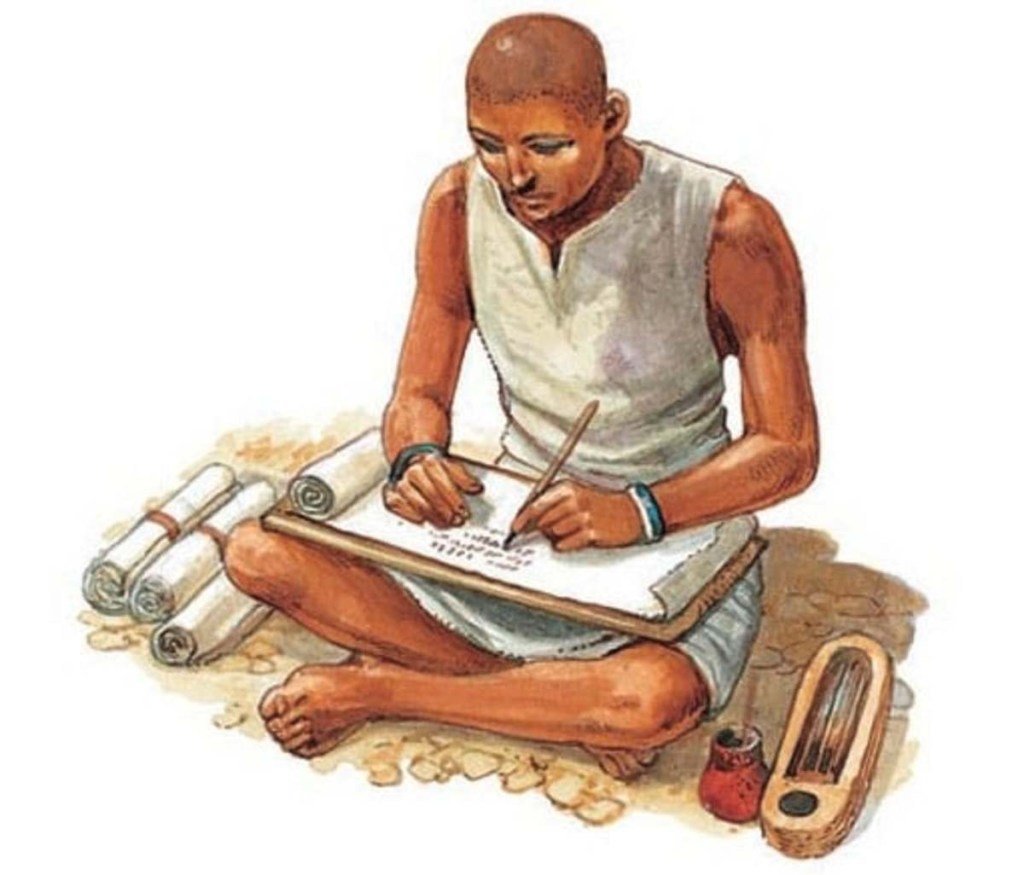
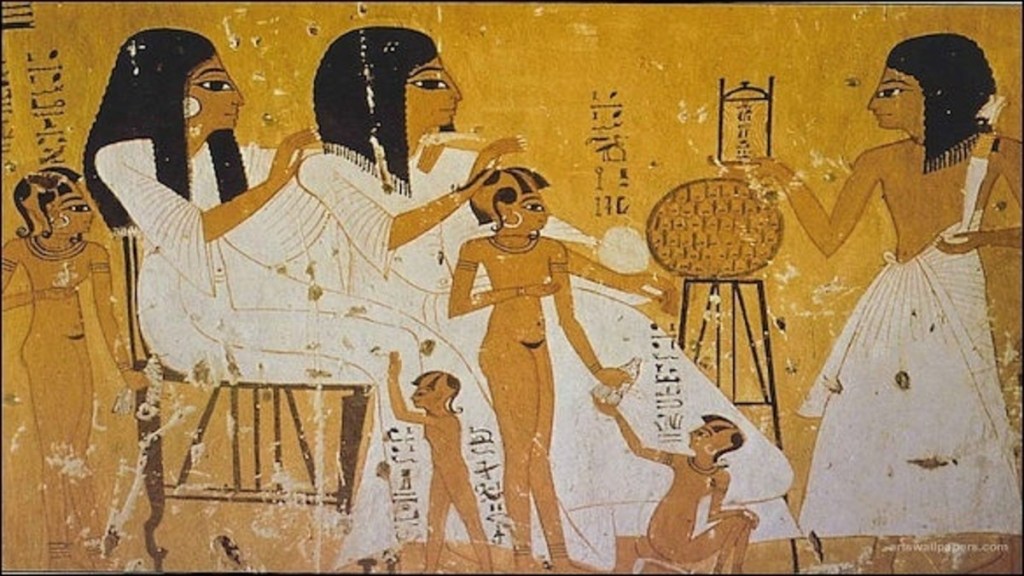
In the early days of the Egyptian Empire, education was a privilege, and schooling was only provided for the sons (yes, you heard it… no daughters) of the wealthy. The sons of the rich were trained to become leaders, scribes, and sometimes important members of the government. Over time, however, as populations exploded and trading reached new heights, some boys were allowed to branch out into new areas, learning new skills from those who specialized in a variety of areas… others were able to attend school, training for positions as clerks or record keepers. As the population grew, more jobs became available. As more jobs became available, opportunities for advancement grew and blossomed.
The girls in ancient Egypt also received an education, but their education did not include reading and writing. Mothers and grandmothers were the teachers in their daughter’s lives. The daughters of wealthy families were taught to run the household, oversee the work of the slaves, and most importantly, what was necessary to become a good wife and mother. Daughters raised by working families needed to learn how to cook, preserve food, weave cloth, make clothing, and yes… they still needed to prepare the mothering skills that would be necessary after marriage and the birth of children. This education didn’t happen overnight, but rather, took place on a day-to-day basis. There was no time to waste, as girls were considered marriageable by the age of thirteen, and they often became mothers before their fourteenth birthdays.
Ancient Egyptian Farming
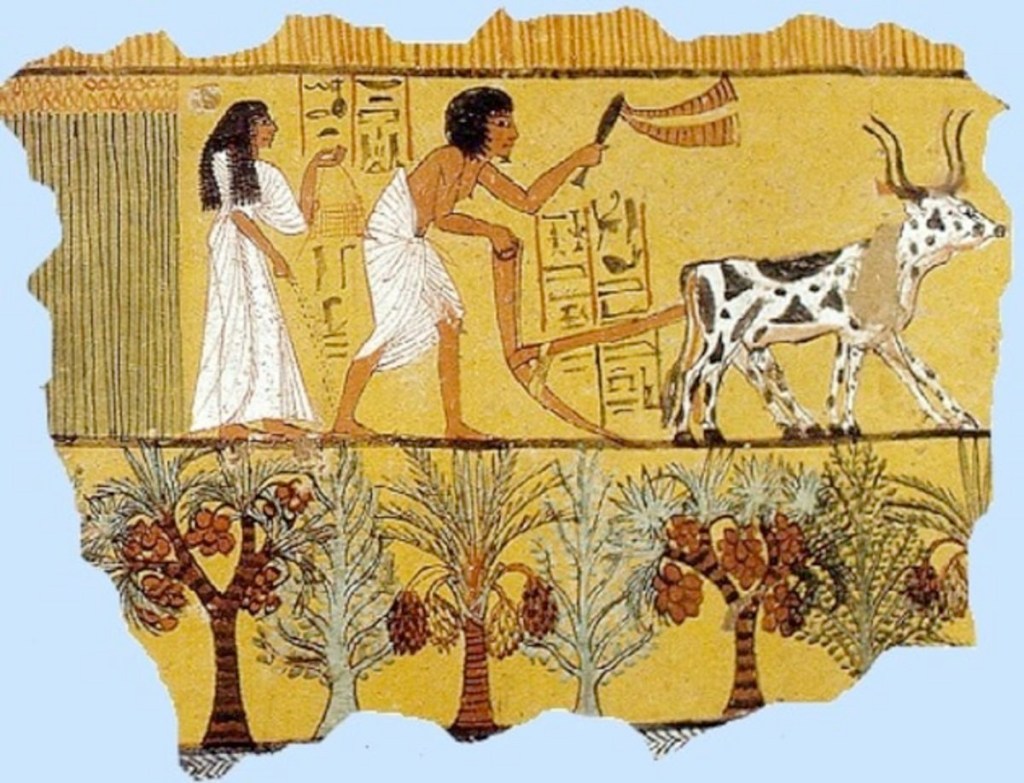
King Thutmose’s kingdom, like all kingdoms, relied upon agriculture for its existence. Without farmers and a steady supply of food sources civilized society is impossible. Wheat, flax, and barley filled the fields, vegetables were sown, and livestock raised. The presence of agriculture allowed for trade both within and without the community. Craftsmen, suddenly in demand, could work from home workshops or set up shop along the narrow, crowded city streets. Sandal makers, jewelers, cabinet makers, bakers, weavers, and my favorite… glassblowers honed their crafts. Talented craftsmen had the opportunity to move up in the world, especially if one of the wealthy nobles offered their patronage to a promising artist.
Pottery
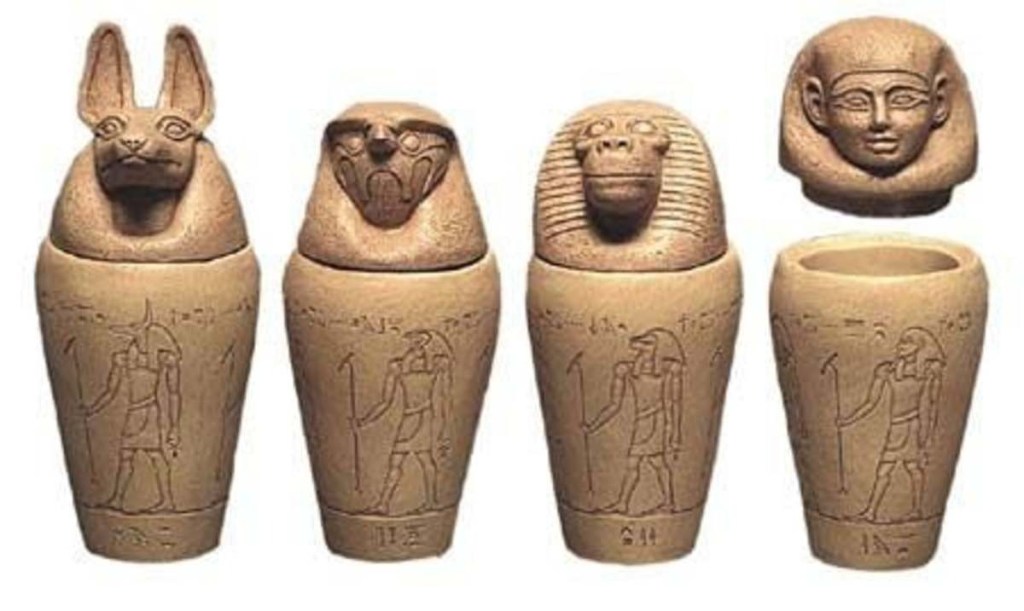
One of the most notable of the Egyptian arts was pottery making. Egyptians invented the pottery wheel, and with its use, beautifully crafted vases and jars were created for a variety of uses. Making pottery is in itself a painstaking process requiring skill and patience. Every piece was different, molded by hand, and baked in a fiery kiln. Initially, potters weren’t interested in creating works of art, but rather functionality. Pottery was an important commodity throughout Egypt that was used in barter and trade. A client needed to store his wares for sale; a potter needed to make a living.
Initially, pottery was formed using silt from the Nile River, hence its name, Nile Silt Ware. This pottery was the most common, and it was primarily used for functional purposes. Over time, potters would come to use different types of clay, and the earthenware they created would move beyond mere functionality, taking full advantage of the variety of textures, strengths, colors, and durability of their sources. Today, Egyptian pottery tells the story of the ancient civilization in which it was created, from the simplest containers to the elaborate vases that showcased artwork depicting the lives, traditions, rituals, and beliefs of their creators.
Trade & Barter
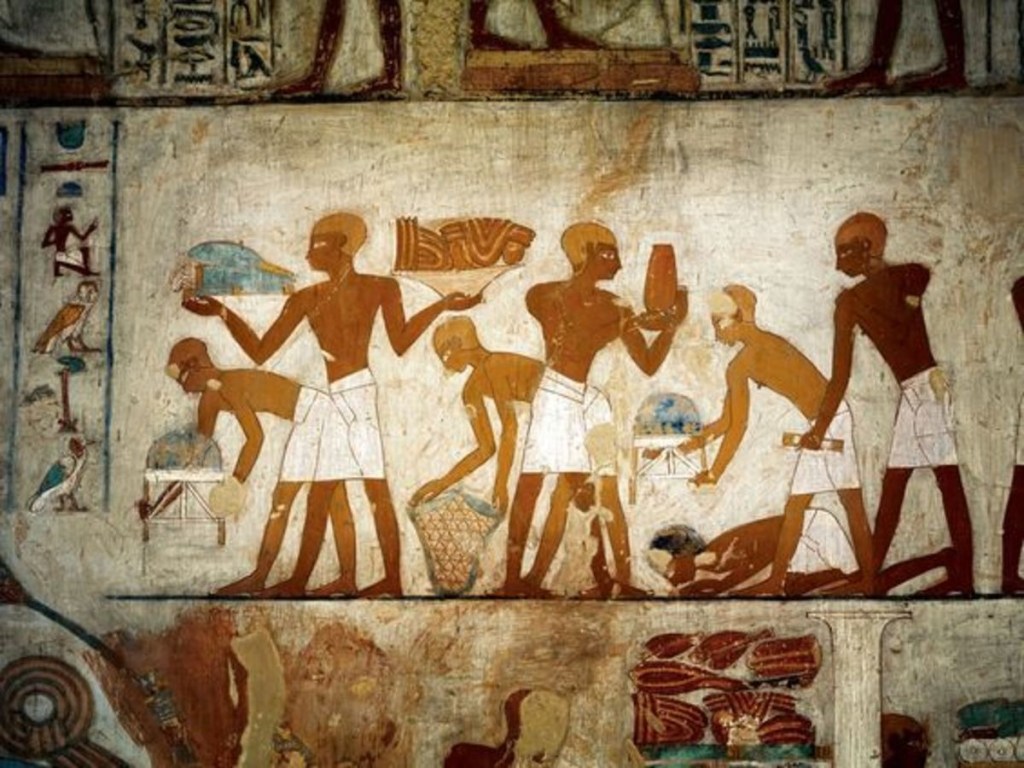
As already stated, the Egyptian economy relied on trade and barter. Coinage hadn’t yet been invented or put into play. The wealthy, however, did sometimes use gold as payment for services, small gold rings that were carefully weighed and inspected to discourage cheating. The value and cost of items were assessed, but bargaining was always a part of the process. Some people were better bargainers than others, which was a benefit during the negotiation process.
Pharaoh Ikhnaton aka Akhenaten
Less than one-hundred years after the death of Thutmose III, the Egyptian Empire would fall into decline. Why the decline? Likely, we’ll never know. Some say that Thutmose III’s reign was followed by reigns of weaker men, who were less than capable leaders. Still others say that conquered lands grew more populace, stronger, building up their own armies to claim their independence. Possibly the nobles in these growing cities wanted to establish their own power, possibly those living in poverty grew so dissatisfied with their living conditions that they rebelled against working for those they didn’t deem worthy of their loyalty.
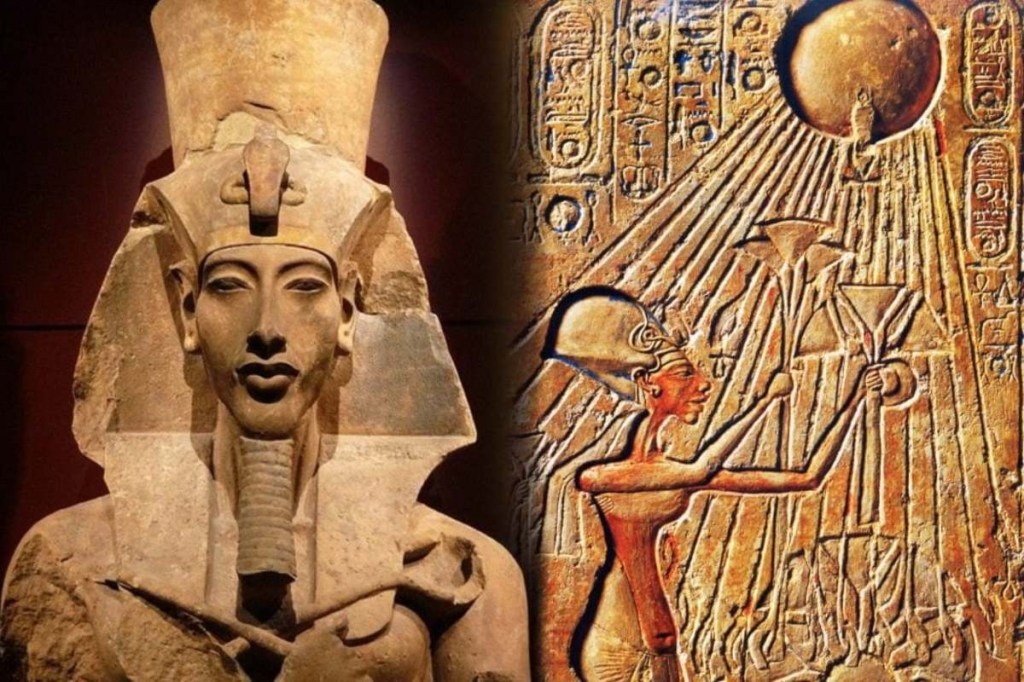
Pharaoh Ikhnaton, also known as Akhenaten, was one such ruler. Rather than govern his people, protect his region, and look toward the expansion of his realm, Ikhnaton focused on religion. He is not remembered for his contributions to Egyptian society as a whole, but rather, for being the first pharaoh to abandon Egypt’s polytheistic beliefs, and the first to introduce monotheism.
Monotheism in Ancient Egypt, Implemented and Rejected
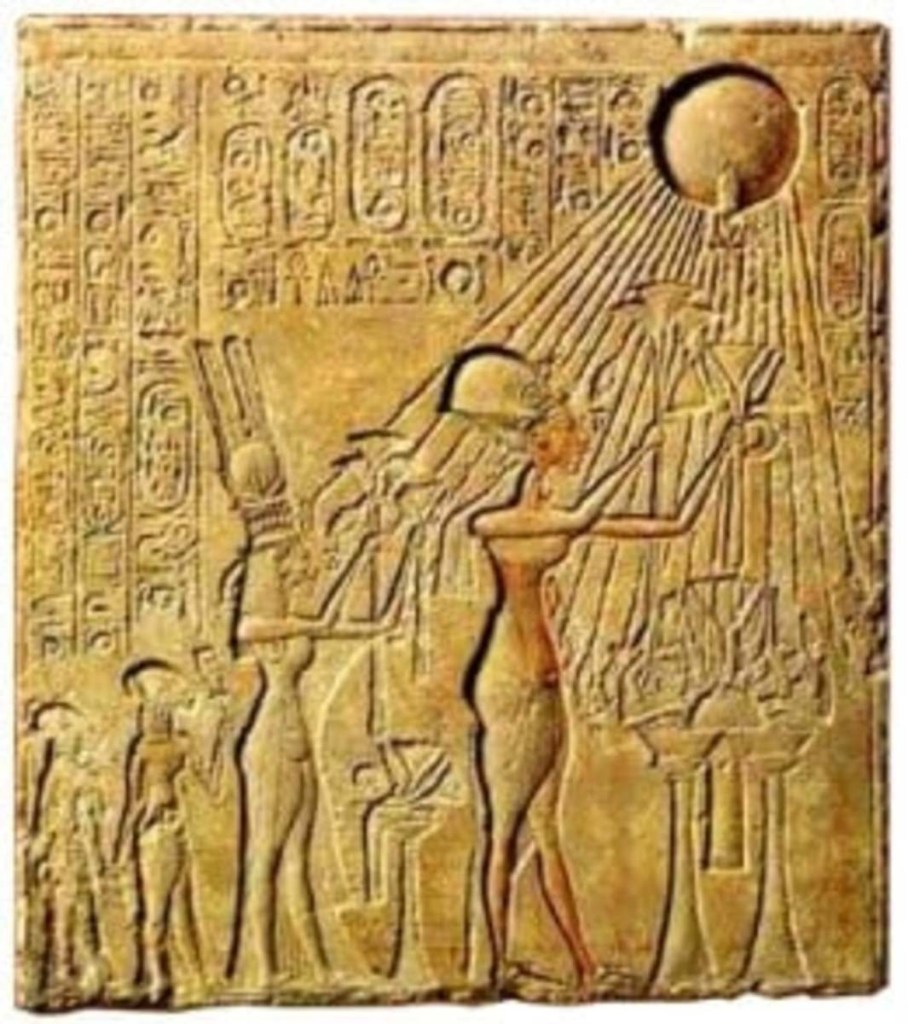
King Akhenaten with his wife Nefertiti and their daughters bearing offerings to Aten (Aton).
Ikhnaton dedicated his life to creating a monotheistic Egypt, centered around what he believed to be the one true god, Aton, the sun-god. As ruler he set upon closing temples built to worship other gods and order the construction of temples dedicated to Aton. Traditional rituals were set aside, offerings were given up outdoors in open air courts, reliefs were carved into exterior surfaces to protect them from direct sunlight. Walking through the temples one could see a depiction of royal life, which most often portrayed the royal family’s dedication to Aton.
Within five years, Ikhnaton implemented his new religion, moving his capital and religious center to a new, untouched, desert area surrounded by limestone cliffs on the east bank of the Nile River. Within nine years, he would go so far as to proclaim Aton not merely the most important god, but the ONLY god. In essence, he erased, or in today’s terms, cancelled the existence of all other gods, removing their names and images from the temples, rewriting, or attempting to rewrite history. If they were destroyed… they never existed.
Tutankhaten, Son of Ikhnaton
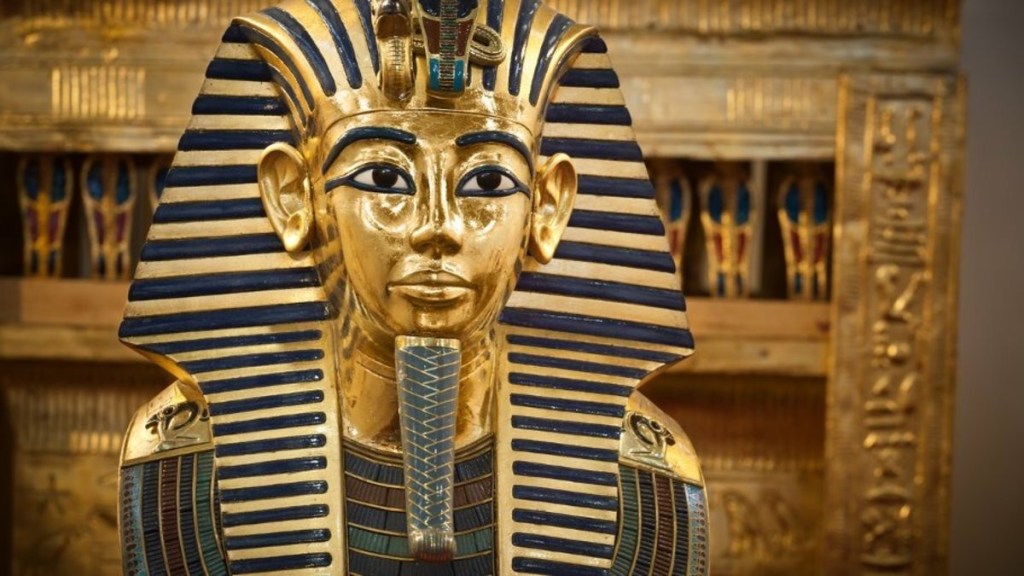
King Tut
In the end, all of Ikhnaton’s changes would only succeed in temporarily altering the Egyptian landscape. His changes weren’t embraced or long-lasting. During his reign, the people were unhappy with his decisions, and they certainly weren’t ready for the elimination of their gods and religious festivals. With Ikhnaton’s death, things would quickly return to normal. Though his successor remains unclear, the eventual succession of his son, Tutankhaten, is clearly recorded. We also know that Tutankhaten, who we know as King Tut, in his eagerness to please the people, or perhaps because of his own personal beliefs, distanced himself from Aton, restored the old gods, and reopened the temples to the Egyptian people, but that is a tale for another day.
 History Belongs To Us
Leave a comment