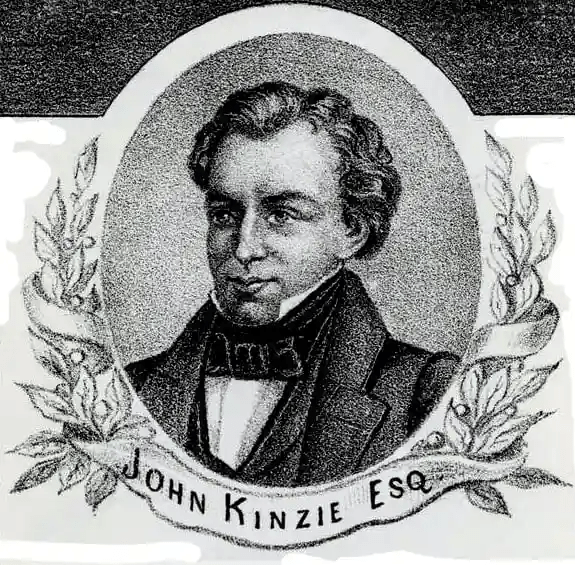
By the year 1828, Chicago was in the midst of a great transformation that would take the lakeside village and literally reshape its horizon. The fur trade began shuttering its windows and closing its doors, and Chicago, along with the times, changed and grew accordingly.
With the end of the fur trade, so would come the end of John Kinzie’s life. The Father of Chicago closed his eyes for the last time, and the village he knew would become something he’d only dreamed about. Kinzie died on January 6, 1828, leaving his wife and children to adapt to Chicago’s transitions on their own. At the end of the War of 1812, Kinzie had made it clear that it was his firm desire that the area around Chicago remain Indian Country. He would never see the transformation of the area he loved, he would not be present for the next war, and as settlers moved into the area in droves and industry boomed, he would not witness the removal of the Native Americans he’d worked with so closely. Possibly, that’s the way he would have wanted it.
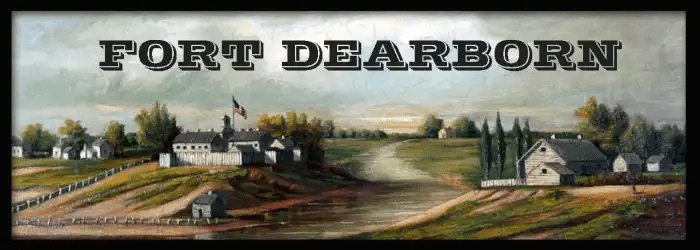
Chicago, 1828
The year 1828 also stood witness to the US militia’s return to Fort Dearborn, which had been sporadically manned and evacuated since its reconstruction. By this time, the garrison had already cut a passageway at the river’s mouth in order to more easily navigate their boats and plans had already been drawn that would allow for the closure of the original river outlet by US Civil Engineer, William Howard.
Howard’s plans were intricate and detailed, but in layman’s terms laid out the specifics for straightening the path of the river and protecting the new outlet with the use of two piers, something that had already been successfully accomplished at Michigan City. The change itself would provide safety and efficiency, as vessels would have access to the harbor rather than having to anchor offshore and transport their goods using smaller boats, all while timing their excursions to avoid storms… safe harbor was essential. According to an article published in the Chicago Democrat on January 7, 1834, a man named Schoolcraft, who visited the area in 1821, addressed this issue in the following manner.
“We allude to the formation of a harbor on Lake Michigan where vessels may be in safety while they are discharging the commodities destined for Illinois… It is well known that… there is no harbor or shelter for vessels in the southern part of Lake Michigan, and that every vessel which passes into that lake after September, runs an imminent hazard of shipwreck. Vessels bound for Chicago come to anchor upon a gravelly location in the lake, and discharging with all possible speed, hasten on their return. The sand which is driven up into the mouth of the Chicago Creek will admit boats only to pass over the bar… It is yet somewhat problematical whether a safe and permanent harbor can be constructed by any effort of human ingenuity, upon the bleak and naked shores of these lakes, exposed, as they are, to the most furious tempests. And we are inclined to think it would be feasible to construct an artificial island off the mouth of the Chicago Creek, which might be connected by a bridge with the mainland… with less expense than to keep the Chicago clear of sand.”
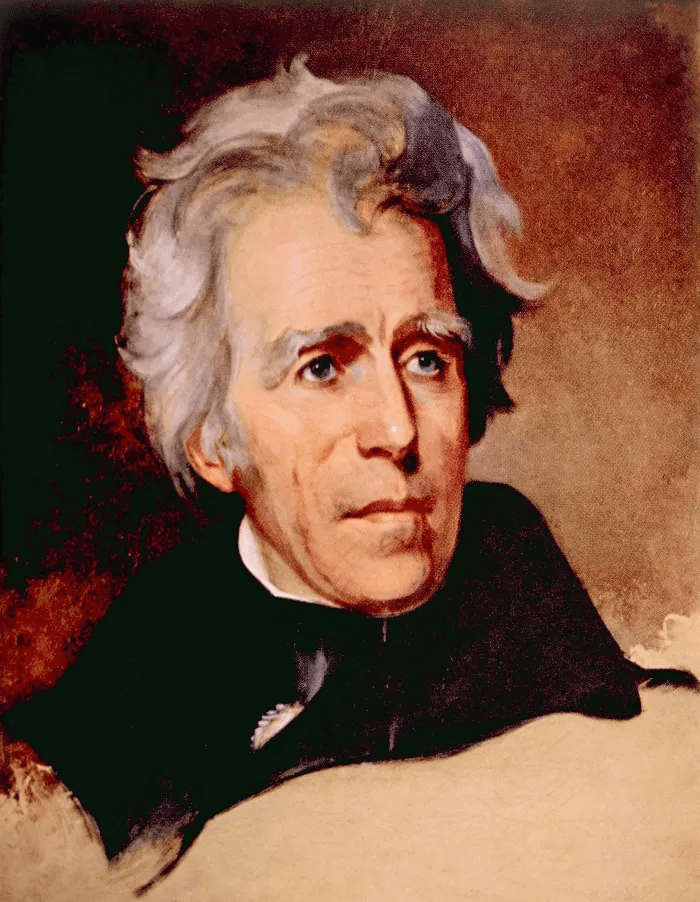
President Andrew Jackson
Indian Removal Act
While the calls for improvement and better access to Lake Michigan became a priority for the government, these plans and improvements were accompanied by calls for the government to take a larger role in Native American affairs. In 1827, Ninian Edwards, the governor of Illinois, pressured then President John Quincy Adams to remove all of the remaining Native Americans from his state. Treaties had already been signed, and over the years, the Native Americans had turned over their rights to the land in their entirety. The only land still in question belonged to the Potawatomi in northeastern Illinois. Edwards wasn’t asking for negotiations… he was demanding compliance. In return, he was assured by the U.S. Secretary of War, Peter Porter, that the Native Americans had agreed to leave the state, an evacuation that would take place by May of 1829.
Enter President Andrew Jackson, who strongly believed that the Native American population should be free to practice their native cultures… on the other side of the Mississippi, and his proposed Indian Removal Act, which passed through both houses of Congress in May of 1830. Jackson, however, didn’t believe that the removal of the Sauk and Fox tribes was an issue, as they’d already agreed to relocate west of the Mississippi, and they’d not only agreed to the treaty in 1804 but reaffirmed the treaty in 1816. The Native Americans, however, disagreed.
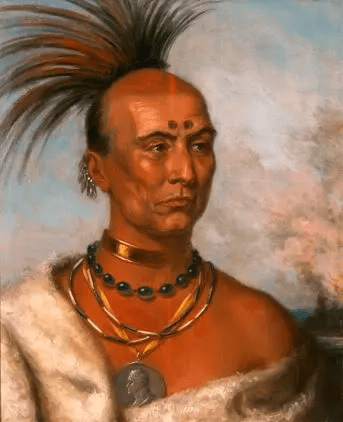
Enter Black Hawk
When Thomas Forsyth, Indian agent and former partner of John Kinzie, visited with the tribal chiefs of the Sauk and Fox in 1828, urging them to begin making plans for their move, he was greeted with dissent. The chiefs denied ceding their land and tensions once again began to grow. Enter Black Hawk, spokesman for the tribes, and the man for which The Black Hawk War is named.
Black Hawk, the son of a medicine man, was born in Saukenuk, which is now known as Rock Island, Illinois. He had previously sided with the British during the War of 1812, and he resented white expansion into Native American territory. Black Hawk, along with his followers from the Sauk and Fox tribes, refused to acknowledge the Treaty of 1804, contesting its intent and content… the fifty million acres of land that the US government now claimed as their own. In his autobiography, Black Hawk writes, “My reason teaches me that land cannot be sold. The Great Spirit gave it to his children to live upon and cultivate as far as necessary for their subsistence, and so long as they occupy and cultivate it they have the right to the soil, but if they voluntarily leave it, then any other people have a right to settle on it. Nothing can be sold but such things as can be carried away.”
According to Thomas Forsyth, Black Hawk genuinely believed that the Native Americans had not ceded their land to the US government and upon learning that the annuities were, in fact, payment for land in 1818, had since refused them. The annuities paid to the tribe were seen by Black Hawk in the same way he viewed the gifts the tribe had received from the British…. as nothing more than gifts. His belief is supported by the fact that Quashquame, the leader of the 1804 Native American delegation in St. Louis, assured him that “he never had consented to the sale of our village.”
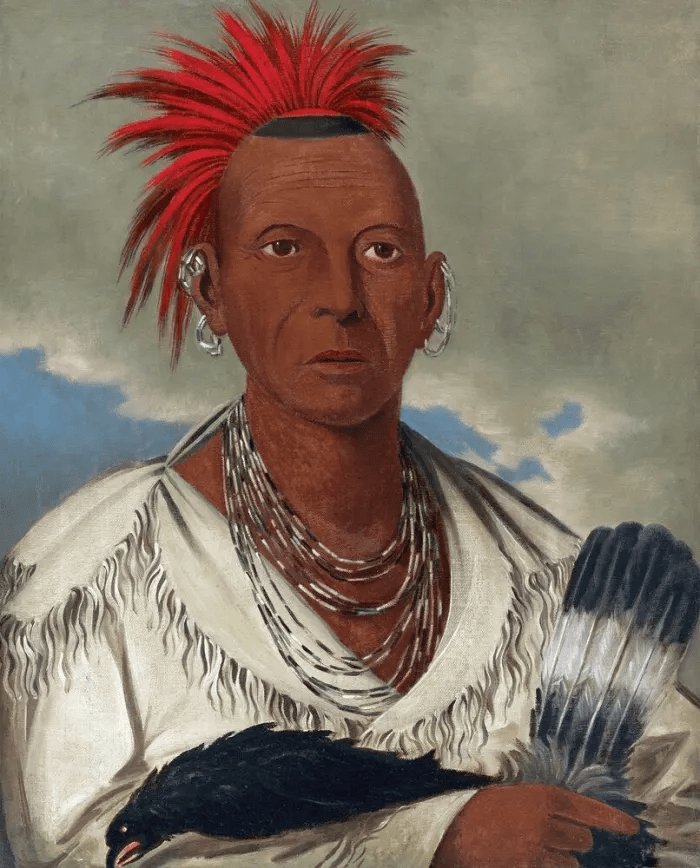
Black Hawk
Concessions
As time went on, Blackhawk determined to remain in his homeland, along with the rest of his tribe, as they awaited the corn harvest to provision their families. Government officials came and left, tribal leaders visited and called meetings for interventions, and offers were made and refused until, at last, Blackhawk received official word, “That no further time would be given than that specified, and if we were not then gone he would remove us.” The tribe’s withdrawal was imminent; the year was 1830.
Soon, a large number of mounted men approached the village, setting up camp nearby, all while General Gaines made an impressionable arrival by steamboat. Gaines offered supplies in return for evacuation of the village to make up for the harvest that would be forfeit upon the villagers’ departure, and Black Hawk, right or wrong, signed the offered treaty and later noted in his autobiography, “I touched the goose quill to this treaty, and was determined to live in peace.”
The supplies, however, were sorely lacking, and the sound of the hunger heard in the lamentations of the women and the children would lead the braves to return to their former home, so they could collect a portion of the crops they’d planted themselves. In return, the braves were fired upon for what Black Hawk described as the “depredations committed by some of my people, on their own corn fields.” We might ask is it’s stealing to harvest your own crop? And yet, Black Hawk’s people no longer lived on that land. He’d signed the treaty; he’d led his people across the river, and the people living on what was once Native American lands now claimed ownership… the land was bought and paid for.
Looking at the big picture, is it truly possible to lay blame at the feet of any one group? Can we fault Black Hawk for his decision to relocate in the face of an army, for honoring the word of his predecessors? Should we fault the government for not providing the essential supplies needed for a positive outcome? And what about the settlers who’d paid for the land they now worked; do we blame them for wanting to improve their lives? Blame is a big word, a word we need to think hard about using before we lay it at the feet of others.
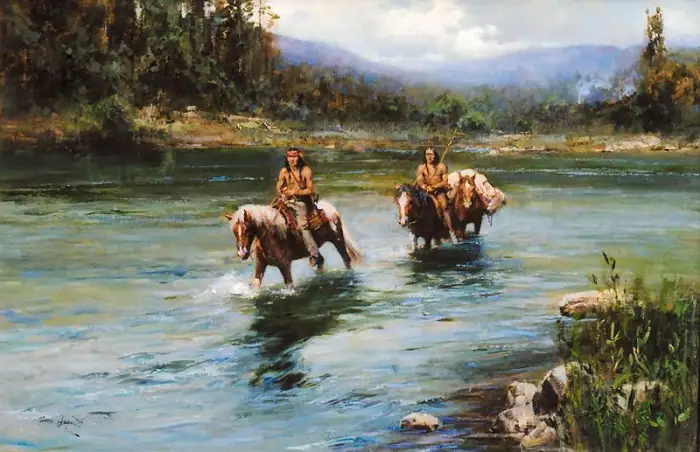
Crossing the River
In 1832, Black Hawk crossed the Mississippi once more, returning to his homeland with what is said to have been one-thousand men, women, and children, carrying with them stores of seed. His followers, who represented the Sauk, Fox and Kickapoo tribes, fully intended to resettle in the area they’d left behind. The land dispute continued, and war would ensue.
The US government’s response to Black Hawk’s actions was quick and decisive. Governor John Reynolds immediately called out the militia, and the government assisted by dispatching troops to aid in his cause. The Native Americans had been warned to remain west of the Mississippi and told in no uncertain terms that their return would not be tolerated. Reynolds had even committed himself on paper in July of 1831 when he wrote, “If I am again compelled to call on the Militia of this State, I will place in the field such a force as will exterminate all Indians, who will not let us alone.”
It is hard to imagine Black Hawk returning to wage war within the boundaries of the land he loved so well with women and children in tow, but it’s even harder to imagine that he couldn’t envision the circumstances he would face upon his return. Most sources agree that he wasn’t looking to wage war, but most sources were not present, and most first-hand knowledge lacks the objective viewpoint needed to make such assumptions. What we do know is that Black Hawk was willing and able to defend his people, that he wouldn’t bow down before the people he believed had usurped his homeland, and that he would not run away from confrontation. We know that Black Hawk felt his people had been betrayed… been duped if you will, to give up the homeland that he did not believe could be owned by anyone… a place that could merely be inhabited.
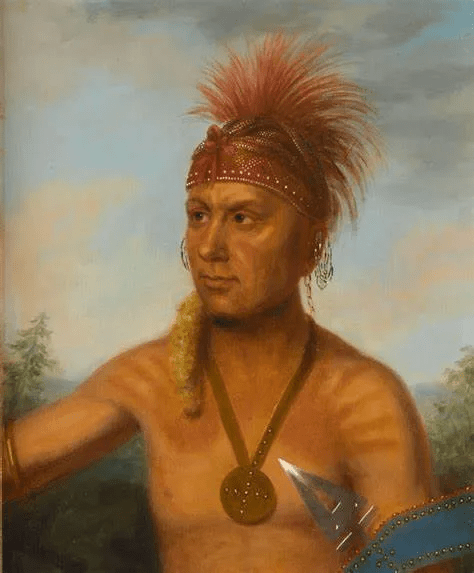
Keokuk: Viewed by Black Hawk as a betrayer of his people.
Black Hawk despised the Native American leaders that accommodated government demands and accepted concessions looking to benefit themselves in the process. Yes, he also desired peace, but he wasn’t going to sell out in order to achieve it. While Keokuk was showered with gifts for preaching patience to his people, all while urging them westward, and even going so far as to supply the Indian agent with information regarding Black Hawk’s plans, Black Hawk looked to the good of his people. While Keokuk would die in disgrace on a Kansas reservation, Black Hawk would continue to speak out, all while attempting to re-establish his village. Conflicting sources claim that settlers were terrorized and slaughtered in their homes, but the attacks in question had little to nothing to do with Black Hawk. Tribal discontent was widespread and growing, as was the fear of the newly ensconced settlers.
Prelude to War
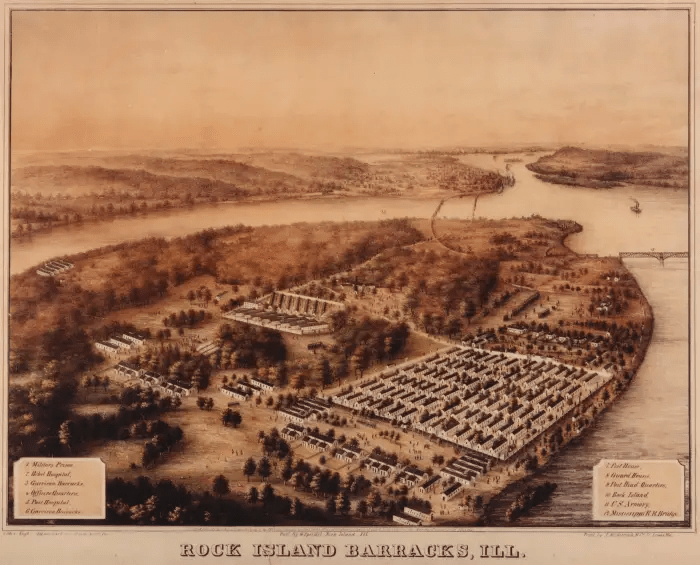
In April of 1832, Brigadier-General Atkinson was ordered to Rock Island. His appointment placing him in command of the forces that would engage in the Black Hawk War. Initially, Atkinson issued warnings, sending his men to hold talks with the Prophet (White Cloud) and Black Hawk, who’d recently arrived. White Cloud encouraged Black Hawk, all while promising assistance. Black Hawk, on the other hand, refused to heed the warnings of the soldiers (in Atkinson’s name) to return east of the river, claiming that the “General had no right to make the order so long as his band was peaceable, and that he intended to go on to the Prophet’s village.”
Shortly after, Black Hawk would find that Atkinson’s warnings weren’t merely warnings… he was ready to act. Militia had already arrived to assist Atkinson in fulfilling his purpose. Black Hawk, in turn, would find that he had been misled by White Cloud’s promises, and while at council with the Pottawatomi and Winnebago chiefs, would learn that he had no backing from the other tribes. They would not join him.
The Battle of Stillman’s Run would mark the true beginning of the Black Hawk War, as Major Stillman led a group of men up the Rock River to an area known as Sycamore Creek (now Stillman’s Creek) to observe and report on the actions of the Native Americans camped nearby. Note, the militia were sent to observe and report, but the group was made up of far more than militia. This group of almost three-hundred men was comprised of both militia and volunteers, men coming forward to answer the call of their government and protect their people, men who were untrained and inexperienced. Might we conclude that both groups were doing what they believed to be honorable, standing up for the same reason… the good of their people.
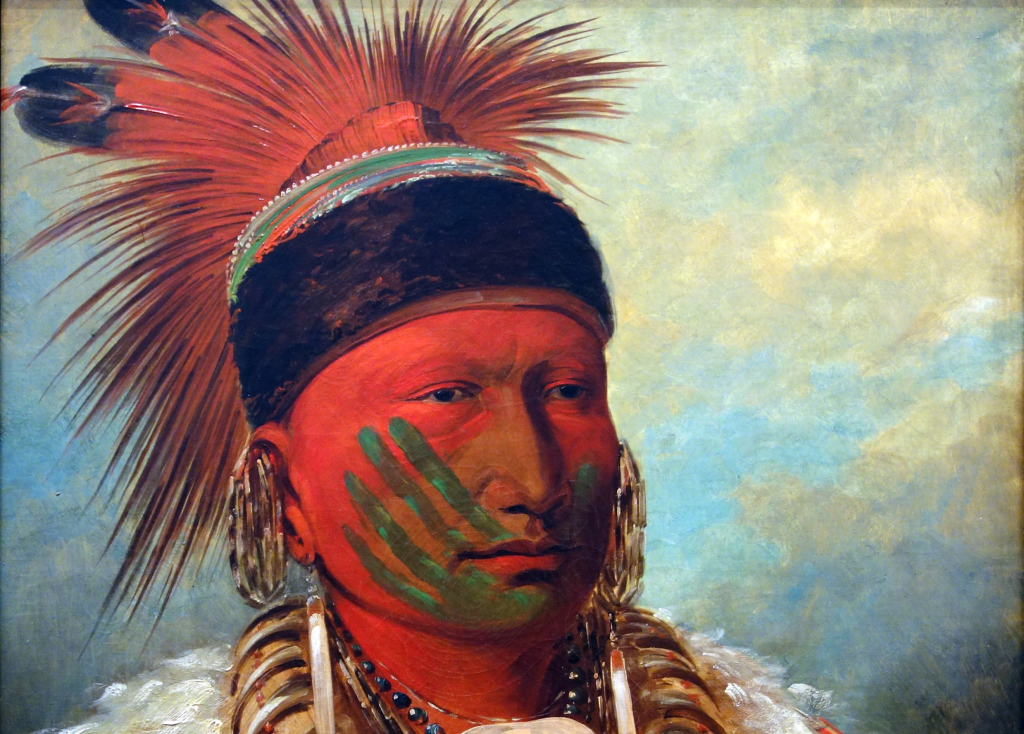
Chief White Cloud
Researching the Battle of Stillman’s Run leaves one with mixed emotions. Surviving records are anything but objective, something that can easily leave us shaking our heads. What we do know is that the abandonment of Black Hawk by those who’d promised assistance was a fact. We also know that Black Hawk was determined to reclaim and protect the land on which his people had lived for generations regardless of the cost. The knowledge that his objectives were near to impossible without the support of those who’d pledged assistance must have been devastating. In essence, one battle would be exchanged for another.
Black Hawk’s re-entry into what was his homeland wasn’t a rash decision, nor was it completely based upon his determination to retake the land of his people, but rather an invitation. White Cloud, like Black Hawk, was young and rebellious, and renowned amongst his contemporaries as the Prophet. He worked alongside Black Hawk and had even invited Black Hawk’s tribe to settle with his own along the Rock River. Sadly, White Cloud also made claims that if the Sauk and Fox tribes were attacked, support would be provided by other tribes, as well as the British, who’d committed to send forces by way of Lake Michigan. All of these claims proved to be untrue.
In late April of 1832, Black Hawk was forced to face the facts. On April 26th he met with two Sauk chiefs sent by Atkinson to inform him that he would not be allowed to remain on any land east of the Mississippi. As a result, the Ho-Chunk also took back their offer of allowing Black Hawk’s people to settle on their land because they feared reprisals. The news that the British weren’t coming placed the final nail in the coffin. In looking at the big picture, we can understand Black Hawk’s decision to withdraw. Sadly, methods of communication at the time were nothing like our own, and before Black Hawk’s journey could begin, plans and unforeseen developments created a chain of reactions that were impossible to contain.
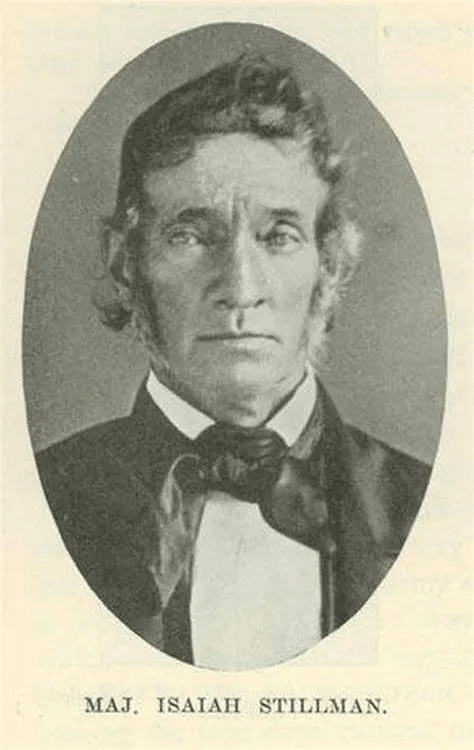
Major Stillman
Negotiations, or Not
On May 14, 1832, Black Hawk’s tribe was in the midst of preparations for their journey back down the Rock River to the Mississippi when they learned that Atkinson’s men were nearby. Black Hawk, who in his own words had already “resolved at once to send a flag of truce to Gen. Atkinson and ask permission to descend Rock River, re-cross the Mississippi and go back to their country….” then sent three of his warriors, carrying a white flag of truce, to arrange negotiations for their safe return. These negotiations never occurred.
The description of the events that followed the warrior’s approach to meet with the militia at Sycamore Creek, also known as Old Man’s Creek, are varied to say the least, but I think it’s safe to say that many decisions were made in haste and without thought. The three warriors sent to parlay waved their white flag, the militia, most inexperienced, attempted to talk. Language was definitely a barrier. Some sources say that none of the militia present at the parlay spoke Sauk, others note that one had limited use of the language, and according to Black Hawk, one of the guards was “able to talk a little with them in their own language.”
Language aside, the three warriors were quickly taken into camp, and for reasons unknown, the flag bearer was immediately shot and killed. Black Hawk, who’d intended to look out for the group’s safety, had also dispatched a group of scouts, presumably spotted and possibly the reason for the flag bearer’s swift execution. The scouts, however, did not engage the militia at this juncture and made a hasty retreat back to their camp, so they could inform Black Hawk of what had transpired. In their wake, a group of militia followed close behind, a group who without orders acted on their own to pursue the scouts and in turn, kill two of the retreating Native Americans.
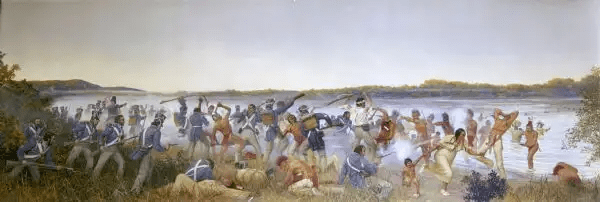
The Battle of Stillman’s Run
The Battle at Stillman’s Run
Amidst the chaos, Black Hawk had no need of this information, as word of the event had already reached him, and he immediately responded by rallying every warrior in the camp. Fifty warriors on horseback would set out from camp and quickly conceal themselves within the wooded landscape. Fifty warriors, tomahawks raised, would emerge from the brush ready to slaughter their pursuers. In the face of this band of warriors, Stillman’s militia, untried and inexperienced, and even in some histories described as drunk and disorderly, would collapse in confusion and chaos. Their hasty retreat would take most of them as far as Dixon’s Ferry, while others would head for the safety of their homes.
The attack on Black Hawk’s camp was a distinct loss for the US militia, but in the end, the US government had no intention of being defeated. Black Hawk, himself, was amazed by the fact that so few warriors could defeat the attacking militia, but in the end, he knew that his dream for peace had come to an end. His decision to retreat to the north was based on the good of his people. They were starving and without supplies. The women, the children, and the elderly still had to be cared for, thus, it was necessary to remove them to a place where they could regroup and avoid their pursuers.
Over the coming months, Black Hawk would continue to move north, but he would not escape conflict. Throughout the region, the battles would continue to rage, other tribes would engage the militia, and many lives would be lost on both sides. Rumors would abound, claiming that Stillman’s defeat was the result of actions of “2,000 blood-thirsty Indian warriors,” leading Governor Reynolds to call out another 2,000 militiamen. The battle was over, and a new war had begun, but that’s a story for another day.
Sources:
chicagoarchitecturehistory.com
britannica.com
 History Belongs To Us
Leave a comment