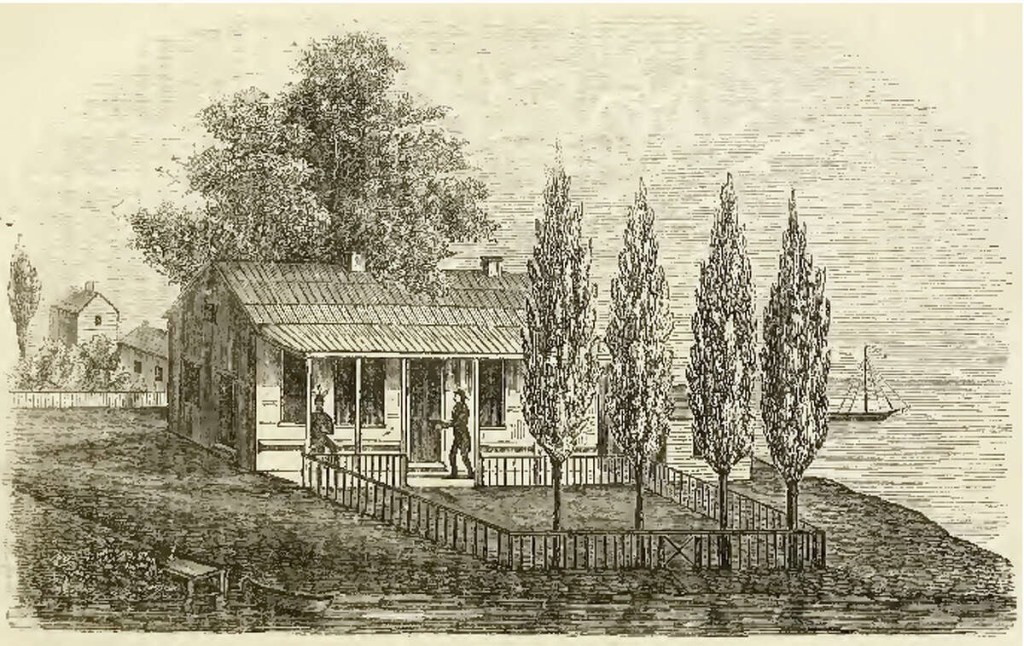
The home of Jean Baptiste Point DuSable, Chicago’s first settler.
Chicago’s Beginnings
In the early 1800s, the city that we now know as Chicago, was a small community and an important center of the fur trade. The city began as a trading post where the Potawatomi would provide pelts and information to the traders in exchange for goods, most of which were imported from England.
The traders, primarily French, cemented their relationships with the Native Americans through marriage, which allowed them safe access to tribal hunting camps throughout the Great Lakes region. The wives, on the other hand, generally stayed behind while their husbands set off on their journeys, maintaining and supervising the family businesses and raising the children, who would go on to become important ambassadors and negotiators as the area expanded.
Jean Baptiste Point DuSable, one of Chicago’s first settlers, an active farmer, and a fur trader, would erect the area’s first mansion, a sprawling five room log cabin on the north bank of the river that boasted a long-covered porch constructed in the Creole fashion. The definition of “mansion” has definitely evolved over the centuries. DuSable left Chicago in 1800 in favor of Spanish Upper Louisiana, an area now known as Missouri.
Like DuSable’s, other homes in the area were made from logs, as was Fort Dearborn when it was constructed in 1803. Most of these homes, however, were constructed in the French-Canadian style, with the logs placed vertically within a trench, and openings filled in with a mixture of grass and mud, before the dwelling would finally be covered with lumber or bark. Fireplaces, which were a necessity, were placed in the center of the dwelling in order to provide better heating.
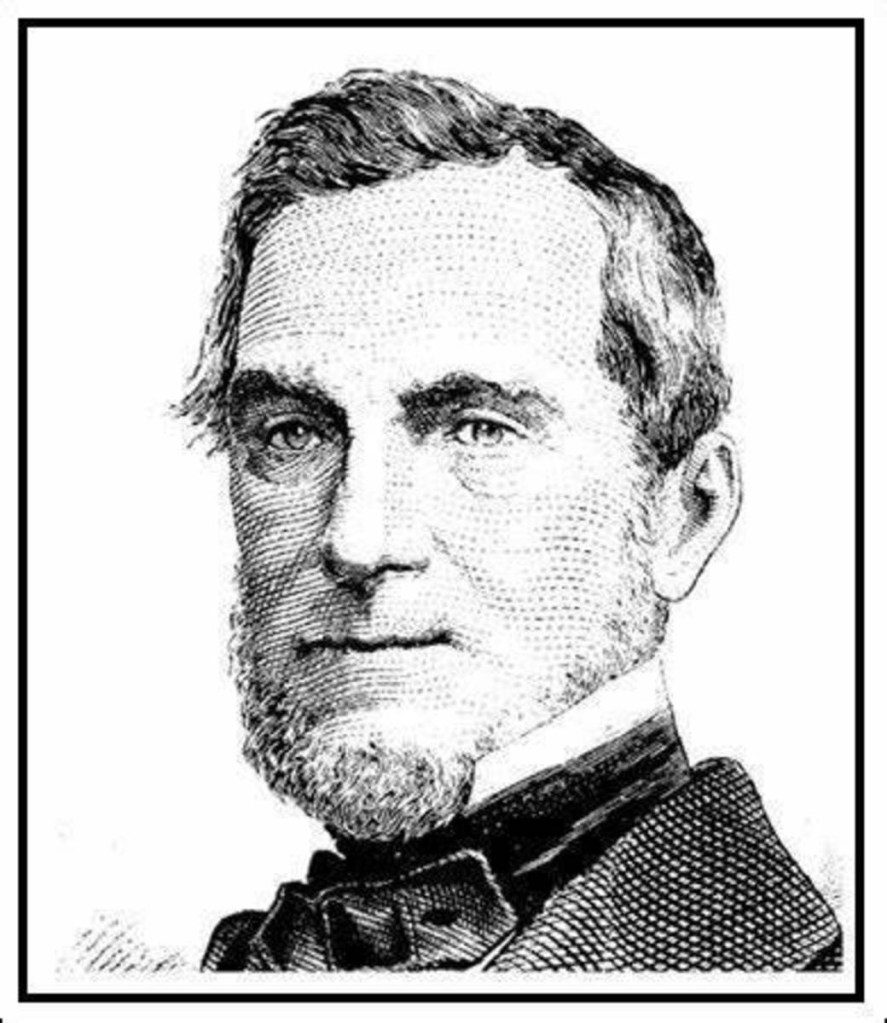
John Kinzie
The Fur Trade
By 1810, three families dominated the fur trade. John Kinzie purchased DuSable’s home and moved to Chicago from Michigan, where he began successfully trading with the Native Americans in 1804. Today, Kinzie is honored as the “Father of Chicago,” the first permanent white settler, and the only white settler outside of the military for almost twenty years.
Fast forward to June 17, 1812, the date on which Kinzie engaged with Fort Dearborn’s interpreter, Jean Lalime, in what would be a fight to the death. The actual cause of the conflict between the two men remains unknown, and the event has been reported in numerous ways… few objective. What we do know is that Lalime worked as the interpreter at Fort Dearborn, that the US Factory, where Lalime spent most of his time had been closed by Captain Heald because of an attack by the Native Americans on a nearby farm, and that Lalime had already been threatened with personal harm by two members of the garrison, Lt. Helm and Ensign Ronan due to arguments about the factory’s closure. It is also said that Kinzie was actively working toward Lalime’s dismissal and the installment of one of his own men to Lalime’s position, in addition to the fact that Kinzie had forced Lalime to relinquish his home.
That both Lalime and Kinzie were willing participants in the confrontation is unquestionable. Both men carried weapons, Kinzie a butcher knife; Lalime a pistol. That they departed the fort together was confirmed by witnesses, that the fight between them was agreed upon remains unknown. In the end, Kinzie escaped the altercation with a gunshot wound to the shoulder and returned home where his wife, Eleanor, cleaned and bandaged his wound before he left the fort, obviously unwilling to accept the consequences. Lalime wasn’t so lucky. He died immediately. All that was left to his wife was the burial and the memories.
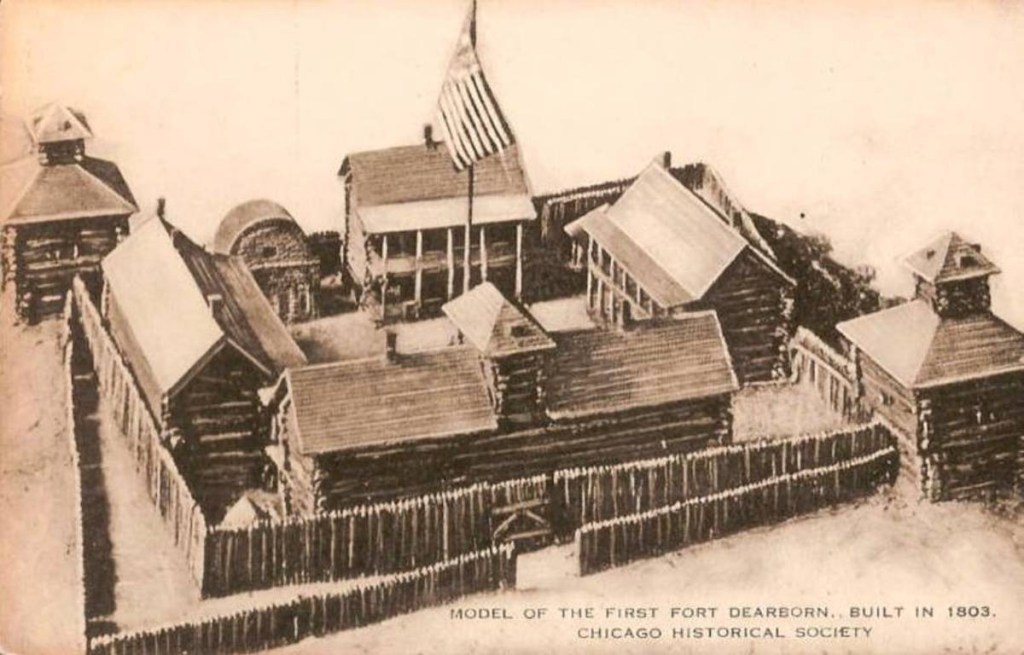
Fort Dearborn
Before the Battle
Kinzie was already well away from the fort when Captain Heald issued a warrant for his arrest, having sought refuge in the woods north of the Chicago River where he convalesced. Soon after, he would make his way to Milwaukee where he had many connections, arriving on June 21, 1812. Ironically (or not), Milwaukee was hosting other notable figures at this very same time… a Native American war council was in progress.
During his time in Milwaukee, Kinzie ingratiated himself with the tribes and gained acceptance, even among those who were initially suspicious of his loyalties. He became aware of the Native Americans’ plans to fight alongside the British, and he even learned of the gathering of forces for the attack on Fort Mackinac. The information Kinzie gathered would later be used to support the US government.
The threat of war seems to carry with it the possibility of making impossible things happen, as is the case of John Kinzie’s recall to Fort Dearborn. During his absence, he’d proved that his presence was a necessity. In recalling Kinzie, Captain Heald acknowledged his worth as interpreter and negotiator, Kinzie’s connections were more important than his arrest. The Potawatomi, with whom Kinzie had always had a cordial, respectful relationship, were showing signs of increasing resentment toward the Americans and their neglect in paying out the annuities that were a part of previous treaties. Knowing the fort was well supplied, they began to gather, hoping for a distribution of the stored goods.
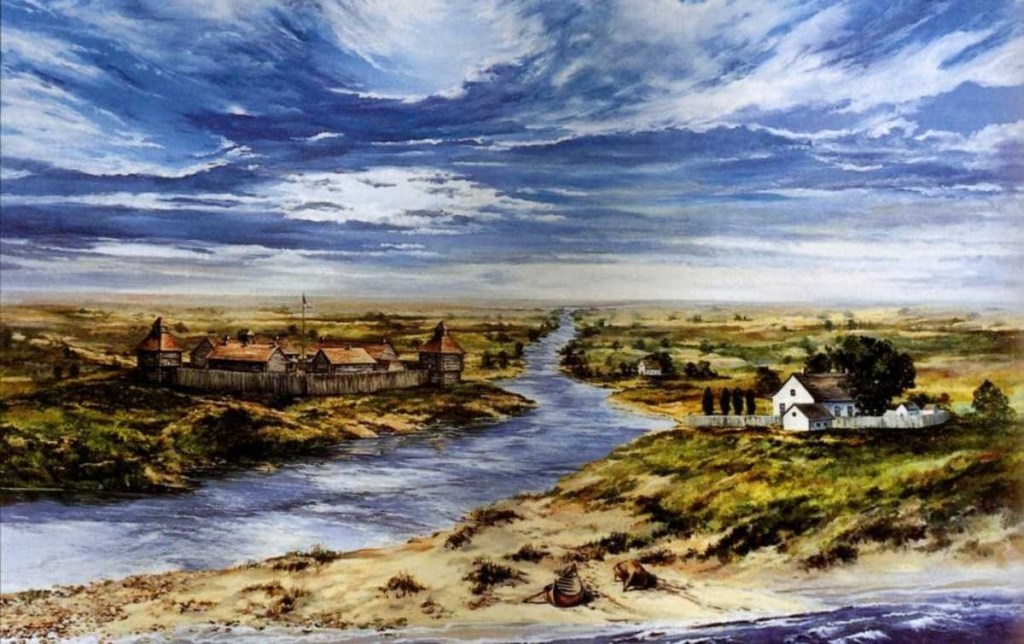
Fort Dearborn circa 1810
The Warning and the Evacuation
In early August of 1812, Kinzie accepted Captain Heald’s appointment as the agent, who would represent Chicago at a council set to meet in northwest Ohio at Picqua. The purpose of this council raises questions, however, as the US government intended the event to put time and distance between the militia and any hostile actions that might be brewing. The leaders of the Native American tribes, on the other hand, agreed to attend the council in the hopes of receiving the annuities that had been deferred or other gifts. Looking back, did the government actually believe that holding this council would better their relations with the Native Americans or defer hostility? What plans did they have to ensure peace? Why host a council with the intent of placating or postponing the inevitable. This we will never know, as the group traveling with Kinzie would only make it as far as St. Joseph, before meeting with a messenger who was destined for Fort Dearborn, carrying orders for Captain Heald and the news that Fort Mackinac had fallen… surrendered without one shot fired.
Upon hearing the news, Kinzie immediately turned and headed for home. Kinzie’s response to the news was simple, and he advised Captain Heald he had two options. One, evacuate immediately as ordered. Two, remain in the fort, which had ample supplies and protection. Heald chose to follow orders, though his “adjustment” to those orders would be responsible for creating the chaos and violence that followed.
On August 15, 1812, while Kinzie was preparing for evacuation, visitors who’d spent the entire night on horseback arrived from St. Joseph to warn him about the dangers of joining Captain Heald and the others as they departed the fort. Topinbee, a good friend of Kinzie’s, as well as the uncle of Kinzie’s clerk, accompanied by Leopold Pokagon and Keepotah tried their best to dissuade Kinzie from joining Heald and the others to no avail, but their journey was not in vain, as they were able to convince Kinzie to remove his family from danger. The biggest question… how to guarantee their safety. If the evacuation wasn’t safe, how would leaving them at home be any different? His family would be unprotected, and his home, filled with supplies could be a target, how could abandoning them be the right decision?
Hurriedly, Kinzie made both the decision and the arrangements that he hoped would insure the safety of his wife and four children. A large open boat, known as a bateau, was procured and Kinzie’s family, his clerk, Black Jim, the boatman, and two Native Americans, who’d agreed to act as the family’s protectors were ensconced in the boat and anchored near the mouth of the river, just close enough that he would be able to see them as he began his journey down the shoreline.
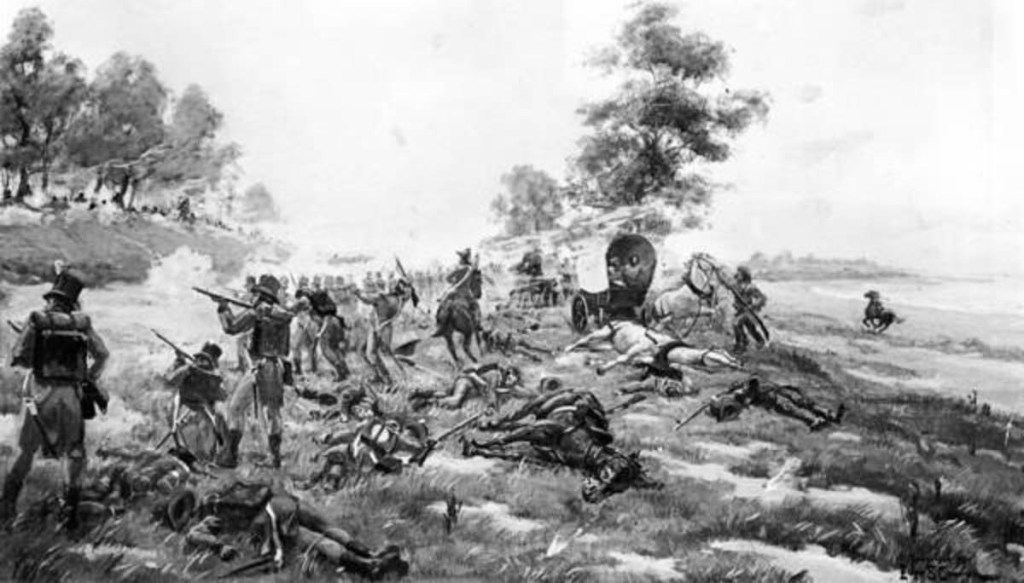
The Massacre at Fort Dearborn
The Massacre
Kinzie’s family stood witness to the violence that followed, the smoke, the fire, and the sound of the guns. Kinzie noted that at some point during the battle, an order was given that neither he or his family should be hurt. Black Partridge, in order to keep the family safe, took them all as prisoners in order to protect them. The family survived intact and by nightfall, they were home. Within days, Back Partridge would send the family to St. Joseph by boat, from which they would travel to Detroit where they would remain for four years before returning to Chicago. During this time, Kinzie was not only arrested, he was imprisoned for treason. Living under British occupation wasn’t easy.
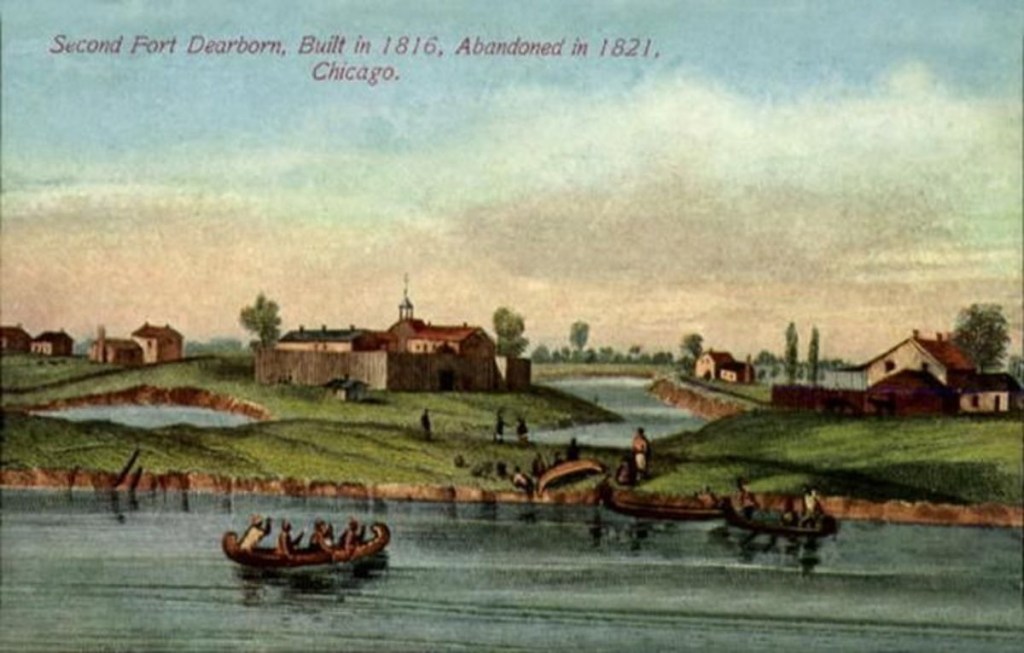
Perseverance in the Face of Adversity
At the end of the war, hostilities would be replaced by reconstruction. The Kinzies would return to their home, and a village would take root. Fort Dearborn would be rebuilt, and the militia would move in and out of the area as deemed necessary. Kinzie and his partner, Thomas Forsyth, were deeply in debt, their fur packs lost to the war, and their remaining property destroyed. In order to pay their debts, they sold any property that remained, including land to avoid imprisonment.
Kinzie’s life was anything but simple during this time. He and his partner were unable to return to the fur trade due to their lack of funds, repeated attempts for reimbursement of property lost due to the actions of the American militia, including Heald’s rental of horses and mules to aid in the evacuation of the fort in 1812 were refused. Compensation for their goods and property at Peoria, destroyed by an American militia commanded by Captain Craig, were also ruled against by Congress.
Lack of money and the inability to return to the business in which he’d been so successful led Kinzie to seek out government employment. In response, he was appointed the interpreter for the new fort that was under construction in 1816. One year later, he would be appointed the fort’s subagent as a result of Charles Jouett’s decision to relocate his family to Kentucky.
Although Kinzie continued to experience financial difficulties, his hard work and perseverance would prevail. By 1825, he was assessed to be one of the wealthiest men in Chicago, but the title didn’t come easy. In the nine years after his return to the fort, Kinzie had multiple jobs that included government appointments, farming, and a bit of trade.
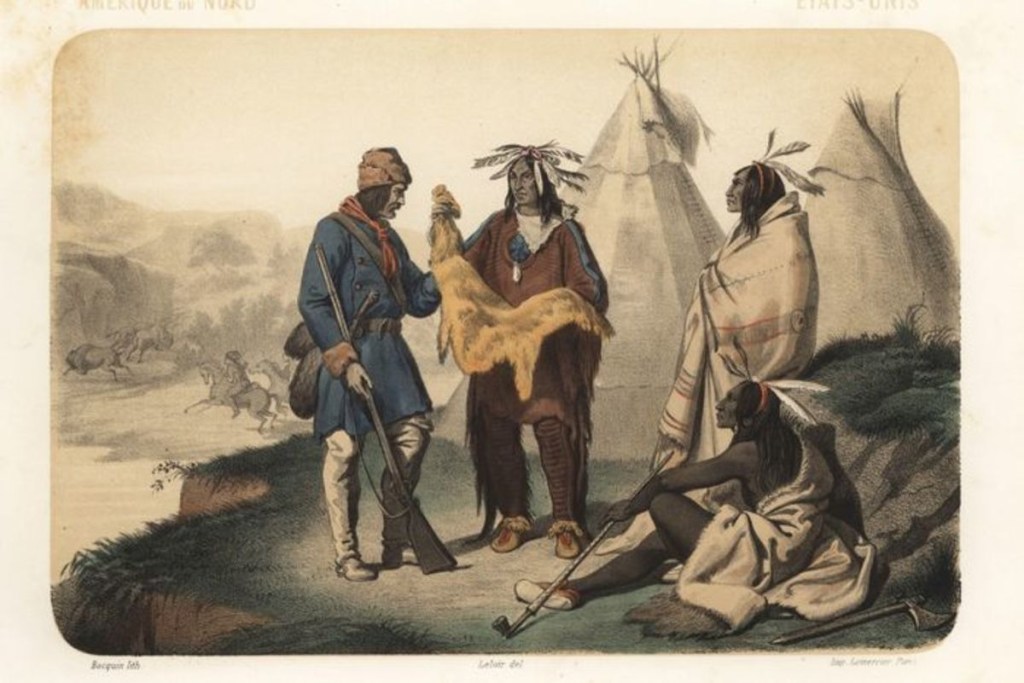
The Decline of the Fur Trade
In 1818, Kinzie would take a job with the American Fur Company as a debt collector, and his fifteen-year-old son, John H. Kinzie was sent to Mackinac as an apprentice for the same. The fur trade was in the family’s blood, fortunes were made and lost, and yet the family’s love for the business could not save it from decline.
As the area around Chicago grew, land cessions reduced the Native American range, and with it, the hunting. Traders moved west, and the whiskey business became a staple of trade. Annuity monies were spent on liquor, an item that was illegal to sell on Native American lands, but as the government took over more and more land, the sale of liquor increased in opposition to the fur trade which faced continuous losses.
By 1828, the fur trade began shuttering its windows and closing its doors. Chicago, along with the time, changed and grew accordingly. The American Fur Company, in the midst of closing down their operations, didn’t waste any time in collecting Native American debt. Government negotiation treaties with the Native Americans allowed for immediate collection of their trading debts, and although the American Fur Company left the city… it didn’t leave empty handed.
Ironically, the end of the fur trade would parallel the end of John Kinzie’s life. Kinzie died on January 6, 1828, leaving his wife and children to adapt to Chicago’s transitions on their own. The man who’d insisted that the area around Chicago remain Indian Country at the end of the War of 1812 would never see the transformation of the area he loved, as settlers moved into the area in droves and industry boomed. Possibly, that’s the way he would have wanted it.
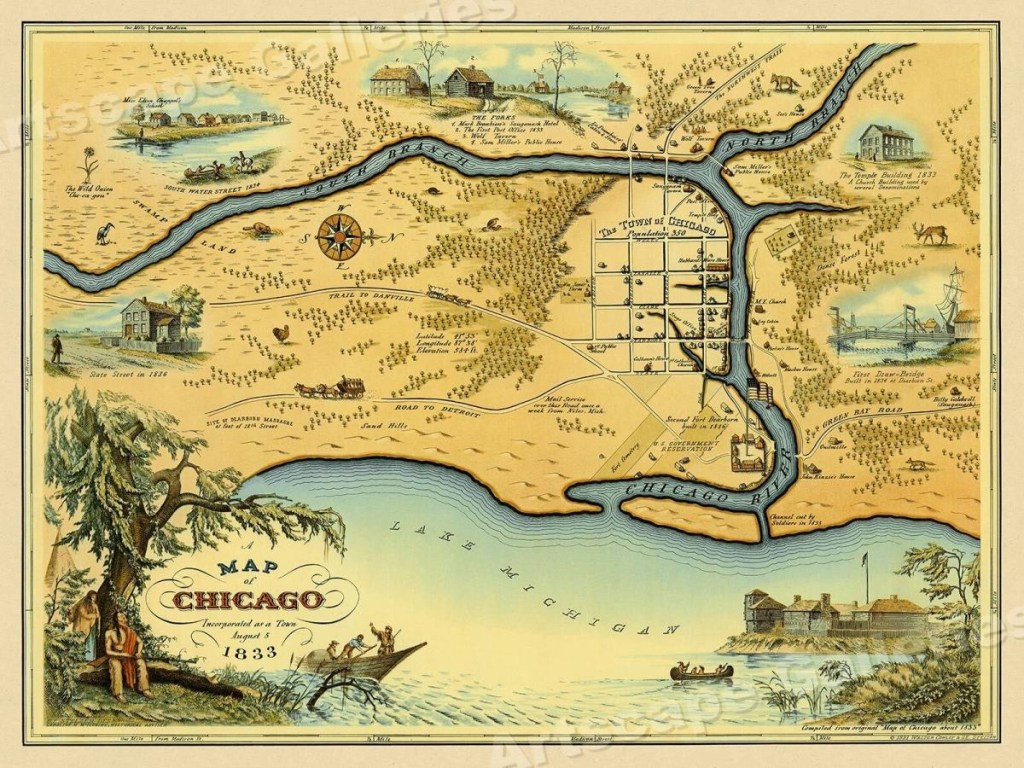
Chicago, Five Years After Kinzie’s Death
Sources:
chicagotribune.com
chicagology.com
livinghistoryofillinois.com
manisteenews.com
“Rising Up from Indian Country: The Battle of Fort Dearborn and the Birth of Chicago” by Ann Durkin Keating
chicagomag.com
encyclopedia.chicagohistory.org
 History Belongs To Us
Leave a comment