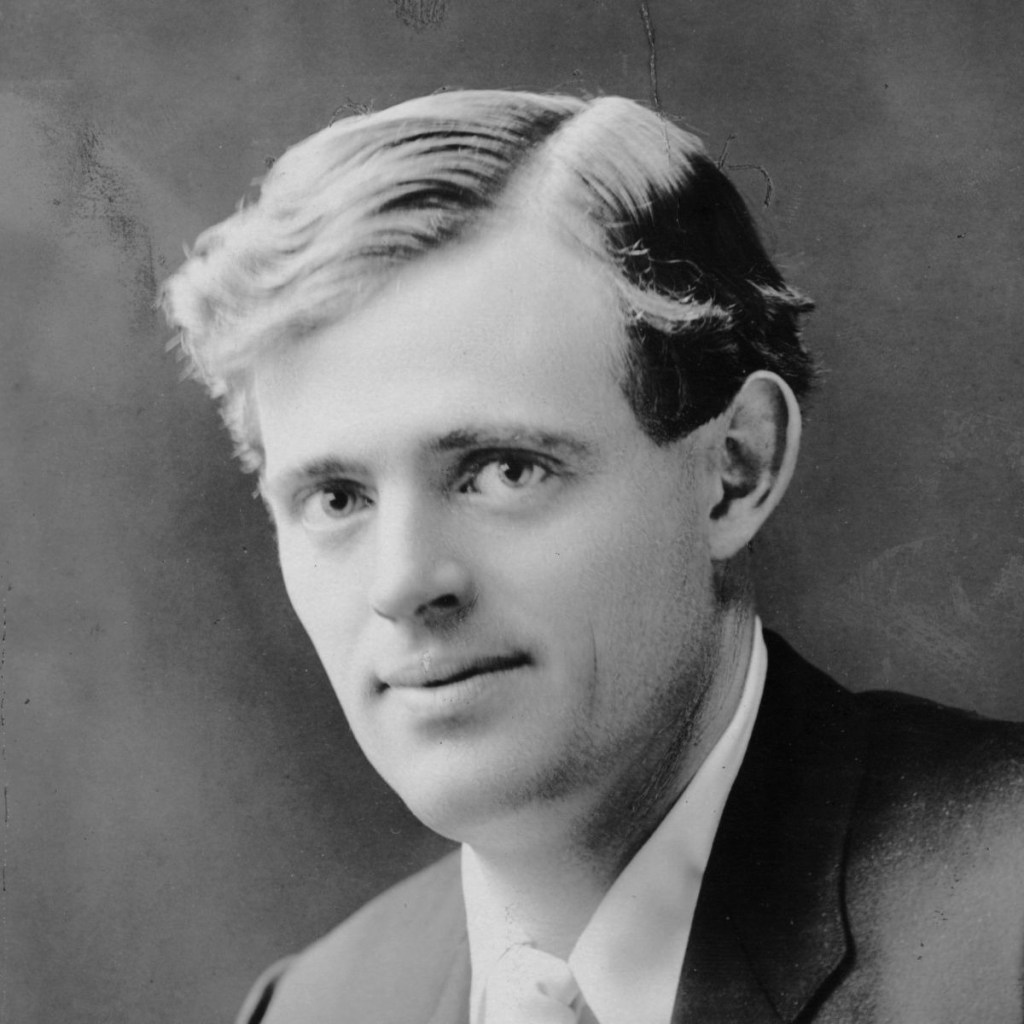
Jack London
This isn’t the first time Jack London has been the “featured author” at our book club, he’s been here before, and because the students appreciate his work… he’s back again. A Piece of Steak was written in 1909, and it was published during a time when an author could not only make a living writing short stories… he could make a good living.
Movie theatres weren’t accessible. The Nickelodeon, which was introduced in 1905, boasted 9,000 locations by 1907, but they were strewn across the country, and though they aroused intense curiosity, motion pictures had yet to become the working class’ main form of entertainment. Few magazines were in circulation, and though television had been conceived, it would be years before Nipkov’s invention of rotating disk technology (1884), would transcend into something that we take for granted today. Reading… novels, short stories, plays, and fine literature were the main source of entertainment in the early 1900s, and they continue to be a large part of our lives today.
During his lifetime, London pursued many different lines of work. At the age of seven he worked on the family farm, by ten, he was selling newspapers on the city street, and by the age of fifteen he’d become an oyster pirate and a ship owner. After years of laboring in various different jobs (jute mills, canneries, fish patrols, laundries, power plants), London, at the age of twenty-four was deemed the “American Kipling.”
Unlike other authors, he did not move from day to day seeking inspiration. London considered writing a craft, and rarely, if ever, did he miss his daily goal of one thousand words. The Saturday Evening Post, included many of London’s short stories in its weekly publications; A Piece of Steak was published on November 20, 1909, and London received a one time payment of $500.00 for the story.
A Piece of Steak by
Jack London:
Our Main Character.
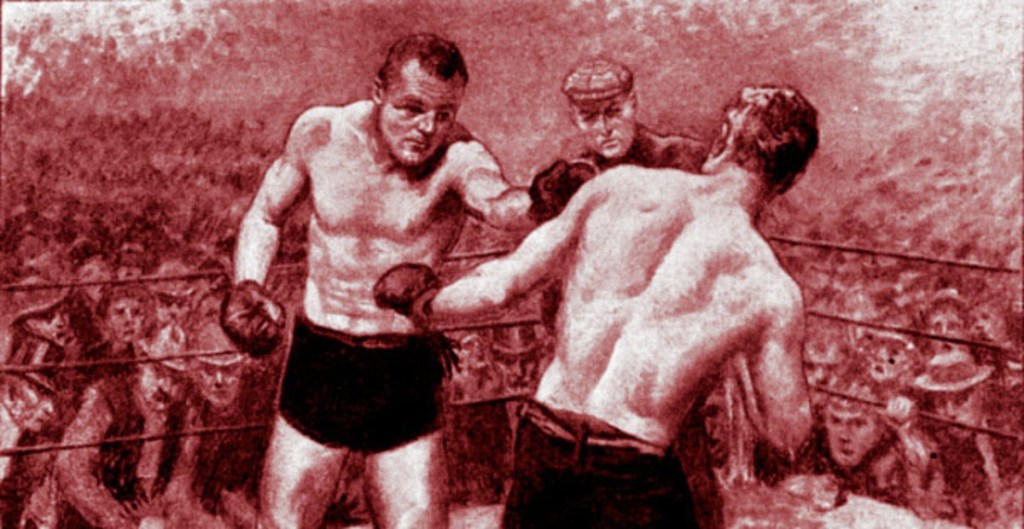
Our main character is a boxer. He is past his prime, struggling not only to win the next fight, but to have the opportunity to fight at all. The narrator describes his looks as being an “unmistakable” advertisement for his career. His jaw was aggressive, brutal, and heavy; his eyes heavily lidded and expressionless… lion like; his nose had been broken twice; his hair was cropped close to his skull, and one of his ears was permanently swollen to twice its size, likened to a piece of cauliflower. He is painted as “a man to be afraid of in a dark alley or lonely place,” and yet he’d never done anything wrong in his life. He was a fighter, but only in the ring.
Tom King is a boxer, a husband, and a father. He’s not one for talking, and although his family is used to the silence, they aren’t used to hunger. Tom is morose and with good reason. He’s preparing for a fight that he isn’t prepared for. As he sits at the table, he stares at his hands, they’re swollen, the knuckles are malformed, they are anything but prepared for another beating. As he stretches them before him he feels the never ending ache, the soreness acquired from being smashed and battered countless times. He knew they couldn’t do it anymore, but they had to. He had to.
A Piece of Steak
by Jack London:
A Summary
Our story begins as Tom King is finishing his dinner. It’s a small dinner, and it’s eaten in silence. His wife looks on, watching as he eats, and he mentally acknowledges that she’s hungry too, but she daren’t eat, leaving Tom feeling guilty, but there’s no other way. Tom needs the food, all of it. He needs his strength or there won’t be any more food. The kids have been sent to bed hungry, as they can no longer get credit at the butcher, not to mention that the rent is late. Tom needs this fight… he needs to win.
Earlier that morning, Tom had woken up wanting nothing more than a piece of steak. His wife Lizzie had gone to two different butchers hoping to give her husband what he desired, something not only wished for, but something that was needed. She couldn’t get that steak, and the reality of their circumstances hit home like it never had before. They had no money, they had no future. They had nothing without just one more win. Without that win they’d lose it all; Tom knew it; Lizzie knew it, and they both were well aware that their future hinged on something that if all went well would be a miracle… so Tom relaxed a bit and thought of the past, hoping that in some way he could bring back the glory he’d once known.
As a young man he hadn’t known the meaning of defeat. Staring at his hands he remembered their youthful perfection, and then he remembered the first time he’d smashed a knuckle, the night he’d smashed it on the head of a fighter named Benny Jones, aka the Welsh Terror. Tom thought back on other things as well. The abundance of steaks, the dog he’d spoiled with feasts of the same, never thinking the day would come when he’d be lucky to have any type of meat at all.
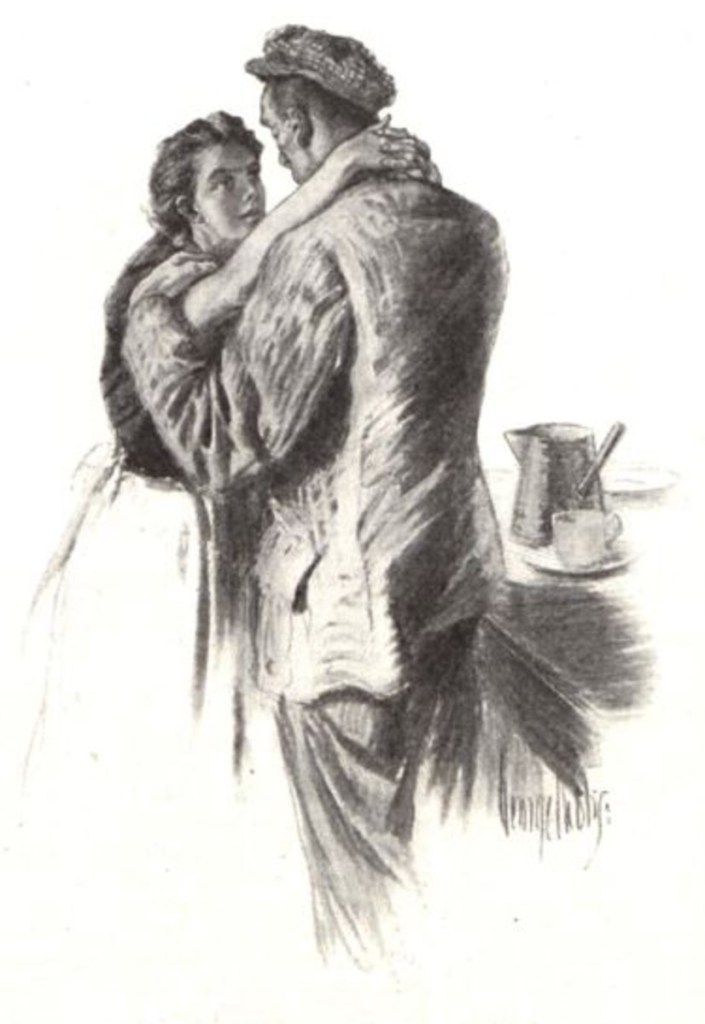
As he leaves for the fight, Lizzie throws her arms around him and kisses him goodbye… something she’s never done before, but she can’t help herself. As Tom walks down the street, he reminisces about the days when a cab would have been waiting outside to drive him to the Gayety. He’d been a champion, and he’d been surrounded by people who’d give anything to be the one paying his cab fare, to ride with him on his way to victory. Then he looked back on all of the fights that brought him the title of champion, and he realized that so many of his opponents were men just like him. Old men, broken men, fighting against the rising stars, fighting against something they couldn’t compete with… youth, and now the tables had turned and it was his turn.
He looked back to a faraway fight with an older man, a man called Stowsher Bill. Bill had taken a brutal pounding during their fight, and yet he’d kept on. Tom now understood that the old man had had a bigger stake, that he’d fought on and allowed Tom to punish him because he needed the win. Maybe Bill had had a wife at home, maybe he’d had young ones to feed, and maybe he’d needed to pay his rent, but it really didn’t matter anymore because Tom now comprehended his predicament. When you’re young, it’s all about the money and the glory, and when your time is past, it’s all about pride and paying the bills. It had taken Tom a long time, but on that very short walk he came to understand why the old man had cried in the dressing room after the fight… he came to understand what it meant to be an “old ‘un,” and he finally realized that he was just that, and “old ‘un.”
As he nears the Gayety, Tom notices a bunch of young men hanging outside the door. The young men are completely respectful, thrilled to have gotten a glimpse of someone they look up to, and for that one brief moment he’s still a hero. Walking inside he passes a young man who immediately pauses to shake his hand on his way to the dressing room, to ask how he’s feeling and Tom’s response, “Fit as a fiddle,” is only belied by the fact that in his mind all he can think of is a piece of steak. A piece of steak could have guaranteed his self confidence… a piece of steak could have made the difference, or could it?
Tom’s opponent that evening is a fighter called Sandel. He’s young, fast, light footed, and more importantly he has nothing to lose and everything to gain. The only thing on Tom’s side is experience; experience and determination, and yet again there’s the patience, his patience, and his knowledge that the only way to achieve victory is to use the things that have made him an “old ‘un,” with or without the piece of steak.
From here on in you’ll need to read the story. It’s inspiring, and it’s rather sad, but it is by no means boring. Aging and poverty are issues faced by many, as is the age old story of maturity and experience versus youth, ignorance, and ambition. You’ll never know how it all turns out unless you read it… and believe me, you won’t find it a struggle to finish!

The Discussion:
A Piece of Steak
The afternoon I passed out this short story, I found that I had mutiny on my hands, as the girls were furious that I’d chosen another story for the boys. I have to admit that it was a pleasant surprise when only one week later the girls arrived having loved the story as much, if not more, then their male peers. Phew, what a relief.
The sport of boxing really never had a chance to enter the discussion for any length of time. The kids didn’t see this story so much as Tom King’s final bout or his last hurrah… they saw it as a story of aging and endings. Tom received an enormous amount of compassion during the short sixty minutes that we talked about him, but I’m not sure that empathy would have been what London was trying to garner in his creation of this particular character.
We talked about dreams, about the aspirations of athletes, and the children were both amused and exasperated that a one time champion was likely to end his career with nothing. Money and irresponsibility is sometimes a very difficult concept for the students to understand. They are still at the age where they’ll tell you they won’t spend a penny of what they’ve saved for themselves, but they have no problem whatsoever spending someone else’s. They believe that riches can’t be lost, that cash flows never end, and then in the very next breath they are ready to condemn something they perceive as stupidity, “How could he spend all of his money? Why feed a dog steak? Didn’t he save anything? Why didn’t his wife make him save up? How can they be poor, and why did both Tom and Lizzie allow poverty into their lives? They had the chance to have it all… why didn’t they pay attention?”
Living the Dream

We then moved on to talk about singers they’re aware of, actors they may have watched as young children. Where are these people now? What do they have? Why do people believe that the riches, the fame, and the glory will go on forever, especially the riches of an athlete? Every athlete experiences the end, and many choose to blame the inescapable process of aging on whatever excuse they can find.
A piece of steak was what Tom believed he needed. It didn’t matter that he hadn’t trained and was out of shape… he couldn’t blame himself for his failures, but he could blame the steak, or lack of it, and that’s what became his excuse. The students felt this excuse to be, in their own words, “lame,” but they still felt sorry for him… they still wanted it to turn out alright, and they rooted for him until the end.
The boys brought up how differently athletes were paid in the past, and how many stick around long past the point where athletes have historically retired. We talked about discoveries in health care, and how certain injuries that would have been career ending in the past might now be seen as mere inconveniences. Surgery has in many cases provided longevity.
They’ve heard stories from their fathers and their grandfathers while sitting around their kitchen tables or in front of the television. They’ve listened to remarks about how overpaid today’s athletes are, and how so many of those overpaid athletes forget their love of the game because their love of the paycheck becomes the ultimate priority. We spent an inordinate amount of time talking about how happy the kids who got cut from the team would be if only they had the chance to be there, the chance to play, the opportunity to make any kind of a living doing what they love. Isn’t it all about the love of the game?
Aging
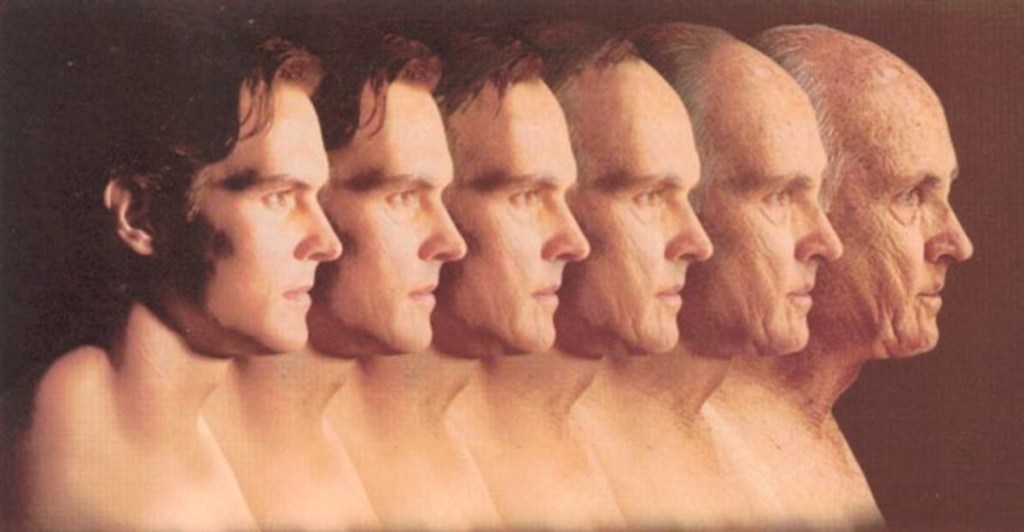
From there we moved to the universal and unquestionable fate we all have in common, aging. Everyone will age, and everyone will die… only those who die too young will escape the cycle of life and stay forever young in the minds of those who remember them. My students believe their parents to be old and their grandparents to be ancient, and I just smile; I’m not going there. They are young enough to dream of invincibility, and yet each and every child in this group is far too smart to believe in it. They are also young enough to dream of being the best in whatever they choose for their futures, and I am more than happy that they are untouched by defeat or pessimism. They believe in their dreams, and in turn, I believe in them.
We ended our time together with yet another discussion about Jack London. The students love his work; he is inspiring; he is talented, and quite frankly, they find him intriguing. The kids talked about London’s past and all of the things he’d experienced and accomplished, and then they asked if I thought he would have ended up like Tom King had he not died such an untimely death at the age of forty? Would he have become an “old ‘un?’ Would he have ended up poor and wishing for nothing more than “a piece of steak?” I couldn’t answer that question. Who knows what he could have been… he could have been anyone.
© 2026 J.R. Watkins
 History Belongs To Us
Leave a comment