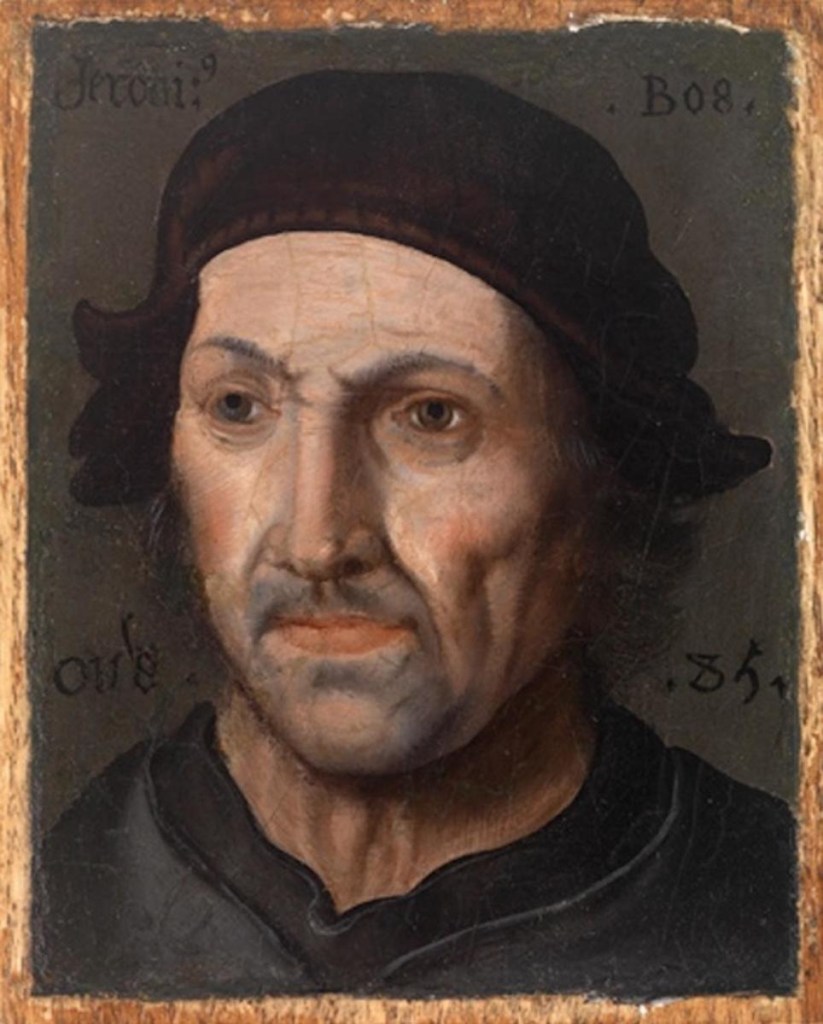
Hieronymus Bosch
Hieronymus (Jerome) Bosch was a master of fantasy. Described by some as a surrealist, his art depicts the mysteries of the Middle Ages. He was extravagant, eccentric, religious, and rather obsessed with visons of Hell. Viewers find him fascinating, but many also find him to be just a bit detached from reality. Many find his works fanciful; others find them gruesome. Who was this man, and what was the meaning behind his art… his visions? Let’s see if we can find that out!
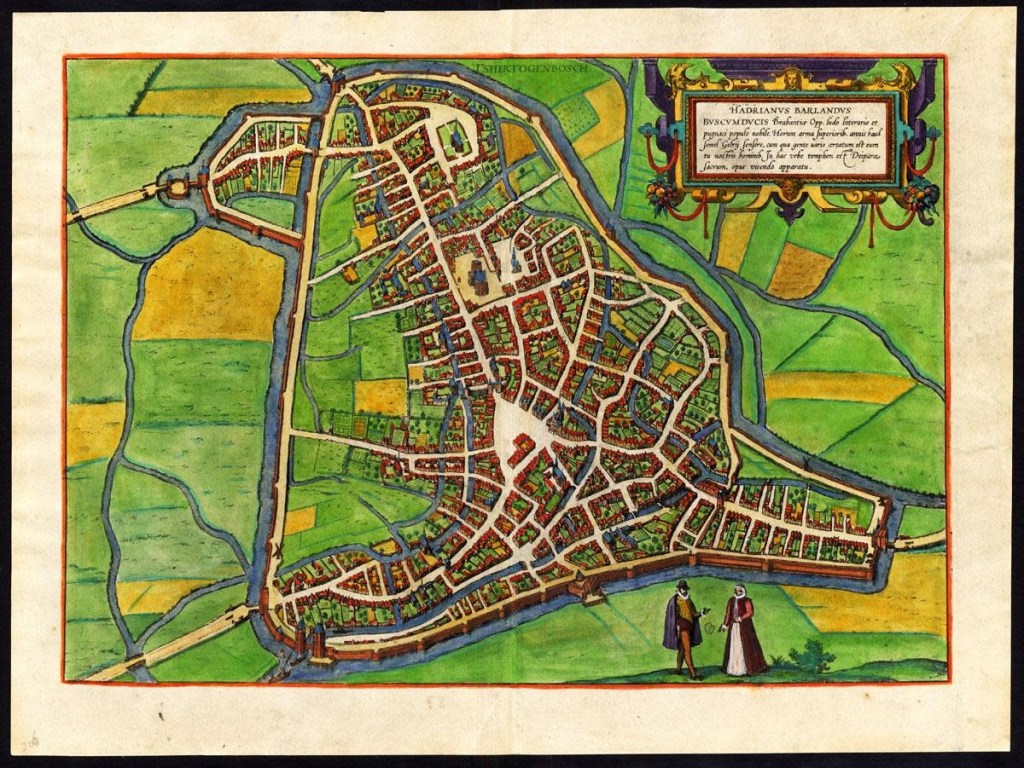
Herlogenbosch
Bosch – The Mystery Man
Very little is known about Bosch’s childhood or artistic training. What is known is that he was born into a family of artists. His grandfather was an artist, as was his father Anthonius, three of his uncles, and his brother Goosen. It is believed that he was trained at home or by another member of the family. He didn’t participate in formal training; his art was raw, unique, and in its own way quite beautiful.
The period of time during which Bosch was born (around 1450) was distinctly transitional. The Middle Ages were coming to a close, and the Renaissance was just beginning. Artists in Italy and Northern Europe were commonly contracted by churches and influential families. Panels were painted, large canvases were produced, and most all of these works were produced for the glorification of the Christian church. They were sources of light for the believer; colorful expressions of the Bible stories held within church walls. They were a confirmation of faith and a testament to the importance of religion.
Bosch’s paintings fall nowhere within this category, and his works are filled with anything but beauty and innocence. For the most part, his paintings are a pictorial celebration to the torments of Hell. He seems to have been an early form of the Hell-Fire preacher, though he had no need to preach with words, as his paintings did the talking for him, and I think it’s safe to say that they convey his message quite clearly.
Bosch married Aleyt Goyaerts van der Meervenne in the early 1480s. It is believed that she was far older than her husband, but that her social standing and wealth made her an extremely attractive catch for the burgeoning artist. He had no need for a young bride, and Aleyt brought Bosch a sense of financial security, as well as the opportunity to gain entrance into the elite membership list of the Brotherhood of Our Lady.
The Brotherhood of Our Lady was a large and wealthy religious organization, and like many of its other chapters, it flourished during the Middle Ages. Devoted to the worship of the Virgin Mary, the group’s contributions to the community supported both religious and cultural life. Bosch’s family members were often employed by the Brotherhood, and Bosch, himself, was commissioned to paint several altar pieces for the Cathedral of Saint John’s. Sadly, none of these pieces were timeless and most have been lost, but the pieces that remain are quite memorable. The man did leave an impression.
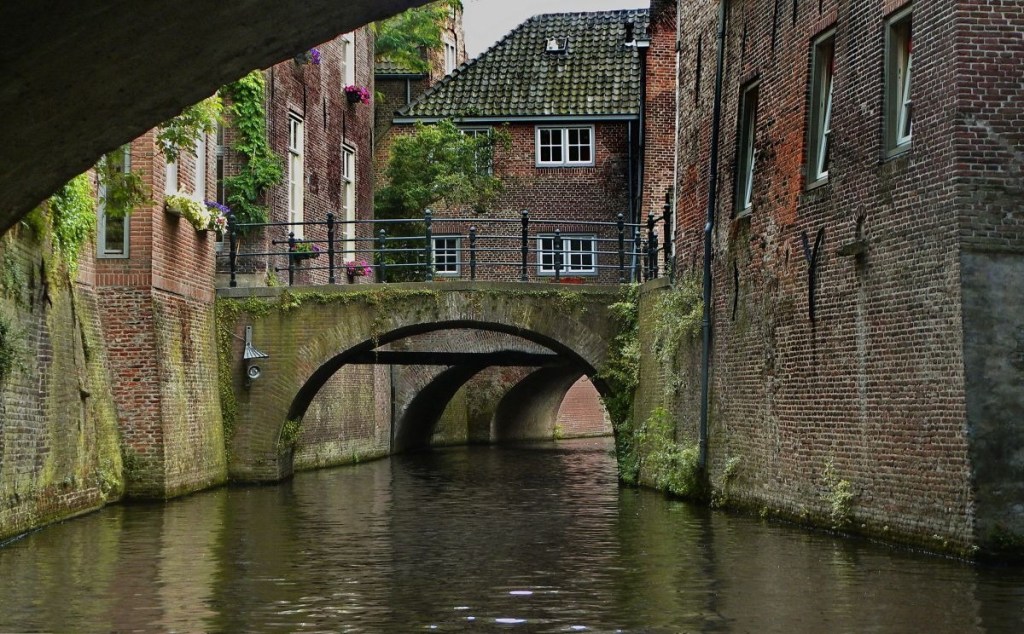
Herlogenbosch
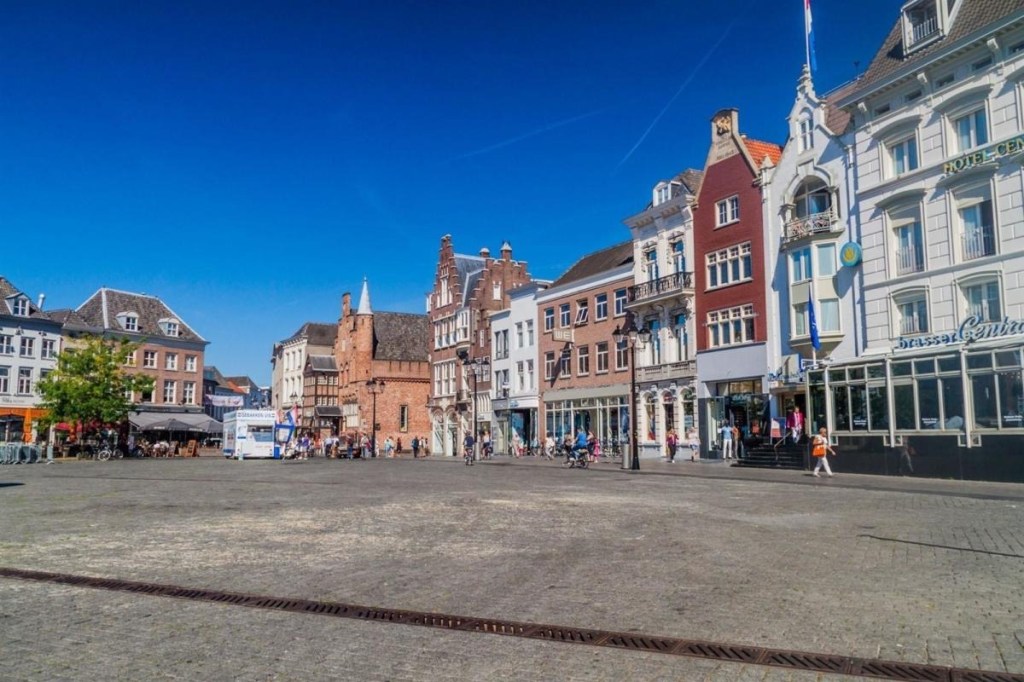
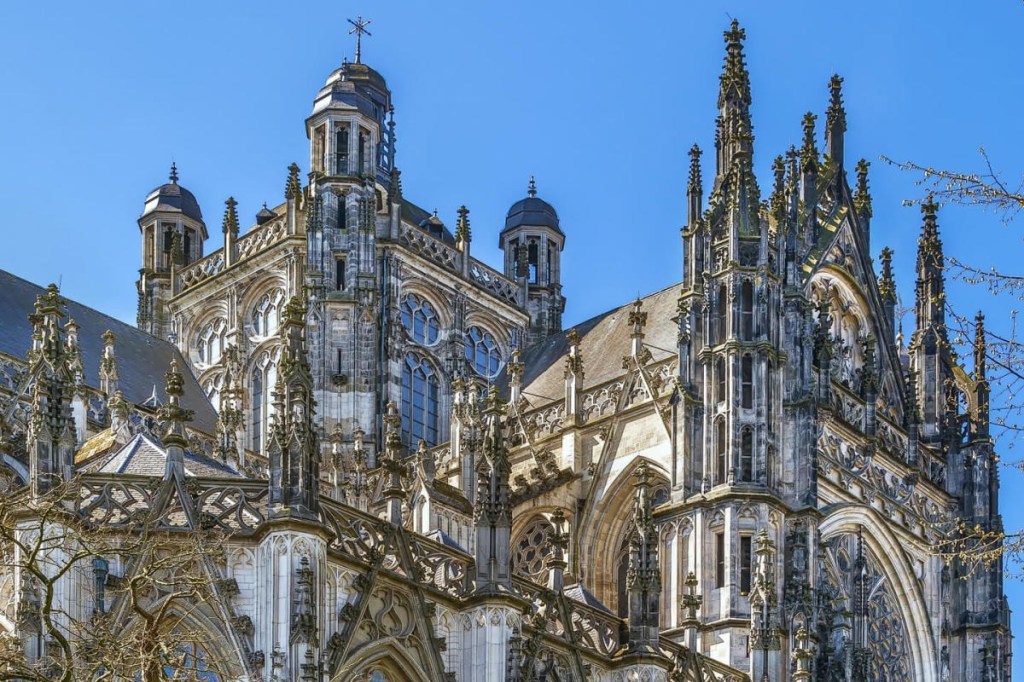
Saint John’s Cathedral
The Triptychs
Surrealistic art allows the artist complete freedom of expression, and Bosch was without doubt, one of surrealism’s forerunners. His work is unique, it’s grotesque, it’s hostile, and it’s filled with mysticism. He exaggerates and distorts, and his focus rarely deviates from the Devil’s success with temptation and man’s obsession with the prospect and pleasure found in the things that are both forbidden and evil. Humanity is depicted as weak, easily ensconced by the allure of sinfulness, captivated by feelings of lust, and incapable of turning away from the obscenities that surround it. He found fame in his depictions of fantastical beings and scenes of chaos… mythological creatures with both human and animalistic traits, demons, visions of carnage, and the horror that accompanies true evil.
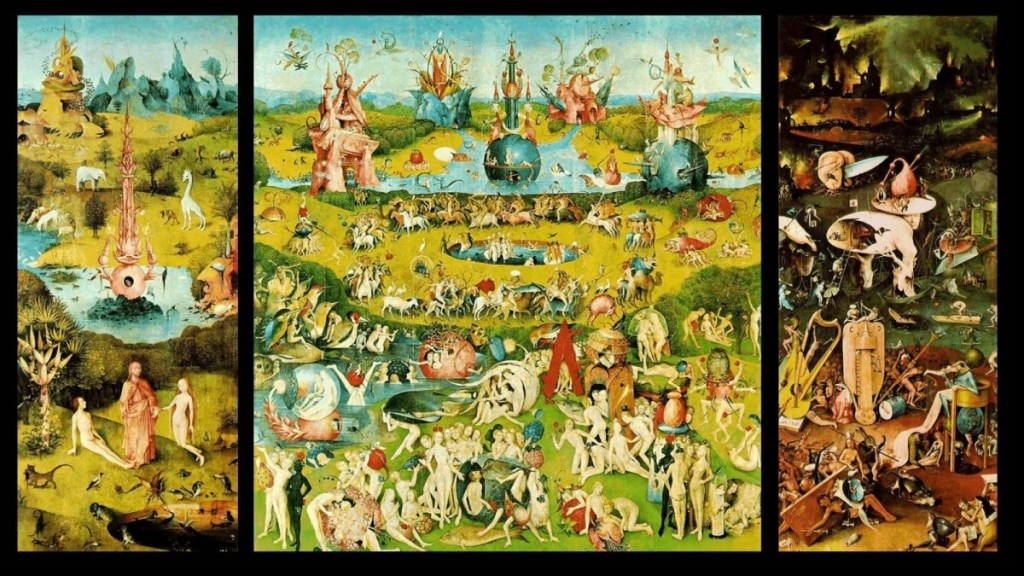
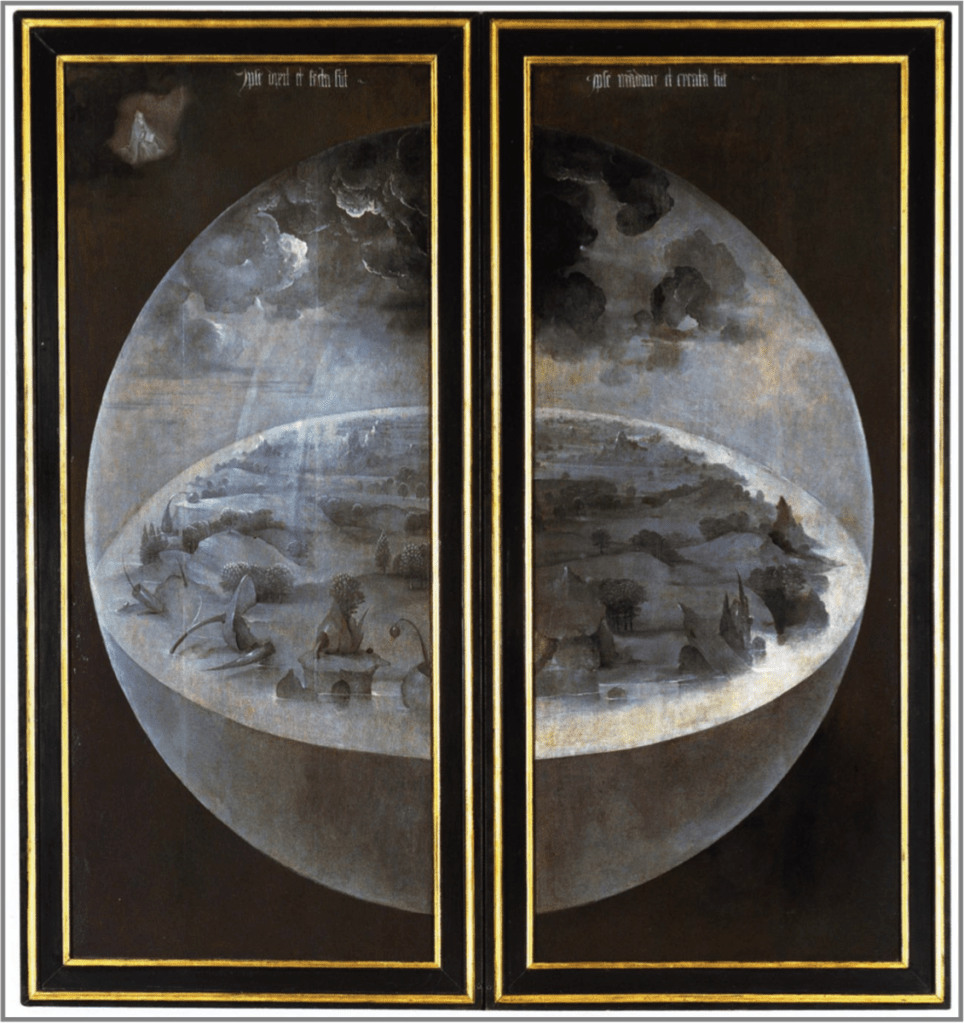
The Garden of Earthly Delights
Bosch’s most successful period came with his enormous, which were called triptychs, the most famous of these being, The Garden of Earthly Delights. This work consists of four paintings that were created on a series of panels. The outer panel, visible when closed, gives the viewer Bosch’s vision of the Third Day of Creation. Inside, The Garden of Earthly Delights, takes center stage, framed by the Garden of Eden to its left and Hell to its right. Containing over one thousand figures, the paintings are overwhelming in their detail. Humanity is portrayed as stupid and sinful… lust has caused the downfall of man. Using the tradition of illumination, Bosch painted these huge panoramas, as if he were filling the pages of a manuscript. The history of the world becomes evident with close inspection. Look closely and you will see the lush garden, original sin, the progression of that sin, and finally… man’s tortured existence in a dark, fiery Hell.
The Temptation of Saint Anthony
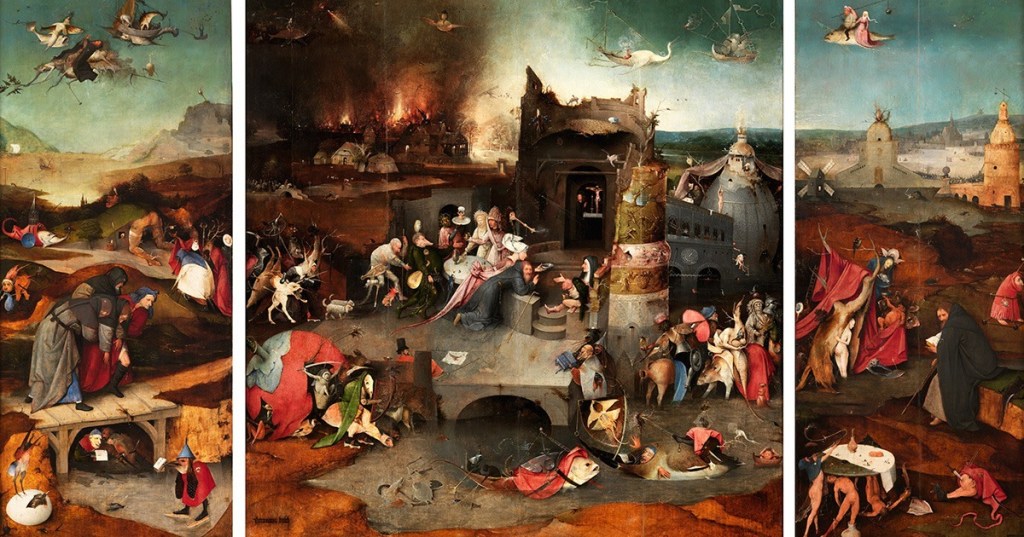
The Temptation of Saint Anthony, painted between 1505 and 1506, is another of Bosch’s triptychs. It is said that Bosch’s spiritual heroes were the saints who held true to their faith even after enduring tremendous physical and mental torture. His favorite was Saint Anthony.
Saint Anthony was a Christian saint, as well as a hermit. Born in Upper Egypt, he gave up all of his worldly goods at the time of his parents’ deaths, placing all of his possessions into the hands of the poor and needy. Afterwards, he relocated to the Egyptian desert, where he suffered from vivid hallucinations. Some claim these hallucinations were visions from God; non-believers attribute them to Anthony’s ascetic life in the desert. Saint Anthony is regarded as the founder of monasticism.
The Temptation of Saint Anthony is centered around what is called the “Black Mass”, the left panel features physical punishment, the right temptations assault on the Saint… blandishments of feed and sex. In essence, Saint Anthony was not only barraged by pleasures of the flesh, but by demonic mental and physical assault as well.
The Last Judgement
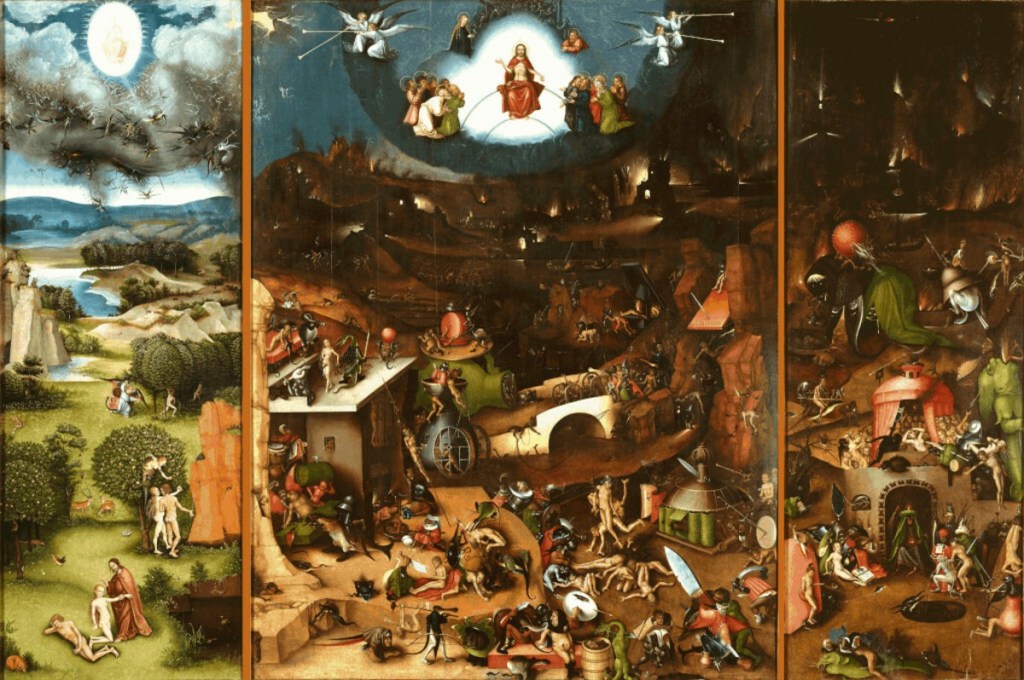
The Last Judgement Interior
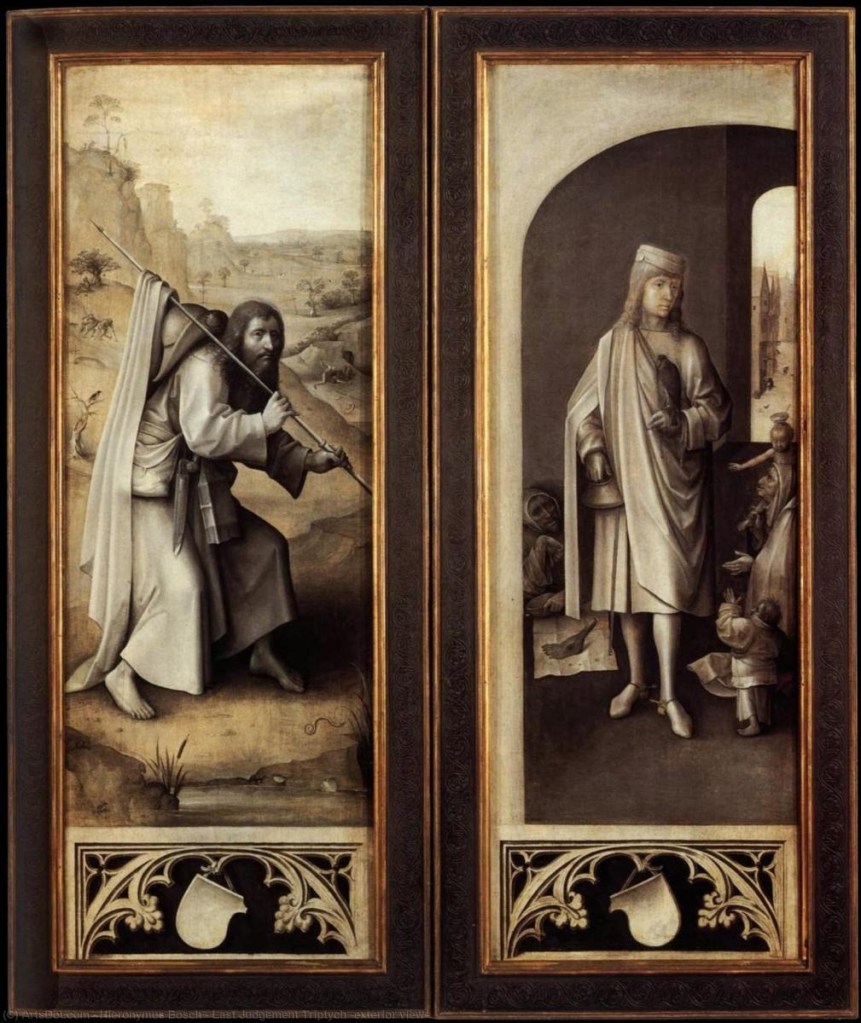
The Last Judgement Exterior Shutters
It is believed that this triptych is directly related to and inspired by Revelation 4:18.
“And then there followed another angel, saying, Babylon is Fallen, is fallen, that great city because she made all nations drink the wine of her fornication.”
The center panel of this piece addresses an important medieval subject, and an important subject even today… Judgement Day. Who will go to Heaven? Who is destined for Hell? From His seat, we can see Christ making that decision while the earth burns below, as otherworldly creatures take those who’ve been left behind into captivity. We see the chaos that will accompany the world’s end.
To the left of The Last Judgement, Bosch once again tells the story of the Garden of Eden. We can see its perfection, and we can see its downfall, as Adam and Eve partake of the forbidden fruit. In their defiance, they come face to face with the end of paradise, as they are cast from the garden… removed from the place where God protected them.
The right panel once again brings us to the final resting place of those who haven’t embraced Christianity, those who’ve turned their back on their creator. The doomed find themselves in Hell. Fires burn on the horizon, and there’s a starkness that almost makes it seem empty, but it’s not. There is plenty of company, and yet, everyone is alone. Hell seems to be eerily cold and ferociously hot all at the same time.
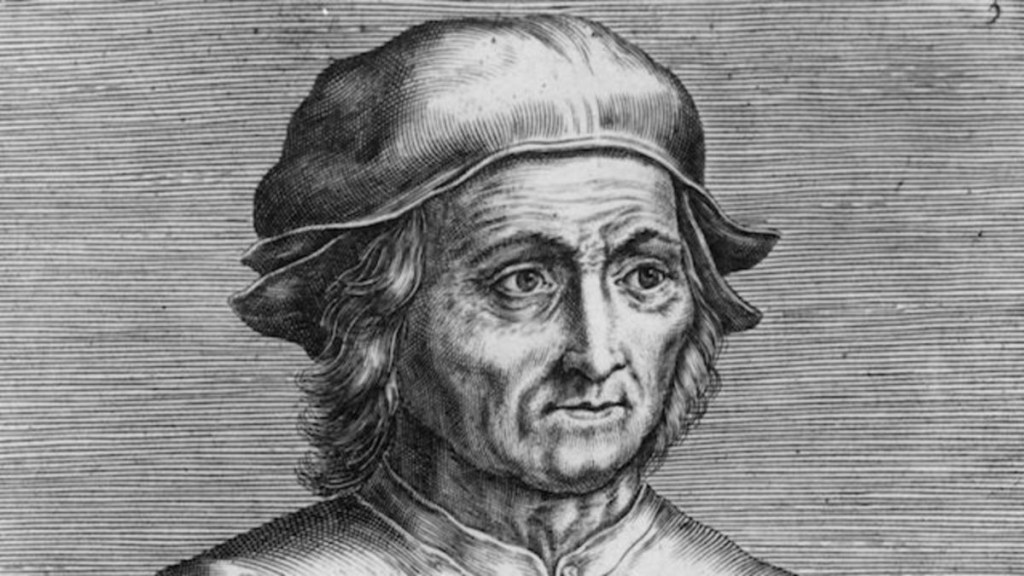
Bosch- Self Portrait
Bosch was a painter of Dutch descent. The times in which he lived were filled with turbulence and uncertainty. Fear of death followed its inhabitants, as the plague ran rampant through the streets of the city, spreading in and out of every nook and cranny, traveling far and wide… no one was safe. In 1463, Bosch saw the city he called home destroyed by fire, but it seems that rather than sending him into hiding, the tragedies he witnessed fed him the inspiration we see depicted in his art. I see Bosch as a pessimist. His works show no optimism, and every stroke seems to be filled with warnings… timeless warnings.
At the time of his death, Bosch left the world a legacy that included twenty-five paintings and eight drawings. As an artist, he neglected to sign much of his work, and he dated nothing. As a result, many museums and private collections house copies and imitations of his original compositions. As an appreciator of art, I admittedly haven’t yet decided how I feel about his art… his paintings. Do I love them, or do I hate them? What I do know, however, is that I find them to be more than just interesting, and that I would love to meet the artist. Where did all of the doom and gloom come from? What was he really like? Was he as gloomy as the context his paintings represented, or was he as full of life and vigor as the colors he chose? What exactly were his personal beliefs… or was he just trying to evoke a reaction? I guess we’ll never know.
© 2026 J.R. Watkins
 History Belongs To Us
Leave a comment