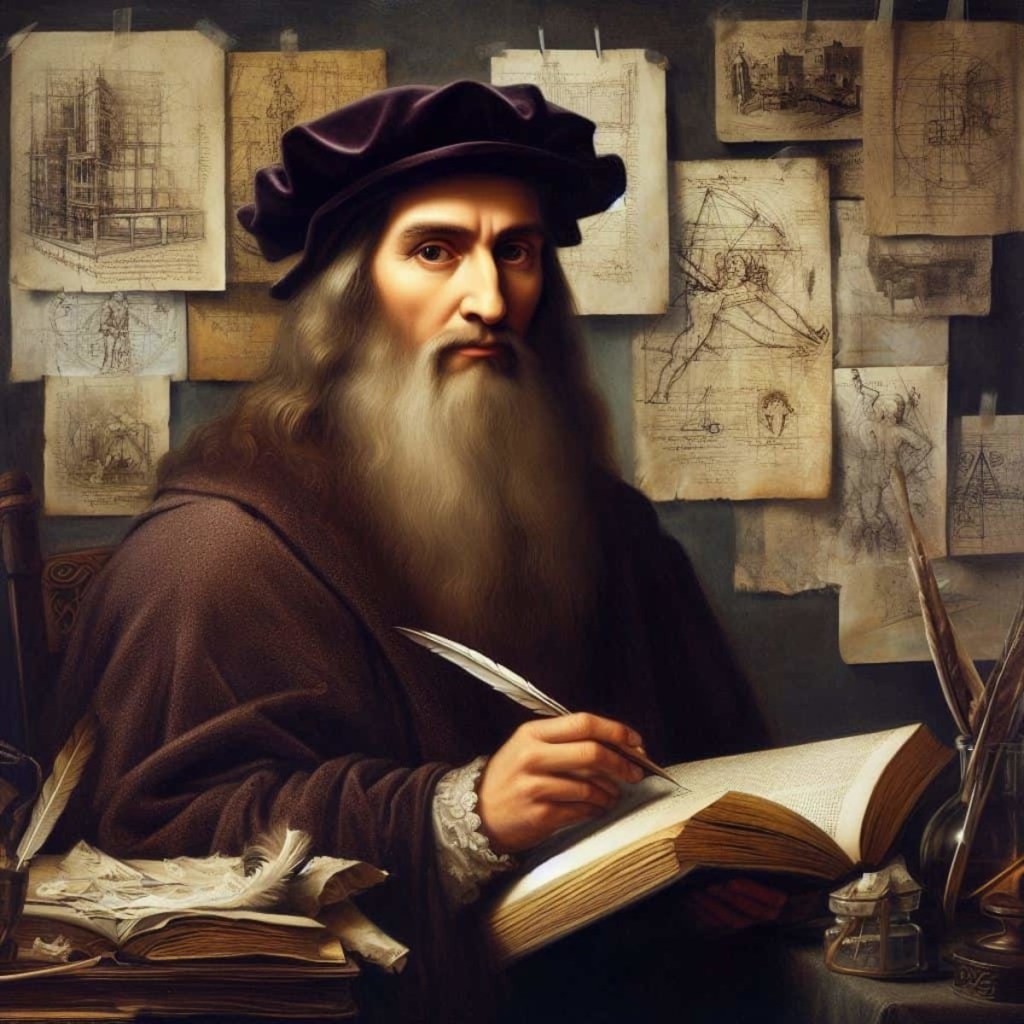
Leonardo da Vinci was born April 15,1452, and as the illegitimate son of a rich lawyer, Leonardo spent the first five years of his life living with his mother… a peasant. Leonardo’s talents were many and his genius incomprehensible. Even today, his visions leave us in awe. From the sketchbooks he filled with dreams that at the time seemed impossible came the dreams that have since come to fruition. How many of this man’s dreams have been realized, and would he have been surprised that they have? I think not.
Da Vinci was a painter, a sculptor, and a musician. He was a vegetarian who studied botany, and he purchased birds at the market for no other purpose than to set them free. He was a teacher and mentor for the poor boys he took in as apprentices… poor boys, and in some cases young thieves, children he saved from the streets even when others believed that those boys weren’t worth saving. One of these children, a boy named Zoro, eventually became a famous artist in his own right. He was also the pupil who contributed to many of his teacher’s paintings, and their individual brushstrokes are indecipherable. But if Zoro were alive today I think that his most memorable time with his teacher would have been the flying. Leonardo’s lifelong obsession with flight immortalized Zoro, as he will always be remembered for his leap from Mount Ceccero… a leap that would become legend. Somehow, I think Zoro probably found the broken leg he suffered during the leap well worth the experience, but I doubt that Leonardo found the destruction of his craft worth either. Zoro had taken the flying machine without permission, and no matter the height or length of his flight… he had flown. In retrospect, I believe he likely smiled through the pain.
Another young boy, a thief named Salai, was taken in by Leonardo at the age of ten. Each of Salai’s actions were noted by his master in his notebooks. Leonardo once recorded the words, “THIEF, LIAR, OBSTINATE GLUTTON,” on one of those pages, and Salai responded to these words with a number of drawings; the drawings were obscene. Regardless of the fact that Salai had no discernable talents, he resided with Leonardo until his master’s passing in 1519, and his value can be noted by the fact that he was bequeathed a substantial amount of property.
One of Leonardo da Vinci’s greatest desires was to make a pictorial record of everything in the world, a dictionary of pictures. He was also a self-taught scientist and engineer… years ahead of his time. da Vinci believed that anything was possible, and that we, as humans, should strive to understand everything. He was a Renaissance Man, he was an artist, an architect, a visionary, and an engineer; he was a student, a teacher, an astronomer, and most importantly an inventor. Leonardo da Vinci was quite simply and without doubt, a genius.
The Artist
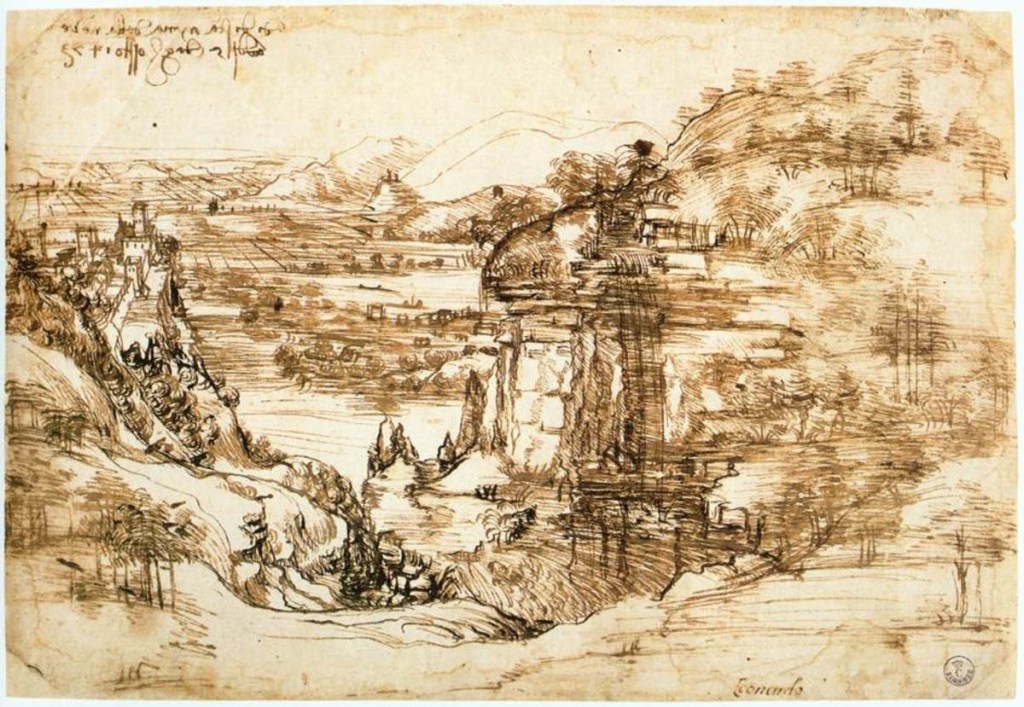
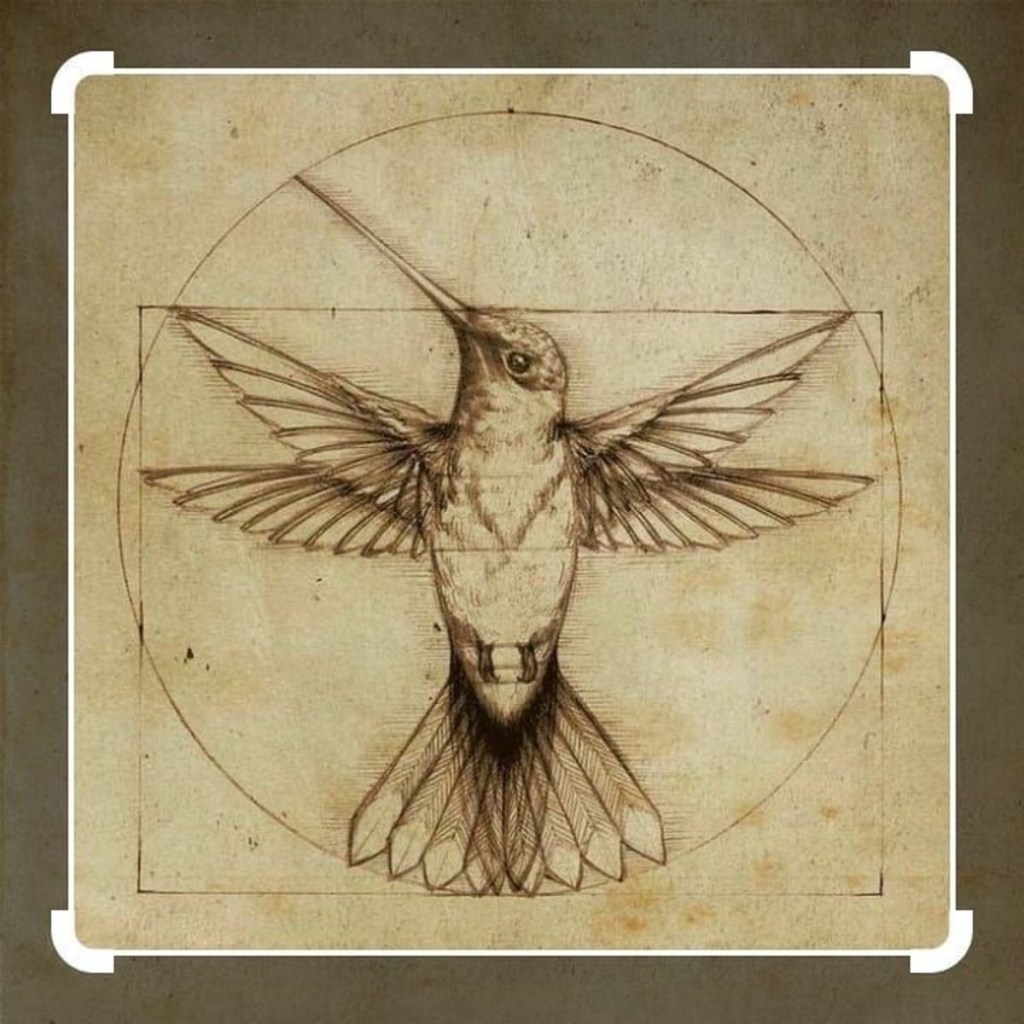
Little is known of Leonardo da Vinci’s childhood, but we do know that even as a small boy he found delight in drawing pictures. The countryside became his muse, and through his sketches he depicted the world around him; plants, insects, flowers, animals, and most importantly, birds. Leonardo’s love for our feathered friends inspired him in a multitude of ways. His study of their wings made its way into his paintings, and it became quite literally what we see as the “wings of angels.” Later, that same love of birds made its way into his sketchbook, and the wings of the birds he’d become infatuated with became a variety of machines with which man might fly. I admit, to sit in an airport with this man would be an unbelievable thing; a mere five minutes to see the look on his face would be as priceless as anything he left behind.
In 1457, at the age of five, Leonardo left the hamlet of Anchiano, and moved to Vinci where he lived with his father and grandparents. While in Vinci, he received a rudimentary education in Latin, Geometry, and Mathematics before being apprenticed to an artist known as Verricchio in Florence. During his years with Verricchio, Leonardo honed his craft and perfected his gift in the art of painting. By the time he was twenty he’d helped his teacher finish the Baptism of Christ. This painting unknowingly became more than just a Verricchio masterpiece, it became the introduction to a master, and the master is introduced in the form of the angel kneeling in a corner; the angel was da Vinci’s.
Leonardo went on to paint many beautiful portraits; he was also one of the first painters to depict the Mother Mary at play with her son. He gave Mary the realism she deserved, and the face of a mom….. a mom who smiled, a mom who visibly loved motherhood. It was his gift for realism that made him such a great painter; his brushstrokes were so smooth you couldn’t see them, and his talent for transition was unequaled; his paintings gave the illusion of movement, they conveyed life, they were engaging (tell me you’ve never thought the Mona Lisa was looking back into your eyes?), and they told stories. Every canvas was a masterpiece.
The Scientist and the Engineer
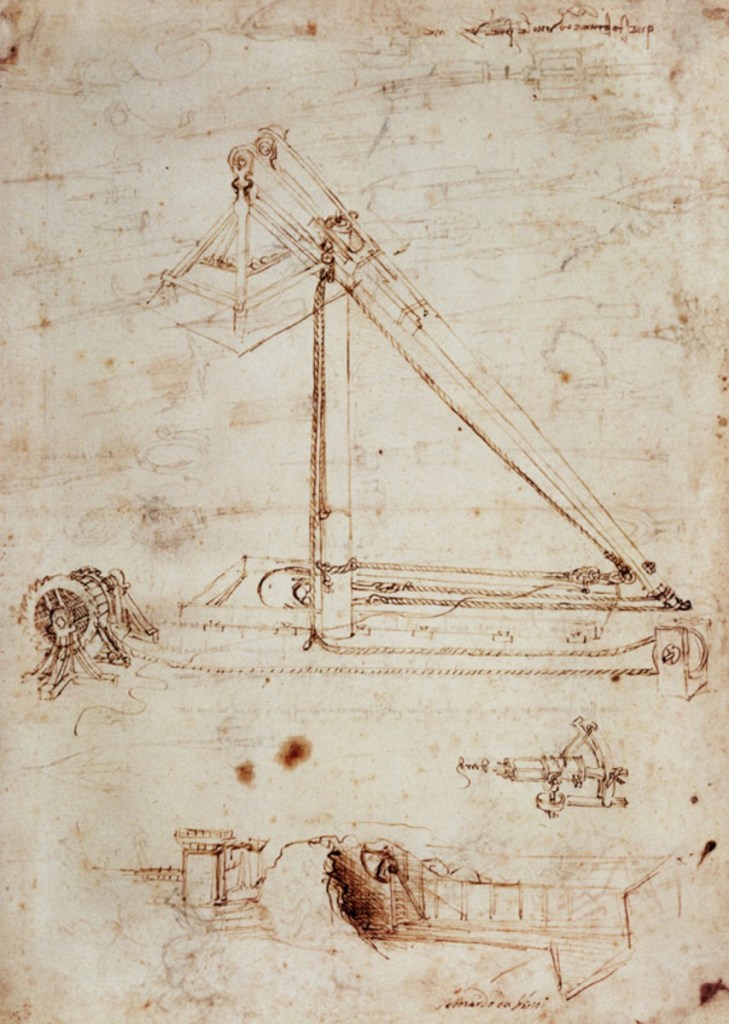
War Machine
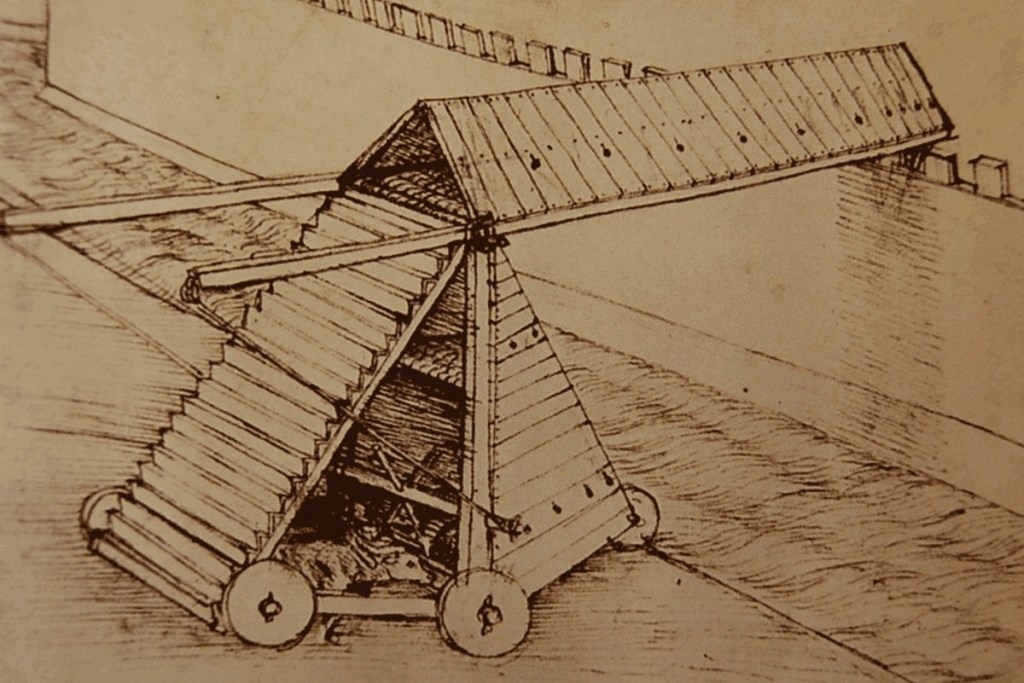
Siege Tower
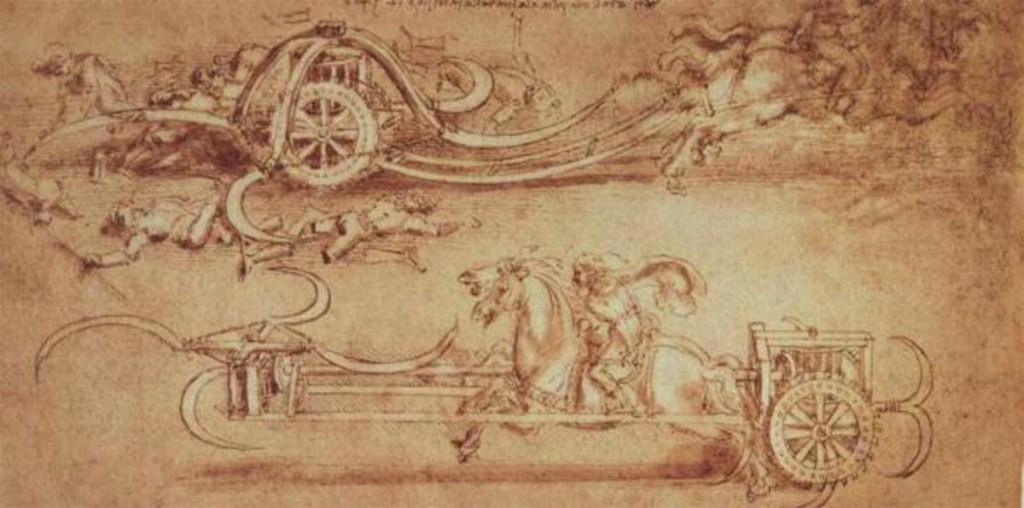
War Machines
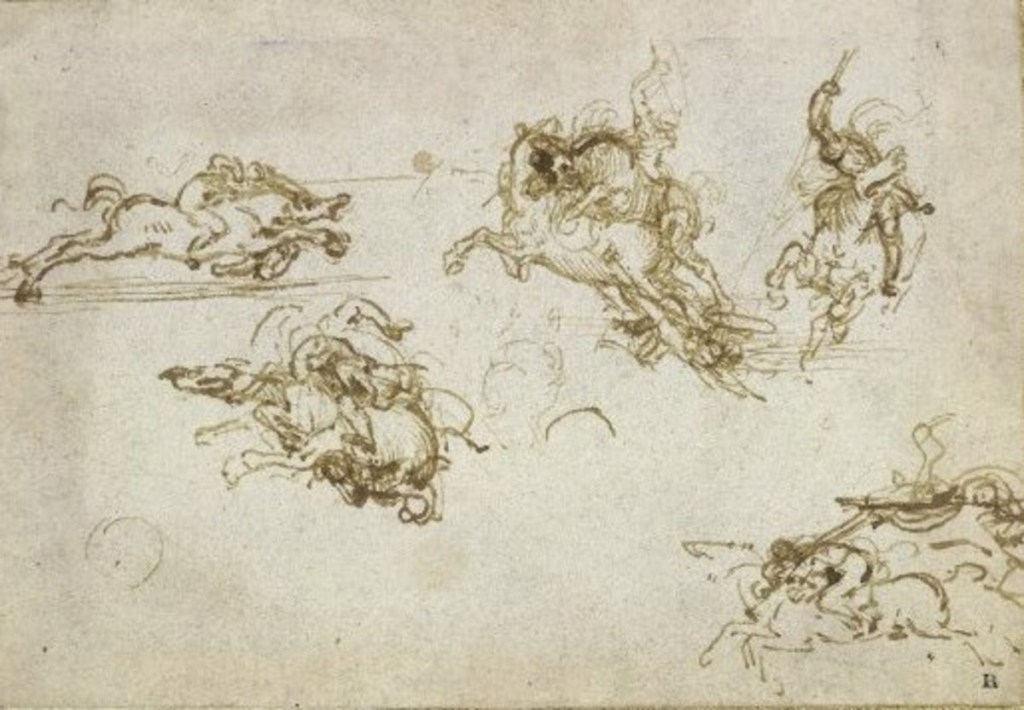
From the time he was a young man Leonardo da Vinci kept notebooks. They were filled with drawings, inventions, architectural plans, and most revealing of all, the artist’s notations. He was a master draftsman. In 1482, Leonardo left Florence to live and work in Milan; it was there that he painted the famous Virgin of the Rocks and the Mona Lisa, but before he made that historical move he had made a promise to the Duke of Milan, a promise to design and make the war machines that would protect the Duke and his people from their enemies. His sketches were erratic, and their purpose belied his true feelings. Leonardo was a gentle man and he hated conflict; he was against war, and yet he had promised to create machines that would be used for death and destruction. Many of his designs looked as if they’d do the jobs they were intended for. Others didn’t look as if they’d work at all. His sketches included armored cars, enormous crossbows, and horse drawn war machines.
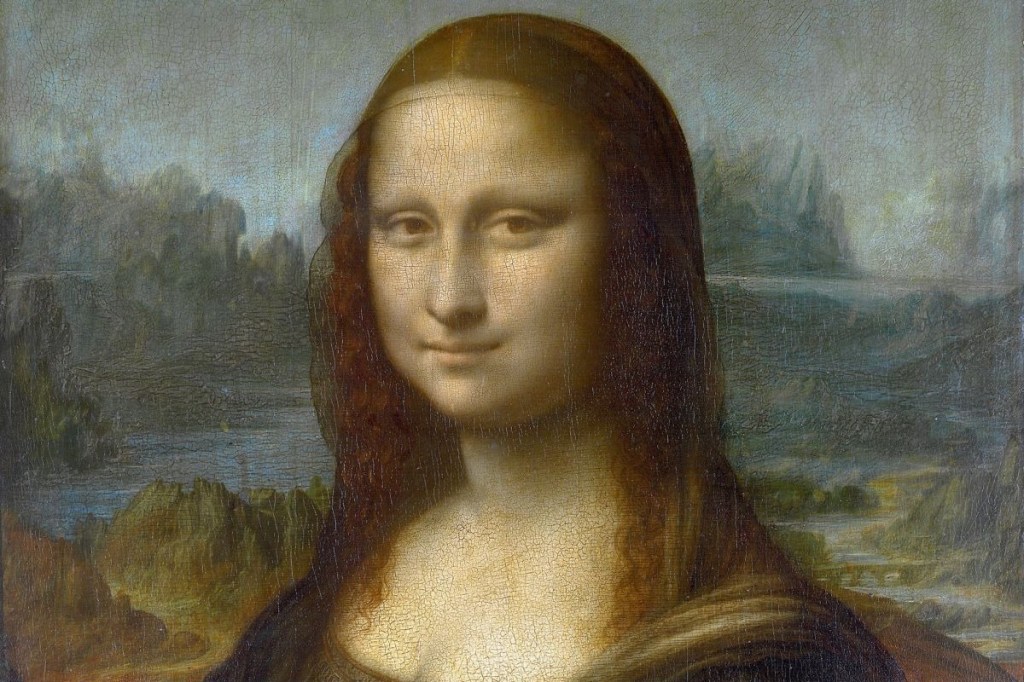
The Mona Lisa (1503)
After the Mona Lisa’s completion, Leonardo’s interest in painting waned as he became more and more interested in the world of science, engineering, and simply using his knowledge to create. The last years of his life were spent away from his birthplace, in another country, as a guest of yet another king, the King of France.
Leonardo’s time in France was like a new beginning, or more aptly, a trip back to the beginning. It is here that Leonardo’s love for birds once again came to the forefront, as he spent hours observing… watching the way they moved in the sky, entranced by their ability to take flight and soar. Over time, his notebooks overflowed with images, some beautiful, others technical…. the beauty of flight… the technical study of wing spans.
Leonardo also studied the vulture, after which, he began to make a very in depth study of the bat, believing that this mammal with its birdlike, winged body had evolved into the most acrobatic creature in the sky. He was mesmerized, and his studies and sketches left us with what would much later become the parachute, the helicopter… the flying machine. He used wire, glue, leather, cane, and the horns of steer in it’s building, but he never realized his dream of flight… that would come years later to the men who took up that dream and realized it for him.
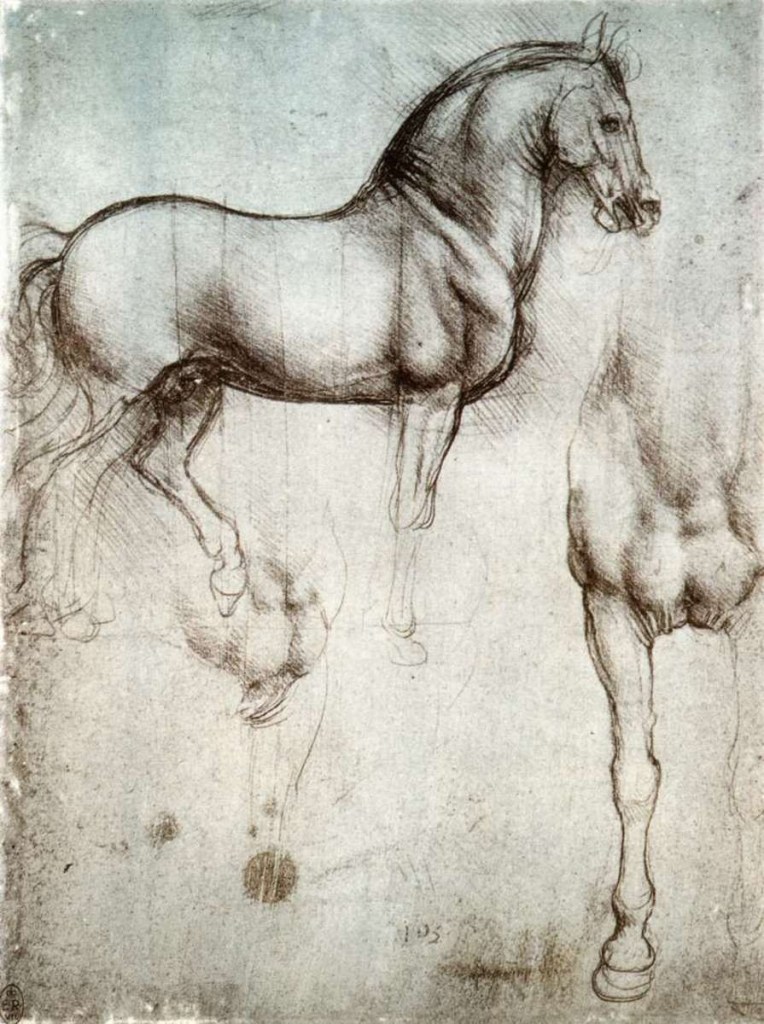
Leonardo da Vinci’s notebooks are filled with amazing drawings; insects, plants, flowers, creatures that crawl, creatures that walk, and creatures that fly. They were detailed and complete chronicles of his study of the human body, its anatomy, the circulatory system, and the miraculous changes during a baby’s gestation, all of these can be found in the more than 4,000 pages of written manuscript he left behind. Within their pages we not only share his thoughts, we dream his dreams, and we are the generation that has seen many of his dreams come true. They weren’t crazy; they were visionary, and today he is not only seen as a great artist, he is seen for the genius he was. The pictures of a brilliant man, the imagination of an artist, and the precision of an engineer can be found in a collection of notebooks that have long survived his death and continue to pay tribute to the man he was. Parachutes, bicycles, machines of war, life preservers, diving suits, and spectacles; all can be found in their pages. What seems to have been intended to become an Encyclopedia of Knowledge was actually left behind as the ultimate legacy, a legacy left to the world he so enjoyed, and to those of us who appreciate the man he was… simply, a genius.
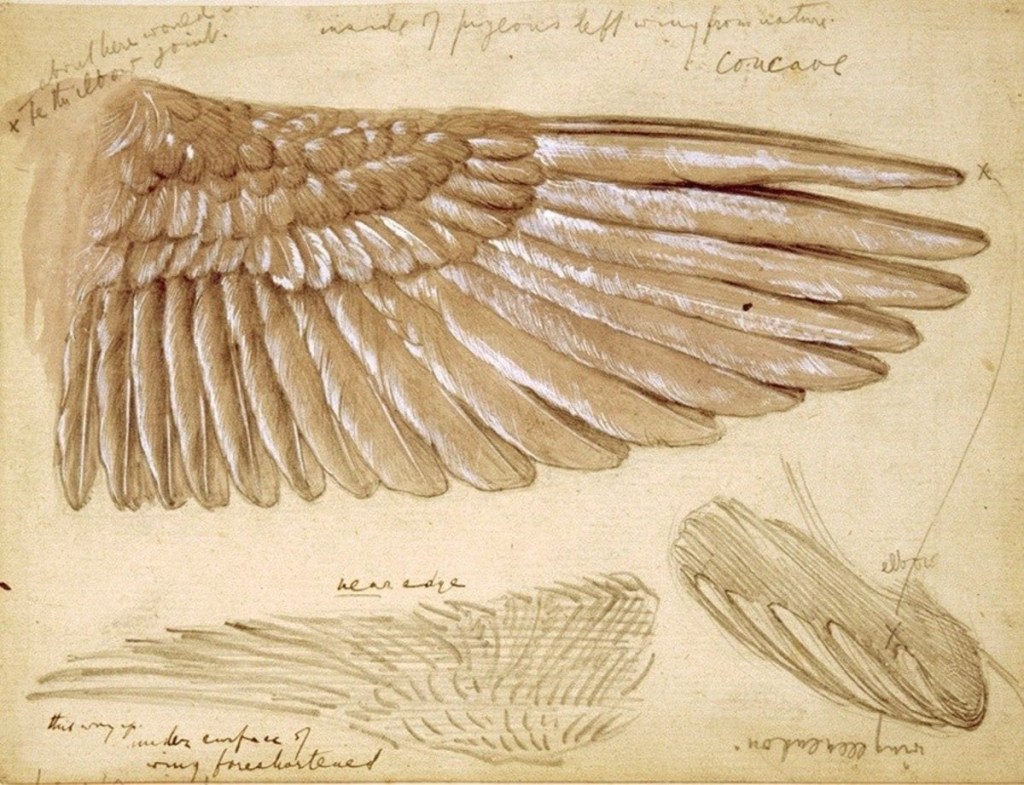
Bird Wings
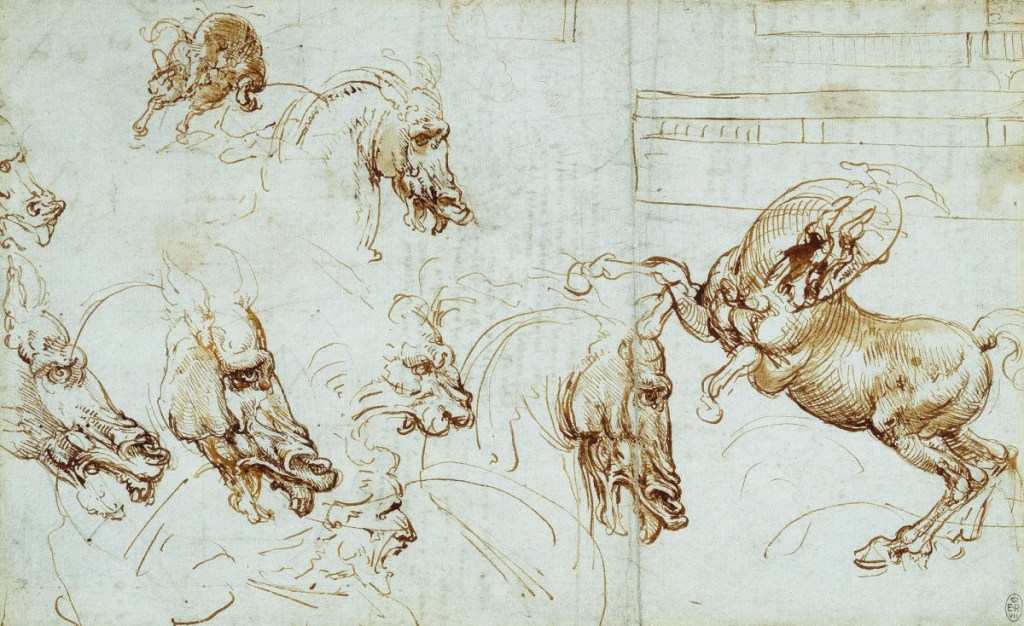
Animals
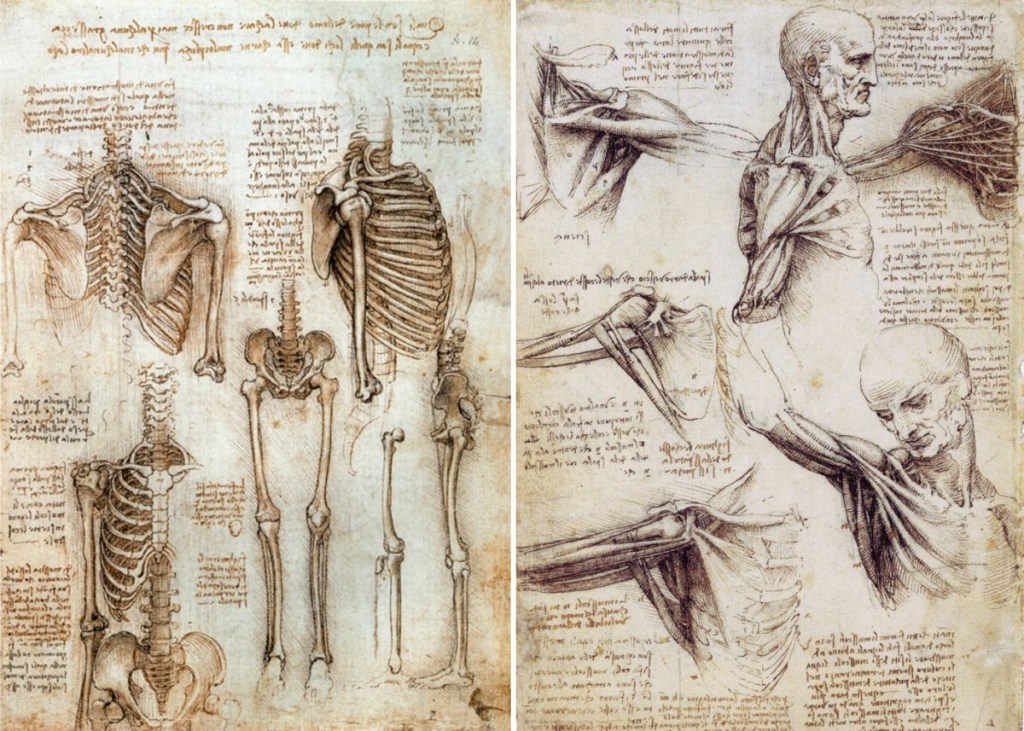
Note: Leonardo da Vinci’s notebooks were not only filled with drawings and ideas, their margins were filled with notations, and the pages of these books could almost be seen as an educational diary of observations; Leonardo was a watcher, and he missed nothing, but his genius may have at times been eclipsed by the many things he never completed; so many projects; so little time.
If you look closely at the pictures of his notebooks it is easy to see that what he wrote, he wrote for himself. It is said that he may have written from right to left because it was easier; he was left handed after all, but the majority believe that his writing, backwards, written in a mirrored image, was a form of secrecy, as were the words that were linguistically indecipherable. Had he intended to publish an Encyclopedia of Knowledge his secrecy would be understandable, it could easily be stolen. Had he done it for any other reason just adds another dimension to his character, another mystery that will never be unraveled.
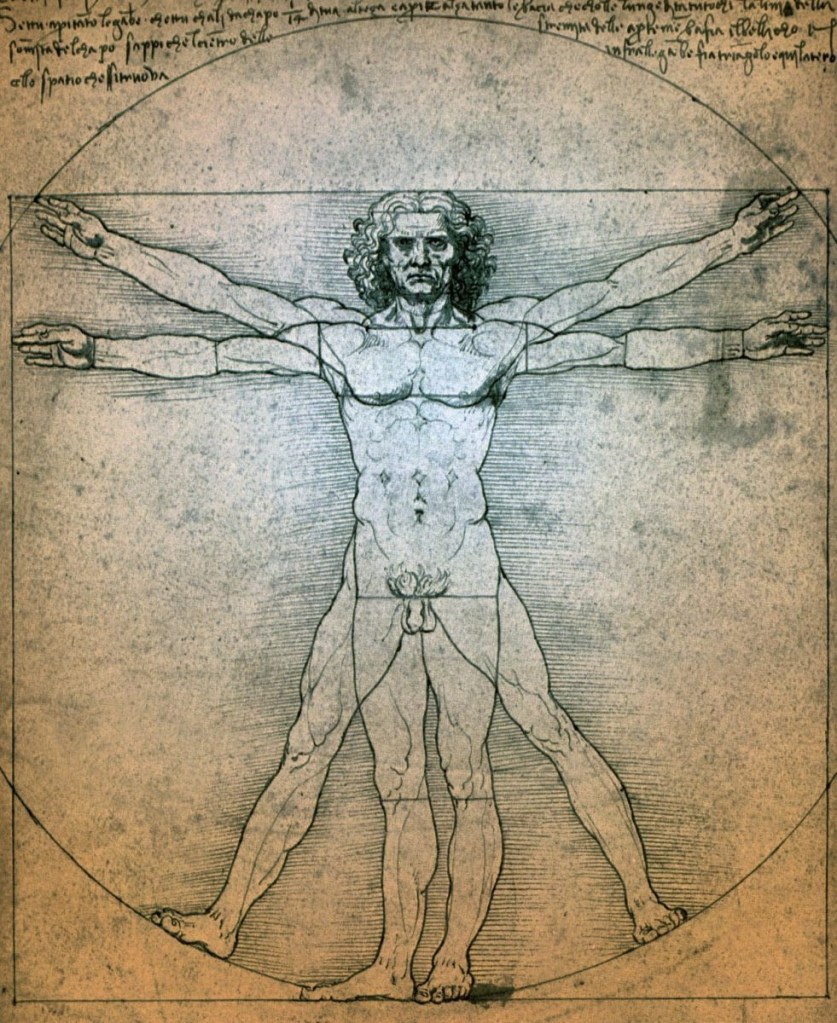
Vitruvian Man
THE LAST SUPPER
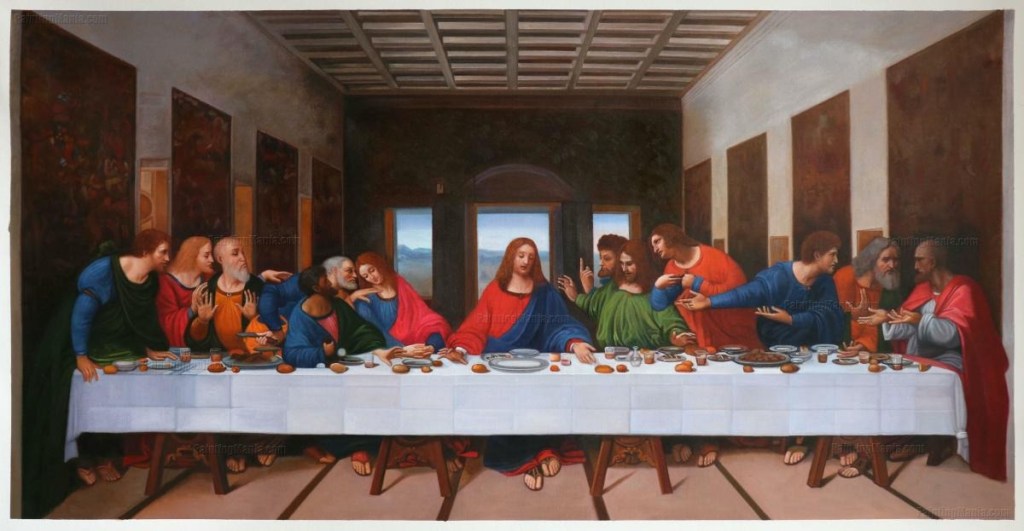
No writing about Leonardo da Vinci would be complete without The Last Supper. His greatest work was commissioned by the church and painted specifically for a dining room wall in the Church of Santa Maria delle Grazie, in Milan, Italy.
The Last Supper
The Last Supper depicts Jesus and the twelve apostles, his closest friends and disciples finishing their last meal together. If you look closely at the painting, you can see exactly what he meant to convey, and that would be emotion. Each and every portrayal brims with one emotion or another; concern, love, bewilderment; the desire of the disciples to understand what their master has spoken of. Only Jesus seems calm, and he is distanced from the rest of the scene because of that countenance, he seems tranquil, settled, and resolved; while all around him we can see contrast in the anxiety and disorder that engulfs his companions. Leonardo has placed the men on canvas in a way that the viewer sees the illusion of movement, something no artist had ever done before.
The Last Supper was Leonardo da Vinci’s greatest work. Unfortunately, the painting itself is showing its age, and certain parts are hard to see because the paint is wearing away and chipping off. Famous for mixing his own paint, it seems that the colors blended for The Last Supper were not his best. Hopefully, the day will come when it can be completely restored.
Copyright 2026 J.R. Watkins
 History Belongs To Us
Leave a comment