History Belongs To Us

Connection to History

  • Massacre at Fort Dearborn

    University of Chicago

    Looking Back

    To recap my first installment, Mud Lake: The Future Home of Fort Dearborn, Captain Whistler, who planned and constructed the first real settlement at Fort Dearborn, was called back to Detroit in 1810. He was replaced by Captain Nathan Heald, who is best remembered for being in charge of Fort Dearborn at the time of the Fort Dearborn Massacre in the year 1812.
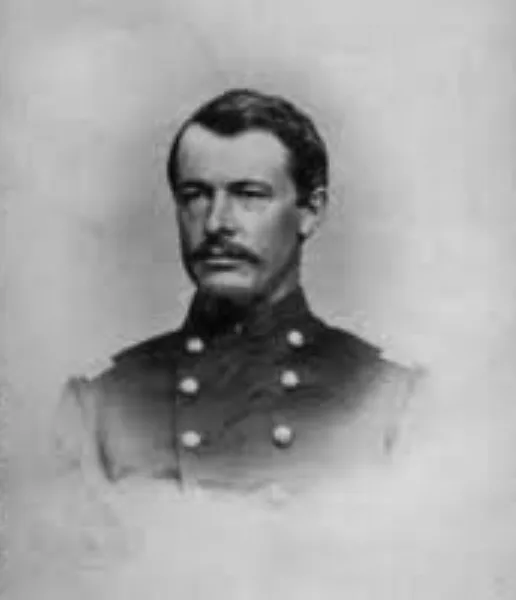
    Captain Nathan Heald

    Heald, reputed to have been meticulous in his record keeping and disciplined in his actions, expected no less from his men. Unfortunately, his men were used to a more relaxed atmosphere, and they resented Heald’s adherence to military regulations and lack of independent thought, something that can be seen in two ways. One, as a military officer he followed the orders of his superiors (or not), which is not only expected but required. Two, Heald doesn’t seem to have reached out to his superiors to question their plan (orders). If he was uncomfortable or unsure, why not voice that discomfort?

    Sadly, Heald’s inability to make decisive plans that he would actually follow through ultimately interfered with his ability to take control of a situation that was his responsibility to control. His lack of independent thought and action contributed to the disaster that would eventually overcome the Fort and its inhabitants, and this is where we begin.
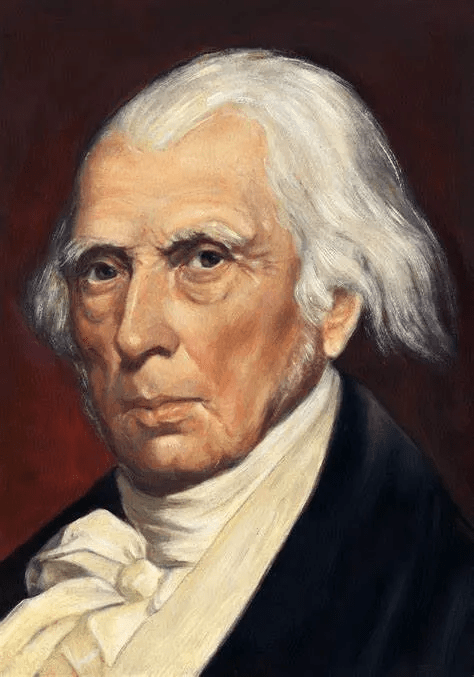
    President James Madison

    history.com

    War…. again

    The Fort Dearborn Massacre was preempted by the War of 1812, a three-year war between the Americans and the British…. a war that is often referred to as America’s “second war of independence,” a war that was officially declared by President Madison on June 18, 1812, a mere two months before Heald’s abandonment of Fort Dearborn.

    So, what was everyone fighting for? America had won its independence from the British in 1776, but had it truly won its freedom? At the start of the 19th century, the British were involved in a longstanding war with Napoleon, and America became a pawn in their war, why? Well, that’s simple… let’s start with trade and supplies. Both France and England traded with America, and they both wanted trade with America limited to themselves. England and France both attempted to block America from trading with the other. England went so far as to require licensing for neutral countries that desired to trade with France or its colonies. England also engaged in impressment, the removal of American seamen from U.S. merchant vessels and forcing them to serve with the British forces.

    In May of 1810, around the time that Heald took charge of Fort Dearborn, the United States Congress passed a bill that they believed would solve their problems with trade. The bill stated that if either Britain or France would drop their trade restrictions against the United States, the United States would in turn, stop trading with the other power. Napoleon implied that he would acquiesce. In response, President Madison blocked all trade with Britain.

    Fast forward to 1811 and the Battle of Tippecanoe, a battle in which the Shawnee chief, Tecumseh, who’d been rallying his people to resist white expansion planned an ambush on Governor Harrison’s troops the morning of what was supposed to be a scheduled council. It is important to note, however, that Harrison’s appearance in what would become central Indiana, was not intended to be a peaceful sojourn. His visit to Prophetstown,” named for Tecumseh’s brother Tenskwatawa, “the Prophet,” was a military expedition. Its goal… to destroy Prophetstown, which had become the home base for the Native American confederacy.
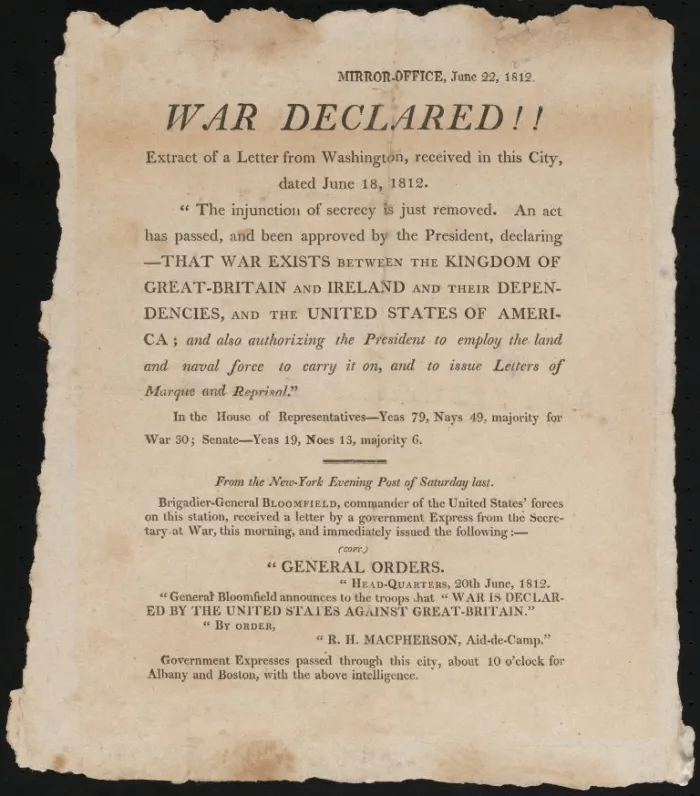
    Declaration of War

    USS Constitution Museum

    Prophetstown

    Harrison’s army was met by one of Tenskwatawa’s men, who carried a white flag and proceeded to relay Tecumseh’s desire for a ceasefire and subsequent parley with Harrison. Harrison agreed, and though he was skeptical, took his men to set up camp about a mile from Prophetstown, having no idea that Tecumseh was nowhere near Prophetstown. Tecumseh could not attend a parley… he wasn’t there. Tecumseh, in fact, had warned Tenskwatawa to refrain from attack, to refrain from inciting a war they were not yet prepared for. His brother didn’t listen.

    Early the next morning, Tenskwatawa’s warriors surrounded Harrison’s encampment and breached their defenses. Harrison’s men, who were well trained and well prepared, defended their positions and after a few short hours forced the Native Americans to retreat. Harrison would later note the effectiveness of Tenskwatawa’s ambush and described it as “a monstrous carnage,” but not decisive. In the end, Harrison burned Prophetstown to the ground. His actions destroyed Tecumseh’s dream of establishing a Native American confederacy. In turn, they also cemented Tecumseh’s alliance with the British, an alliance that would play a major role in the British army’s success in the Great Lakes region during the War of 1812.
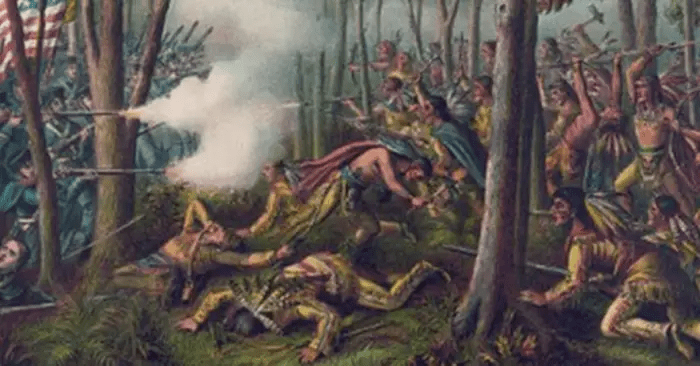
    The Battle of Tippecanoe

    William Hull

    So, what really prompted the Native American alliance with the British? It wasn’t instantaneous, it wasn’t planned. It was something that grew over time. Possibly a result of misperceptions? Misunderstandings? Deceit? Lack of vision? Opinions are diverse, so let’s try and look at the facts.

    Thomas Jefferson appointed William Hull as the first Governor of Michigan in 1805. Hull was a graduate of Yale, a celebrated war hero (the American Revolution), a lawyer, a judge, and a state senator all before accepting the position of governor. He was well qualified for the position, but yet, he had much to learn about walking a fine line between the Native Americans and the ever-expanding numbers of settlers moving into his territory.

    Hull’s purpose as governor might seem to be simple: negotiate with the Native Americans and acquire land for settlement… peacefully. In some respects, Hull was successful. The Treaty of Detroit, for instance, annexed a large area around what would later become Toledo, Ohio from the Wyandot and Potawatomi nations. Unfortunately, the sheer number of settlers flocking into the area within a very short period of time angered the Native Americans, causing a resentment that would only grow in intensity. Enter Tenskwatawa and Tecumseh, two brothers who’d experienced war, the loss of family members, and regular relocation. Two members of the Shawnee, who’d seen their tribe slowly grow apart… brothers who were determined to reestablish and unite the tribes into one coalition. Some embraced the brothers’ ideals, others resented what they considered to be crossing tribal boundaries.

    As time went on, the Native American resistance grew, a fact that led to Hull’s commission as Brigadier General during the War of 1812. Note, Hull was not a young man at the time of his commission… he was sixty years old, and for the most part, he’d led a comfortable life with all of the perks that accompanied his titles. His new appointment, however, was anything but “comfortable”. Tasked with heading a portion of the Ohio militia in the Invasion of Canada, Hull found himself in the midst of something he was ill prepared for and something that would tarnish his reputation amongst his contemporaries, as well as his place in history.
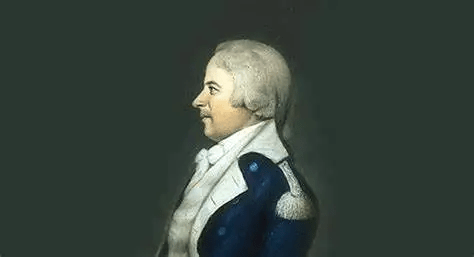
    Governor William Hull

    The Invasion of Canada

    The Invasion of Canada was for all intents and purposes a complete train wreck, and Hull, at the head of the campaign, faced a monumental failure. Plans for the invasion were hurriedly laid out and executed without a backup plan. The militia itself lacked discipline and training, in addition to the fact that they were poorly supplied. In contrast, the British were ready and able to defend Canada. Assisted by the Native Americans and British intelligence, the British forces easily tracked Hull’s movements and gained access to his plans; they also captured a good portion of his supplies. The militia made it as far as Amherstburg before Hull decided that he didn’t have enough weaponry or naval support to complete his mission, a belief that led to his retreat to Fort Detroit and his eventual surrendering of the fort to the British. One of his officers is even recorded as having said, “He is a coward…and will not risk his person.”

    On July 17, 1812, shortly after taking control of Fort Detroit, the British moved on to capture Fort Mackinac. Not a single shot was fired, and the fort, which had belonged to the Americans since 1796 was once again held by British and Native American forces. More importantly, this event marked the official starting point of the War of 1812 in the Great Lakes Region.

    The Straits of Mackinac provided access to both Lake Huron and Lake Michigan, allowing the British to move quickly, as water travel was far quicker than moving over land, providing the British and Native American forces with something the United States had thrown away without a fight. Note, the garrison had not yet been informed of the United States declaration of war against Great Britain.

    Due to Fort Mackinac’s location, it was an isolated post, and Lieutenant Porter Hanks of the U.S. Regiment of Artillery, who commanded the post only had sixty-one men in his garrison. Thus, when Hanks was apprised of the situation, he had to digest two important facts; his country was at war, and the fort for which he was responsible was the intended target of the 600 British soldiers, Native American warriors, and Canadian militia who lay in wait. Why Hanks, who had noticed large groups of Native Americans passing Mackinac Island and was said to have been suspicious, didn’t act on his suspicions is something we do not know. What we do know is that the British were gathering forces a mere forty miles away on St. Joseph Island, and that on July 16th they paddled their way to Mackinac, where they arrived at 3:00 am on July 17th… alerting no one.

    Once the British, under the command of Captain Charles Roberts, had their cannon in place, and their men prepared for attack, Roberts sent Hanks a note asking for him to surrender the fort and warning him to do so in order “to save the effusion of blood, which must of necessity follow the attack of such Troops as I have under my Command.” Hanks complied.
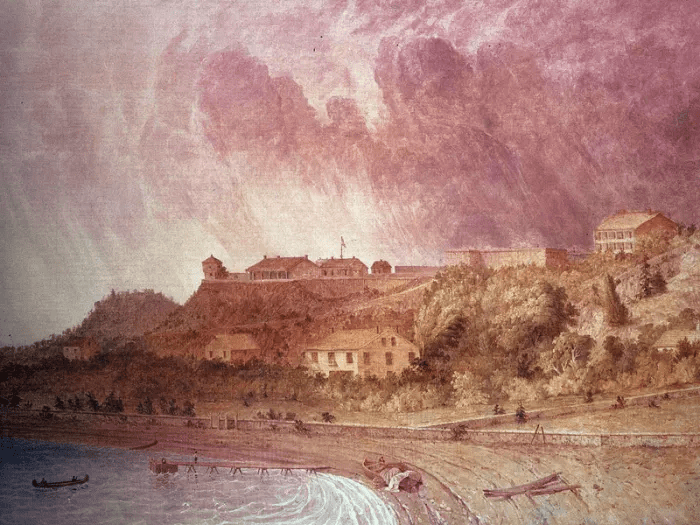
    Raising the White Flag at Fort Mackinac

    hsmichigan.org

    Orders Ignored

    The surrender of Fort Mackinac almost immediately gave rise to what would be recorded in history as the Massacre at Fort Dearborn. Like Fort Mackinac, Fort Dearborn was a major location in the fur trade, it also provided access to Lake Michigan, which is derived from the Ojibwe word “mishigami,” meaning “large water” or “great water” and is the only one of the Great Lakes located fully within the borders of the United States.

    Following the surrender of Fort Mackinac, orders were sent to Captain Heald to evacuate Fort Dearborn, as the United States military was worried about the ability to safely and efficiently transport supplies. Note, 300 miles separated the forts, thus Hull’s orders, which were delivered by Winamek, a Potawatomi leader, were slow in arriving. Hull’s orders were clear… all Americans were to provision themselves and evacuate the fort, all weaponry and ammunition was to be destroyed, and all remaining goods and provisions were to be distributed to the Native Americans who were considered allies. Hull also ordered that the evacuation was to take place immediately before anyone outside of the fort knew about their plans. Heald chose to ignore his orders.
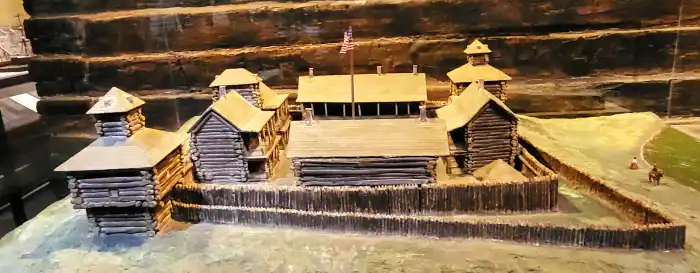
    Fort Dearborn, Display at the Chicago History Museum

    August 14, 1812

    Rather than follow the orders sent down by his superior, Heald called a meeting with the Potawatomi, and on August 14, 1812, almost one month to the day of Fort Mackinac’s surrender, Heald revealed his plans to the Potawatomi in detail, something that is best described in an article titled The Massacre of Fort Dearborn at Chicago published in 1899, in which, Potawatomi Chief Simon Pokagon, describes the event:

    “To their surprise, he told them he intended to evacuate the fort the next day, August 15, 1812; that he would distribute the fire-arms, ammunition, provisions, whiskey, etc., among them; and that if they would send a band of Pottawatomies to escort them safely to Fort Wayne, he would there pay them a large sum of money.”

    Almost immediately after, Heald went back on his word, promptly destroying the fort’s supply of both alcohol and ammunition. Believing that the whiskey would only rouse the anger of the Potawatomi, and that any gun powder or shot that was left behind might be used against them, Heald once again acted without thought. Unfortunately, the Potawatomi, who’d trusted Heald, felt that both Heald and the United States military were going back on their word. Local tribes were still battling over territory, and the Potawatomi, who’d lived somewhat peacefully since the fort’s inception, felt they’d been betrayed. With the desertion of the fort, the Potawatomi wanted to reclaim the area as their own, and in response to the military’s perceived faithlessness, Black Partridge, a Potawatomi leader, returned his peace medal to Heald that evening and issued a warning that Heald should take care when departing the next morning. His words, “I will not wear a token of peace,” he reportedly said, “while I am compelled to act as an enemy.”
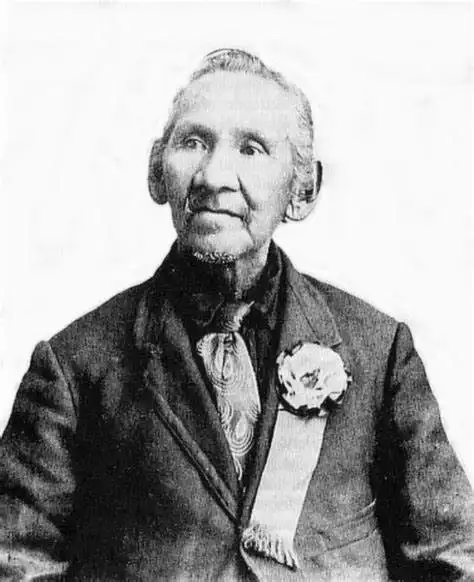
    Chief Simon Pokagon

    The Massacre

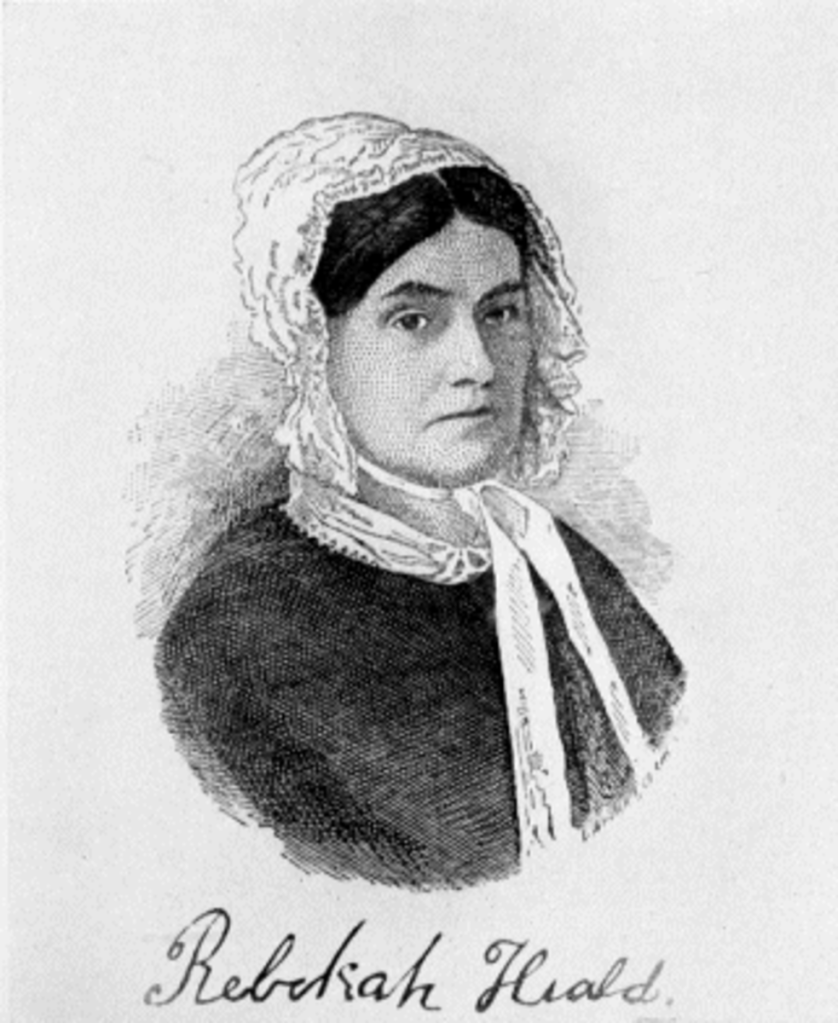
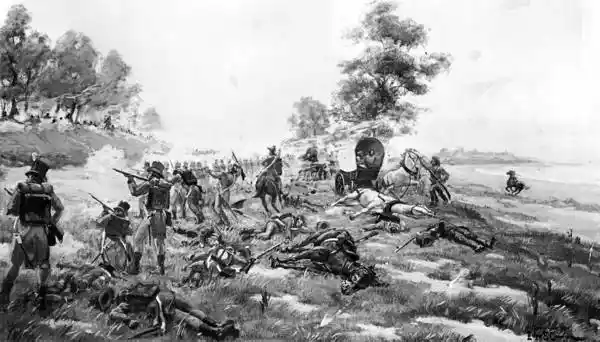
    The following morning, Captain William Wells, who was stationed at Fort Wayne, and who had rushed to Fort Dearborn after hearing of the evacuation, led the fifty-five soldiers, twelve civilian militia, nine women (including his niece Rebekah, Heald’s wife) and eighteen children away from the fort. The group traveled along the shoreline, never guessing that around 500 Potawatomi were hidden on the other side of the low dunes. When Captain Wells spotted the Native Americans and alerted the others that they were about to be attacked, Heald responded by ordering his troops to charge. The troops, rushing headlong over the dunes, were encircled by the Potawatomi that surrounded their flanks. Sadly, only twelve of the militia remained behind with the wagons… with the wives and the children, who were left open to attack.

    Those twelve men fought desperately to save the women and children before being killed themselves. Muskets were fired and used to bludgeon their attackers, but twelve men against hundreds couldn’t save the children, who were traveling in the wagons. It is said that only one Potawatomi climbed into the wagon holding the children, and that one warrior was responsible for hacking them to death with a tomahawk. That warrior, reported Simon Pokagon “…. was hated by the tribe ever after.”

    Within fifteen minutes the battle was over, as Heald agreed to parlay, and then to surrender. In return, the Potawatomi agreed to spare the remaining survivors. It is reported that sixty-seven people lost their lives that morning, a number that included Captain Wells, twenty-five soldiers, twelve militiamen, twelve children, and two women. Captain Wells’ niece, Rebekah, survived, and it is reported that her survival was the result of one man’s actions… Black Partridge.

    Once Heald had surrendered, the group was taken back to the fort, where the badly wounded soldiers were tortured to death. Were these soldiers excluded from the agreement that the survivors would be spared? Were their deaths a part of the agreement? Or were they so near death that the Potawatomi simply did as they wished? This is something we’ll never know for sure.

    What we do know is that in the end, Fort Dearborn was burned to the ground, that the survivors (captives) were divided up among the Native Americans and taken away, and that although most of the captives were ransomed and returned to their families, others were held for the duration of their lives.

    As a result of the Great Chicago Fire, the majority of written manuscripts detailing the fall of Fort Dearborn were lost forever. From the information that remains, Captain Wells will forever be remembered as a hero. Heald, on the other hand, is remembered as nothing more than an inept fool. Is he deserving… I leave that answer to you.
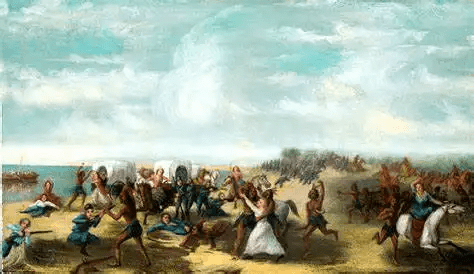
    The Massacre at Fort Dearborn

    Sources:

    Encyclopedia Britannica

    battlefields.org

    michiganpublic.org

    mackinacparks.com

    potawatomi.org
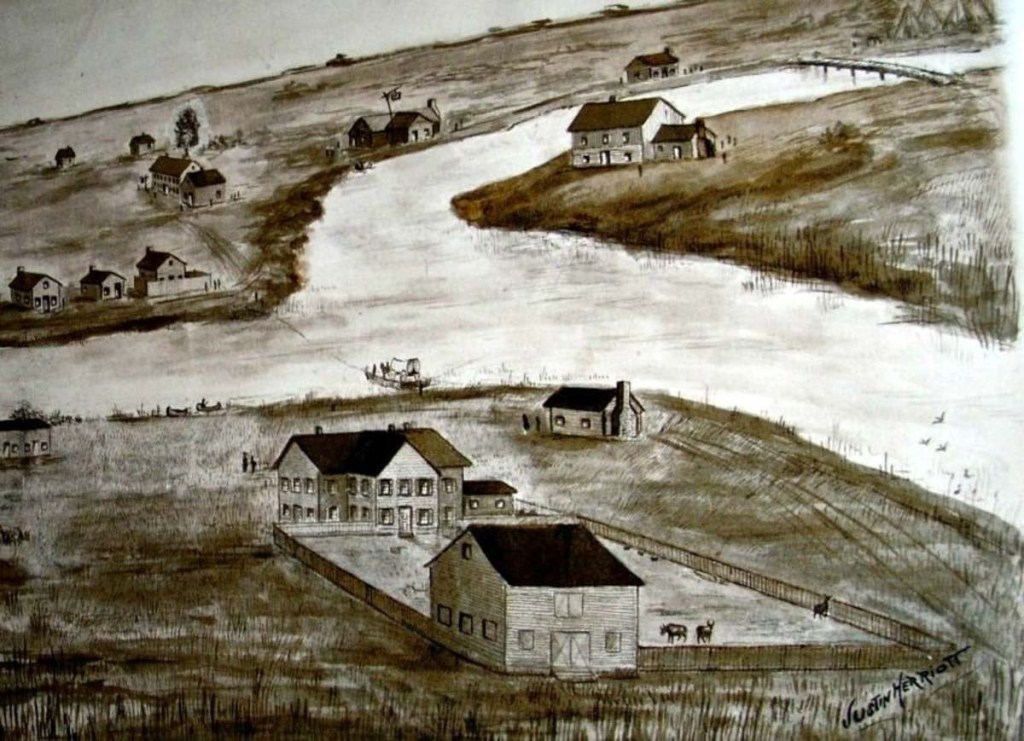
    ,

  • Mud Lake, 1833

    Father Pierre Charlevoix

    The first historical mention of Chicago (in writing) can be found in a report written by Father Pierre Charlevoix in 1671; “Chicagou at the Lower End of Lake Michigan”. Father Charlevoix, a French Jesuit Priest, was also a historian and explorer. Some even say that he was a spy, reporting on the location of troops during the French & Indian War. None-the less, Charlevoix traveled widely, checking on the conditions at French Missions, making notes, mapping areas, and reporting back to the French government about his findings. Note, the priest never made it to Chicago, as his superiors directed him to travel to the Mississippi River, and though it may have shortened his journey, the route through Chicago was obstructed by tribal warfare.

    Marquette & Jolliet

    Jacques Marquette and Louis Jolliet

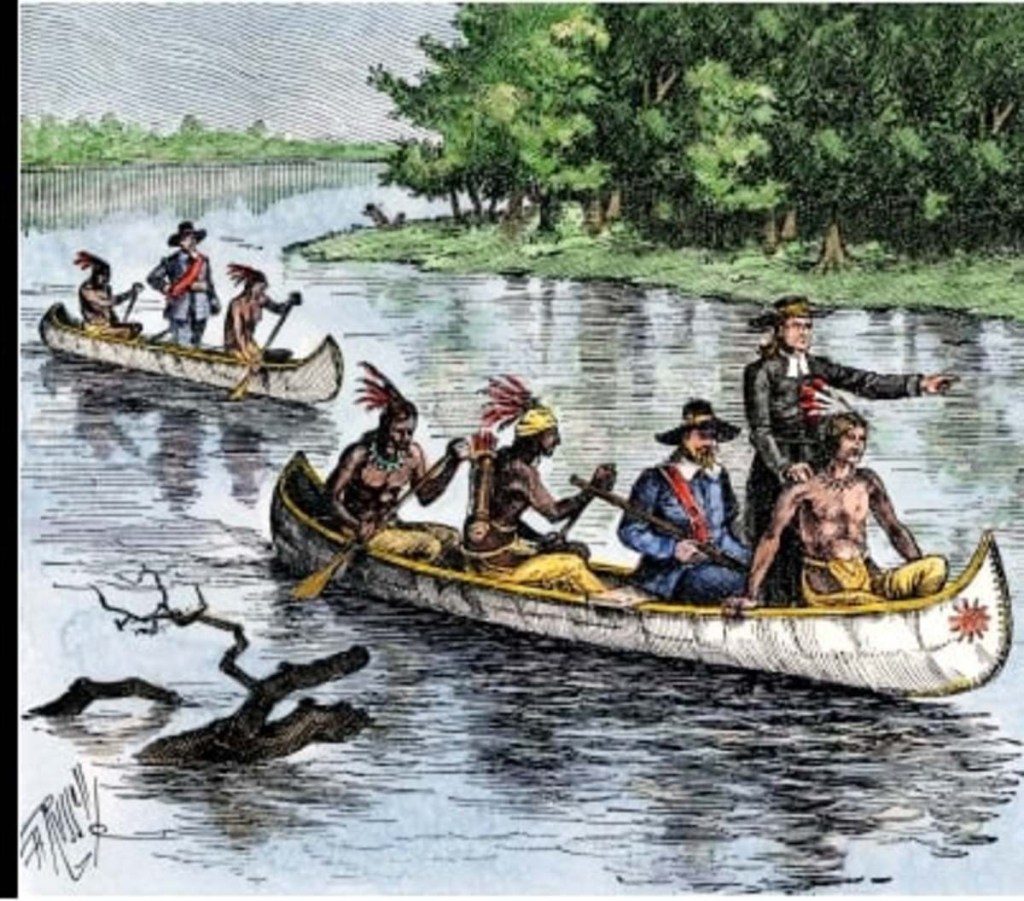
    Two years later, in 1673, explorers Jacques Marquette and Louis Jolliet were exploring the Mississippi River, and during their travels, traveled past what would become the city of Chicago. In Joliet’s report he notes that a canal linking the Mississippi to Lake Michigan would serve to control the North American continent.

    Marquette and Jolliet began their expedition in 1672 at the behest of Louis XIV. Louis XIV had received reports from French scouts that copper deposits had been found in the area around Lake Superior, and the king was determined to take advantage of their discovery. Moving copper ore, however, wasn’t as easy as transporting furs. Finding a new route was a necessity.

    Jacques Marquette

    Louis Jolliet

    Mud Lake

    Louis Jolliet was born in Quebec, the son of a wagon maker. At the age of ten he was sent to the Jesuit college to become a priest, and at the age of twenty-three he decided that the priesthood was not for him and left school to become a coureur des bois or woods-runner. Jolliet was put forth as head of the expedition by the Governor of Quebec, Frontenac, and Marquette was sent along as his spiritual guide.

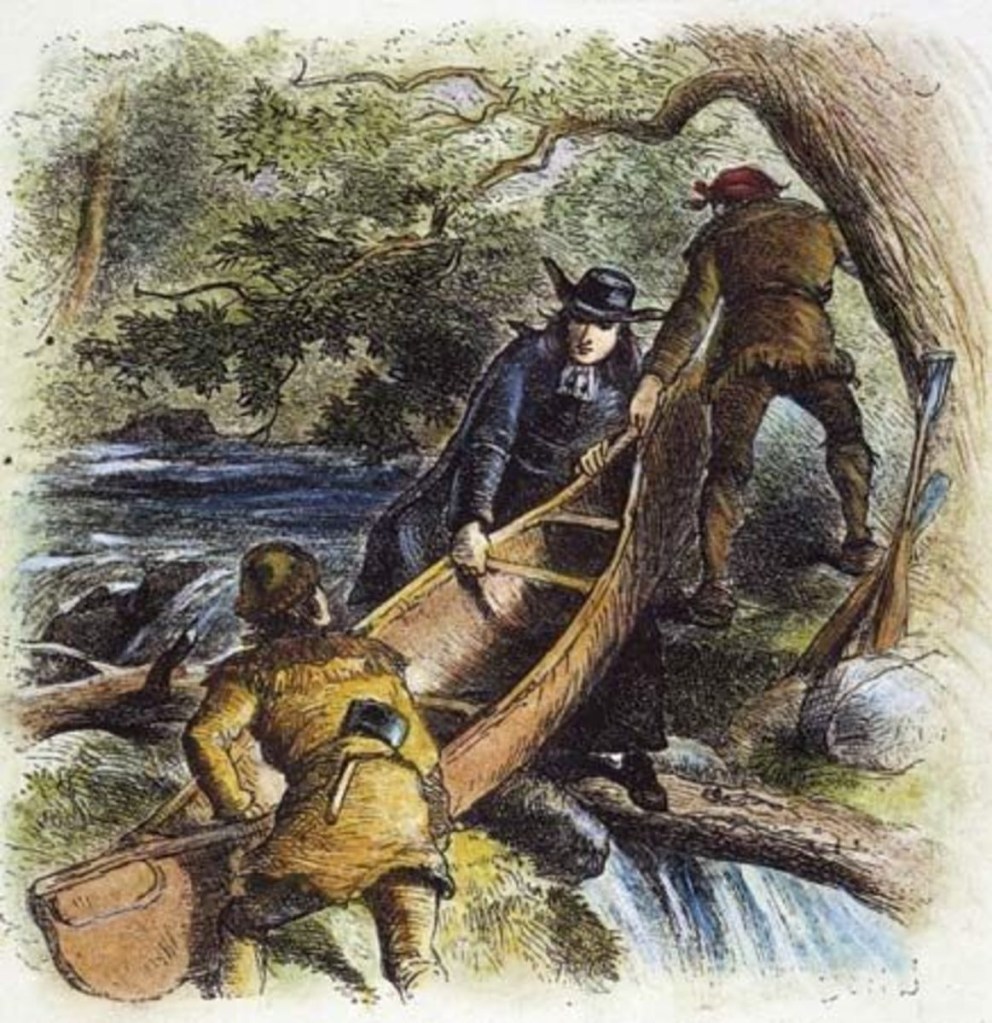
    The portage, which was shown to Marquette and Joliet by members of the Kaskaskia, had been in use for centuries. Surrounded by towering oak trees in an area that was home to beaver, otters, deer, black bears and other types of wildlife, the seven-mile bog later became known as Mud Lake. Shortly after, Jolliet and Marquette would become the first Europeans to traverse the pathway that would later become “The Chicago Portage.”

    René Robert Cavelier, Sieur de la Salle

    We now fast forward ten years to meet explorer, René Robert Cavelier, Sieur de la Salle. Like Jolliet, La Salle studied for the priesthood; unlike Jolliet, he took his vows in 1660, and five years later he requested to be sent abroad as a missionary. Within another two years, La Salle asked to be released from those vows on the basis of moral weakness. In March of 1667, the Church granted his request.

    That same year, La Salle arrived in New France… without money or vocation. He did, however, arrive with a dream… finding a route to the Vermillion Sea (Pacific Ocean), which would in turn, would open up a new route to the Orient.

    In 1679, Louis XIV ordered La Salle to take possession of the Mississippi Valley in his name. Along the way, La Salle arrived at the portage in 1682 writing, “This will be the gate of empire, this the seat of commerce.” Three months later, he would claim the area in and around the basin of the Mississippi River for France, its name… Louisiana.

    René Robert Cavelier, Sieur de la Salle

    Early Settlement

    During the late 1600s, the settlement in what would become the great city of Chicago, served as a transit point… a place to rest, regroup, and resupply. This transit source would briefly pause, however, when the continuing wars between the French and the Fox Indians made access to the port impossible in the early 1700s, wars that would continue for a span of forty years. By the end of the French and Indian Wars in 1763, use of the port and increasing trade would boom, eventually leading to the construction of Fort Dearborn in 1803.

    Prior to the fort’s construction, the fur trade was controlled by merchants from France, England, and Scotland, who used imported goods such as kettles, beads, alcohol, awls, and guns to exchange for furs supplied by the Native Americans and French Métis (French/ Native American lineage). The furs in demand during this period included bear, beaver, the black fox, deer, and otter.

    The Fort Dearborn trading post, which also served as a factory, attracted skilled artisans. The construction of the fort, however, wasn’t merely a means to produce and trade, it was also a way to end the British monopoly of the fur business and to break the hold the British had over the region itself. The ability to do this was a direct result of the Treaty of Greenville (1795) in which the Pottawatomies, Miamis, and their allies gave up their rights to “one piece of land, six miles square, at the mouth of the Chicago River, emptying into the south-west end of Lake Michigan, where a fort formerly stood” to the United States.

    Captain John Whistler

    1803 & the Construction of the Stockade

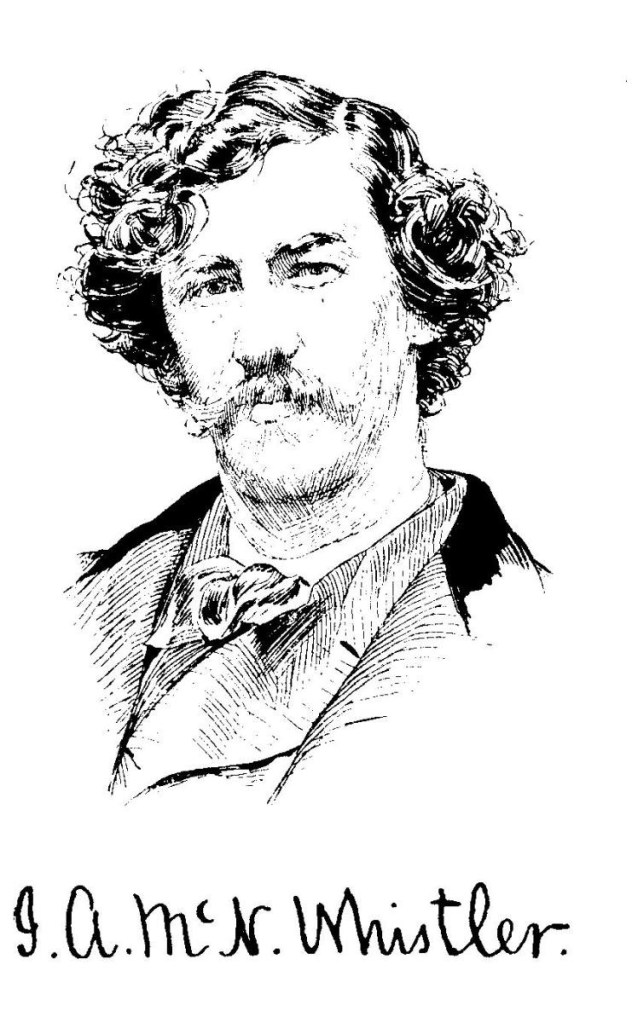
    Captain John Whistler arrived in Chicago in the summer of 1803 to plan and oversee construction of the area that would become Fort Dearborn, named after Henry Dearborn, who served as President Thomas Jefferson’s Secretary of War. When completed, the fort which might be more aptly described as Chicago’s first settlement, housed soldiers, as well as their families, and was surrounded by homes and businesses.

    Whistler’s son, William, who served under his father, would spend most of his service in the Fort Dearborn area, and two of his children were born within its palisades. Before arriving at the fort, the Whistlers were stationed in Detroit, and upon receiving their orders left Detroit and traveled overland under the guidance of Lieut. James S. Swearingen. Once Whistler’s group reached the Saint Joseph River, they embarked on a canoe for the final leg of their journey.

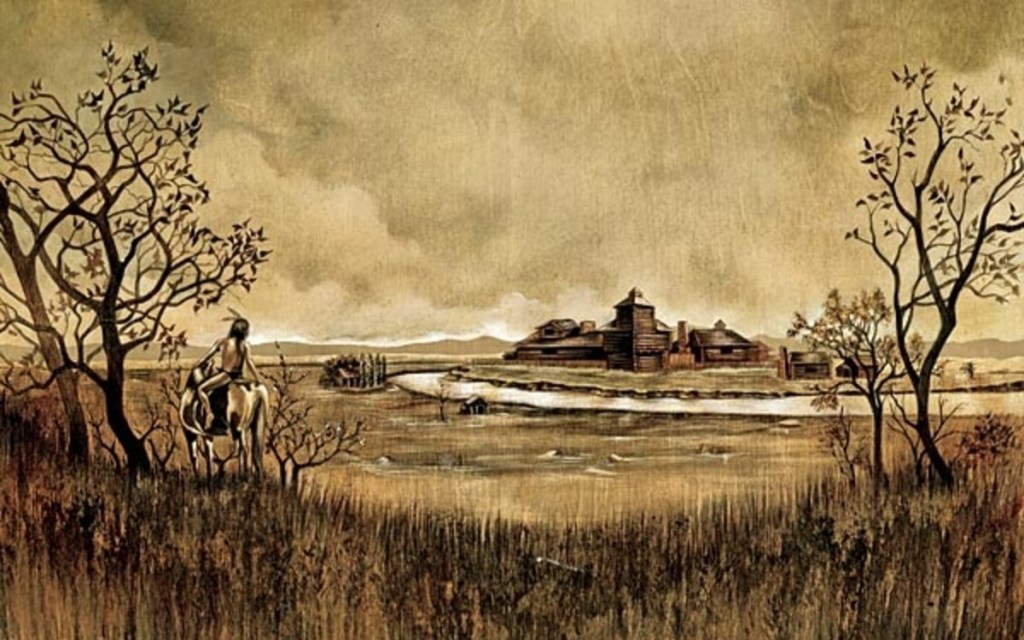
    Fort Dearborn

    Upon their arrival, Captain John Whistler immediately began preparations for the stockade that would shelter and protect his troops and family during the construction period. Mrs. Whistler noted that when they disembarked the canoe, “There were then here…. but four rude huts, or traders’ cabins, occupied by white men, Canadian French, with Indian wives.”

    Captain Whistler oversaw the construction and completion of the stockade before the end of that same year. Construction, however, was no easy task. Without horses or oxen, the soldiers had no choice but to don harnesses and use ropes to lug the necessary timbers to the building site. The soldiers were responsible for every aspect of the project’s completion including cutting the timbers, hauling the wood, and providing the physical labor that was needed to erect the stockade itself. When it was completed, the real work began, and Fort Dearborn would eventually become a reality.

    Five years later, in 1808, Fort Dearborn was completed. Located on the south bank of the Chicago River, the fort provided a base and home for American soldiers and their families, surrounded by homes and businesses. To the north, fur traders with Native American ties set up shop, most notably, John Kinzie, who’d purchased the home built by Jean Baptiste Point de Saible in 1804.

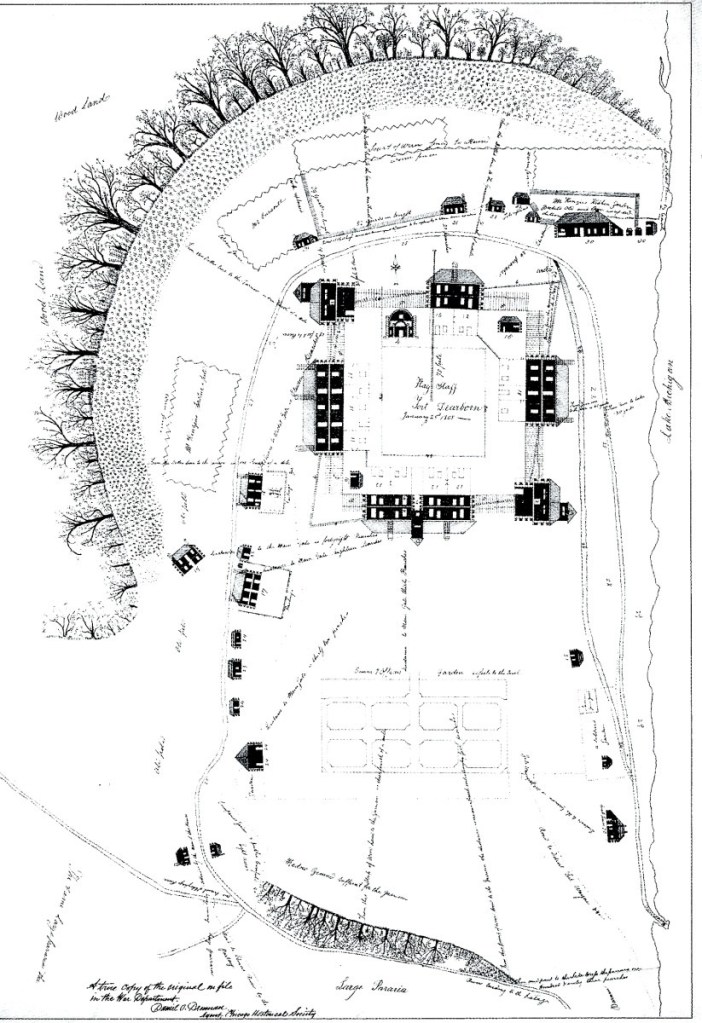
    Plan of the first Fort Dearborn drawn by John Whistler in 1808

    In 1810, Captain Whistler was called back to Detroit, and he was replaced by Captain Nathan Heald. Heald found the fort to be a place of isolation and loneliness, a feeling that was only changed by his marriage. In May of 1811, Heald and his new wife, Rebekah, arrived at the garrison… their new home, and according to historian, J. Seymour Currey:

    “On their arrival the garrison turned out to receive them with military honors. Rebekah was much pleased with her reception, and found everything to her liking; she liked the wild place, the wild lake, and the wild Indians, then indeed friendly enough, but soon to become fierce enemies. Everything suited her ways and disposition, “being on the wild order” herself, she said; and we can well imagine Captain Heald becoming, in his changed circumstances, quite reconciled to the situation with which he was so much displeased the year before.”

    Captain Heald is best remembered for being in charge of Fort Dearborn at the time of the Fort Dearborn Massacre in the year 1812. He is reputed to have been meticulous in his record keeping and disciplined in his actions, something he expected from his soldiers as well. Unfortunately, his men were used to a more relaxed atmosphere, and they resented his adherence to military regulations. Sadly, Heald’s adherence also interfered with his ability to take control of a situation that his superiors had no understanding of… his lack of independent thought and action is said to have contributed to the disaster that would eventually overcome the Fort and its inhabitants, but that’s a story for another day… a story soon to follow.

    Rebekah Wells Heald

    Fort Dearborn

    1) Project Gutenberg’s The Story of Old Fort Dearborn, by J. Seymour Currey

    Sources:

    chicagology.com

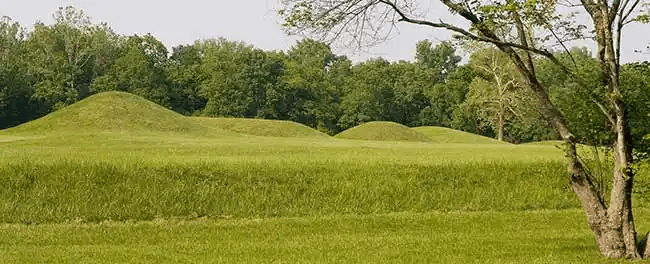
  • Travels through the Mississippi and Ohio Valleys are filled with scenic landscapes, views that might be passed by with nothing more than a second glance at the beauty they bestow. Upon careful inspection, you might notice the rolling slope of a hill; if you’re paying particular attention to the signs along the road, you might just understand that what you’ve seen is an important part of American history.

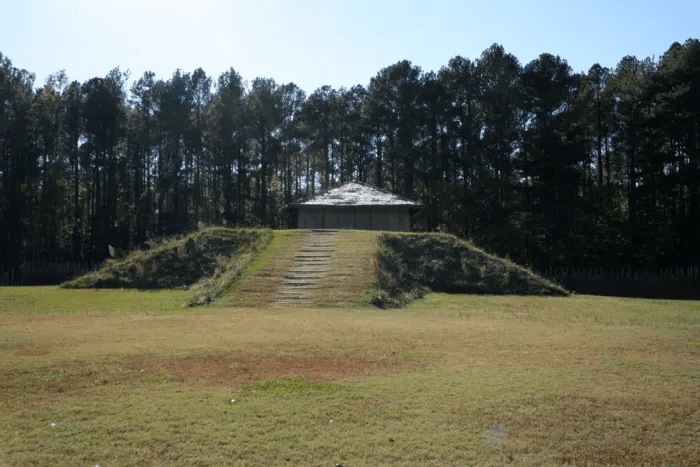
    Unbelievable remains are still in existence, which bear record to some of North America’s earliest civilizations. Yes, the Egyptians built the pyramids, but even before that, Native Americans were constructing enormous communities that were centered around giant semicircular mounds perched on the bluffs that overlook the mighty Mississippi River.

    More than a thousand years before Columbus set sail, a group of Native Americans had already been living and trading across half the continent. They had established trade routes in the Ohio and Mississippi Valleys; they traded precious metals with present day Canada; and left behind evidence of flint mined in the present-day state of Indiana. These people were the Mound Builders; they were Americans before the advent of what we know as America.

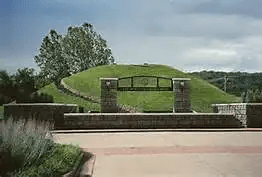
    The mound builders had more than a few reasons for the hills they created. Many different Native American cultures built the mounds over a period of thousands of years. Constructed from dirt, sand, gravel, debris, and ancient artifacts; it is often hard to distinguish their appearance from the natural landscapes that surround them today. Mounds can be sporadically found throughout the Mississippi and Ohio Valleys. Over 5,000 mounds were built in North America between 7000 B.C. and A.D. 1700.

    The mounds found in North America occur both as single structures and groupings. Built entirely by hand, transportation of soil and rocks was done without the use of wheeled vehicles or animal labor. Sizes and shapes of the mounds vary. They were used for burial, something that was done with great ceremony, and as effigies. Some also distinguish themselves as intricately planned geometric landscaping. They served as tombs; they served as foundations for houses and temples; and they were even used as marks to identify territories.

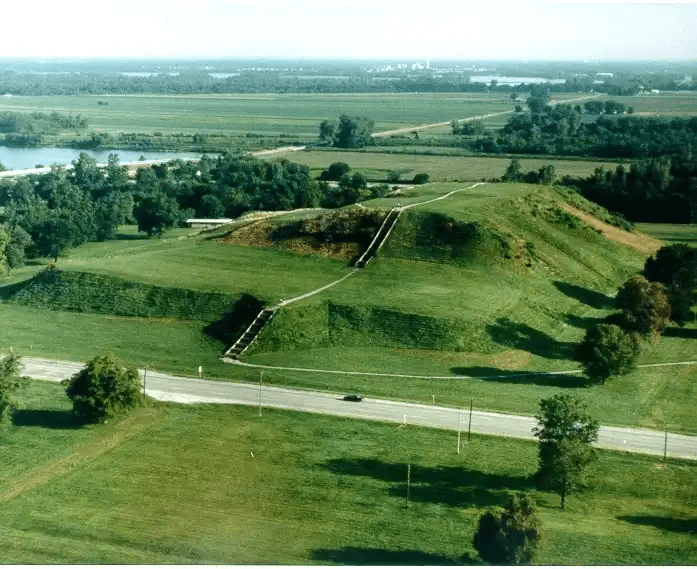
    Temples built atop the mounds were a place of sacred worship. Worshippers would approach the temples by climbing sets of steep stairs or ramps built up the sides of the mounds themselves. Depending upon the culture, reverence may have been shown for the Mother Earth, who was worshipped as the “giver of life.” In which case the mound was seen as a symbol of the womb.

    Archaeologists have marked three different periods during which mound building occurred in North America: the Archaic Period, the Woodland Period, and the Mississippian Period. The Adena, Hopewell (Woodland Period), and Cahokia (Mississippian Period) cultures were each adept at the craft they’ve become known for; they were indeed builders of mounds.

    What is a burial mound?

    What is a burial mound? To some that would seem a silly question, but why bury the dead in mounds? How were they planned? Were they planned at all, or did they just appear indiscriminately as members of the community passed on?

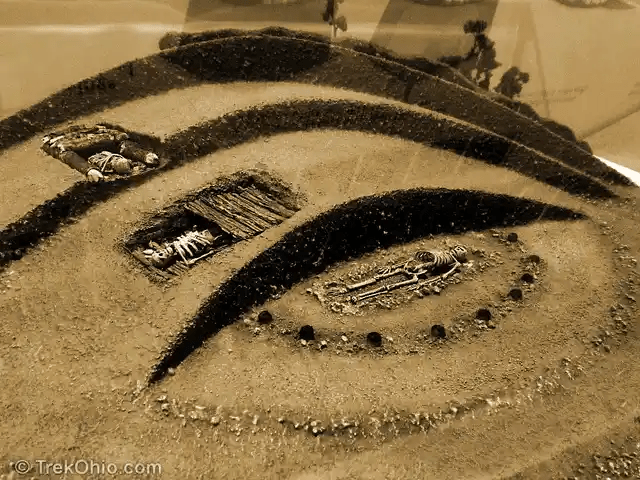
    Burial mounds were planned, and they were built in layers. Families had their own personal mounds, similar to the family plots in cemeteries today. Constructed in layers, each level of the mound contains members of the community buried according to their station. Lesser members of the tribe were cremated before being entombed in tiny logs; the logs were then covered with dirt. Burials of chiefs, shamans, and priests would have been accompanied by great ceremony. Like the Egyptians, their bodies would have been kept company by cultural items such as pottery, projectile points, beads, and pipes.

    Effigy Mounds

    Effigy mounds were well planned and constructed into shapes that depicted creatures like birds and bears. Their purpose was both religious and social. Archaeologists believe that these types of mounds are connected to the constellations and the celebrations of the winter and summer solstices. Effigy mounds were also occasionally used for burial.

    Effigy mounds were only erected during the late Woodland Period, and most of these particular mounds are located in present day Wisconsin.

    Effigy Mounds

    Geometric Mounds

    Geometric mounds were usually circular, square, or rectangular. They were mainly used for ceremonial purposes, but in later years they were also used as tombs. It is also believed that the geometric mounds may have been used as observatories.

    Geometric Mounds

    The Woodland Period and the Adena

    The Woodland Period lasted more than a thousand years, dating from about 500 B.C. to A.D. 700. During this period cultures developed in the North American Eastern Woodlands, which stretched from the Atlantic Ocean to the Great Plains. The early Woodland peoples were nomadic; they moved from place to place, season to season, to hunt, fish, and gather wild plants. Over time, these groups conquered the cultivation of plants, and eventually they began to settle in small communities. The earliest of these communities were small, consisting of only two or three households; later communities were larger, possibly home to as many as 100 people.

    Woodland villages required food sources, and besides hunting for game, the Woodland people began growing crops. Early settlers depended upon crops such as gourds, squash, and sunflowers. Later, corn (maize) would become an integral part of the Woodland people’s diets, as tobacco cultivation would become a source of trade.

    Archaeologists recognize the Adena as the first of the two major mound-building cultures during the Woodland Period. The Adena began their construction of mounds around 600 B.C., in the area we now know as southern Ohio.

    Little information is known about the Adena culture, and the information we do have is based upon what has been found in the burial mounds they are famous for. Items found within the mounds themselves have been a window into a world that without them would be an elusive mystery.

    The Adena mounds are generally conical in shape, and their sizes vary greatly. Mounds may be as large as 100 meters in diameter, and they are surrounded by moats. Each mound has only one access to its burial site, and the moats were built with single gateways for entrance.

    Adena mounds (tombs) were constructed from the floor up. The tomb’s base was made up of logs, surrounded by poles, topped with a platform, roofed with tree bark, and covered with soil. The weight often resulted in the tomb’s collapse.

    The Woodland Period and the Hopewell

    The most complex of the mound building cultures during the Woodland Period, was that of the Hopewell in the Ohio Valley. The Hopewell culture flourished during the years between 100 B.C., until about A.D. 500. Their community was centered around religious ceremony and focused upon the death ritual. Hopewell mounds can be found throughout the modern day states of Ohio, Illinois, Michigan, Wisconsin, Iowa, and Missouri.

    Leaders of the Hopewell were buried in huge mounds. At the time of burial, the deceased would be accompanied by all the wealth they would require in the afterlife. In one burial site, archaeologists discovered thousands of pearl beads, necklaces adorned with the teeth of grizzly bears, and ornaments made of copper.

    Other objects that have been discovered tell us that the Hopewell participated in trade with other areas of North America. Shells and shark teeth from what is now Florida, pipestone from present day Minnesota, volcanic glass from Wyoming, and silver from the province of modern day Ontario.

    Around A.D. 500, the trade networks began to collapse, and the Hopewell culture disbanded. Members took to the hills. Based on the large, sporadic earthworks that were created for defense, it is believed there was unrest in the area. Who created this unrest? Your guess is as good as mine. The supposed invaders remain unknown.

    The last evidence of the Hopewell culture can be found in the earth walls they constructed. The people disappeared, but the mounds remain.

    The Mississippian Period

    As the Woodland Period came to a close, another mound culture emerged in the southeastern Mississippi Valley, in what is aptly known as the Mississippian Period. Mississippian communities began establishing themselves just after the year 900 A.D.

    Mississippian people began building towns on the flood plains of the river. Regular flooding enriched the area’s soil and produced excellent conditions for farming. The rivers were also conducive to trade.

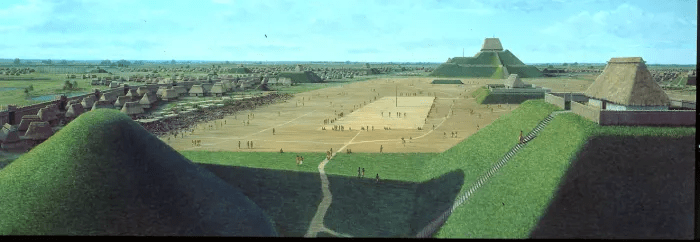
    Towns were built around large, flattop mounds, and other earthworks that would border the plaza, a place for public events. Temples, meetinghouses, and the homes of chiefs and priests were located on top of the mounds, declaring their importance. The mounds also supplied the entire community a place of refuge during times of flooding. Many of the towns were protected by stockades.

    Artistry from the period can be seen in the many artifacts that have survived to give us a glimpse into the Mississippian people’s history. They made a variety of decorative pottery, in the shapes of animals and human beings. The most common symbols are those of the falcon and the jaguar, something that has led historians to believe that the culture had undeniable ties to Mesoamerica.

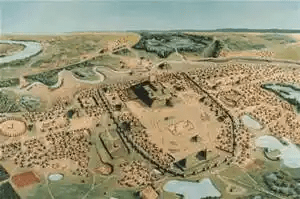
    Cahokia is known as the jewel of the Mississippian culture. Located in present day western Illinois, Cahokia was once home to more that 30,000 people. With over 100 mounds in the area, Monk’s Mound, the tallest, stands ten stories high on a base that covers sixteen acres. While excavating the site, archaeologists discovered posts that were laid out in a circular pattern. It is believed that the posts were used as a calendar, that the people track time using the shadows cast by the sun, and that the position of those shadows gave farmers the knowledge to plant and sow their crops.

    The Mississippian Period came to a close in the early 1700’s, but not before European explorers had the opportunity to get a glimpse of them firsthand. It is said that conflicts had a part in the demise of this once great culture, as did the diseases brought to the Americas by Europeans.

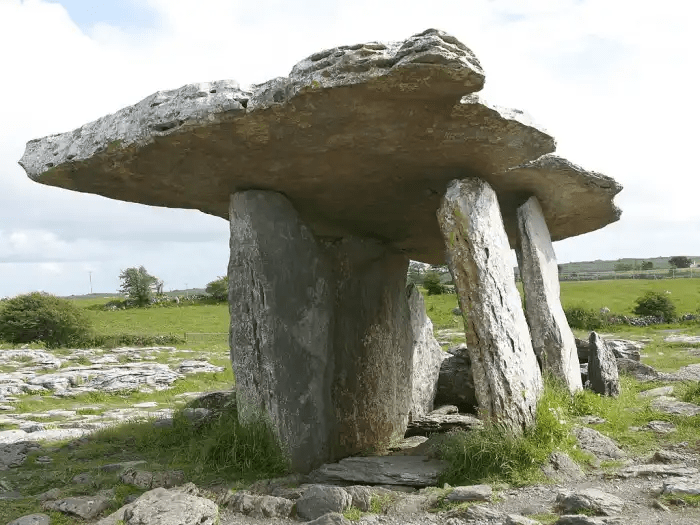
  • Poulnabrone Dolmen, County Clare, Ireland. 4000-3000 BC- Dolmen means stone table

    Transition

    Before the onset of the New Stone Age, humanity lived in minuscule groupings without permanent homes. Their societies were mobile, endlessly making their way through new terrain as they pursued game and searched for edible plant life.

    It is hard to imagine their day-to-day lives; can we even remotely understand the difficulties that would accompany the constant movement and lack of shelter, not to mention how hard it must have been to prepare the evening meal? Or perhaps how much effort went into avoiding having the table turned, in staying safe, in not becoming dinner for the ever-watching prey they hunted.

    All in all, day to day survival would have been nothing short of miraculous, and yet, God gifted humans with something no other living animal possesses to such great an extent—intelligence. Intelligence set man apart from the very beginning; the invention of tools, the ability to use the natural environment, the ability to problem solve, and maybe the most important thing of all—the intelligence to be tenacious.

    As the climate continued to warm, the needs of the hunter-gatherer societies changed. Plants flourished and diets changed due to the abundance of food sources. People began eating more wild grains and possibly small animals; people began settling in areas that were rich in natural resources. This “settling” defines the beginning of the New Stone Age, also known as the Neolithic Era.

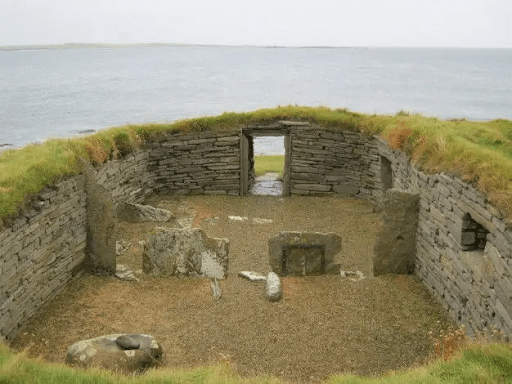
    Neolithic Farmstead- 3500 BC to 3100 BC- Orkney Island

    Agriculture- Origins

    Dependence upon nature’s bounty was sometimes risky. The small hunter-gatherer societies faced a multitude of difficulties; extreme temperatures, drought, famine, and disease could easily end the existence or annihilate the majority of their populations, occasionally, their entire population. It is said that “population control” was most likely common, that infanticide may have been practiced regularly to keep the groups small enough to support themselves. These are things we will never know for certain………. but that’s okay; it’s not something I really want to know.

    In order to ensure regular food supplies, the Neolithic people turned to farming; scholars believe that it was the women who honed the craft of caring for plants. Instead of just gathering them for use, they began to take more notice of the things they gathered; learning their cycles, watching their reaction to both rain and sunlight, and finally nurturing them in order to regulate the food supply. This process took a long period of time, but eventually the need to hunt was lessened by a steadier supply of food, people were able to coexist in larger groups, and the constant need for movement became far less frequent.

    Domestication marked the period. Plants and animals were trained and made use of, but these societies were independent ones, and the rate at which they came into being was independent as well. Similar societies began to emerge all over the world. Paleolithic experiments transitioned into agricultural societies, and over time farmers learned which plants were the sturdiest, which wheat would yield the most grain. Vegetables; peas, yams, and okra—all of these became a regular part of the diet. Then there were the animals; sheep bred with the intentions of producing thicker wool, and cattle, which supplied both milk and meat.

    Agricultural economies did not come into being on a specific date; they sprang up sporadically, and the idea and process took years of cultivation before this new way of life was truly realized. Agriculture was not a revolution; it was a transition.

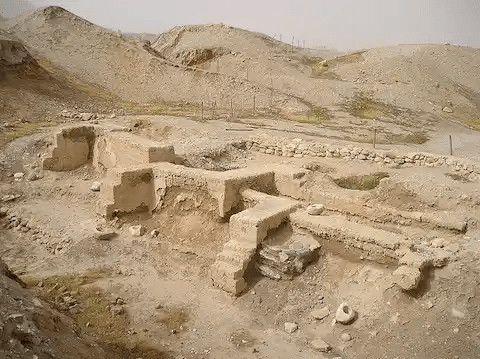
    Remains of the walls of ancient Jericho, the longest settled city in the world…………

    Changes

    The most important change ensuing from the use of agriculture was a large explosion in the population. This change in itself necessitated new forms of social organization; people no longer devoted their time to foraging—they devoted it to cultivation. Because of this, the people of the New Stone Age built permanent shelters in close proximity to their fields, and unlike their predecessors they had no need to continue the migratory lifestyles of their Paleolithic ancestors. Villages were born.

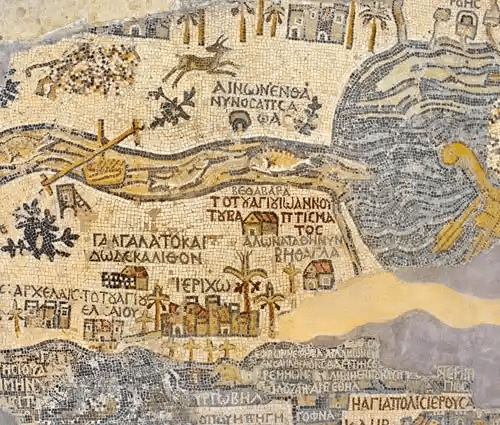
    Jericho, established near the Dead Sea, is home to one of the earliest known Neolithic Villages. Its inhabitants may possibly have numbered two thousand; they lived in circular mud huts that were eventually surrounded by walls and moats, signaling their consequent transition into a wealthy community. Farmers cultivated both wheat and barley, aided in their endeavor by the nearby oasis.

    Jericho’s sheer size allowed for specialization of labor; food surpluses gave some people the opportunity to experiment with other talents, talents that would lead to other enterprises. Jericho soon became more than just an agricultural community; it became a center of trade. Salt was a valuable natural resource, and an abundant volcanic glass called obsidian supplied them with another resource that was used to make knives and blades. Make no mistake, these were not the rudimentary objects of the Old Stone Age; their edges were clean and sharp, and the obsidian was polished to a previously unknown sheen. Craftsmen were born, and a new source of support had arrived.

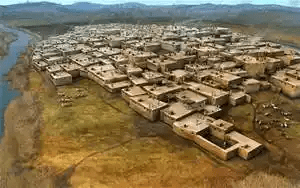
    Catal Hyuk as it might have looked…

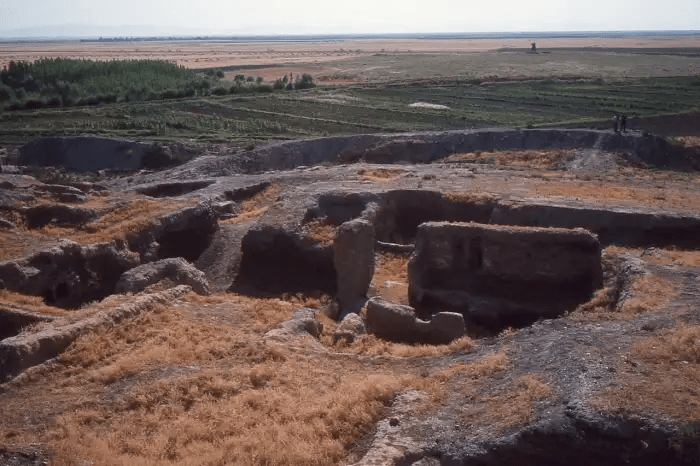
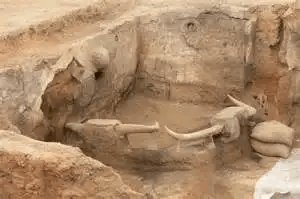
    Excavation Site

    Catal Huyuk

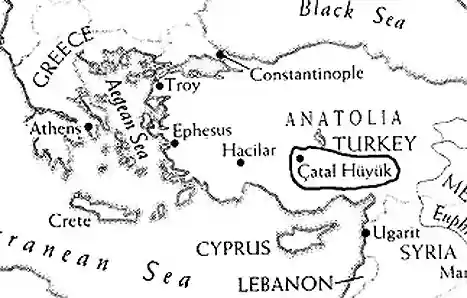
    The information we’ve gained about the Neolithic Era is due in large part to the discovery of a large mound on the banks of the Carsamba River in what is now southern Turkey. Large is likely not an apt description, as the measurements of the mound are equal in size to approximately twenty-one football fields. This very large area is one that would easily be passed by unnoticed, a hill on the horizon, but underneath that hill is Catal Huyuk, the largest ancient city ever located by archaeologists.

    Somewhere around 8,500 years ago, Catal Huyuk was a bustling city and home to what is thought to be around 5,000 people. Its inhabitants lived in well-made homes that boasted brick walls, which were covered with plaster; roofs were flat, and their wooden beams were strewn with grass. Homes were also connected (perhaps for protection), had no doors, and the citizens of that city entered their homes through holes in the roof and ladders that awaited their arrivals and departures. The city had no streets.

    Visitors to the city would have been impressed by its size, but the buildings themselves held no beauty on the outside. It would have been an invitation into someone’s home that would have changed that impression. Interiors were richly decorated; walls were covered with artistic depictions of cattle, leopards, and various species of plants. Each home was equipped with a fireplace, an oven, and reed covered platforms that served as sofas during the day and beds at night. Each home had a storage room, and the people of the city depended on the things held within it. Clay pots stored enough wheat and barley for a family to subsist on for an entire year.

    Catal Huyuk was not only self-supporting, it created surpluses. Its farmers supplied the food for the entire city, a task that left them time for little else, but it was their accomplishments that allowed further specialization to occur. The farmers planted and harvested the crops; others made wheat from what they provided. Houses needed building, bricks needed making, women needed utensils, and everyone was still in need of tools. The community initially thrived economically on this new method of exchange, but little did they know that soon their city would soon be booming with trade.

    Catal Huyuk- Crafts and Trade

    Catal Huyuk eventually transitioned from a city of independence and self-support to one of trade. Technology was developed that enabled craft workers to create jewelry, and the discovery of copper gave the jewelry a new look. Fine pottery that was ever more intricate in design became commonplace. Wool from domesticated sheep was separated and twisted into thread, and looms were created allowing cloth to be made. This woven cloth is thought to be the first of its kind. The use of obsidian continued; it was valuable, and it was desired. Obsidian not only made the sharpest knives, it also made the most beautiful mirrors. But what did Catal Huyuk need in trade?

    That answer is a simple one. Archaeologists have found evidence of an abundance of materials within the mound that would not have been available in the area. The forests were miles and miles away, and yet, Catal Huyuk used wood in the construction of their homes. The copper used in the making of jewelry and tools was not native to the area, but they had obtained it, and someone must have supplied it. Remains of Syrian pottery have also been discovered there, as have seashells from the Red Sea; they didn’t get there by themselves. Who brought them? Who might have traded the sound of the ocean for a copper ring? Who might have bartered a Syrian pot for a mirror of obsidian?

    The First Civilizations

    The New Stone Age was a time of discovery and settlement; it was a time when communities prospered and a time when humanity was able to dream of a life different from that of their ancestors. Catal Huyuk is an example of the changes that agriculture brought into the world, but more changes were to come. The first civilizations would soon follow the city under the hill; they grew near rivers—different rivers, and in different countries, but grow they did. Some have even left records of their lives behind, and we will be looking at them soon………… but not today.

  • Thousands of years ago, the Earth was a very different place. The northern part of the world was covered by thick sheets of ice; the animals were far larger than any we have ever seen, and they were covered in long wooly hair that afforded them warmth and protection. The ice and frigid cold caused these animals to migrate; they trekked across thousands of treacherous miles in search of a warmer climate and food sources; they migrated in order to survive. If we were afforded the opportunity to watch those migrations firsthand, we’d see other things as well; for not so very far behind another form of life followed in earnest; that life form was man.

    “Survival of the fittest” is an apt cliché when looking at the small bands of hunter-gatherers who plodded on behind one of their most important sources of food; this wasn’t evolution, it was conformity. Only those with massive amounts of strength, courage, endurance, and most important of all, intelligence would survive the journey; most would die of starvation or succumb to the elements, but those few who did survive would find themselves on the Earth’s most southern part. They weren’t aware of how far they’d traveled, and they had no idea that others had preceded them there, or that others may have been there all along. What they would have been aware of was that they’d survived long enough to realize their purpose, that they weren’t wrong to have trusted the instincts of the animals they followed, and that the environment could only be beaten if you had the courage to change it, to physically change it by moving on.

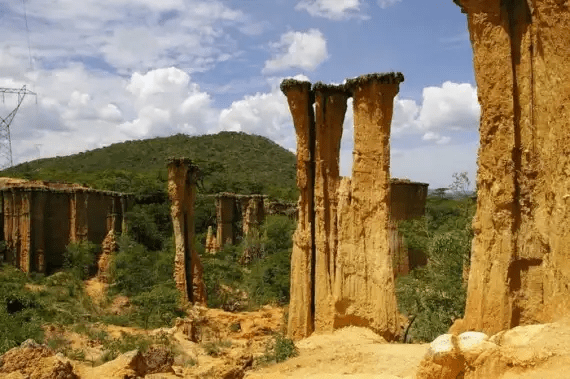
    ISIMILA (TANZANIA) ONE OF THE WORLD’S OLD STONE AGE SITES

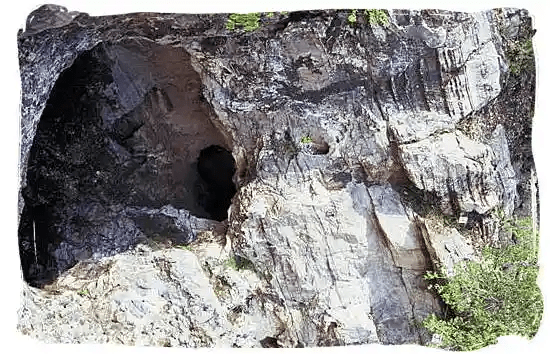
    Sterkfontein Caves South Africa

    Hunter- Gatherers

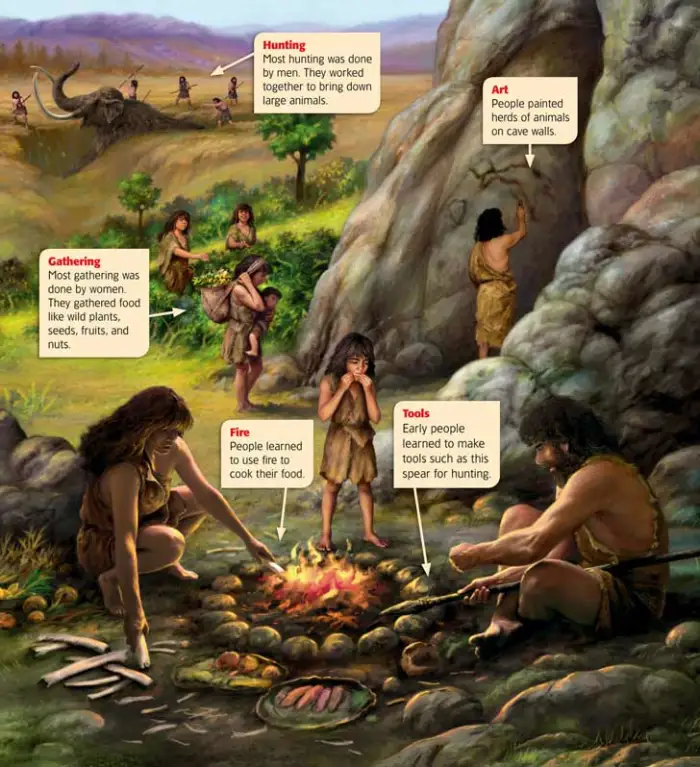
    The hunter-gatherer societies were adept at hunting for their food and gathering other food sources from the plants around them. Plant remains discovered by archaeologists have also displayed that they held far more knowledge about botany than previously believed. Trial and error had educated them as to the dangers and uses of plants. In time, these societies knew which plants were medicinal, which were deadly, and which were safe to eat.

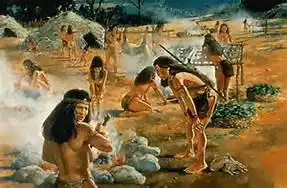
    The hunter-gatherers often lived in caves. This type of housing afforded them safety from the elements, and it also allowed them to keep watch over the areas below their campsites. Evidence from South Africa gives us a glimpse of the way they lived, and the discovery of a place called the Border Cave has allowed archaeologists to envision what life was like 40,000 years ago. The picture they paint contains a natural cave built into the side of a cliff. Surrounded by buffalo-thorn trees and other types of shrubbery, the cave overlooks a grassy river settled deep inside of a luscious valley. The valley itself is home to a variety of animals, animals that the hunters would need for food. Each year, herds of eland (a breed of antelope) would come back to the valley, and each year the hunters would wait for their arrival.

    Tools and Technology

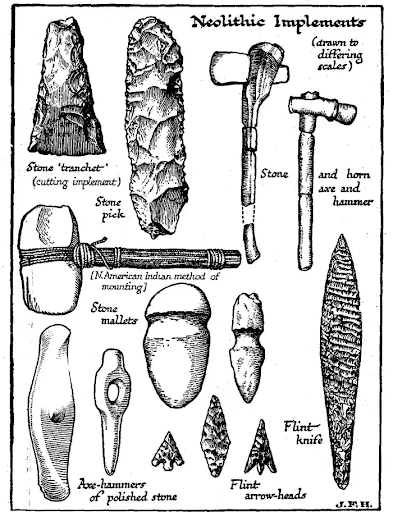
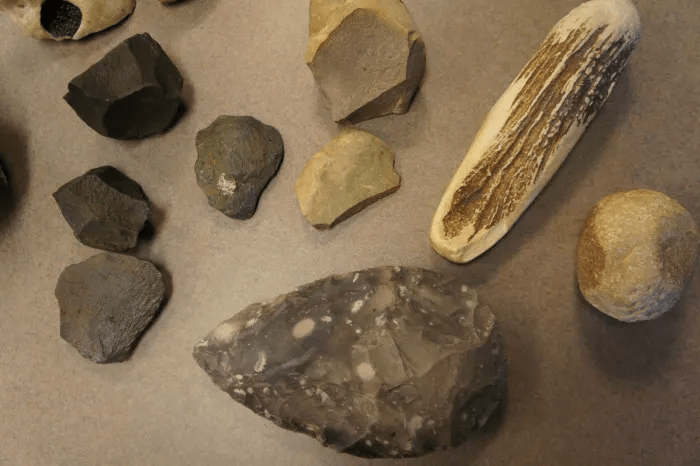
    The world’s first technology was without question the “stone tool,” and up until around 12,000 years ago, stone tools were the most commonly known to man. Some stones were naturally shaped, and others had to be shaped by their users, but a knifelike sharpness was necessary for them to serve their function. Hides needed to be cut, meat had to be prepared, and wood needed to be chopped.

    As time went on, man discovered that certain types of stone were better suited for tool making, that “flaking” the stones made them sharper, that flint was the most desirable, but that in a pinch obsidian and quartz would do just fine. Eventually, they came to realize that different sizes and shapes could be used for different purposes, and later, they discovered that baking the stones in fire made them harder and more durable.

    Fire itself was another important piece of technology. For the early hunters, this meant that meat and other foods could be cooked. For those living in colder climates it meant survival. The caves in South Africa have shown that grass was used for bedding and warmth, but that fires had been lit as well. Those fires provided warmth, food, and light, and they were often the deciding factor in who would live or who would die.

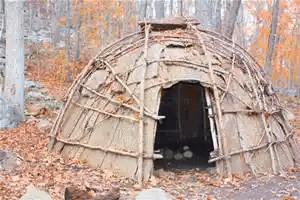
    The discovery of fire also stirred people with the desire to create more permanent shelters. Ancient shelters have been found around the globe; huts made from mammoth bones in Siberia and huts of branches in Africa. Ancient bedding was found in Israel, the oldest known to man in a place called Ohalo II, near the Sea of Galilee. Israel is also home to the oldest brush huts ever found; the huts are believed to be some 19,400 years old. Prior to the sea level falling due to a major drought this find was kept well hidden; the drought unveiled six huts, a grave, hearth areas, and an array of artifacts, tools, burnt fruit and seeds.

    Socialization

    The peoples of the Old Stone Age were for the most part hunter-gatherers, but over time that changed. Small bands of nomadic people began to grow in size. The thousands of years that the Earth had spent in a cycle of warming and cooling had started to level out. Warmer climates enabled humanity to stay put just a little longer before the time came for them to move on, and because of this the capacity to socialize became essential.

    The elders of the group were responsible for socialization. They made the rules, and they made sure that those living within the group respected those rules, not so very different from today. What was far different was the way their world was seen. The people of the Old Stone could only see with their eyes; everything else was a mystery and often feared. They could only travel as far as they could walk; they could only eat what they could gather or hunt, and they could only live in places that were provided by nature or made with things that nature provided.

    Changes

    As the Earth’s climate continued to change, the lives of people and animals changed as well. New and abundant plant sources supplied food, the changing coastlines provided marine life, and groups of people began to form settlements in areas that were rich with natural resources.

    Technology continued to slowly develop with the discovery of metals, the invention of long-distance weapons (spears), bows and arrows; things that could make hunting safer and more effective. Tools also aided in what would be the next major change in human life, agriculture, but that would bring us to the New Stone Age, and that is for another day.

  • As I’ve gone through my life, I am ever captivated by history and its connections to the world we live in today. Throughout history, people have consistently wanted the same things, those being comfort, community, and the opportunity to better their lives. Sadly, history also teaches us that over the span of thousands of years, humanity continues to make the same mistakes… that in moving forward, we also repeatedly refuse to learn important lessons about our world’s past.

    Having worked in the education field for over twenty-five years, I am appalled by revisionism. We should never rewrite history as a means to support specific viewpoints. History should be taught in a way that our children can learn from the past. It isn’t an ideology, it’s quite frankly what was a way of life. We use ancient documents, pictures, photos, scientific discoveries to build what we believe is a true depiction of the world as it began, progressed, and eventually became what is “our” collective home.