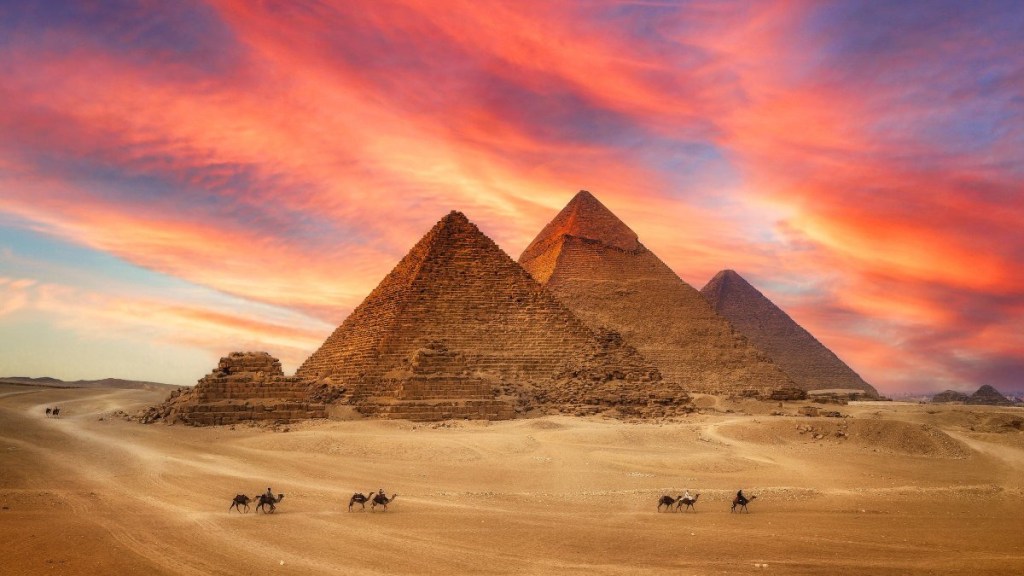
History Belongs To Us

Connection to History

  • Egypt is studied as one of the world’s earliest civilizations. Civilizations, as defined today, are made up of governments, religion, achievement, population, economy, social structure, and specialization, and if we look carefully at the civilizations in which we live today, it is easy to point out the similarities… the world has changed dramatically, and yet, we as humans continue to live in a world where all of these components, though transformed over the years, remain virtually unchanged.
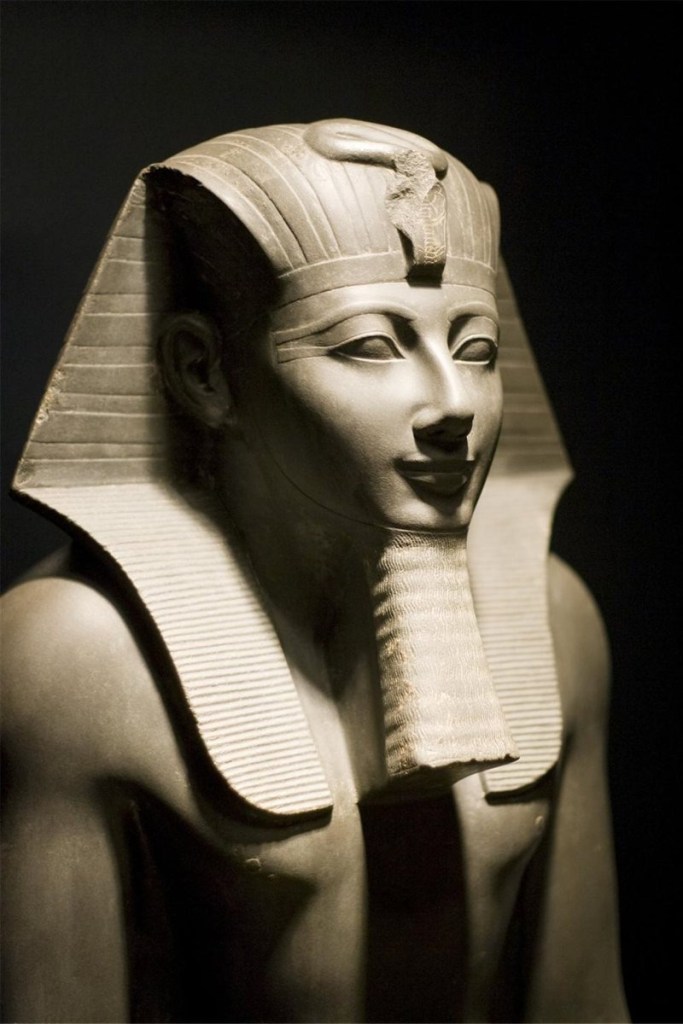
    King Thutmose III

    Thutmose III, The Napoleon of Ancient Egypt

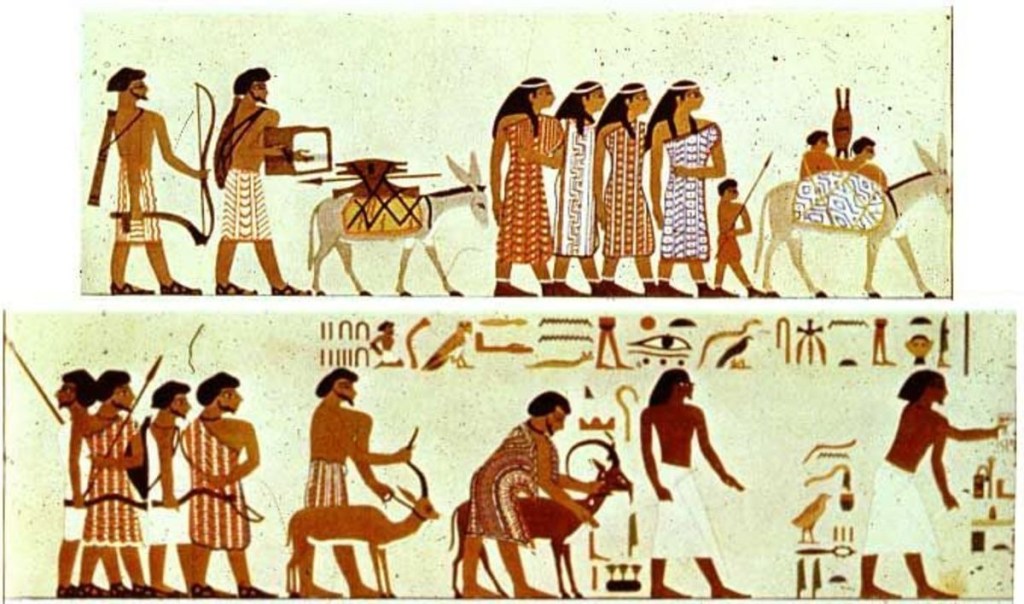
    Thutmose III, the sixth king of Egypt’s 18th Dynasty and a lauded military commander, is often referred to as “The Napoleon of Ancient Egypt”. As a warrior, he would conquer Syria, Canaan, and Nubia, expanding Egypt’s boundaries. As a king, he would enact major reforms that supported centralized power. Trade became all important, and with it, the fostering of peaceful interactions between regions, as well as a distinct focus on diplomacy. Expansion required a plan, it required growth, and most importantly, it required a prosperous economy. Thutmose’s dreams for an improved infrastructure required goods and labor. Trade routes didn’t establish themselves. Roads, canals, and bridges were erected to aid in the efficiency of transportation, travel, and communication. Without these things, governance would be difficult if not impossible.

    Thutmose III, however, didn’t merely focus on his own ability to rule. His patronage was essential to not only the building of temples for the many Egyptian gods, but the restoration of existing temples as well. A well-known example of this can be seen in the restoration and expansion of the Temple of Amun, where Thutmose III oversaw the construction of additional buildings and courtyards, which were adorned with intricately carved reliefs and inscriptions.
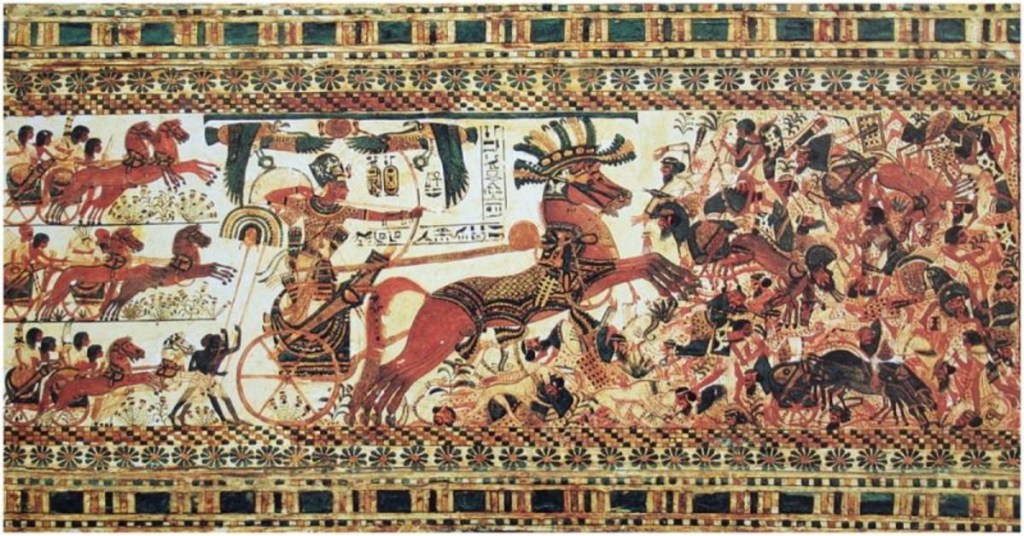
    Pharaoh Thutmose III and the Battle of Megiddo

    Ancient Egypt Under Thutmose III’s Rule

    As a patron of the arts, Thutmose III would support the work of Egyptian artists in their creations of exquisitely designed masterpieces using the mediums of stone craft, painting, and glass making. Many of these designs commemorated the king, portraying his (Thutmose’s) power and military conquests. Other artistry was centered around religion, the gods, and various mythological tales that have been passed down through the centuries. Art, like hieroglyphics, was used to tell stories, record history… to inform and preserve.

    If we set our sights beyond King Thutmose III, however, looking past his kingship, his conquests, his patronage, and his governance… we see the people. The Egyptians living under the rule of King Thutmose III were very much like the people we see around us today. These people, like us, had needs and wants… things that were necessary for survival, and things they dreamed of… sometimes attaining their dreams and sometimes not.
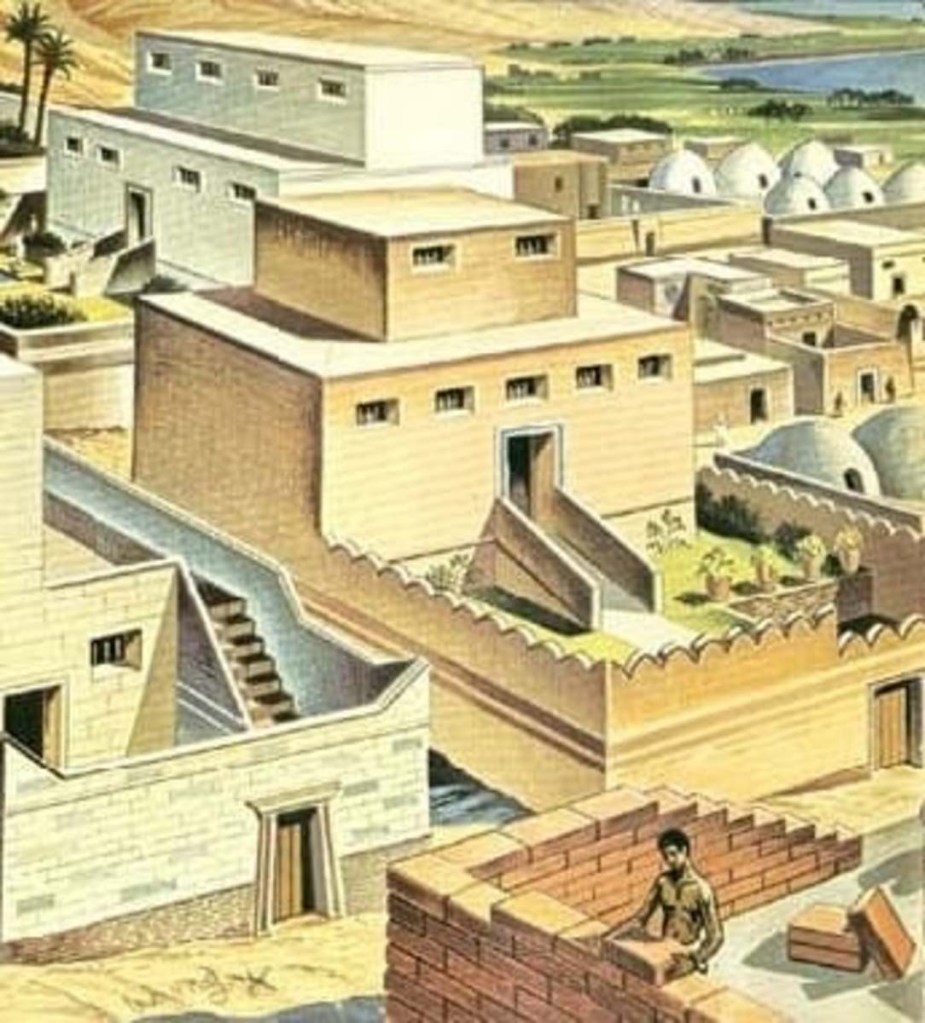
    The Opulent Homes of Wealthy Egyptians

    Lifestyles of the Rich and Powerful

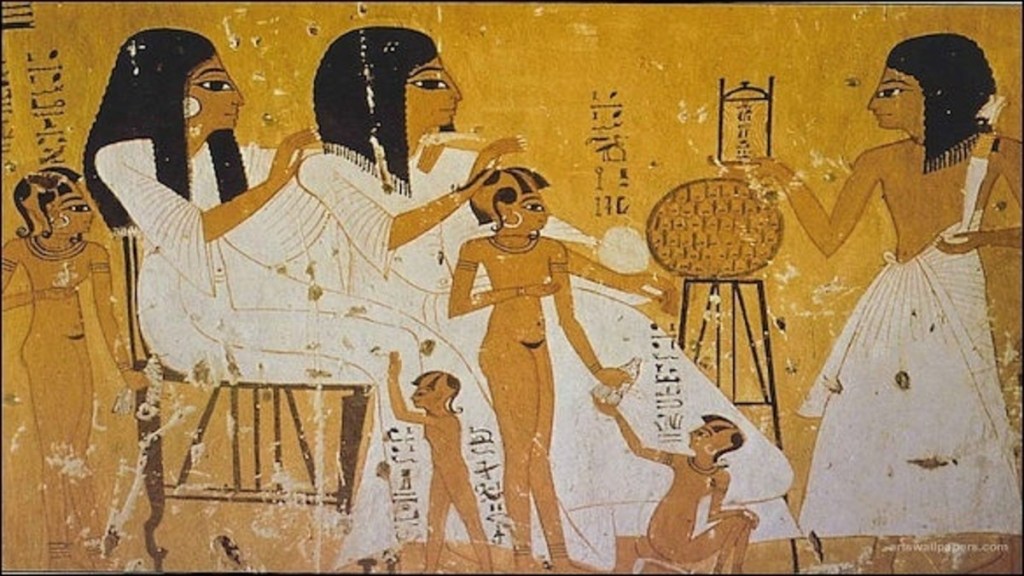
    Just like today, the wealthy lived in what were seen to be large, opulent homes that were often surrounded by gardens filled with flowers, vegetation, and trees surrounded by high walls. Built with sunbaked brick and wood, the bright, spacious rooms filling these homes were decorated throughout. Murals adorned the walls, and the ceilings were often painted to mirror the night skies; floors were painted with the intention of bringing the landscape indoors…. a pool here, grass there… art was everywhere, found even in the heavy floor mats and rugs that were woven with reeds and rushes.

    For the wealthy, food was abundant. If you had money, there was no limit to the fresh food, vegetables, and types of meat (regional) available to the household. Meal times were a time of family socialization but a bit messier than we’re used to. Where we use plates, the Egyptians utilized large portions of bread to hold their food. Where we use utensils, they used their fingers, wiping their fingers on their plates (bread), nothing was wasted.

    Ancient Egyptian Fashion
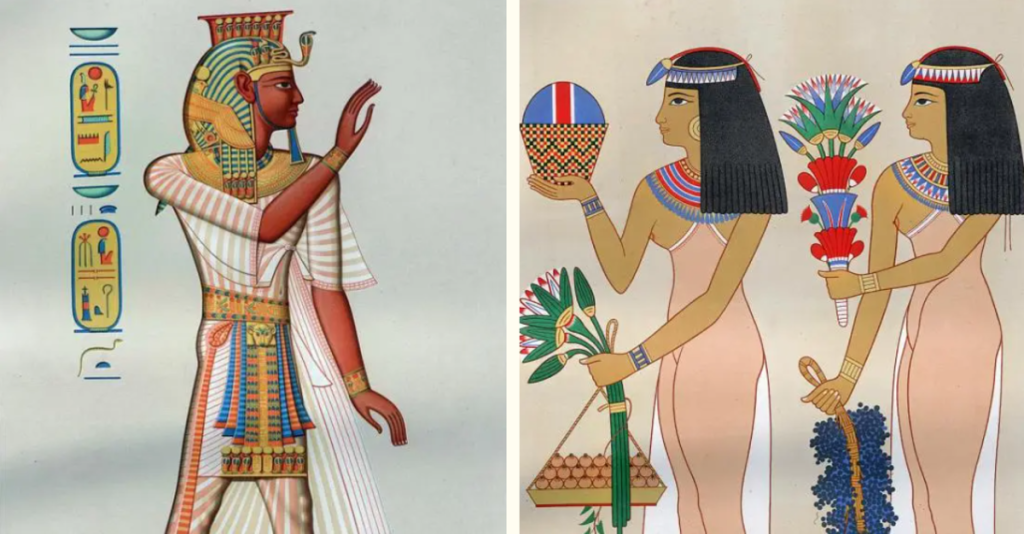
    In addition to a wide array of food, the wealthy enjoyed well made clothing. Both women and men dressed with care, focusing on their appearance. Women wore floor length dresses with shoulder straps, covered by loose garments made from fine linen. Men dressed in skirts, short or long to suit their individual preferences, often adding a cape that was worn over their shoulders. Both men and women adorned themselves in white, which was often embellished with brightly colored, detailed embroidery.

    Slavery in Ancient Egypt
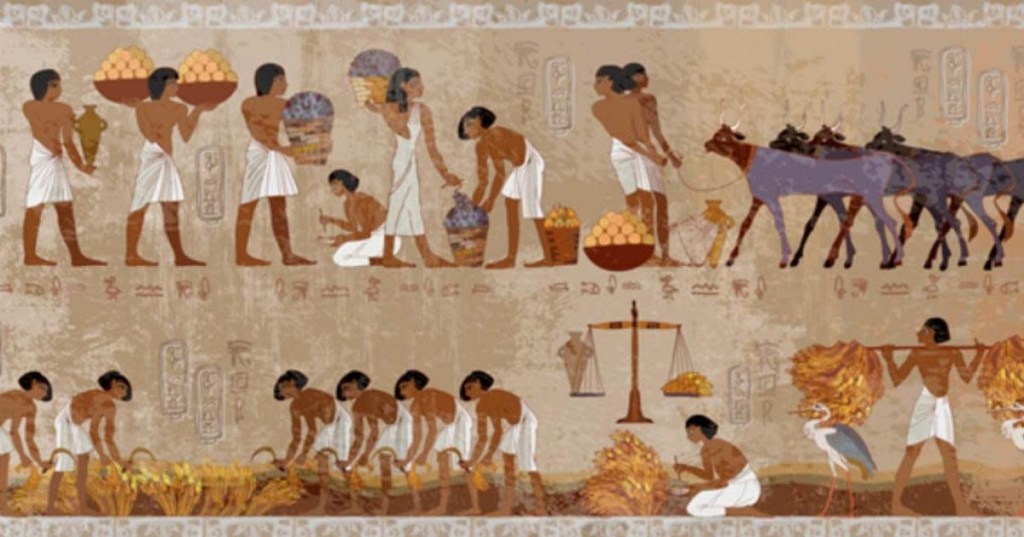
    As evidenced, wealthy Egyptians enjoyed lives of leisure. In addition to their beautiful homes, the wealthy also owned slaves. They were continuously waited on, fanned to keep cool on hot days, and entertained by those they held within their households. Food was prepared, laundry was washed, gardens were tended, and houses were cleaned… not by their owners, but rather, by their human property, property that was procured by both force and choice.

    Slavery, has without doubt, existed in one form or another since the beginning of civilization. The conquered were enslaved by their conquerors (prisoners of war), children were born into slavery via the circumstances of their mother. People, by choice, would sell themselves (or members of their family) into bondage in order to pay off their debts, many others were abducted and sold for profits, and yet still others, at the lower scales of the social hierarchy, would sell themselves in exchange for food and shelter. Sometimes, the thought of shelter and a good meal makes people do things they would never otherwise have done.

    Life in Ancient Egypt
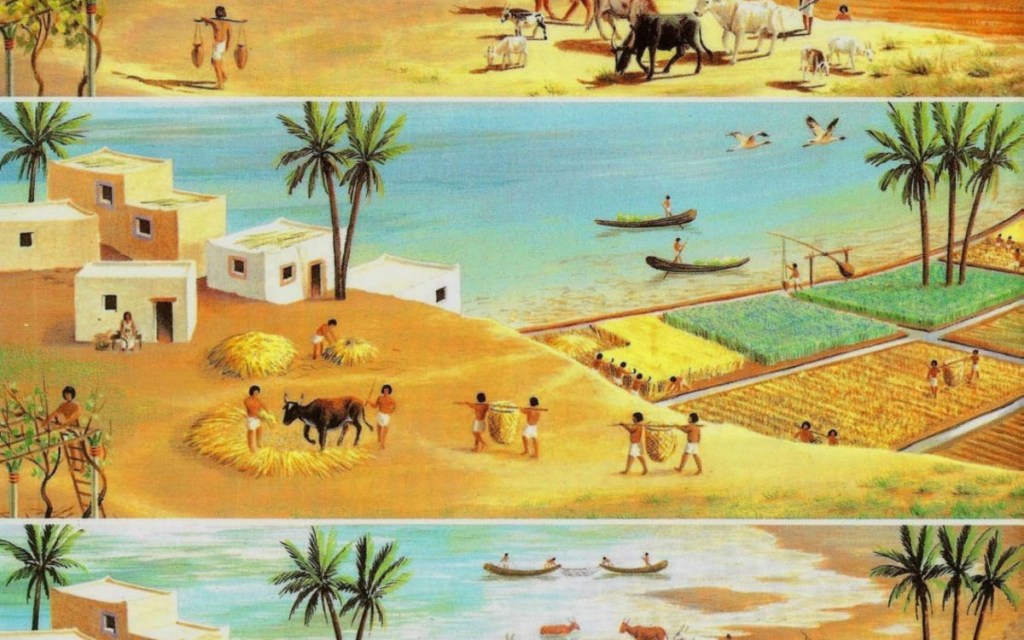
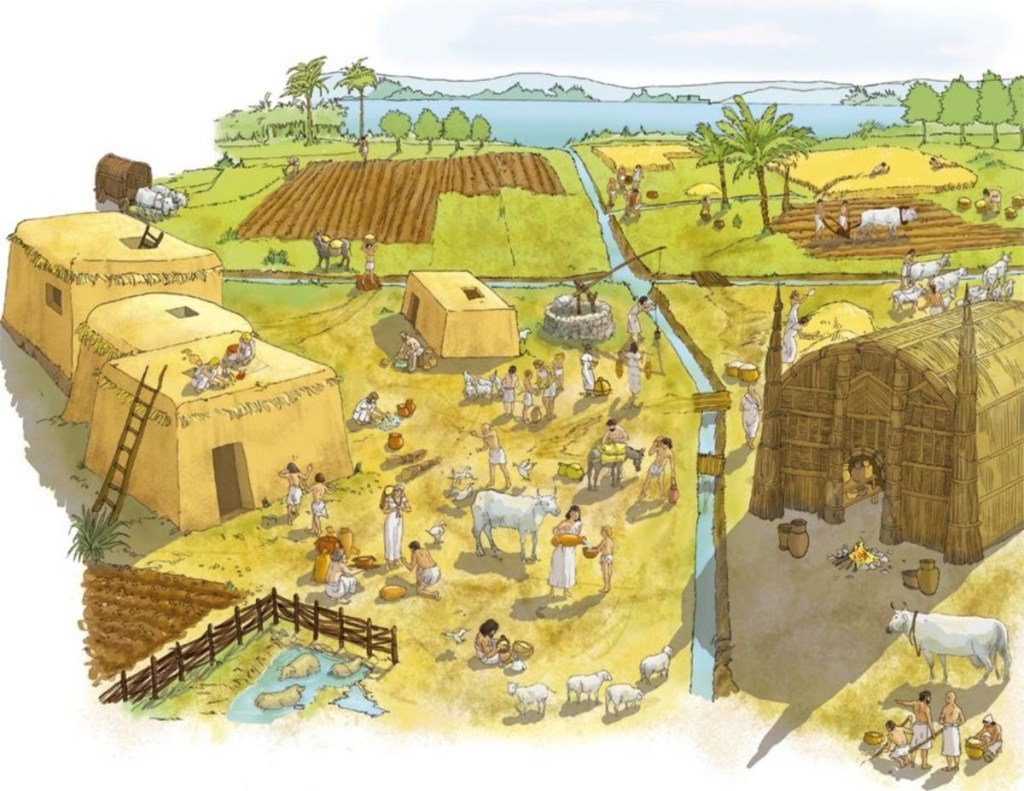
    The majority of the people living in Egypt were poor peasants. They lived on land belonging to the nobles in simple, one room mud houses thatched with the abundant grasses flourishing near the Nile River. Furniture was sparse, beds were simple mats laid out on the floor (dirt), and meals usually consisted of nothing more than a few barley cakes, dried fish, and goat’s milk. Clothing was simply made. Men wore trousers and shirts; women wore dresses made of coarse linen. Everyone worked… long, difficult, and likely what seemed to be endless hours of labor. In the end, however, the progress made by the Ancient Egyptian civilization would provide for more and more opportunities for the peasantry to better their lives.

    Education in Ancient Egypt
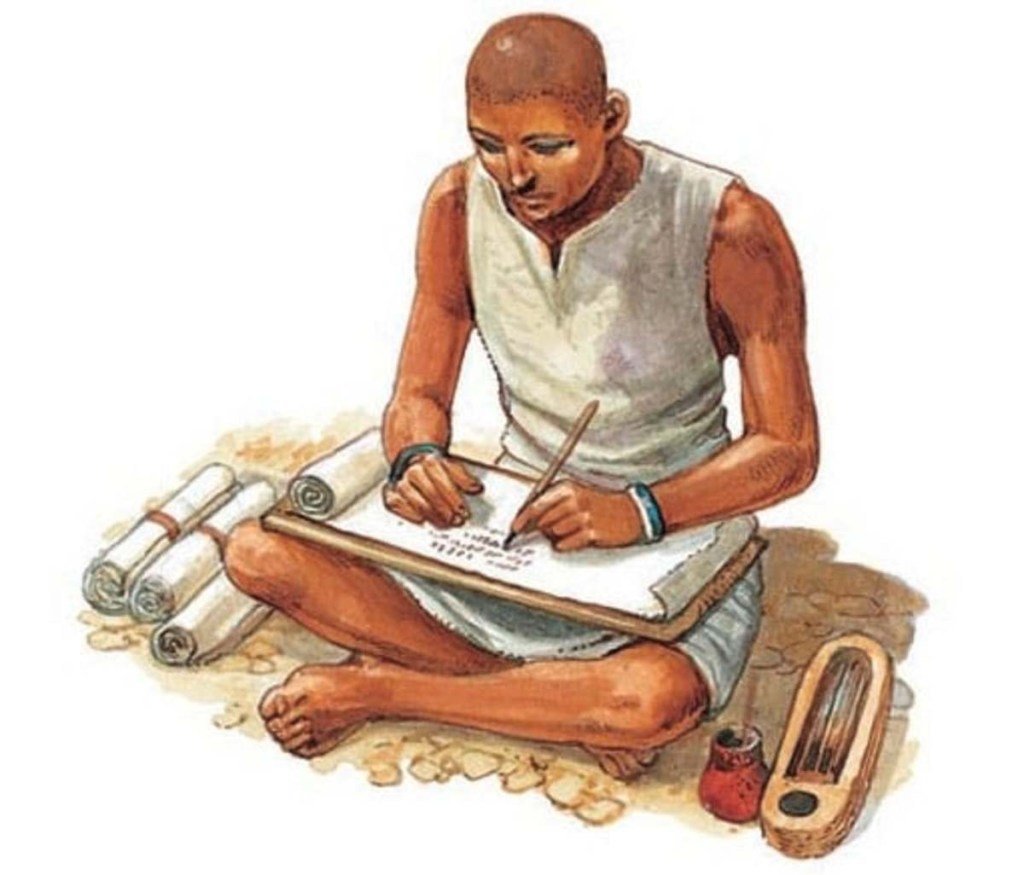
    In the early days of the Egyptian Empire, education was a privilege, and schooling was only provided for the sons (yes, you heard it… no daughters) of the wealthy. The sons of the rich were trained to become leaders, scribes, and sometimes important members of the government. Over time, however, as populations exploded and trading reached new heights, some boys were allowed to branch out into new areas, learning new skills from those who specialized in a variety of areas… others were able to attend school, training for positions as clerks or record keepers. As the population grew, more jobs became available. As more jobs became available, opportunities for advancement grew and blossomed.

    The girls in ancient Egypt also received an education, but their education did not include reading and writing. Mothers and grandmothers were the teachers in their daughter’s lives. The daughters of wealthy families were taught to run the household, oversee the work of the slaves, and most importantly, what was necessary to become a good wife and mother. Daughters raised by working families needed to learn how to cook, preserve food, weave cloth, make clothing, and yes… they still needed to prepare the mothering skills that would be necessary after marriage and the birth of children. This education didn’t happen overnight, but rather, took place on a day-to-day basis. There was no time to waste, as girls were considered marriageable by the age of thirteen, and they often became mothers before their fourteenth birthdays.

    Ancient Egyptian Farming
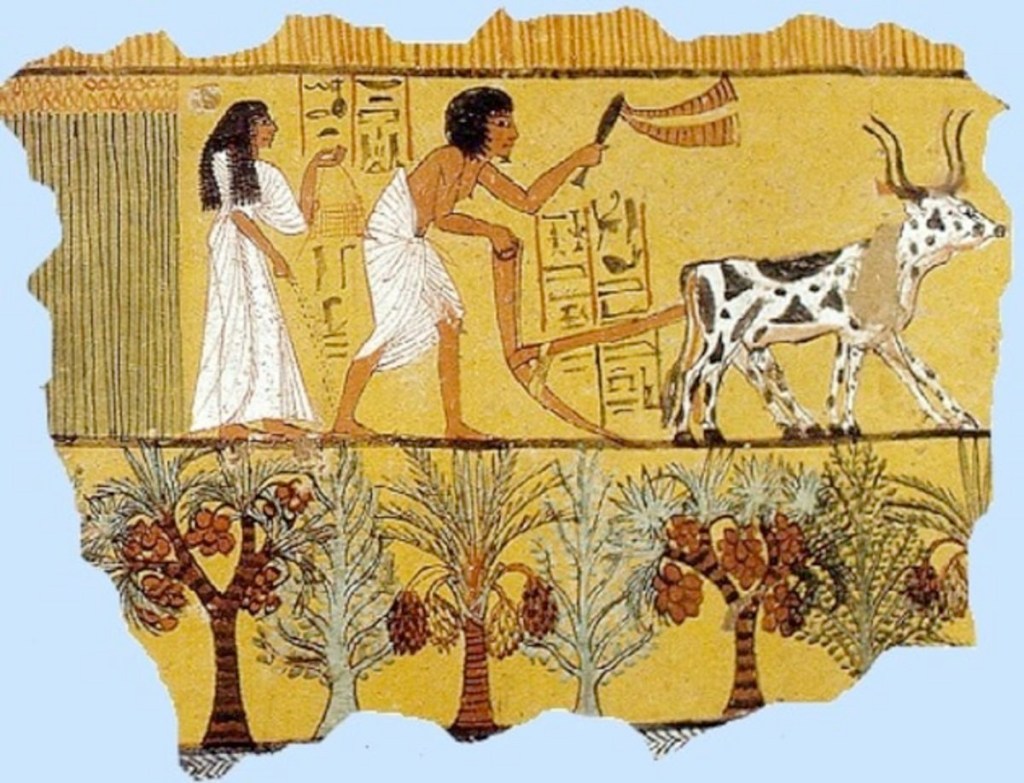
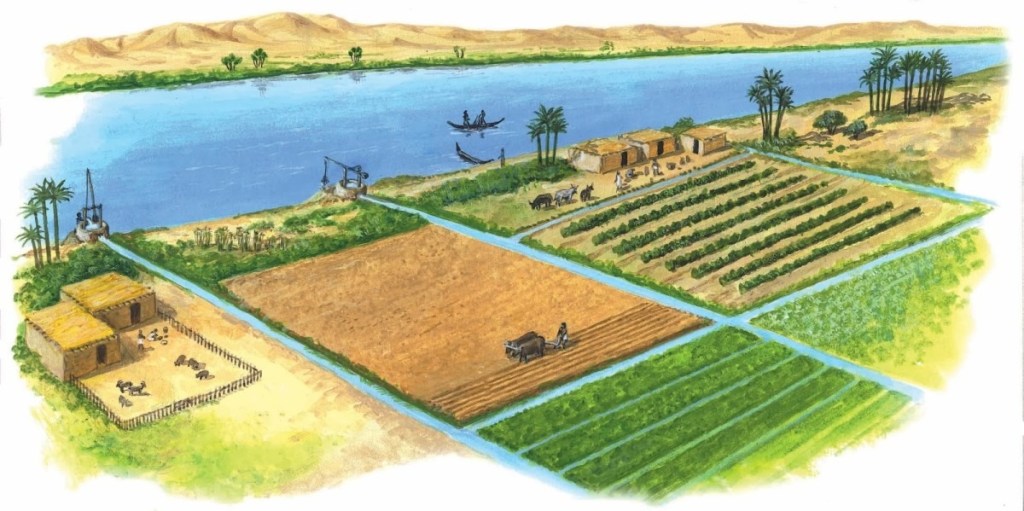
    King Thutmose’s kingdom, like all kingdoms, relied upon agriculture for its existence. Without farmers and a steady supply of food sources civilized society is impossible. Wheat, flax, and barley filled the fields, vegetables were sown, and livestock raised. The presence of agriculture allowed for trade both within and without the community. Craftsmen, suddenly in demand, could work from home workshops or set up shop along the narrow, crowded city streets. Sandal makers, jewelers, cabinet makers, bakers, weavers, and my favorite… glassblowers honed their crafts. Talented craftsmen had the opportunity to move up in the world, especially if one of the wealthy nobles offered their patronage to a promising artist.

    Pottery
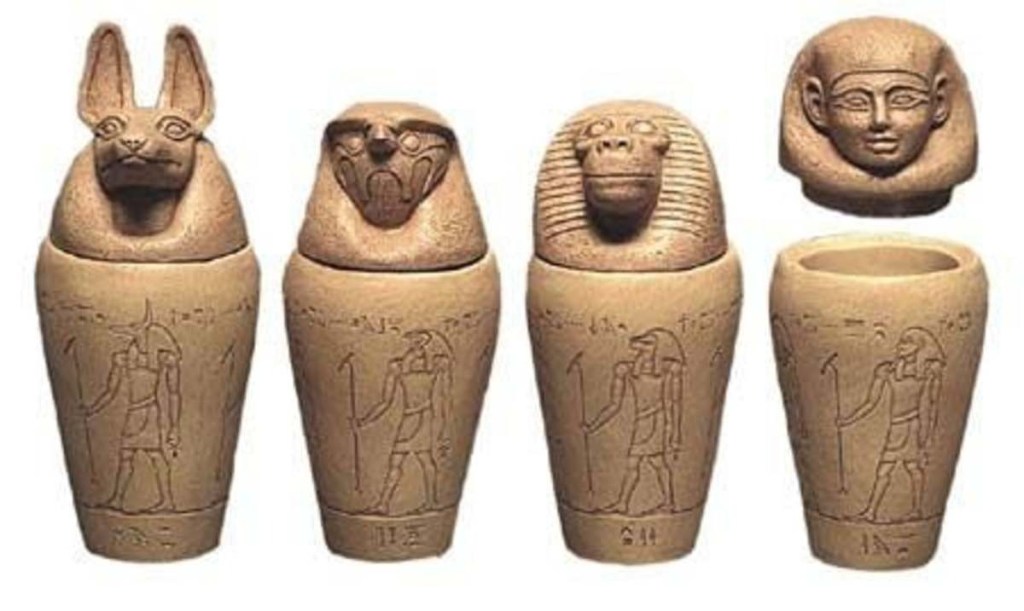
    One of the most notable of the Egyptian arts was pottery making. Egyptians invented the pottery wheel, and with its use, beautifully crafted vases and jars were created for a variety of uses. Making pottery is in itself a painstaking process requiring skill and patience. Every piece was different, molded by hand, and baked in a fiery kiln. Initially, potters weren’t interested in creating works of art, but rather functionality. Pottery was an important commodity throughout Egypt that was used in barter and trade. A client needed to store his wares for sale; a potter needed to make a living.

    Initially, pottery was formed using silt from the Nile River, hence its name, Nile Silt Ware. This pottery was the most common, and it was primarily used for functional purposes. Over time, potters would come to use different types of clay, and the earthenware they created would move beyond mere functionality, taking full advantage of the variety of textures, strengths, colors, and durability of their sources. Today, Egyptian pottery tells the story of the ancient civilization in which it was created, from the simplest containers to the elaborate vases that showcased artwork depicting the lives, traditions, rituals, and beliefs of their creators.

    Trade & Barter
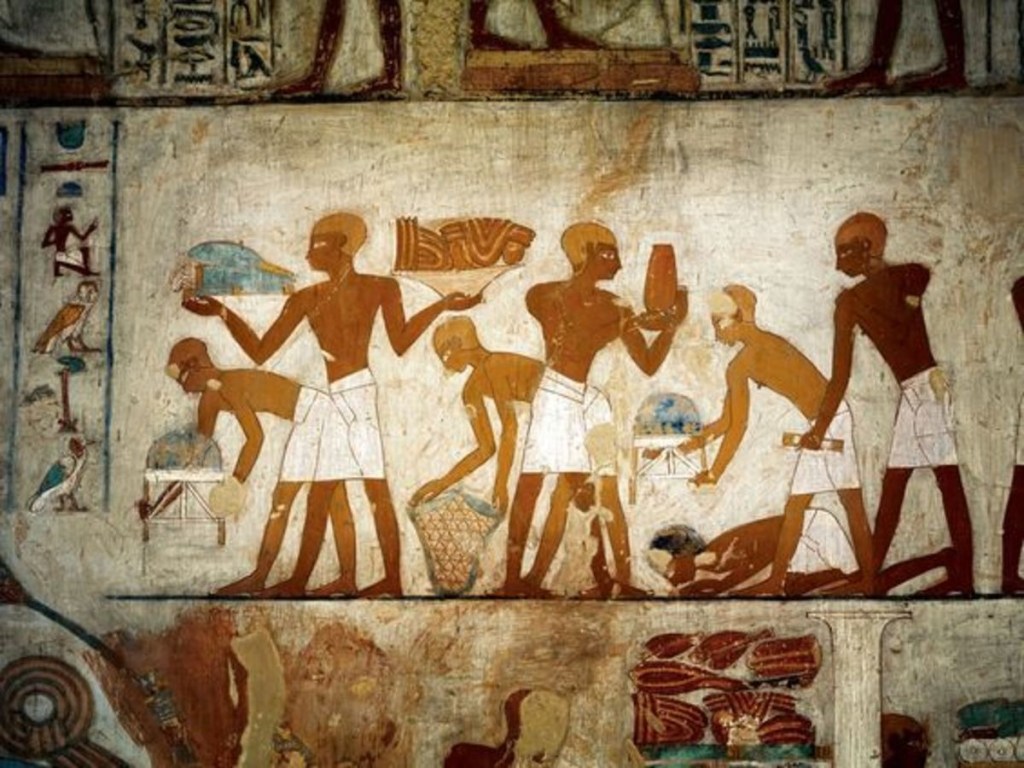
    As already stated, the Egyptian economy relied on trade and barter. Coinage hadn’t yet been invented or put into play. The wealthy, however, did sometimes use gold as payment for services, small gold rings that were carefully weighed and inspected to discourage cheating. The value and cost of items were assessed, but bargaining was always a part of the process. Some people were better bargainers than others, which was a benefit during the negotiation process.

    Pharaoh Ikhnaton aka Akhenaten
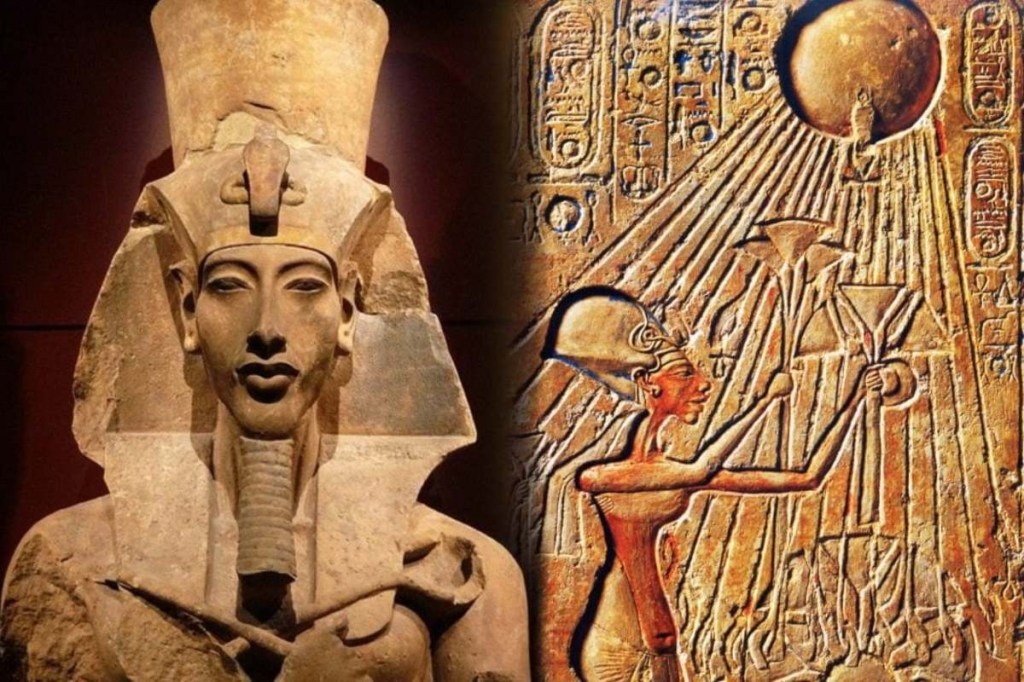
    Less than one-hundred years after the death of Thutmose III, the Egyptian Empire would fall into decline. Why the decline? Likely, we’ll never know. Some say that Thutmose III’s reign was followed by reigns of weaker men, who were less than capable leaders. Still others say that conquered lands grew more populace, stronger, building up their own armies to claim their independence. Possibly the nobles in these growing cities wanted to establish their own power, possibly those living in poverty grew so dissatisfied with their living conditions that they rebelled against working for those they didn’t deem worthy of their loyalty.

    Pharaoh Ikhnaton, also known as Akhenaten, was one such ruler. Rather than govern his people, protect his region, and look toward the expansion of his realm, Ikhnaton focused on religion. He is not remembered for his contributions to Egyptian society as a whole, but rather, for being the first pharaoh to abandon Egypt’s polytheistic beliefs, and the first to introduce monotheism.

    Monotheism in Ancient Egypt, Implemented and Rejected
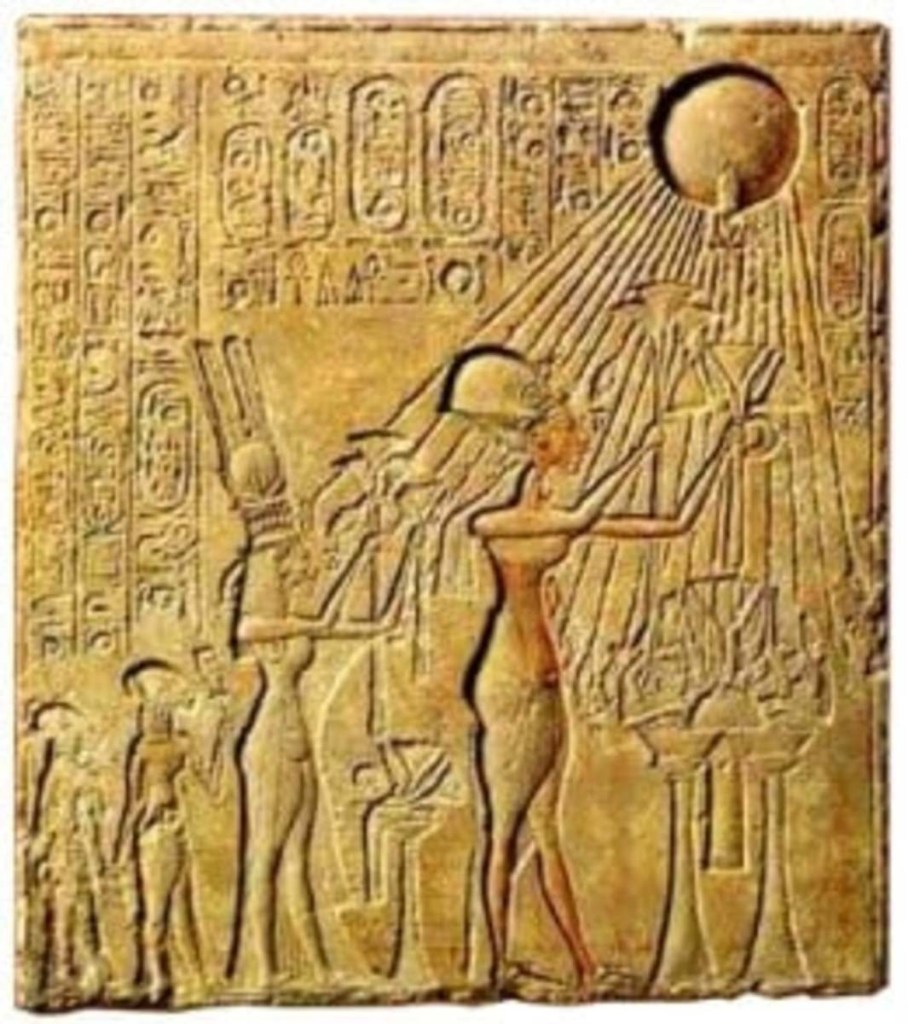
    King Akhenaten with his wife Nefertiti and their daughters bearing offerings to Aten (Aton).

    Ikhnaton dedicated his life to creating a monotheistic Egypt, centered around what he believed to be the one true god, Aton, the sun-god. As ruler he set upon closing temples built to worship other gods and order the construction of temples dedicated to Aton. Traditional rituals were set aside, offerings were given up outdoors in open air courts, reliefs were carved into exterior surfaces to protect them from direct sunlight. Walking through the temples one could see a depiction of royal life, which most often portrayed the royal family’s dedication to Aton.

    Within five years, Ikhnaton implemented his new religion, moving his capital and religious center to a new, untouched, desert area surrounded by limestone cliffs on the east bank of the Nile River. Within nine years, he would go so far as to proclaim Aton not merely the most important god, but the ONLY god. In essence, he erased, or in today’s terms, cancelled the existence of all other gods, removing their names and images from the temples, rewriting, or attempting to rewrite history. If they were destroyed… they never existed.

    Tutankhaten, Son of Ikhnaton
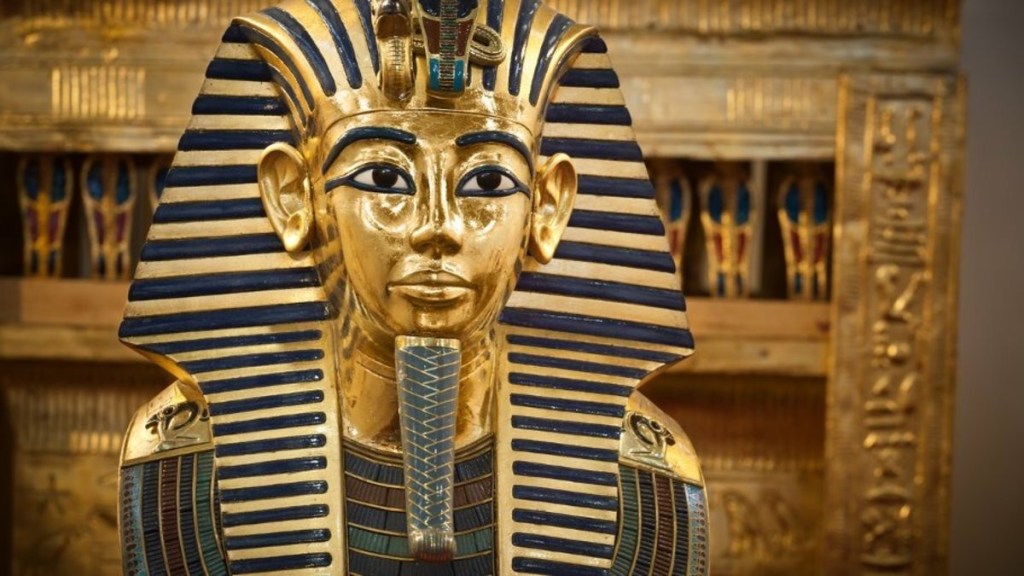
    King Tut

    In the end, all of Ikhnaton’s changes would only succeed in temporarily altering the Egyptian landscape. His changes weren’t embraced or long-lasting. During his reign, the people were unhappy with his decisions, and they certainly weren’t ready for the elimination of their gods and religious festivals. With Ikhnaton’s death, things would quickly return to normal. Though his successor remains unclear, the eventual succession of his son, Tutankhaten, is clearly recorded. We also know that Tutankhaten, who we know as King Tut, in his eagerness to please the people, or perhaps because of his own personal beliefs, distanced himself from Aton, restored the old gods, and reopened the temples to the Egyptian people, but that is a tale for another day.
  • What an experience it would be to have one short twenty-four hour period of time to travel into the past and see the world the way it was. Always intrigued by people and the history they’ve lived before us, I often wonder what period I’d most like to visit, but the fact is I don’t think I’d ever be able to choose only one.

    Creation? Maybe, but we have the chance to see God’s creation renewed each and everyday. The birth of a baby, the flowering of a plant, birds meticulously crafting a nest, that rare meteor shower visible in the night sky. Sunrise, sunset, thunder, lightning, ever changing landscapes, and the roar of the ocean. Simple things like smiles, and yet all part of God’s plan.

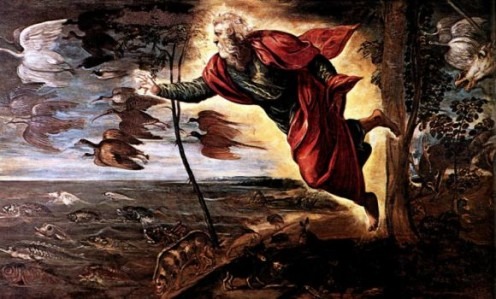
    Creation of the Animals by Tintoretto, c. 1550

    So how did God’s plan begin? Prehistory? What exactly is “pre-history?” God created the Earth in seven days. How long were God’s days? Did he measure time? The monsters of ancient history; did God place these creatures on the earth to teach man humility, to teach him to survive? Genesis, Chapter One gives believers an inarguable answer to this question: “God blessed them (Adam and Eve); and God said to them, ‘Be fruitful and multiply, and fill the earth, and subdue it; and rule over the fish of the sea and over the birds of the sky and over every living thing that moves on the earth.’” (New American Standard Bible).

    This one verse teaches us that God made man to rule over what we envision today as superhuman beasts with monstrously large teeth and claws to match, as well as majestic reptiles that yearned for nothing more than the salad provided by the creator’s splendid garden buffet. That man was meant to rule over them is satisfied by the knowledge that humanity has survived where their once great numbers dwindled into extinction. Scientists don’t share my beliefs, and they don’t have to. Nor do I have to share theirs…………..

    To go back in time would mean to become prey to the beasts that roamed the world before us. Could I survive even one day? Would I find myself in the midst of Hollywood’s Jurassic Park, only to become a small slice of meat on the evening menu? Would I miss all of the things I yearn to see because I’d run lickety split to the nearest place I could find to hide myself, only to be swallowed whole by the hungry vegetation I’ve never studied?

    The world of yesterday holds more mystery than any one person is capable of imagining, and I know that if I had the chance to visit, the things I’d like to see would be the moving, breathing animals we read about in our history books. The furry animals, you know, the ultra large versions of the animals we see today. The giant cats slinking through the tundra; the supersized elephant of yesterday sporting matted hair and unimaginable tusks; the animals that if I had them within close enough proximity (and muzzled), I’d like to scratch behind the ears. But enough of that………… let’s meet them.

    The Ice Age

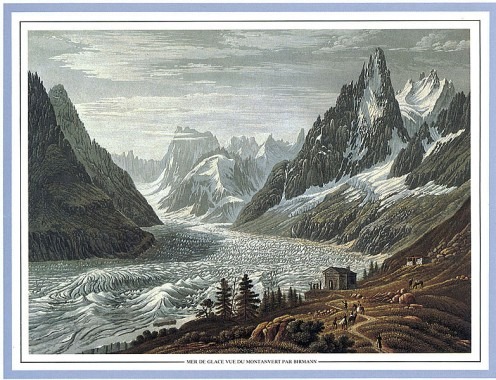
    The Earth has experienced many changes since its creation. One of these changes is known as the “ice age,” a period of time in which large portions of the world were buried under massive sheets of ice. Some of these ice sheets are believed to have been hundreds of feet deep, and during the coldest times, approximately one third of the Earth’s land was blanketed beneath the frosty layer.

    During the Ice Age; North America, Europe, and Asia were home to enormous glaciers that rose up like mountains on the horizon. These large rivers of ice slowly moved downhill, grinding away at the landscape, crushing soil and rocks, using their immense weight to mold the land beneath them. Many of these glaciers would have made the tallest buildings in existence today seem small in comparison.The layers of packed ice beneath them are believed to have measured more than a mile deep.

    Animals of the Ice Age battled daily for survival. Seasonal changes and slightly warmer weather during the summer months would melt the ice and bring forth streams to feed surviving plant life. Many plants were buried in the snow; the flowing water helped them grow again, and the animals that needed them for nourishment were afforded the chance to survive just a little longer.

    Many animals escaped the cold and ice by migrating to areas with warmer climates. They traveled long distances, trekking across what was sometimes treacherous terrain. Their path was carefully chosen by instinct and a desire for survival; they followed their noses, as it were.

    The creatures who chose not to make the journey found other accommodations. They made do with what they had. Movements of glaciers had not only carved paths through the land; they’d carved out areas in the hills and cliffs as well. The result of those natural carvings were caves, and the caves provided shelter and protection for the animals who made them home.

    Hyena

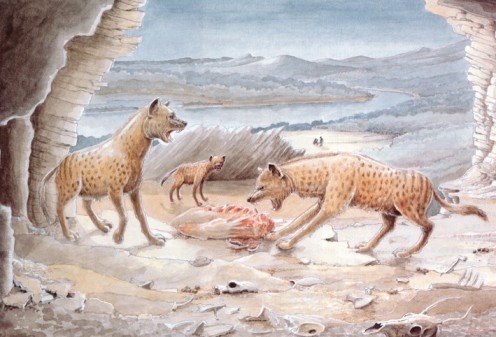
    Today, hyenas are only found in Africa. Unless of course, you visit them at the local zoo. But thousands of years ago hyenas could have been found wandering through much of the European countryside and living within many of Europe’s finest caves.

    Caves sheltered newborn litters and gave the hyena somewhere to feast on a fresh kill. Hyenas both lived, hunted, and traveled as packs.

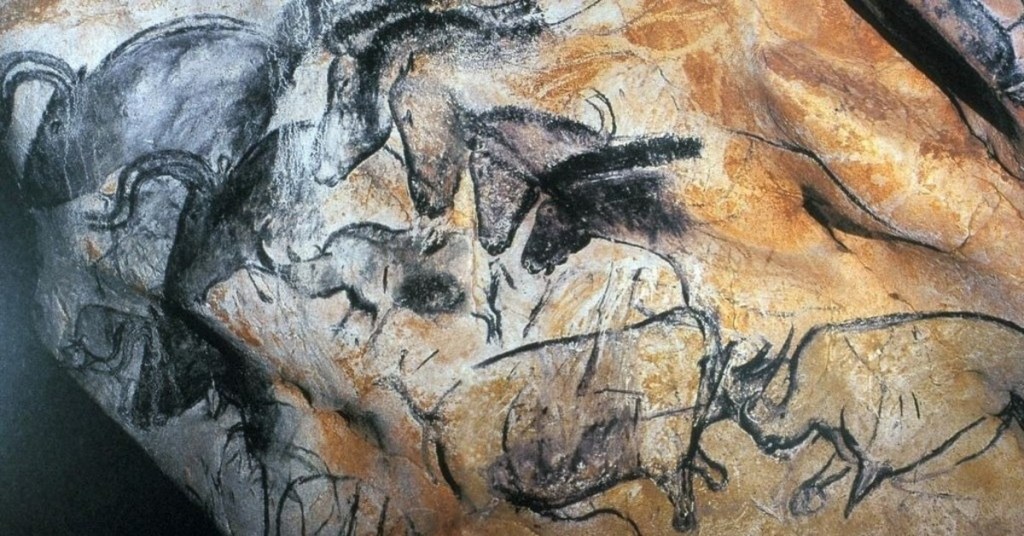
    Chauvet Cave Painting

    Cave Bear

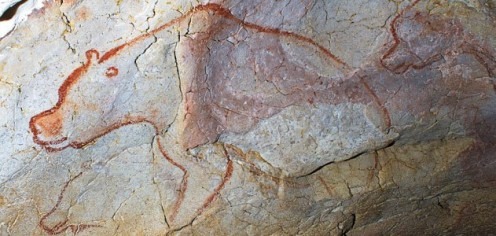
    Another cave dweller was the Ursus-spelaeus, better known as the “cave bear.” Standing seven feet tall, the cave bear would have been extremely intimidating. Think about the grizzly bear…………. he might stand over three meters tall and weigh in at more than one thousand pounds…………… the cave bear; he was bigger!

    Cave bears lived throughout much of Europe, and like the hyenas, they lived in groups. The remains of more than 100,000 cave bears have been found in caves throughout Europe, most notably in Austria.

    It is believed that the cave bears were vegetarians, and information gathered from the study of their remains has concluded that a good many of the bears died during hibernation. Signs of sickness and disease were evident in studies that were performed on specimens of all ages. By the end of the Ice Age, these bears had disappeared.

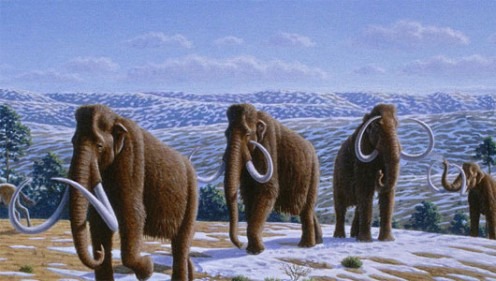
    The “Woolly Mammoth

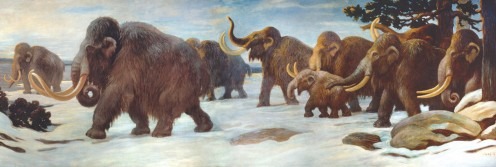
    The best known animal of the ice age, and my own personal favorite, would be the woolly mammoth. The name mammoth, derived from an old Siberian word, means “earth burrower.”

    When originally given its name, the mammoth was not thought to be an ancient, long extinct, prehistoric creature. Instead, it was believed to have been an underworld beast, something that lived underground in a burrow, never to surface because the open air would mean certain death. The mammoth was likened to a mole. Needless to say, those initial observations were incorrect.

    Far from creatures who burrowed beneath the earth’s surface, these “giants” stood more than nine feet tall at the shoulder and sported huge, curving tusks. Tusks were essential tools that allowed the mammoth to sweep aside snow and dig for the food buried beneath it; they were also useful during the mating season when the male mammoths busied themselves with fighting over the women.

    The woolly mammoth was covered with long, shaggy hair that could reach three feet in length; thus its name. But the woolly mammoth needed far more than a coat of shaggy hair to keep warm in the ice age environment; he actually sported not just one, but three coats of fur.

    The woolly mammoth’s outer coat was very coarse and very long. Underneath that wooly layer was a thinner, shorter underfur that measured ten to twelve inches and provided extra protection. A mammoth’s third layer of fur was its undercoat, a thick layer of wool next to the skin. Although this layer only measured one to three inches, it may have been the most important as it provided necessary warmth in an unfriendly environment. Further insulation was provided by four inches of fat located just beneath the mammoth’s skin. In other words…………. he was always ready to go out and play; no jacket required.

    Mammoths originated in Africa but eventually they migrated to faraway places, and took up residence in North America, Europe, and Asia. They traveled in herds searching for plants. Moss, grasses, herbs, and ferns were favorites. It is said that they consumed an average of 300 pounds of vegetation per day; now that’s a big salad! Plants were pulled from the ground by the mammoth’s trunk which served as a very strong, very flexible, and extremely handy appendage. The mammoth’s trunk allowed it to feel and grasp for things. We are able to observe similar movements in the modern-day elephant.

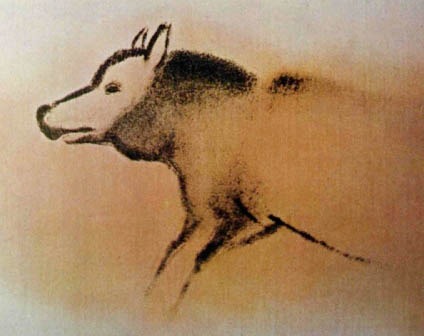
    Painting of a wolf in Font de Gaume

    Surprisingly, they say that outside of humans hunting for food, the mammoth’s most active predator was the wolf. It was during this period that the now extinct Dire Wolf roamed the world, specifically in North America. Large concentrations of fossilized remains have been found throughout California and Florida. The large numbers of fossils in these areas are attributed to their excellent conditions for preservation.

    Packs of hungry wolves would stalk the herd and choose its weakest member; then they’d give chase, tiring the animal to the point they could surround and bring it down. Dire wolves differ from the wolves we know today in that they were much larger, had sharper teeth and stronger jaws (perfect for crushing bones), shorter, stronger legs, and smaller brains. Seeing that the grey wolf migrated over the land bridge of Berengia some years after the dire wolf; I have to wonder if intelligence had anything to do with the survival of one and the extinction of the other. Maybe someday we’ll find out.

    Early cave art contains many depictions of the woolly mammoth. Most of these works have been found in the caves discovered in France and Spain. They are believed to be thousands of years old.

    Sabre Tooth Tiger

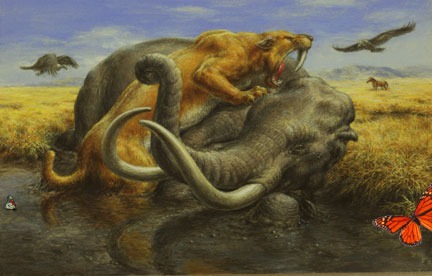
    It isn’t difficult to understand how the saber-toothed tiger got its name. Their large front teeth were razor sharp and shaped like the sabers (swords) we see on film and in museums. Many variations of the saber-toothed cats stalked their way through most every continent on the planet before their eventual descent into extinction.

    Growing to more than nine feet in length, the saber-tooth tiger was far larger than the tigers we know today. They boasted powerful front legs and shoulders, extremely large jaws that had the ability to open to an angle of over 120 degrees, and fangs measuring up to 10 inches long. Not one to waste time, the saber-tooth tiger aimed to kill its prey by penetrating the soft folds of its neck.

    As strong as they were, the saber-tooth tiger didn’t always have it easy. Their prey was often bigger, stronger, and more than ready to fight back. Brittle teeth were one of this big cat’s weaknesses; missing their mark and connecting with bone would often result in broken teeth. Scientists believe that many a tooth was fractured while attacking the belly of another beast and hitting the ribs of their prey. The saber-tooth cats were intimidating and a force to be reckoned with, but they were not invincible.

    La Brea Tar Pits

    The La Brea tar pits in California were a death trap for many ice age animals, and many of the remains that have been excavated from the site are both complete and intact. Entrapment in the sticky tar would have made for a slow and agonizing death in its own right, but to be eaten alive by predators such as the saber-tooth while sinking into the ooze and stench must have made that slow death even more unbearable. I wonder if it would have given the animals any sense of justice to know that the predators who attacked them at their weakest usually followed them into the abyss. The tar pits didn’t pick and choose; everything was fair game, and everything was devoured whole.

    Megaloceros

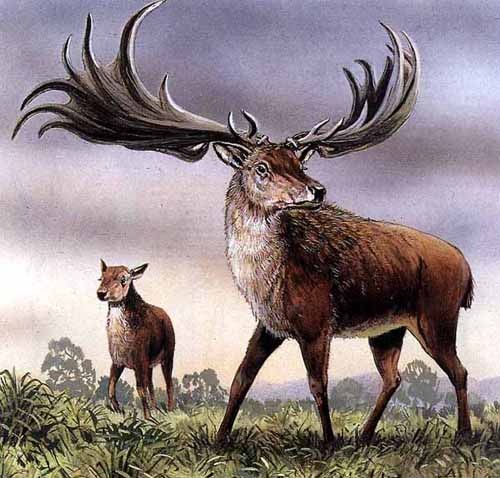
    To sight a Megaloceros would be any modern day hunter’s dream. Making their homes in Europe and in sections of Central Asia, the Megaloceros boasted the largest antlers of any deer that has ever existed. During the growing season, the male deer’s antlers would grow at a rate of a quarter inch per day. By the end of the season their crown would span an approximate length of nine feet.

    These immense antlers were a source of pride and a sign of vigor. As the end of the growing season marked the transition into the mating season, these deer would become combatants in contests that would require both strength and endurance. Large males show evidence of having weighed in at up to 1,540 pounds, with 80 of those pounds carried on the tops of their heads. Their prize was the right to mate. Shortly after mating, the females would go off to live on their own, and the males would do the same.

    For the male, the end of the season was marked by the loss of his antlers; they simply fell off, leaving the male a bit lighter and affording him the necessary agility he needed to move about during the harsh winter. Come spring, his antlers would once again begin to grow aided by a diet that consisted of grass, trees, and willow shoots. Willow shoots provided the vast amounts of calcium necessary to augment the antlers’ growth.

    Many remains of the Megaloceros have been found in the peat bogs of Ireland. Because of this, the Megaloceros is often mistakenly called the “Irish Elk.” It is believed that many of these majestic animals died because the size of their antlers made it difficult to navigate through trees. Becoming entangled in the branches of their environment; having their antlers grow to such a great size that they found themselves unable to raise their heads; and malnutrition are three of the reasons given for their eventual extinction.

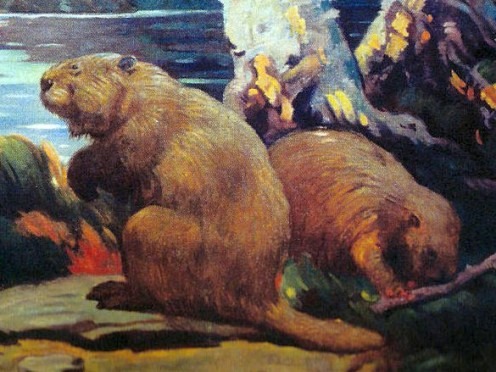
    Castoroides- The Giant Beaver

    Long ago, North America provided a home for the Castoroides (giant beaver). Dwelling in the lakes and forests of the continent, this very large amplification of present day beavers cut through wood with six inch teeth, grew to a length of eight feet, and could weigh up to four hundred pounds.

    This ingenious rodent lived through the last ice age before becoming extinct. The cause of its demise remains unknown, as does its purpose. No one knows if the Castoroides was a “builder” like its modern-day counterpart, nor do they know the reasons for its extinction. Minnesota proudly embraces the Castoroides as their state fossil.

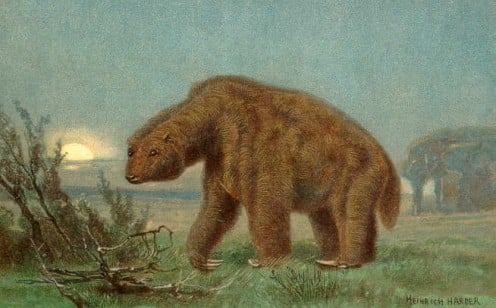
    Megatherium Cuvier, 1796

    Before the Earth’s plates shifted, joining the South and North American continents, South America was an island. While much of the world struggled with the ice and bitter temperatures, its region was more temperate than others.

    South America’s habitat provided homes for many species that lived nowhere else in the world. After the eventual joining of the North and South American continents, at a small stretch of land called the Isthmus of Panama, the animals of the two continents began to move freely between the two. Opossums, sloths, and armadillos trekked northward, while animals like mice, wolves, bears and squirrels made their way south.

    The Megatherium, or giant sloth, was the largest of its species. Measuring up to nineteen feet long from the top of their heads to the tips of their tails, they didn’t hang from trees like their distant relatives in today’s rain forests.

    Walking on the knuckles of their front paws, they used their tails for balance when plucking tasty morsels from the trees. And if they couldn’t reach them at their full standing height of twenty feet, they’d simply break the branches down. At a full weight of five tons, I can only imagine how much food they’d eat per day, and I’d guess there were many broken branches left behind from their foraging.

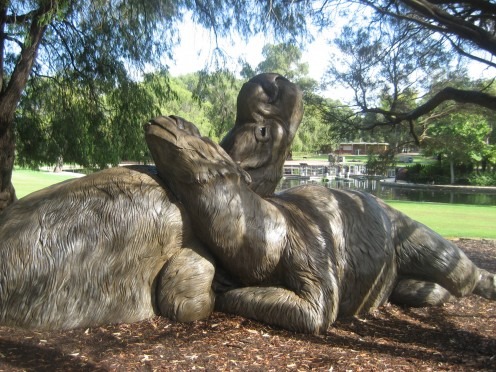
    Diprotodon, Kings Park Perth

    Australia’s ice age mammals are said to be all marsupials (animals that both feed and care for their young ones in a pouch). Likened to a present day hippo, the largest marsupial was the wombat-like Diprotodon, a vegetarian. Tipping the scales at more than two tons, many wombat remains have been discovered in deep mud. Footprints have concluded that like the wombat, the Diprotodon’s front feet turned inward, mistakenly giving the impression it was pigeon toed. Large claws are believed to have enabled the Diprotodon to dig up the roots of plants. It is presumed that many of these mammals became trapped in the mud while trying to reach for foliage.

    Another of Australia’s ice age animals is a distant relative to the red kangaroo. The Procoptodon, also known as the “mega-roo,” was twice the size of its present-day family member. Standing approximately ten feet tall and weighing nearly five hundred pounds, the Procoptodon could move (hop) at speeds around 30 mph. The Procoptodon fed on grass and bushes, living much as the newer, smaller kangaroos do today.

    After the ice age came to an end, most creatures found life easier. The bitter cold slowly gave in to more temperate climates, vegetation was able to grow and spread unhindered, and the migrations of man and beast spread out over the globe.

    Many ice age animals didn’t live through this new change. All of the animals mentioned above eventually disappeared from the landscape. Archaeological discoveries have unearthed and supplied us with a glimpse into the past. Without them we would not be aware that these enormous versions of today’s animals once lived.

  • The Million Year Picnic by Ray Bradbury

    Here we are… it’s Wednesday again, and it’s time to catch up with my eighth graders; they are always hard at work, always looking to broaden their scope of knowledge, and always looking for the next debate. They love to disagree… always.

    I have to tell you that this was not today’s short story, and I guess I have to fill you in on a little secret. I am about a week late here; always living life just a bit behind and admittedly enjoying the fact that when it comes to some things… I can be late and not worry about having to punch a clock. There are so many other things to do, and although I truly love to write, I love other things more!

    A few weeks ago, we journeyed into Ray Bradbury’s, The Veldt. The kids loved it, and because they’ve asked, and because I am a pushover for letting them roll with the things they enjoy, Ray Bradbury is back, and we’ve once again delved into this author’s futuristic visions that somehow don’t seem to be quite as futuristic as they did during the time in which they were written. The Million-Year Picnic; what is it? Why would anyone plan a picnic that would engulf not just one lifetime but thousands? Why would a family travel to a destination light moments away? Why would they have to? Is it a necessity, or is it just another day? Let’s find out.

    “Don’t think. Thinking is the enemy of creativity. It’s self-conscious, and anything self-conscious is lousy. You can’t try to do things. You simply must do things.”

    Ray Bradbury

    Ray Bradbury

    Since I have already given you a glimpse of Ray Bradbury’s views on technology, and his reasons for questioning technology’s effect on the family unit in my introduction to The Veldt; I will not repeat myself here and take the chance of boring you. Bradbury’s novels are not only creative but are also used as a personal forum to address modern day issues and to make observations on the way we live today. The following words are Bradbury’s own. They encompass his views on education, and they should serve to humble the educator. If we love our students… we should take them to heart.

    In a nutshell…

    “The main problem is with our education, of course. First-grade teachers for many years now have not been teaching reading and we have to encourage them to pull up their socks and begin to pay attention so that the whole school system doesn’t go to hell. People are getting into high school who can’t read. It’s stupid, isn’t it? It’s crazy.”

    “The jails are full of one million non-readers. We can’t let it happen again. If you allow another generation to grow up to be 12 years old…. without the ability to read, write, and think, we’re sunk. If they can’t read, if they can’t write, if they can’t think, they become criminals. We’ve already lost two generations. Unless we teach reading intensely and completely in kindergarten and first grade, the whole civilization goes to hell.”

    “With computers, kids can connect and search libraries and the Encyclopedia Britannica, but if you don’t teach them to read in the first place, they’re not going to [log on], are they?” (Speech to National School Board Association, 1995)

    And then, we have his thoughts on life and getting older, as on the occasion of his 80th birthday in August 2000, Bradbury said, “The great fun in my life has been getting up every morning and rushing to the typewriter because some new idea has hit me. The feeling I have every day is very much the same as it was when I was twelve. In any event, here I am, eighty years old, feeling no different, full of a great sense of joy, and glad for the long life that has been allowed me. I have good plans for the next ten or twenty years, and I hope you’ll come along.”

    The Million Year Picnic

    Emotional Journeys

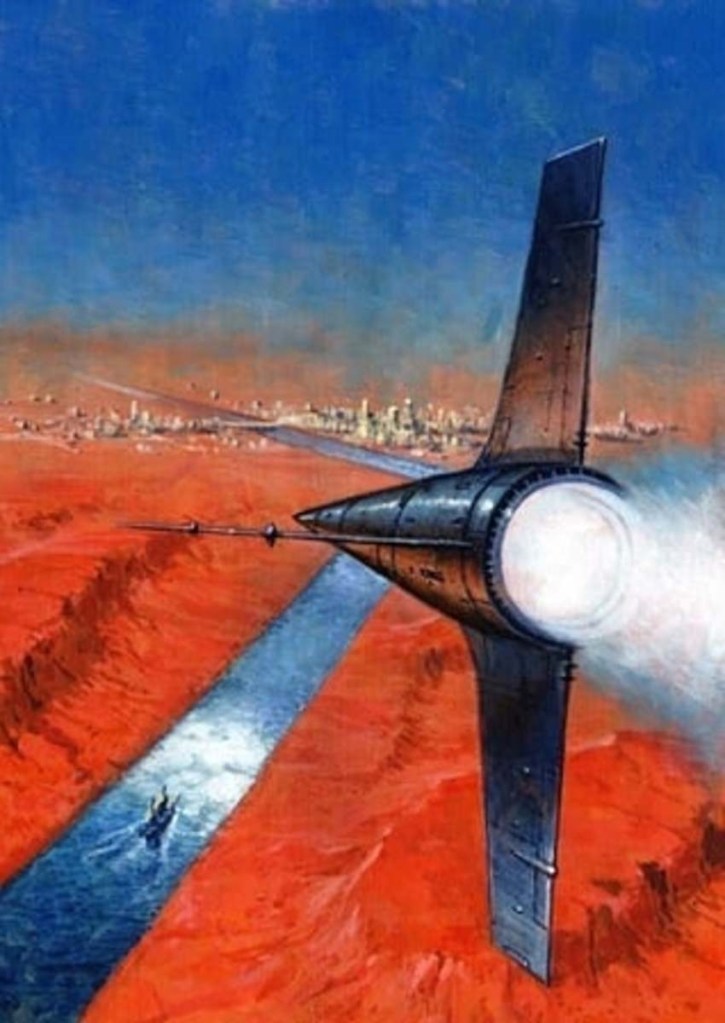
    The million year picnic begins as a trip. It isn’t forever, it isn’t anything that is seen in any other way than the way in which it has been addressed… it’s a fishing trip, but is it? The trip was Mom’s idea, but why mom? Why would she want to go fishing? Dad, on the other hand, seems nervous. His hands are trembling, he shuffles his feet, he has a hard time looking his children in the eye and questioning looks are shared between him and his wife. Their oldest son Timothy watches them both with eyes that also question, eyes that are also young enough to hold curiosity.

    Timothy remembers the trip from Earth. He remembers the night before they left, and he remembers the negative undercurrents that accompanied the packing… the rushed hurrying of unplanned spontaneity. Where had his father found the rocket? Why travel so far away? Why Mars? Timothy had kept silent. He’d questioned nothing in his desire to not to worry his brothers, but that didn’t mean that he didn’t have questions, it just meant that he hadn’t voiced them out loud.

    Their arrival on Mars finds them at the beginning of a journey. The two younger brothers are ready to fish, but Timothy senses that their presence in the water boat and their departure down the canal is more than what he’s been told. He holds onto his father’s hand, and he watches the changes in his father’s face… a look in his father’s eyes that he has never seen before, a look that isn’t easy to decipher, but also a look that doesn’t alarm him. The look he sees is reassuring, but why does this look ease his fears, and even more importantly, why was his father afraid? What has happened in the lives of these five people that forced them to take this trip to Mars, and are they the only ones making this fateful trip? Are there others, and if so, where are they?

    Timothy breathes in his father’s obvious sense of relief at their safe arrival, it calms him, but he continues to watch his father’s face while listening to the sounds of the violet water splashing against the sides of the boat. He relaxes even more as he observes how the lines in his father’s face are changing before his eyes… crevices caused and deepened by worry and apprehension are slowly transforming themselves into the lines of long-lost smiles.

    The Discussion

    Another story by Ray Bradbury was specifically requested by my students, and their request couldn’t have come at a better time, as Bradbury’s work enabled us to continue a discussion that had already begun. A Million Year Picnic was my own personal choice, and it was chosen to make them think. What is it that we are really afraid of, and if we’re scared, what will it take to alleviate our fears? Who is responsible for the situations we find ourselves in? Who and what protects a nation from fear, and who do we trust to make decisions for what are our lives? Do we trust anyone? Have we lost trust, and what will it take to get it back? The following quotations have already been mentioned in the summary, but these quotations are what became the basis for our discussion; “I was looking for Earthian logic, common sense, good government, peace, and responsibility.” His son asks, “All that up there?” To which the father responds, “No, I didn’t find it. It’s not there anymore. Maybe it’ll never be there again. Maybe we fooled ourselves that it ever was there,”

    The belief in the existence of Earthian logic is well and alive in our twelve and thirteen year old children. They concede that there are great men and women… men and women who possess great minds, compassion, empathy, vision, understanding, and the ability to use those gifts for the good of the whole. The American people. That our country feels as if it’s on a shaky path was agreed upon unanimously by the students, that we have reason to fear for our futures was also a majority rule decision. There was no debate that we are in trouble both as a country and as citizens of this planet, but they also have faith that if the people with power choose to use it in the right way, with good intentions, we can make it. They firmly believe that things can be better, that they can get better.

    Common sense and good government did not receive the same vote of confidence. There was much discussion about our government’s “posturing” for the media, for the people who watch. Posturing was not my word, but it was used by the children, and that’s how they perceive our government officials. They specifically noted several members of Congress (who will remain unnamed) that they consider to be fabulous orators, socializers, and ambassadors… great to watch on social media, but unrealistic in the capacity of government leaders. They do not see these overly loud and demanding officials as people who are leading a country, but rather, people who are looking for attention. They believe that too many decisions are made on the basis of what looks good, and the things that in all reality are good; they are put aside to suit the roles our officials have decided they want to fulfill. They see their government officials as having a great presence that is partnered by a lack of substance. They left me speechless.

    Peace is their greatest desire. Talk Middle Eastern politics with a group of middle schoolers; discuss the wars that have continued and repeated themselves for thousands of years and all for the same reason. Their immediate response is, “We were told to share in preschool. Why can’t adults learn to share?” We talked about religion and the way that one specific city is claimed by many religions, but why it can never really belong to any one of them. We talked about the privileges we take for granted… the church over there, the mosque in the city, the cathedrals, the temples, the freedom of religion we hold as God given rights.

    Natural resources, shortages… wars over oil, the probability of water someday holding that same value and provoking the same results. Peace is desired and unrest is inevitable, but how do we encourage the world to place the same values on the invaluable. How do we get the population of the Earth to hold morality and values as what is most important. Who is responsible for what could be a “global education,” and why doesn’t anyone want to take on the responsibility of just standing up and saying, “this just doesn’t work anymore; we are all responsible.” Where’s the common sense, and won’t the use of common sense bring us peace? I can’t answer that, but I did listen. I think we should all listen.

    There was a bright spot though, a moment of positivity, as my students proclaimed the father wrong, someone was giving up on the goodness of humanity. They believe that the things he searched for while looking back at the Earth he’d fled with his family had existed. They saw him as having given up, but they also saw what he’d done for the good of his family as the right thing. They saw him as a man who embodied Earthian Logic, as a visionary, and that his vision had taken him and his family on the million-year picnic that would enable him to do it all over again, the right way.

    The Reality

    Watching the rocket disappear behind them, the family moves on down the river. The younger boys ask, “How far are we going? How long until we get there?” The same questions asked by children everywhere at the outset of a family road trip, but this is not a “normal” family vacation, and the father responds that they are traveling, “a million years.”

    Their ride down the river reveals cities, but the once thriving cities are now dead and deserted. The father looks pleased; he’s obviously happy they’ve been abandoned, but why is he happy? Why is he visibly pleased at the sight of desolation and emptiness? A bird flies nearby, and the father is startled. He explains that he believed the bird to be a rocket, and he seems to be frightened.

    Traveling along the family looks towards home, searching the sky for a glimpse of Earth… the war torn cities they’d left behind. The father once again looks sad, nostalgic, and then he looks away to the empty, pink horizon that lay before them. Timothy senses his apprehension and asks why he is looking so hard… what is he looking for. His father responds, “I was looking for Earthian logic, common sense, good government, peace, and responsibility.” To which his son asks, “All that up there?” To which the father responds, “No, I didn’t find it. It’s not there anymore. Maybe it’ll never be there again. Maybe we fooled ourselves that it ever was there,” and he finishes by pointing out a fish nearby in the river.

    Further on they find themselves looking for Martians, but there is no evidence of their existence. The planet is empty, empty but for the family that has traveled there because their planet and the world they lived in no longer exists. The boys are entranced by a silver ring fish floating near the edge of their boat; they watch its actions, and the father responds by comparing the fish to the ravaged world they’d left for what three children had believed was a fishing trip. His comparison, “Just like war. War swims along, sees food, contracts. A moment later- Earth is gone.” What does this mean?

    The children continue to look for Martians… Martians that their mother claims to be a dead race, and their father says, “Maybe tonight.” He doesn’t deny their existence. The boat continues to roll through the canal, each inhabitant wearing a different faces… Dad’s look is determined, whereas Mom’s look is resolved. It is what it is, a simple fishing trip, rockets, an endless supply of food hidden where they’d landed, a gun, and then suddenly out of nowhere an explosion. Everyone jumps. The rocket has self-destructed, and the father’s intake of breath signals relief, but the children are now overcome with questions. Only Timothy seems complacent; he seems to understand.

    This is where we’ll leave off. If you want to know and understand Bradbury’s vision; you will need to read it for yourself. Is the family alone? Has anyone other than the father, once a state governor, seen the future and prepared? Will anyone else complete the journey? Has anyone else survived the end of the Earth, and if they have, will the generations of the future have learned from the mistakes of the past? Who are the Martians, and will they finally see them face to face? The answer to the last question; yes. Can you guess who the Martians are?

  • Hammurabi’s Legacy

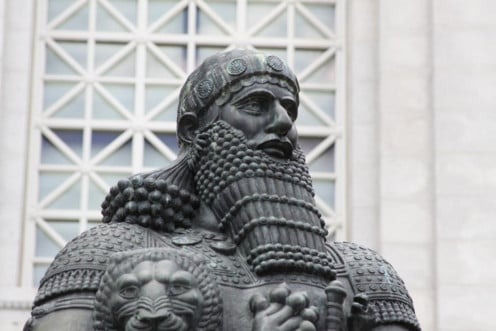
    At the time of his death, Hammurabi, the sixth king of Babylon, had complete rule over the lands of Mesopotamia. The first few decades of his rule were peaceful, and during this period of respite from war, Hammurabi dedicated himself to the improvement of his capital in Babylon.

    Walls were made higher for defense, temples were expanded, dams were built, and alliances with minor kingdoms were forged. He had imposed a set of laws, the “Code of Hammurabi,” and his skills of leadership improved the administrative efficiency of his government… Hammurabi’s Babylon was powerful, wealthy, and well run. But for some reason none of his successors were able to maintain it, and before long invaders were knocking at the gates of his capital.

    Hammurabi

    The Assyrians

    After several centuries of turmoil, war, and invasion, Hammurabi’s former empire returned once more to imperial rule. The Assyrian cities of Assur and Nineveh had been amongst the first to break away from Babylonian rule after Hammurabi’s death. Improvements were made, armies were organized, and trade routes were established, and by 1300 B.C., Assyria had begun to gradually extend their control and authority over a very large portion of southwestern Asia.

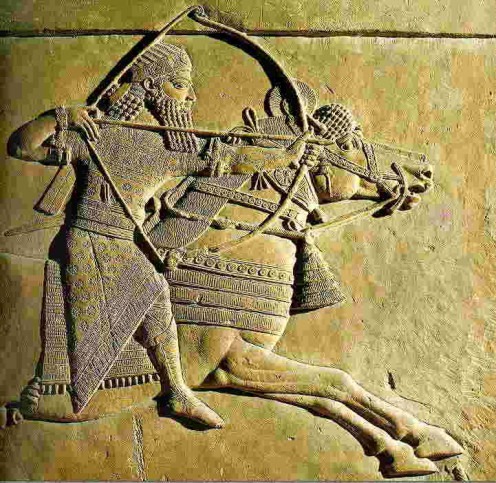
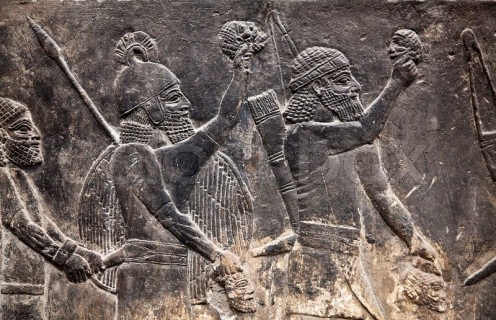
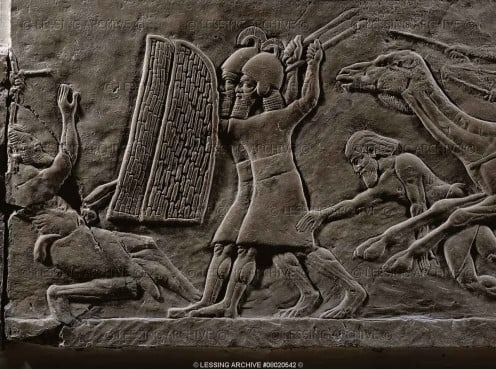
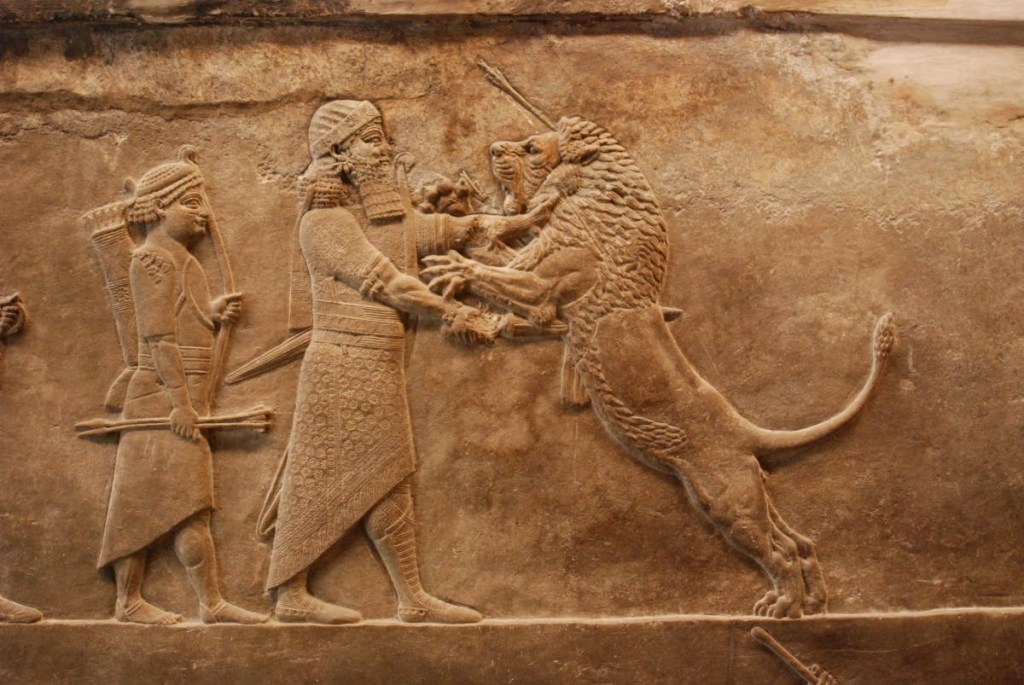
    Assyrian armies brought fear to the masses; no city was safe from invasion. Battering rams and wheeled towers were implemented to bring down the walls of protesting cities; horse drawn chariots were added to the cavalry units and soon became a staple of war. Because of this, battles were not only more ferocious, they were quicker and more efficient. Archers decimated their foes from these rapidly moving platforms, and those who survived soon found themselves vulnerable to the infantry and cavalry units that followed.

    Assyrian forces were organized into units and commanded by professional soldiers. Attaining rank was not dependent on having political connections or having been born into the nobility. Assyria’s military leaders were chosen based on performance, merit, skill, and bravery.

    Prisoners were sometimes tortured, but most were taken captive and transported to growing cities as slaves. These conquered souls provided cheap labor for farmers and physical strength for building projects. Some prisoners actually escaped and returned to their homelands, but many embraced their lives in Assyria and eventually went on to start their own families and become citizens. Newly acquired skills afforded them job opportunities, family afforded them a sense of community, and citizenship gave them the right to vote.

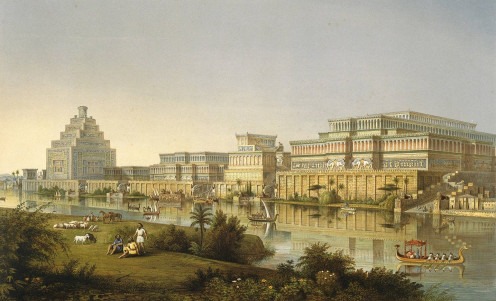
    Ninevah

    Ninevah

    The Assyrians, like the majority of Mesopotamian peoples, relied heavily on the methods of administration their predecessors had implemented. Laws were similar to the Code of Hammurabi and literature was preserved in huge libraries.

    The vast library established at King Assurbanipal’s court housed literary and scholarly texts, as well as diplomatic correspondence and government records. One of the most important pieces of literature found among his texts was the Epic of Gilgamesh, a true gift to those who have read it.

    His palace was magnificent and luxurious, and the citizens of his empire shared in the wealth, enjoying a comfort never before known. That’s not to say that all citizens were fat, happy and content. Many of the people living in regions outside of Nineveh and Assur found Assyrian rule less than desirable. Rulers frequently faced rebellion by their subjects over what was an enormous area.

    These rebellions soon became a challenge to the administration, and ultimately, the combination of unrest and its ensuing assaults caused the empire to crumble. By the year 612 B.C., the Assyrian Empire had ceased to exist.

    Gilgamesh and Enkidu

    Many monuments have been discovered in the ruins of ancient Assyria; one such monument boasts the following inscription, commissioned by King Ashurnasipal to describe his army’s conquest of a city;

    “Their men, young and old, I took as prisoners. Of some I cut off the feet and hands; of others cut off the noses, ears, and lips; of the young men’s ears I made a heap; of the old men’s heads I built a minaret.”

    Sources

    Hawlinson’s “Five Great Monarchies” vol. 2, p85, note.

  • Beyond Entertainment

    Wednesday is my favorite day of the week, well, at least at school. It’s the day I get to move beyond the ever changing routine and actually have a discussion with the kids that they want to have. Wednesday is the day I actively challenge the people who repeatedly tell me that American children no longer possess imaginations, that they have no focus beyond their video games, or that they just don’t have the drive they used to have academically. You are wrong, and my kids will prove it.

    It isn’t the children who lack imagination, it’s the world they’ve grown up in. If all they ever experience in school is rote learning, fact based, nonfiction texts, and art projects that are planned rather than created, in addition to screens, screens, and more screens… it isn’t a surprise that their imaginations have been affected. If time at home is spent playing games, we aren’t enhancing their imaginations, we are allowing them to exist in a place that is the result of someone else’s imagination.

    Children and Voices

    It’s important to remember that everything we do influences the minds of the children around us. The things we wear, the things we say, and more importantly the opinions that we sometimes pass down without even stopping to really think about what we say. They learn from our every word, the words we don’t say, the shrug of our shoulders, the spontaneous smiles, and the smiles that are withheld. Book clubs encourage discussion, friendly debate, and critical thinking. They are not a venue for showcasing our superior minds; they are meant to “open” up the collective minds of the group itself, to allow for imagination, and most importantly give the children a voice to interpret and apply fine literature to their own lives, to see that they’ve something of their own experiences to apply in every situation, and they do just that…. proudly and loudly.

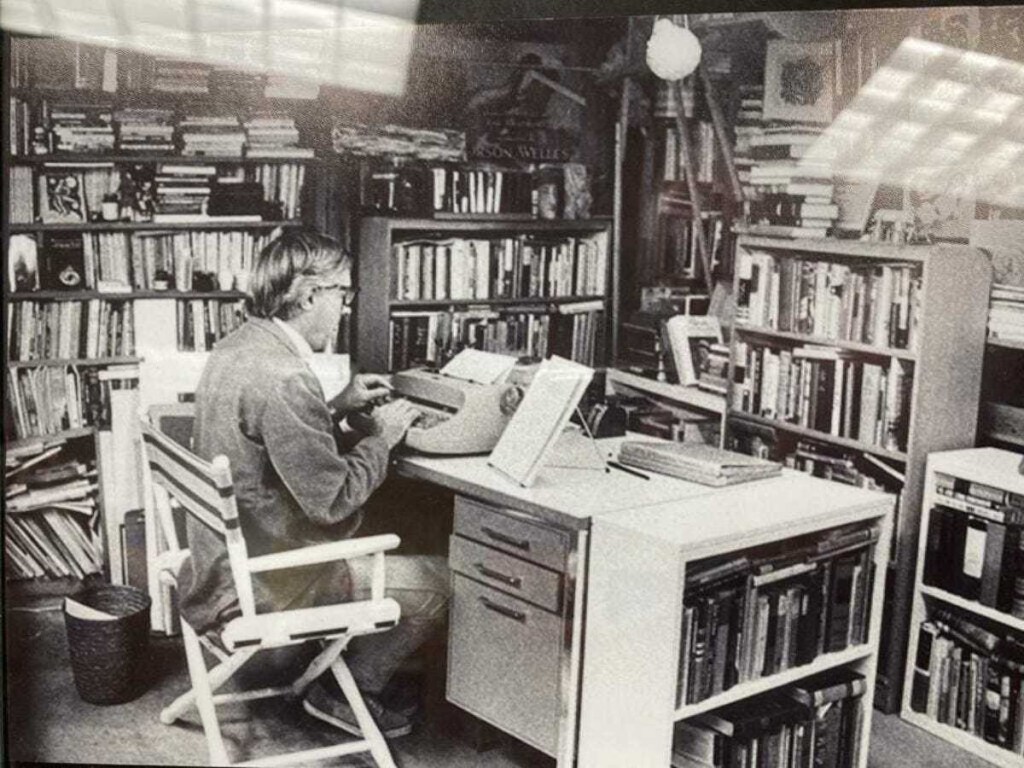
    Ray Bradbury

    Ray Bradbury is one of the most popular American writers of our time. Over the years his writing has not only been embraced by literary circles but has served to inspire filmmakers and television executives as well. His writing is timeless and appreciation for his work has no boundaries. He appeals to young audiences, as well as the more mature. He changes the way that people think, but more than that, he makes them think.

    The Veldt is one of Bradbury’s short stories and was originally published in the Saturday Evening Post under the title, The World the Children Made. It was later republished in Bradbury’s anthology The Illustrated Man.

    Change In America

    The 1950s brought many changes to America. America was changing, technology was changing, and the fear that families too would change became a worry for many. Technology was feared, not for the advances being made, but for the way they might affect the family as a whole. The world of television was invading the homes of American families, and American families were both enthralled by its appearance, and yet, they were unsure how this new family member would affect the family unit as it settled in and made itself at home. Bradbury wrote The Veldt in response to this fear, but he takes it one step further. Bradbury creates a machine that purposely allows that same separation and detachment everyone was worried about… a machine that has the capability of destroying the family unit, and ultimately, it does just that.

    The Veldt/ A Summary

    George and Lydia have it all, and that’s exactly what they’ve given their children. The couple have purchased a Happy Life Home, and they’ve purchased it for $30,000.00. Just think! It cooks your food…. no more cooking; it does your laundry, and it dresses you. Breakfast, lunch, dinner… all you have to do is sit at the table, and your every wish is granted. You are washed and bathed, massaged and coddled, rocked to sleep, and transported through your home without having to move a muscle, all of this luxury, and yet, they’ve even upgraded. At half of the cost of the house, a mere $15,000.00, they’ve added an enormous nursery. Nothing is too good for their children, or is it?

    The nursery can be anything the kids desire. It can be the beach or a fairy tale. They can travel anywhere they’d like, experience anything the world has to offer, and do it all from the enormous addition that was made to their home. The room comes complete with wind, hot sun, and yes, even “odorphonics.” You’d never know the places weren’t real, or are they?

    The Dreams of Children

    The story opens with Lydia drawing her husband into a conversation about their children. She is visibly worried that they are spending far too much time in the nursery, that the places they’re visiting aren’t suitable, and that the fact they have chosen the African Veldt as their escape of choice is alarming.

    She wants her husband to call the psychologist, but she wants him to call the psychologist for the house. The “happy home” that they talk to, the home that talks back, that they thank for its every service; the home that was supposed to make their lives perfect, but it isn’t perfect and she’s crying. She wants to leave. Lydia feels as if she’s become unimportant, that she’s not needed. She’s no longer the caregiver, no longer a wife, no longer a mother, and she isn’t wrong.

    The children come home, and they want their nursery. When their parents talk about shutting it down, they react as if a cherished family member has passed away. They throw tantrums, they threaten, and then they shift gears just quickly enough that they get their way. They know exactly how to manipulate mom and dad. They know that their parents will give them anything to keep the peace, and they know this because their parents have forgotten how to be parents. Their attachment is not to the ones who gave them life, but rather the technology that has taken care of them. The house is their parents, and it’s the only caregiver they’ve ever known, and because of their love and loyalty to that caregiver, they are willing to do anything they have to in order to save its life.

    Where did the veldt come from, and why is it their preferred destination? What happened to the fairy tales, the trips to Wonderland, the cow jumping over the moon, and visions of Pegasus flying in the sky that was a ceiling. Where had the fairy castles, fireworks, and sounds of angels gone? Why the veldt? Why the sounds of roaring lions, the heat from the sun, the smell of blood, and why the screams? Who is screaming?

    Exasperated and frightened the parents call on the psychologist. He too is concerned, and explains what the room was intended for:

    “One of the original uses of these nurseries was so that we could study the patterns left on the walls by the child’s mind, study at our leisure, and help the child. In this case, however, the room has become a channel toward destructive thoughts instead of a release from them.” The Veldt

    He explains that the children are emotionally “in trouble,” that the children have become more than the spoiled children he’d originally become acquainted with, and that for some reason they’ve become angry, or let down in some way. George admits that punishments for bad behavior have been to deny the children of things that are second nature to them and is told that these things that have been taken away are the things that have replaced both he and his wife in the children’s affection. George had once been a Santa, and now he was a Scrooge, and we all know that kids don’t like Scrooge.

    His advice is to shut off the house completely, to put the children in therapy, and to get as far away as possible from the life they’ve been living, but can they? Can they get away? Can they say no and really mean it?

    That is where I’ll leave the summary…. look the story up online; it’s a short one, and here is what my eighth graders had to say about the whole thing….

    The first part of the discussion was pretty basic, but it was also filled with surprises. I almost wanted to make a list of the things that came up, but I don’t think that it would have the same effect. I would rather invite the parents of these eleven children in for an instant replay. I think they’d be touched, but that they’d also leave feeling more than a little guilty. It was an eye opener.

    For starters, your kids know the difference between wants and needs. They love technology, but they love something else more, and that would be you. I’ll start with smart phones; the kids love to own them, but they want you to lose yours more than they love the ones that they carry. There wasn’t one child in this group who didn’t dread the call from work on the weekend that would take their parents away. They hate the accessibility that takes you away from them. They look at your phones as intruders, and they are almost jealous of them to a certain point. The girls talked about waiting for shopping trips with their mothers, and then never having their mother’s complete attention because they spent their time on the phone… at that point they wished they’d just gone with their friends. This is where we lose them, the times that we’re with them, but we’re not; the times that are supposed to be planned and special, but that lose the “special.” They want that undivided attention, and they need it.

    Most all of these kids come from two income families. They appreciate that their parents work to give them the things they need, but they don’t like the time taken away that gives them what they want. None of them claimed to be immune to wants, but each and every one of them admitted to having more than they need. They all want to spend more time with their parents, and they want it more than they want the video game or the new clothes. They want the time, not the overtime.

    The boys talked a lot about baseball games, and they glowed over dad showing up for the last few innings, but they also had no trouble mentioning the missed home run. All of them, both the girls and the boys wished there were more family dinners, resent the times they’re shooed out of the room because everyone is too busy, and claim that each of their parents has unknowingly used the television, gaming systems, or the computer as a babysitter. Don’t get me wrong, there was no parent bashing in this group; it was all just honesty; their feelings and their honesty.

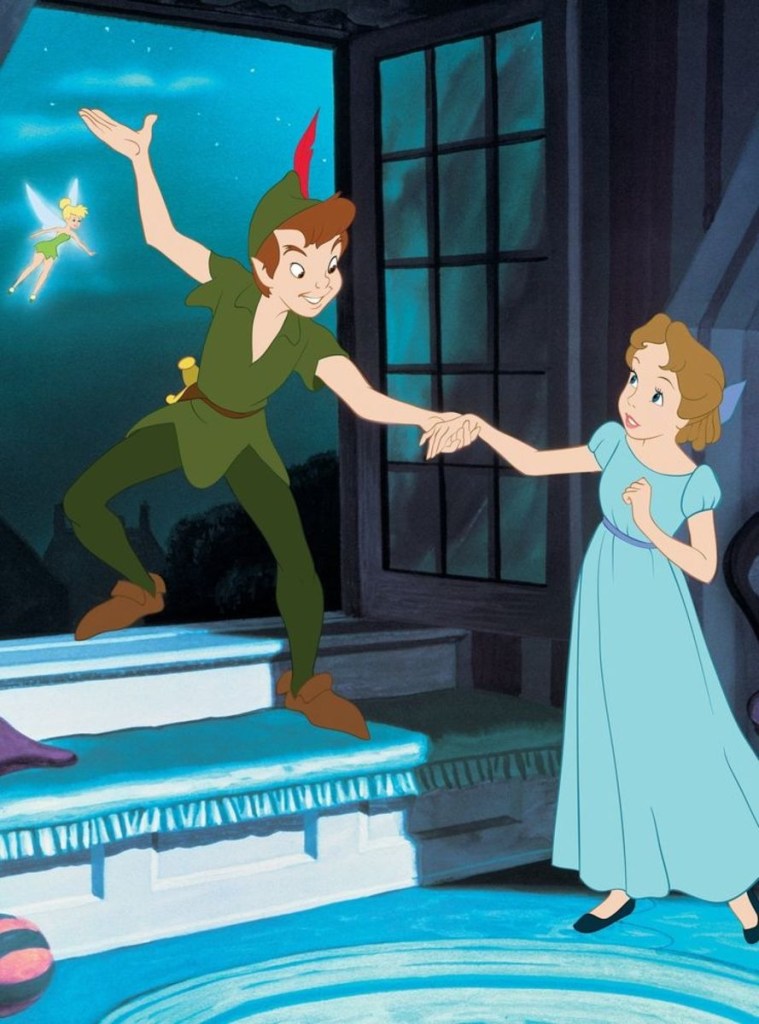
    “Forget them, Wendy. Forget them all. Come with me where you’ll never, never have to worry about grown up things again. “

    One of the boys… one of my quiet ones, made one of the most thought provoking analogies of the entire discussion, one of the best I’ve ever heard, maybe because I’d never thought of it myself. We won’t talk about the fact that I’ve used this story probably fifteen times in the last twenty years, that it was required reading for me while in high school, or that I’ve had the pleasure of working with some really brilliant kids in the past; he wowed me! As all of the other kids were challenging each other over the deep meaning of Africa, the smell of blood, bloody wallets, and comparing Bradbury’s futuristic vision of the nursery to the present day IMAX Theatre and playing games on their Switches, he completely changed the course of the discussion with this simple question, “Do you think the author had a hidden meaning in using the characters of Peter and Wendy in this story? They are Peter Pan and Wendy you know?”

    Well, I didn’t know, and I still don’t, but they had an unreal debate about the lost boys and the desire to stay children, as well as the fact that technology, going home to empty houses, and all of the chaos of everyone coming home and just trying to get it all done has taken away their ability to just be kids. They talked about wanting to go fishing and to be able to do something after school without it taking major planning. They talked about just wanting to be able to go outside, and the fact that most of them can’t because they need to go home. They don’t want to, but they need to, and they do understand, but they also grasped this understanding that Peter and Wendy didn’t know love, and how it made them selfish, and they likened this understanding to Peter Pan’s not understanding what a mother is. Peter Pan thought nothing of his actions because he didn’t know better. He couldn’t understand Wendy’s attachment and love for her family because he’d never had one, and that lack of knowledge made him their perfect example of unknowing selfishness.

    The end of our time together brought even more insights to the way our children think, and don’t ever misguide yourself into believing that they don’t. They think, and they think deeply. Our discussion ended with thoughts of what would happen if a child had never known love, a child’s never having been nurtured, and the fact that love grows through a sense of touch, the feeling of security, and what you see in the eyes of the people who love you. My readers conceded that Peter and Wendy had never experienced the warmth of human touch, or that they had forgotten it. They described the children’s lack of emotion and detachment from their parents as inevitable. The children were cold because they’d never felt warmth… they were detached because they’d never felt connected, and they were unable to really feel love because they didn’t know what it felt like. The children felt nothing, nothing for their parents, and nothing for the things around them. They were empty inside, and it wasn’t their fault. All they knew was the house, and to them the house was the one living thing they had to come home to every day. It took care of what they needed, and they didn’t want it to die. One of the girls likened this to a boy she’d had a crush on. She said he was a jerk, but he was a boyfriend, and a jerky boyfriend was better than not having one at all…. so in her eyes, the house was better than nothing. I’ll give her that, but I will be challenging her jerky boyfriend theory in a smaller setting.

    That is where I’ll end. The rest of our discussion was all about Bradbury’s conclusion to the story, and I want you to read it. Revealing the end would be defeating the purpose, and it’s a killer ending.

  • The White City: 1893 World’s Columbian Exposition

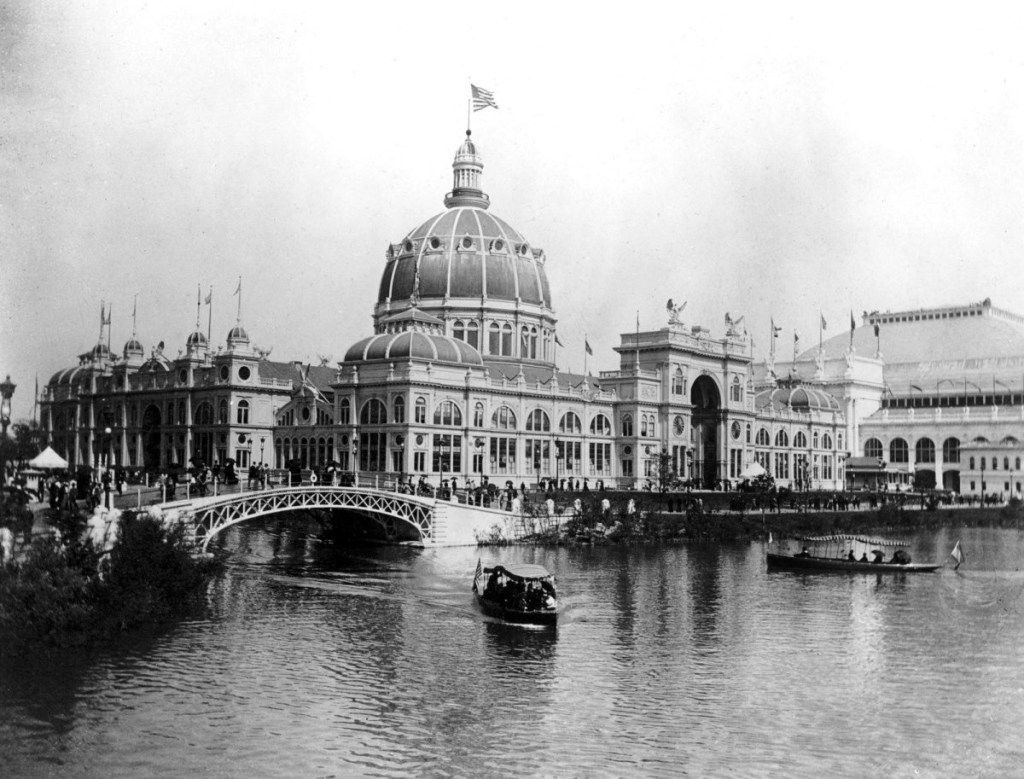
    In 1893, the World’s Columbian Exposition was held in Chicago, Illinois in order to celebrate the 400th anniversary of Christopher Columbus’ voyage to America. In order to host this very important celebration, Chicago had to compete with many other cities throughout the country. In the end, it was Chicago’s extensive railroad access, in addition to the ten million dollars the city guaranteed, that put it over the top.

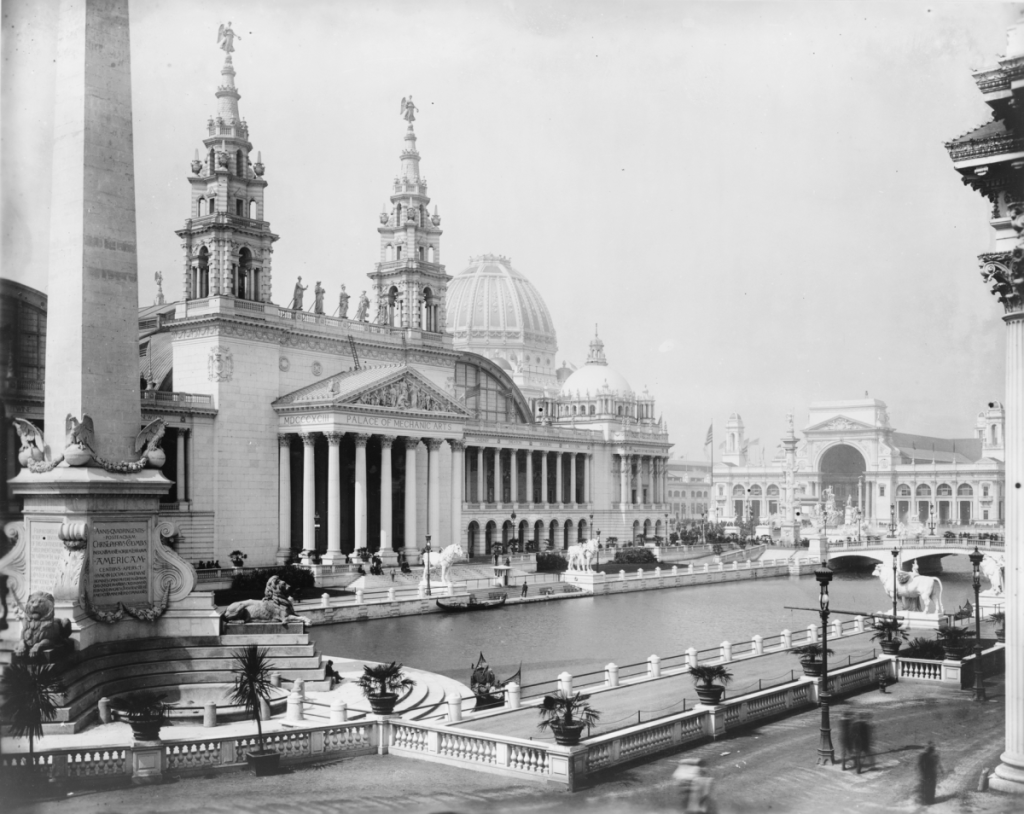
    Planning for the exposition was extensive, and once complete, the newly constructed White City, an area that spread out over 682 acres, including a large area of lakefront property was born. Note, the exposition should actually have taken place in 1892… “In 1492 Columbus sailed the ocean blue..,” but due to the elaborate plans and the amount of work it would take to bring those plans to fruition, the timeline was changed.

    Upon its completion, The White City was so magical that it is said to have inspired The Emerald City in Frank Baum’s, The Wizard of Oz. The Ferris Wheel made its first public appearance, as did electricity which had previously only been seen in France… and with the electricity came the gadgets, numerous items created to use with electricity… items that would make life easier like hot plates and fans. The Palace of Fine Arts, later to be rebuilt and renamed, The Museum of Science and Industry, made its debut. And the food… it’s hard to picture a world without shredded wheat, diet soda, Aunt Jemima Syrup, and Wrigley’s Juicy Fruit gum, but each and every one made their debut at the exposition that took place in Chicago in 1893.

    The Palace of Fine Arts: Chicago’s 1893 World Columbian Exposition

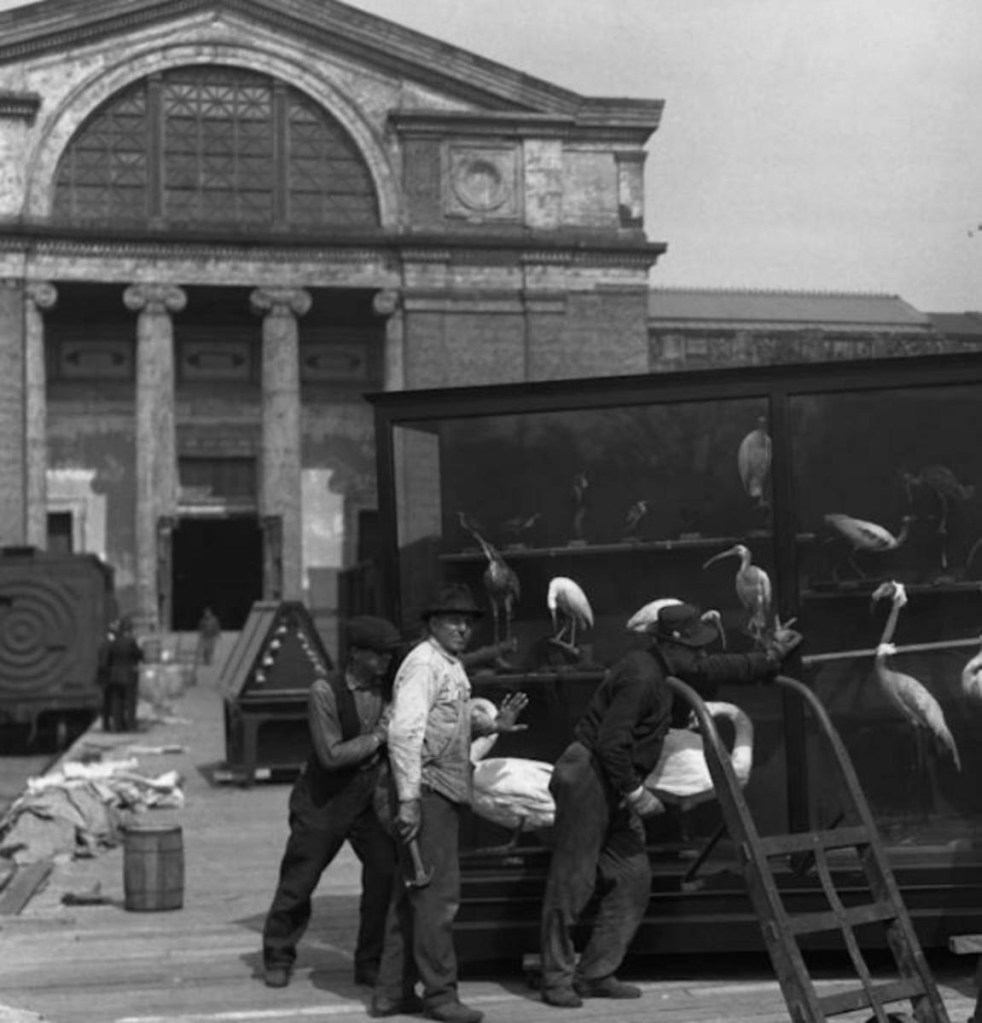
    Among the buildings and exhibits was that of the Field Columbian Museum, which over the years has transformed into what we know today as The Field Museum of Chicago. Initially, the display at the World’s Columbian Exposition contained some 65,000 exhibits, which may not seem like a lot today, but in 1893… the number was extraordinary, dazzling patrons with amazing, never before seen artifacts… things only read about in books.

    During the six-month period that the exposition took place, over twenty-five million people would attend, and with its closing, the dream of a permanent museum would begin its journey to reality. Initially, the museum was named the Columbian Museum of Chicago, and it made its home in the Exposition’s Palace of Fine Arts, which was located in Jackson Park. By June 2, 1984, however, the museum would not only open but change its name, honoring Marshall Field, its first benefactor, a Chicago business magnate, who’d provided a one-million-dollar donation to get things off the ground. It goes without saying that Field was renowned for his support of cultural education and the arts, and his legacy lives on.

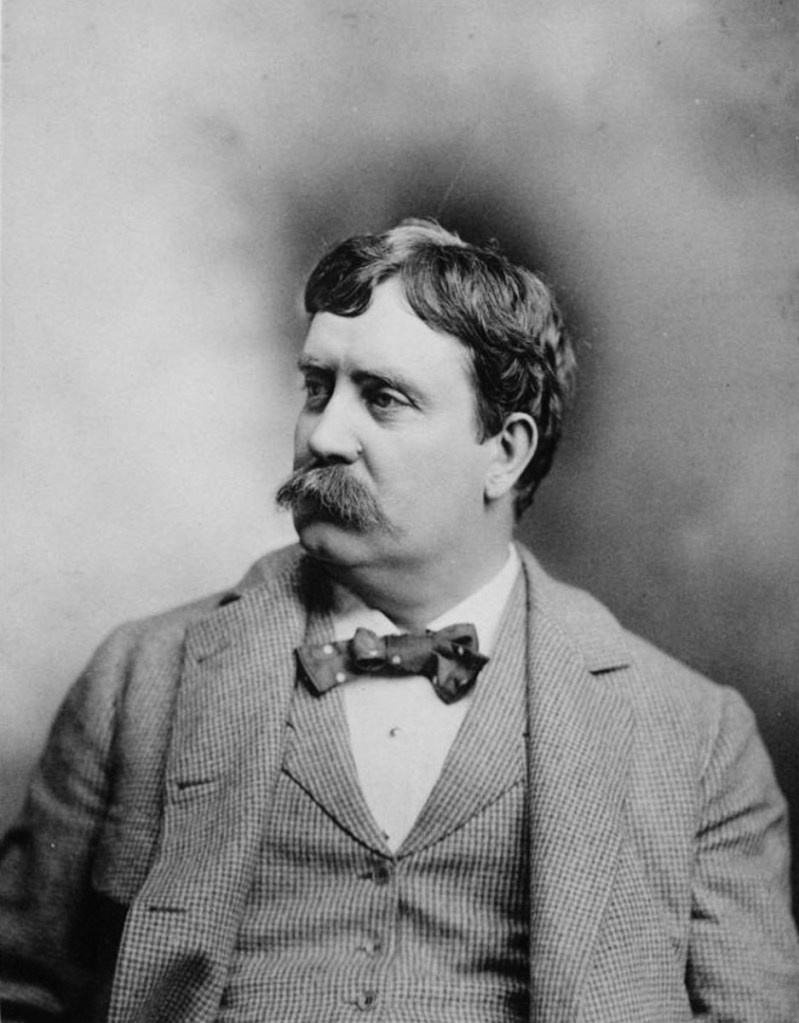
    Daniel Burnham: Architect

    The White City’s Art Palace was admired worldwide, and architect, Daniel Burnham, deserved every accolade. Initially constructed to be a temporary addition to Chicago’s lakefront, the Art Palace was constructed differently from the other buildings for one simple reason… the items it contained were priceless and irreplaceable, valued at about five million dollars, which today would equal about $173,441,758.24. As a result, the Palace, unlike the other structures erected for the Exposition, was made of brick and built to be fireproof. Today, it serves as the home of the Museum Science and Industry, but many of the original artifacts it contained are now housed in The Field Museum of Chicago.

    The Palace of Fine Arts was a beautiful building, in an even more beautiful location. Chicago’s lakefront at its best. Over time, however, the building began to deteriorate, and in 1909 it was decided that the museum should be relocated, but it wasn’t until 1915 that the construction for the new building would begin. Six years later, the new building, located near Chicago’s Grant Park, was completed at the cost of $7,000,000 the equivalent of $21,259,623,762 in today’s money.

    The Field Museum: Opening its Doors

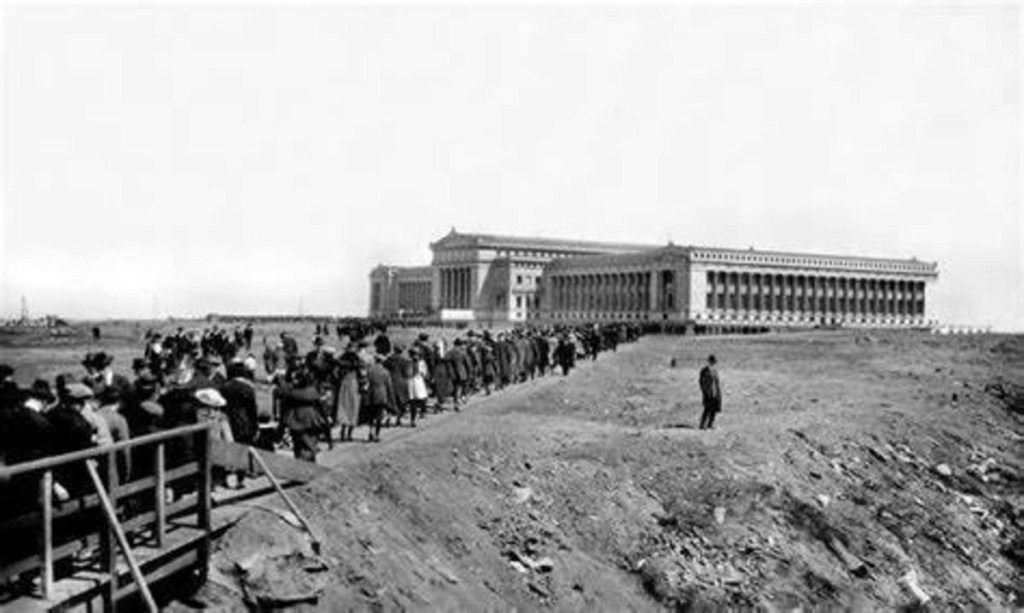
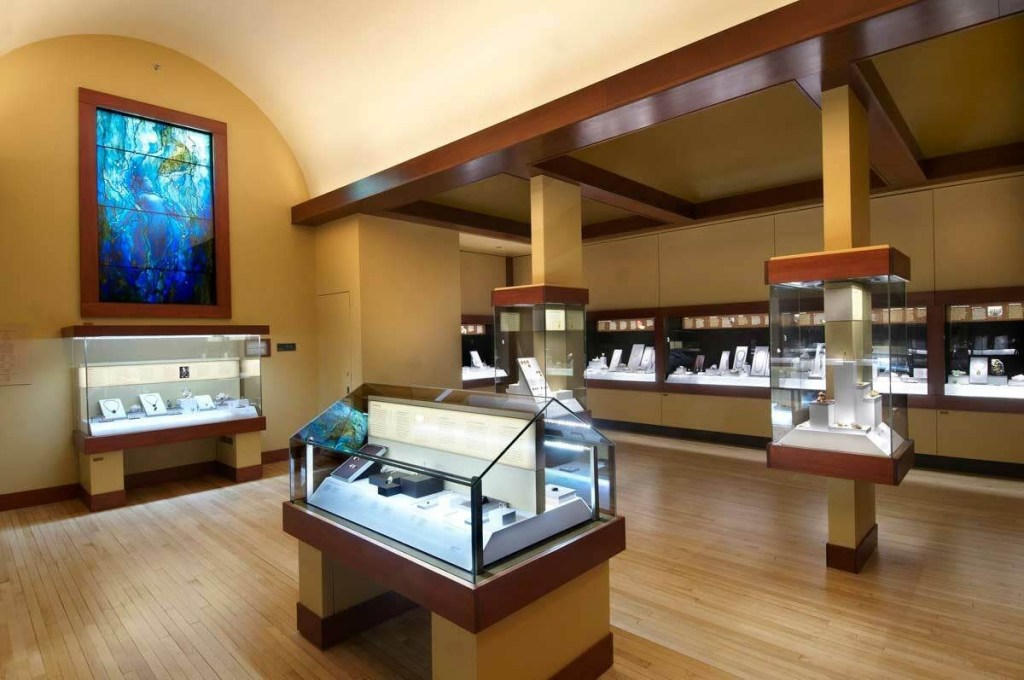
    On May 21, 1921, the newly constructed Field Museum, located just south of Grant Park opened its doors. For over a year, crews had been transporting the museum’s collections from one building to another… amazing collections that included Tiffany and Co’s priceless gems, musical instruments from foreign countries, pre-Columbian gold ornaments, and a large collection of Native American artifacts… all relocated with the use of the railcars and horse drawn carriages. Everything was carefully planned for the grand opening, during which, the museum welcomed the miles long line of visitors that lined up outside awaiting admission.

    Stanley Hall

    Stanley Hall Field, the nephew of the museum’s benefactor, Marshall Field, became the president of the Field Museum in 1908, a position he held for fifty-six years. He also played a major role in the decisions and processes involved in the museum’s relocation. Stanley Hall, named for Field’s nephew, is built on a half acre of floor space made from fossilized limestone, and each corner of the room holds a statuary depiction of one of the four muses, which represent the purposes behind the museum’s founding, those being research, record, the dissemination of knowledge, and science.

    The Four Muses: aka The Maidens

    The muses, better known as The Maidens, were sculpted by American artist Henry Hering, who also created the three relief panels depicting female figures adorned with wings, as well as various other statues that make their home in the museum.

    Anyone who knows me knows that I love statues above all other forms of art. At the age of five, security was called at the Art Institute when I curiously and impetuously ran to touch a forbidden statue. Today, I understand the fuss, I doubt my father ever got over it.

    A Dinosaur Named Sue, Discovered by Sue Hendrickson (1990)

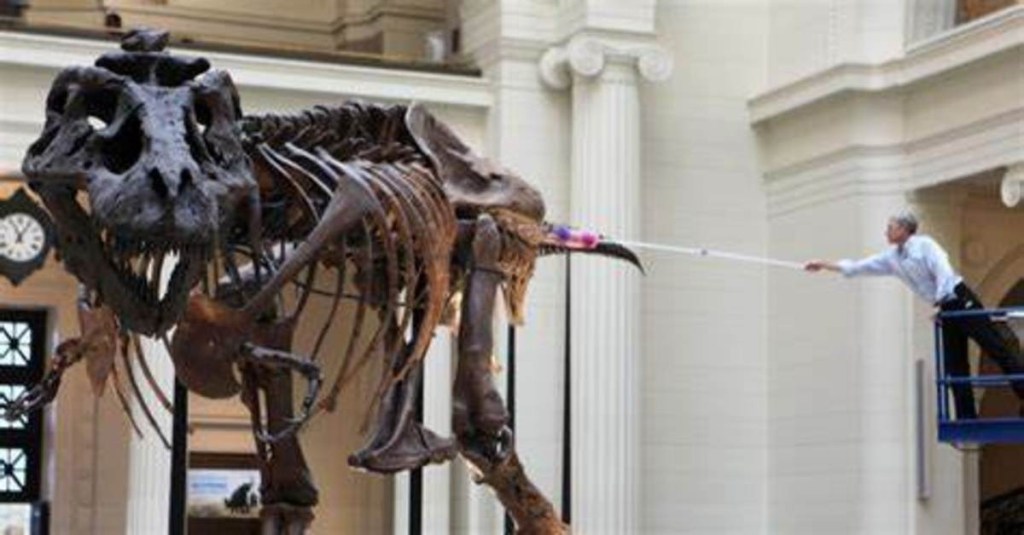
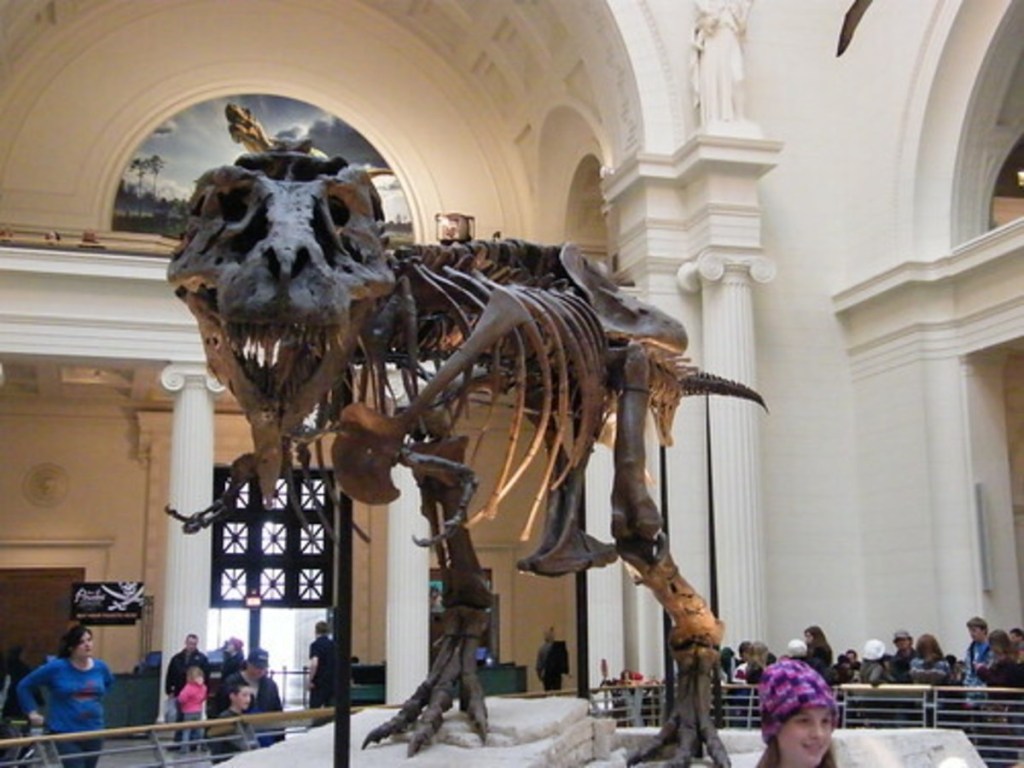
    Moving past the muses, Griffin Halls of Evolving Planets would likely be my favorite exhibit in the museum… my grandson’s too. Note, I do not believe in evolution, so many of the things the exhibit would like to teach me do not apply. The skeletal remains of the dinosaurs, however, are beautiful, fascinating, and most of all… intriguing. Standing face to face with Sue, the T-Rex, allows us to truly imagine what it would have been like to meet her while she was alive. Her history is even more fascinating. Who knew that dinosaur bones, like trees, have growth rings? Well, paleontologists uncovered this fact, and Sue is said to have been twenty-eight years old at the time of her death. Another question we might ask is how do they know that “Sue” was a girl? Admittedly, they don’t. It is impossible to determine the sex from bones, and Sue is named in honor of Sue Hendrickson, the woman who discovered her remains while participating in an excavation trip in South Dakota in 1990.

    Sue’s presence in the museum is taken for granted by those of us who appreciate her, but getting her to the museum was no easy feat. It took six people to excavate Sue’s remains over a course of seventeen days, after which the parentless T-Rex became the subject of a custody battle, yes, a custody battle, that lasted for five years and would only be put to rest when Sue was put up for public auction. In the end, the largest T-Rex ever found would be the object of the highest bid and purchase of any existing fossil, 8.4 million dollars, paid for by the Field Museum, which had received huge financial support from private donors, the McDonald’s Corporation, and the Disney World Resort. Sue finally had a home, but now they had to get her there.

    Sue’s Journey to Her New Home

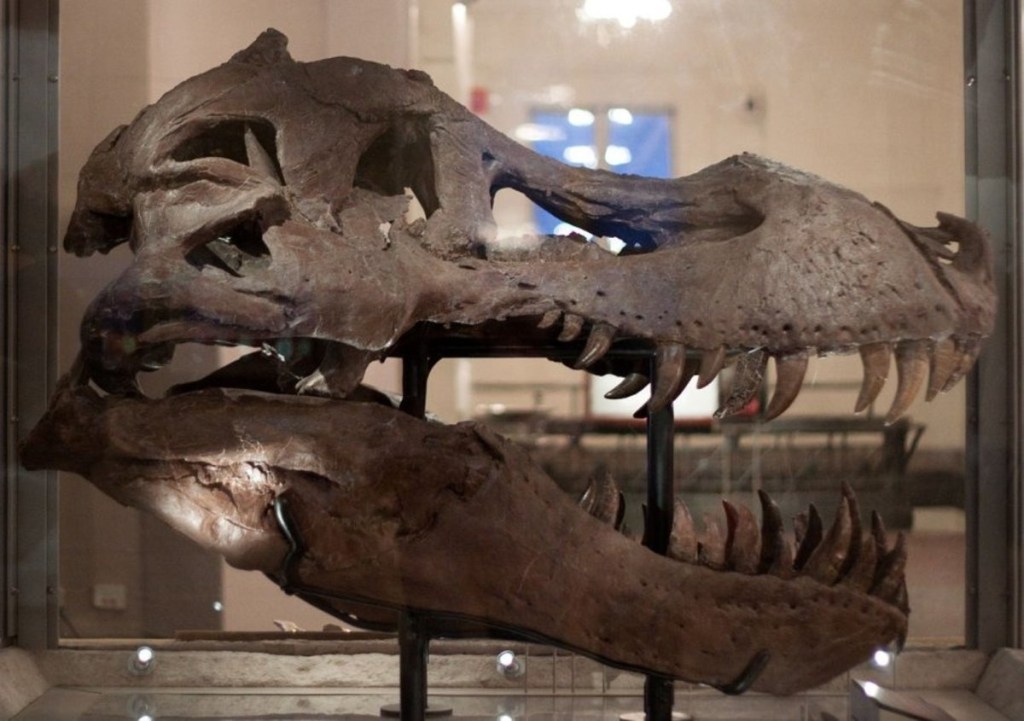
    Three years after the bidding was over, Sue would be moved to her new home, and she would be exhibited, front and center, in the beautiful Stanley Hall. People might ask, why did it take so long, but we have to remember everything that was involved. Sue’s skeletal remains were not intact, the puzzle had to be solved, the exhibit had to be constructed, and Sue’s head… too heavy to perch upon her skeleton without muscle and ligaments, a whopping six-hundred pounds, had to be replicated… her real skull displayed in a glass case that was placed on the balcony of the stairwell, where it would remain until 2018. Sue has since been moved to her permanent home in the Evolving Planet exhibit. Admittedly, I preferred her place in Griffin Hall. It was always a thrill to walk into the museum, and almost instantly see her standing across the room. A surreal experience that left one evermore awed by the pure size of the amazing creature, whose size seemed to increase with every step.

    Sobek the Spinosaurus & Other Exhibits


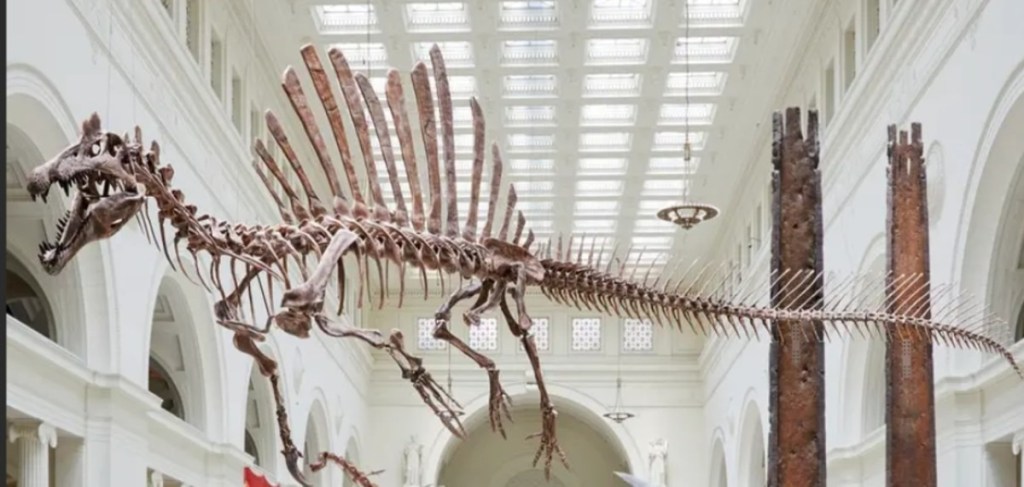
    Sue’s place in Griffin Hall has been filled by Sobek the Spinosaurus, a fish eating dinosaur with a crocodile-like body and paddle tail. Forty-six feet long, Sobek once cruised the rivers of North Africa. Today, he hovers above the entryway to the museum, so while you’re standing in line waiting to purchase your tickets… please look up.

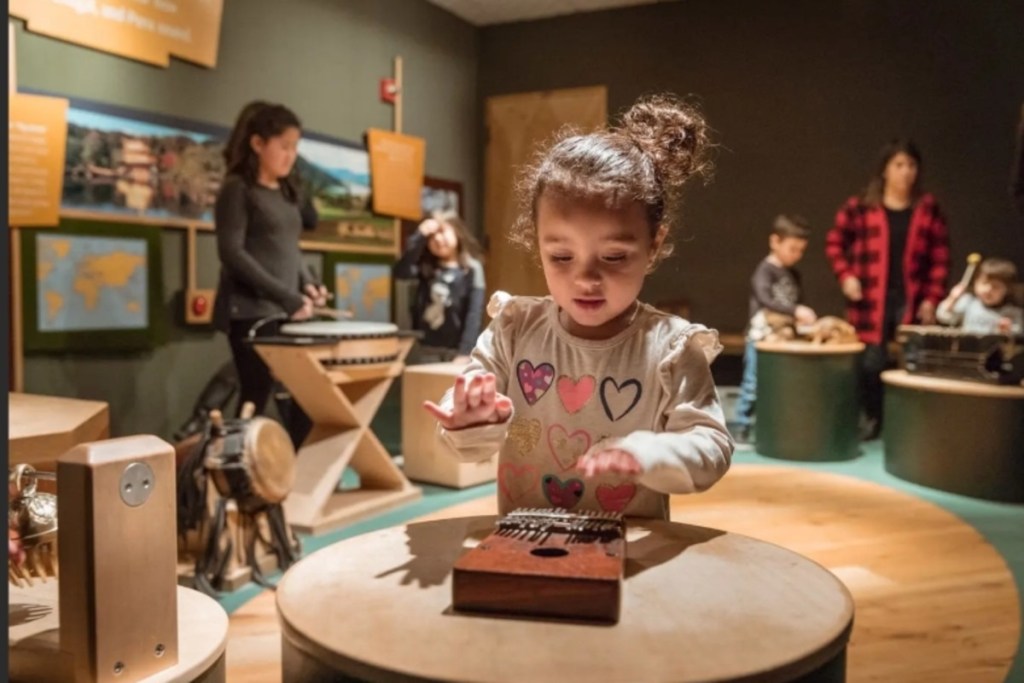
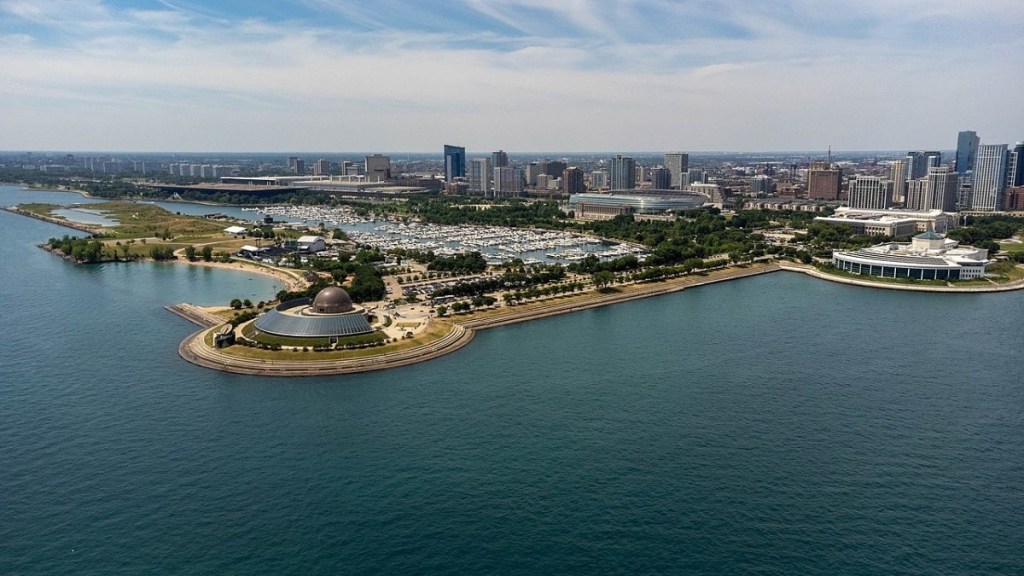
    The Field Museum is filled with so many exhibits that it is impossible to truly enjoy them all in one visit. Unseen Oceans, Inside Ancient Egypt, the Grainger Hall of Gems, the Crown Family PlayLab, the Maori Meeting House, The Robert R. McCormick Halls of the Ancient Americas, and a host of other exhibits await your visit. But when you visit, always remember to look around you, to take in the architecture, to maybe, if there’s time, walk over to the Shedd Aquarium or Planetarium, and then top your trip off with the short walk down to 12th Street beach and enjoy the beauty of Lake Michigan. Chicago at its best.

  • What is Art?

    If we were to randomly poll a group of people on a city street as to their definitions of the term “art”, we would in all likelihood receive a variety of meanings. The word “art” is in itself many things to different people. For some, it’s viewing paintings in the local museum, for others, art can be found in the beating of a drum, the flowers in a garden, the thrill of the hunt, the weaving of a rug. It can also be found in the movement of dance, the performance of a play, the reading of poetry, the sounds of music, the chirping of birds, the branches of a tree, a breathtaking landscape, and even the simple finger paintings of small children.

    What an amazing experience it would be to see the faces of our ancestors, those ancient peoples who crafted the first musical instruments… to see the widening of their eyes the first time they heard the sound of a flute, the first time they realized that plants could be made into paint, or even the first time that a group of people raised their hands in unison, partaking in the joy of dance. Art is everywhere; beauty is all around us. All we have to do is take the time to look, to smell, to experience, to touch… take the time to be awed by the simple things like a bird in flight, the dancing of leaves, the reflection of the sun’s rays in the puddles on a sidewalk. There are those who are forever distracted by the beauty humanity has been blessed with, and there are those who will one day leave this Earth thinking it never really existed at all because they are too busy to allow themselves that distraction. Me? I choose to be distracted.

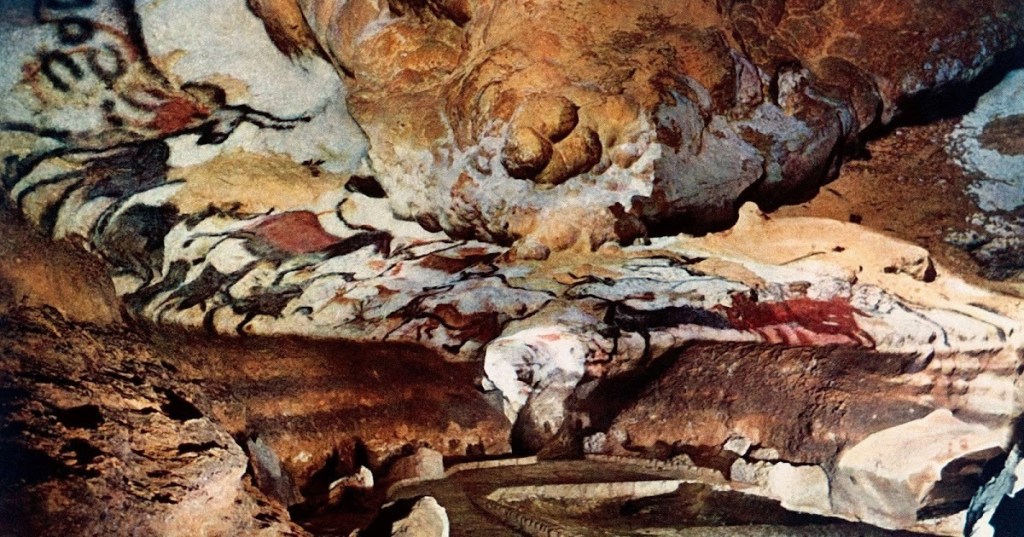
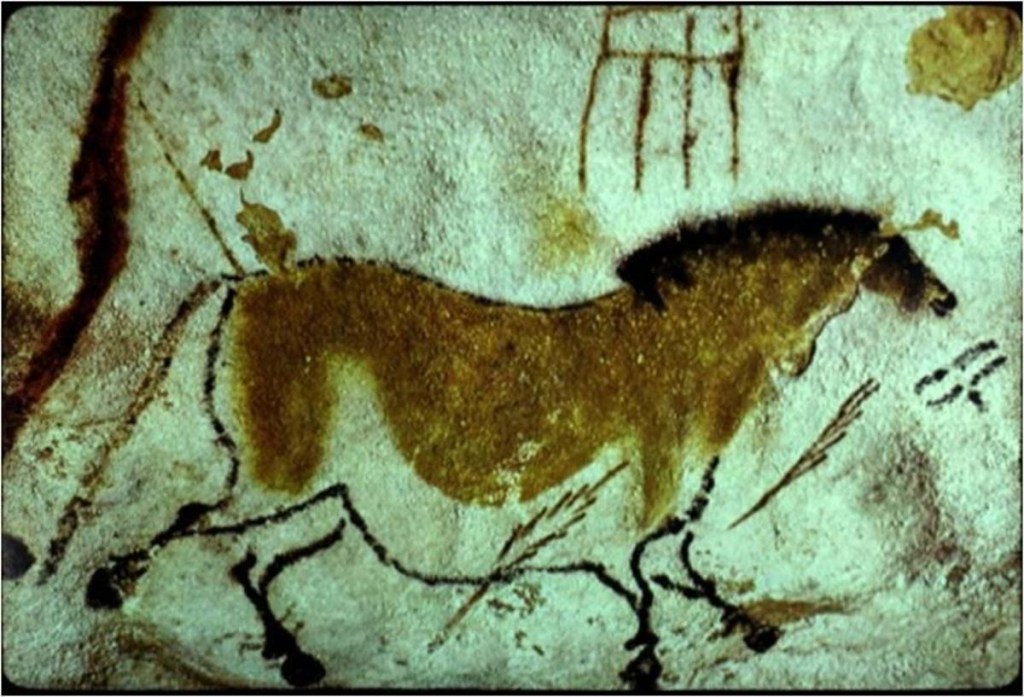
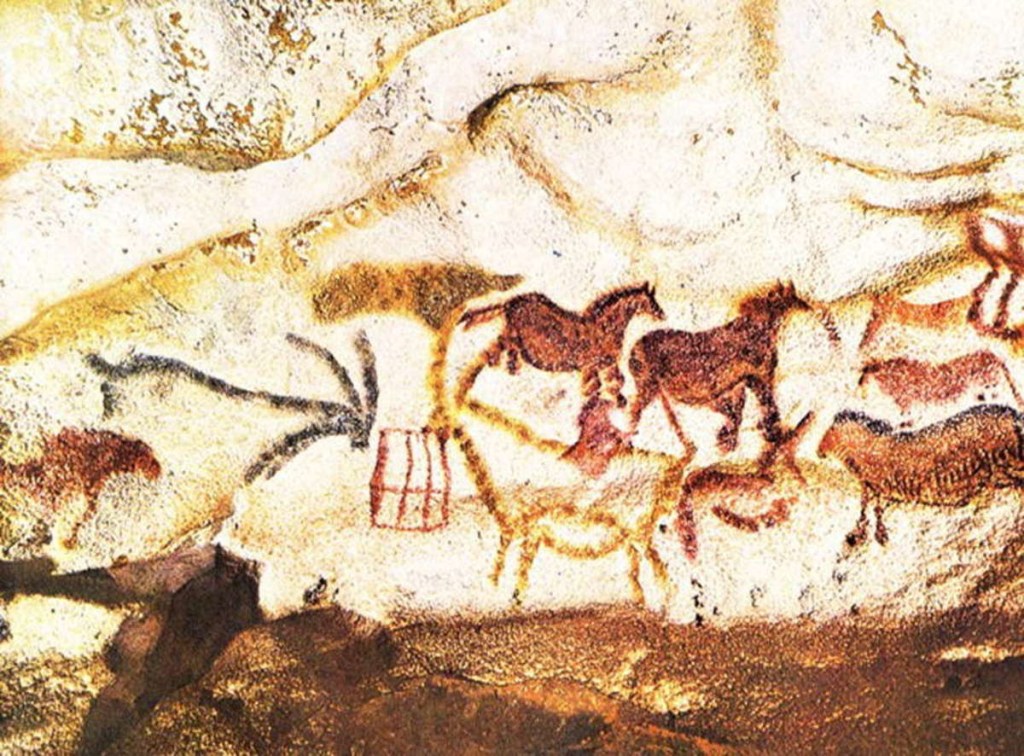
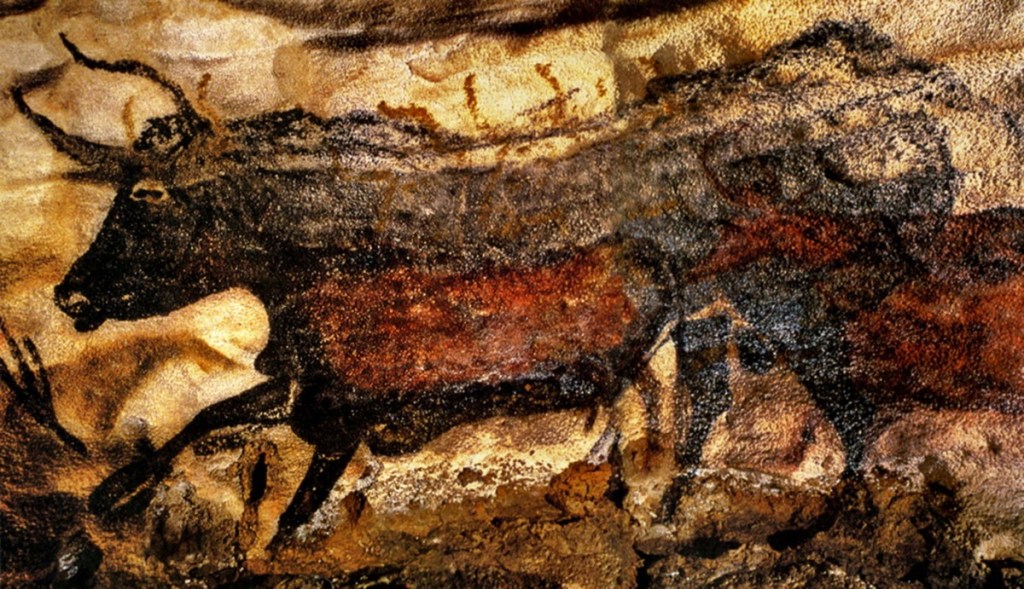
    Lascaux Cave Paintings

    The First Artists

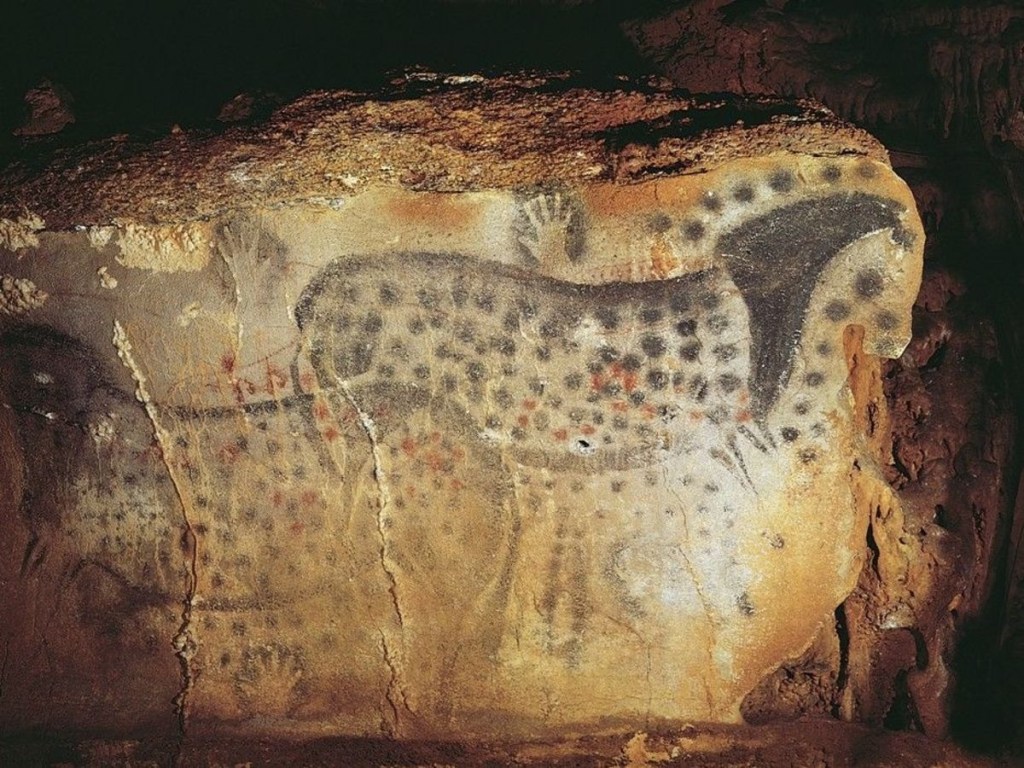
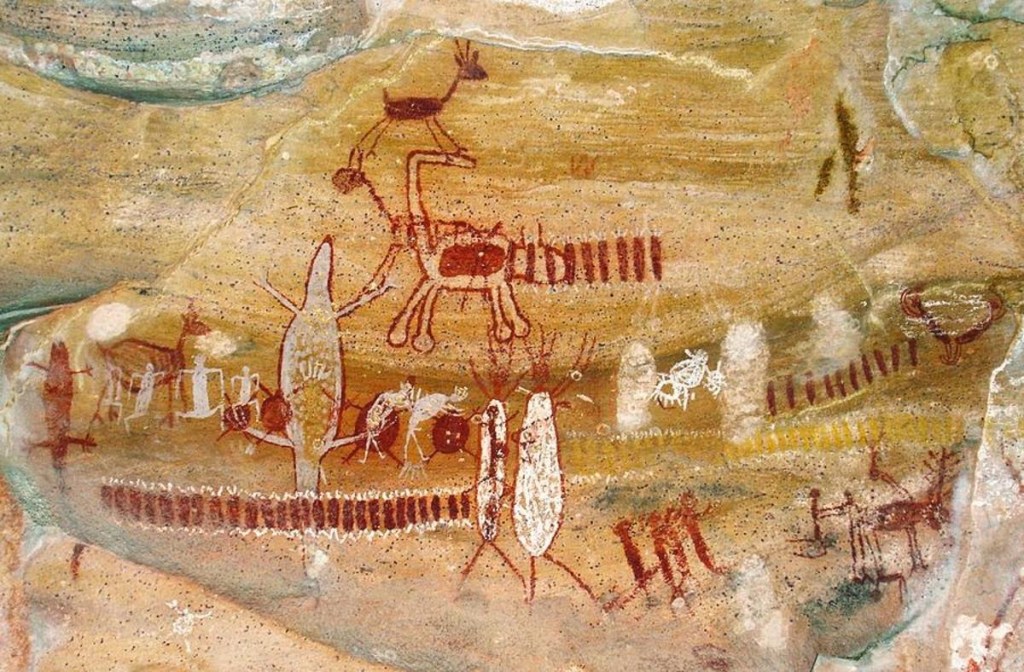
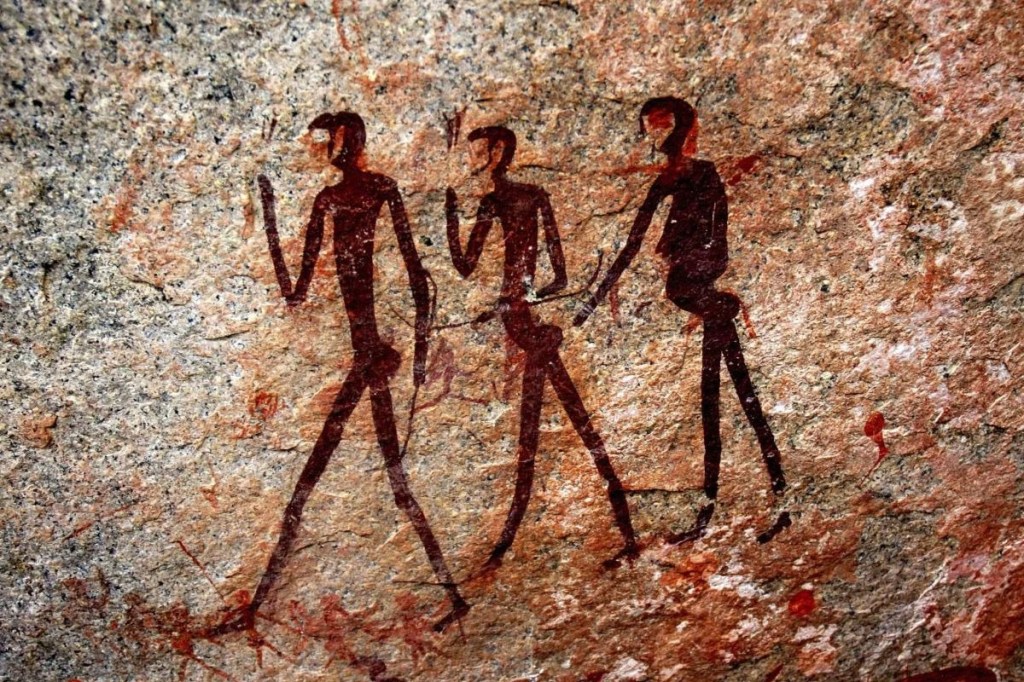
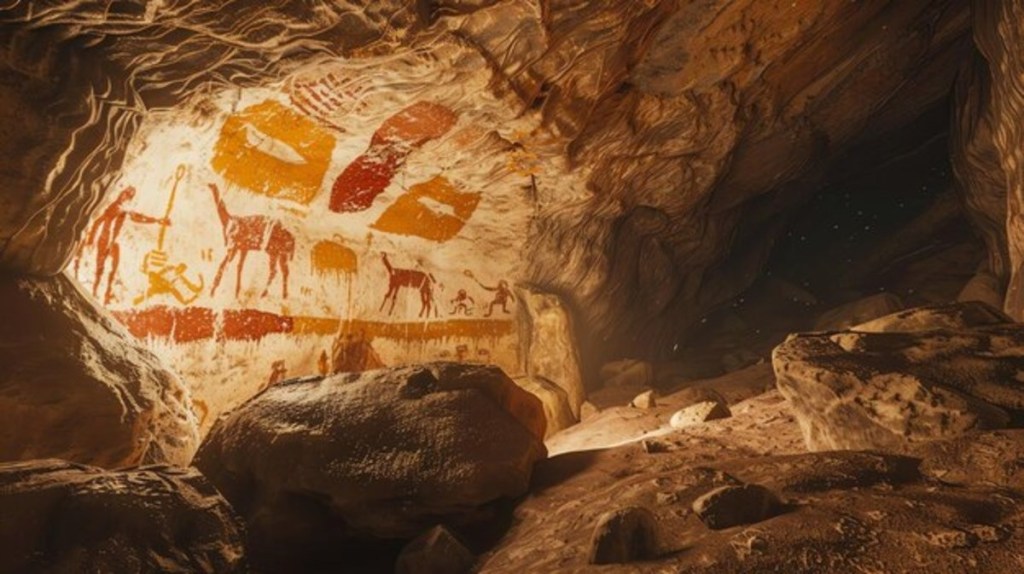
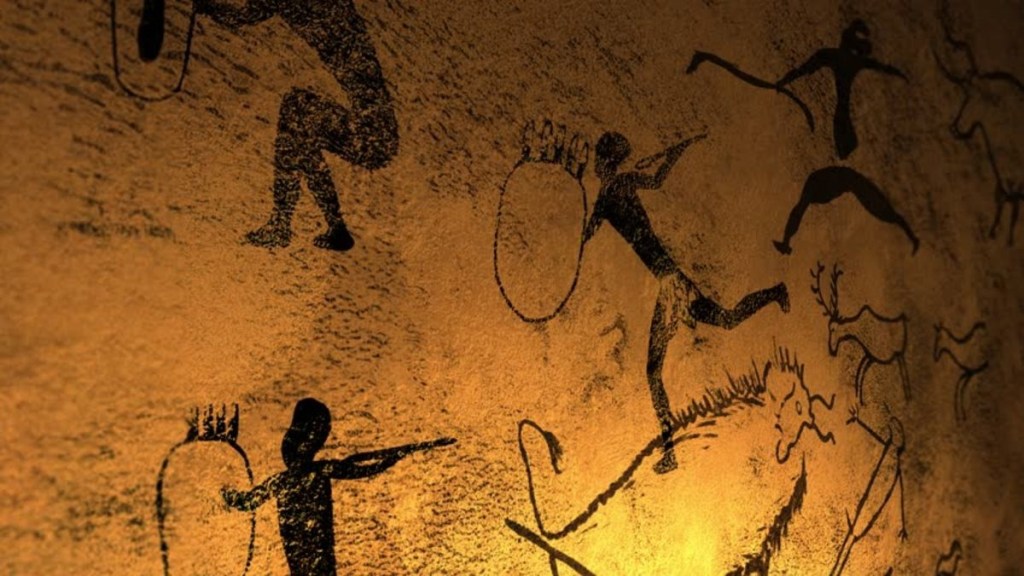
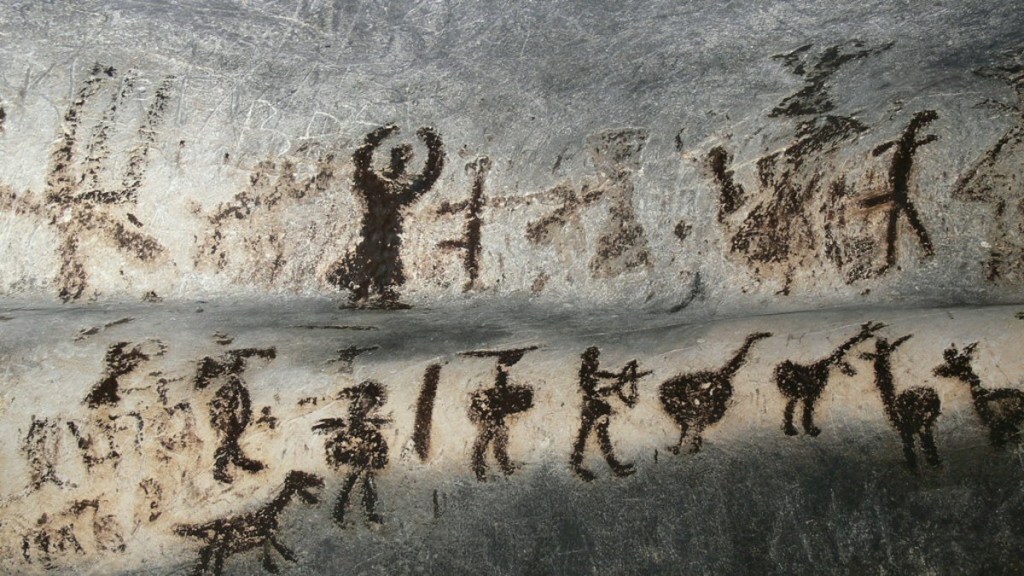
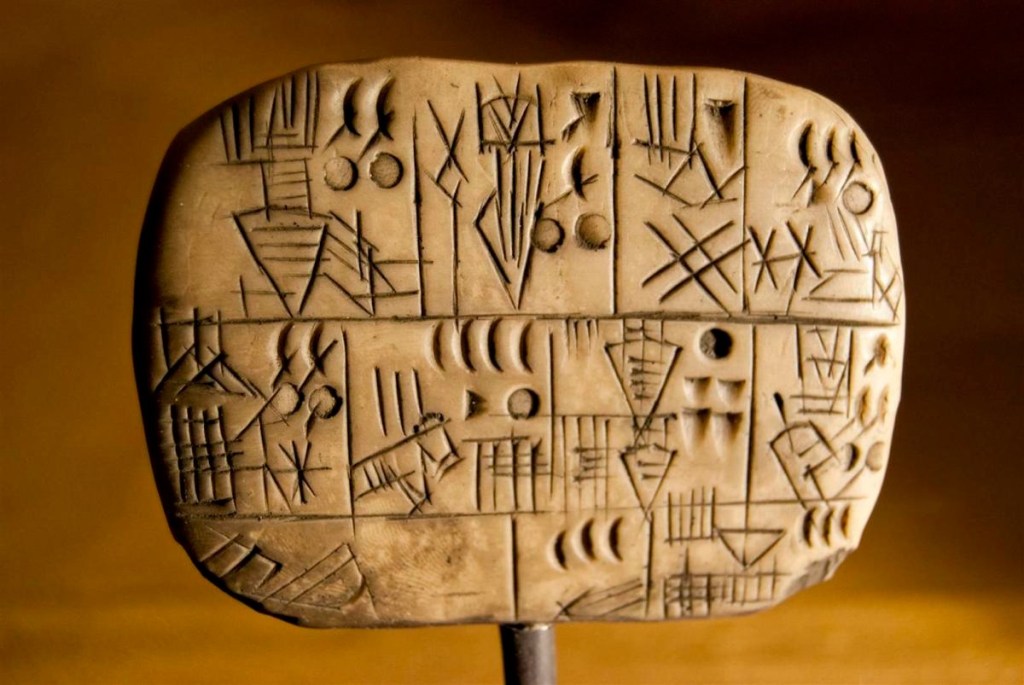
    Prehistoric Art is a term used to describe the artistic depictions of a people who hadn’t yet implemented writing into their culture. The appearance of the written word dates back to the Sumerians (3250 BC) and their use of pictographs, small pictures that tell their stories, describes their lives, and record the data they used to keep track of business details. All of these things allow us a glimpse into history and supply us with knowledge of times we’d know nothing about without the things they’ve left behind. Cave paintings enable us to envision the past. They depict daily life, religion, superstition, and magic.

    Art was believed to be magical ~ pictures were believed to have special powers. It is said that the artists themselves were seen as spiritual beings, that they were revered, and that their artistic portrayals were capable of keeping a people safe from the forces of nature and angry gods. Some of the artwork that has been found is believed to have been created for the sole purpose of pleasing the gods or asking otherworldly spirits to bless these groups with fertility and successful hunts. Other pictures are believed to be instructional, prehistoric how-to-manuals. Here’s the deer; here’s the heart; this is where you aim the spear.

    Over the years, archaeologists have studied cave paintings and found that many actually cover earlier artwork, and some have concluded that those paintings, which were never reworked, had been considered lucky and left untouched. On the other hand, many feel that walls that were used over and over again may have been re-worked because the walls themselves were lucky. I guess we’ll never know.

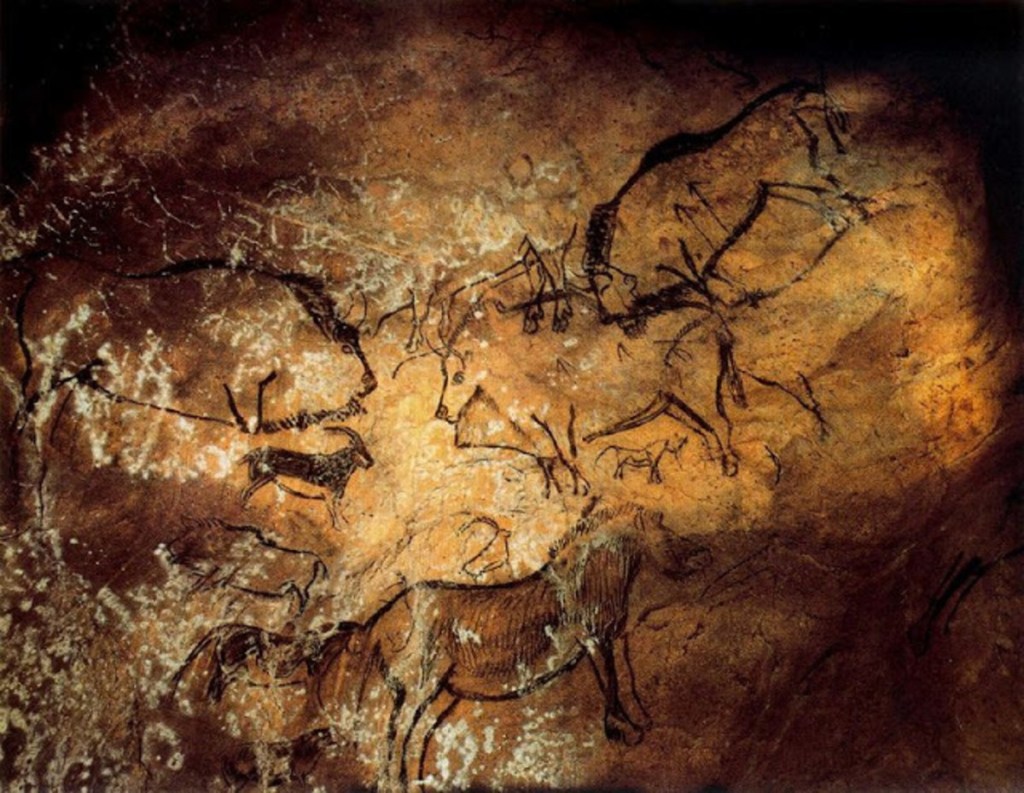
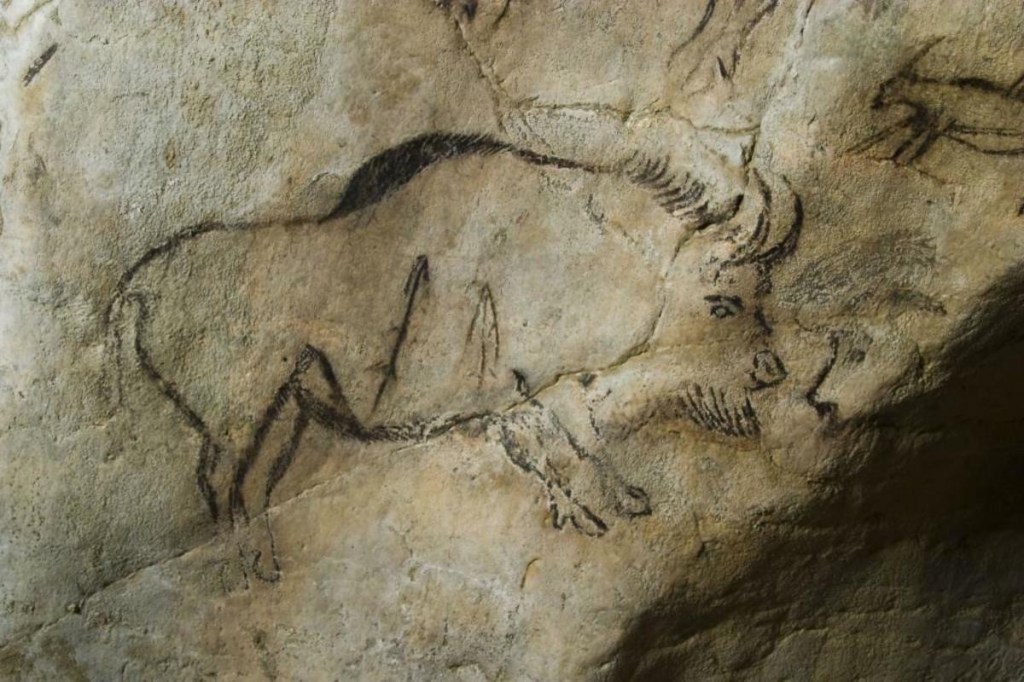
    Cavern de Niaux

    This painting has been discovered to be layered over others.

    Methods and Mediums

    Modern man wasn’t the first to perfect his craft, experiment with different mediums, or to explore the use of various tools that caught both his eye and imagination. Trial by error is not owned by the modern era, and the prehistoric artist is believed to have spent a lifetime looking for perfection… an artist is an artist. Evidence of the belief that “practice makes perfect” can be seen is corrected drawings, in sketches found near or next to the final product. It is also believed that older artists mentored the next generation, apprenticed them long before the term became popular among the artisans we read about in our history books.

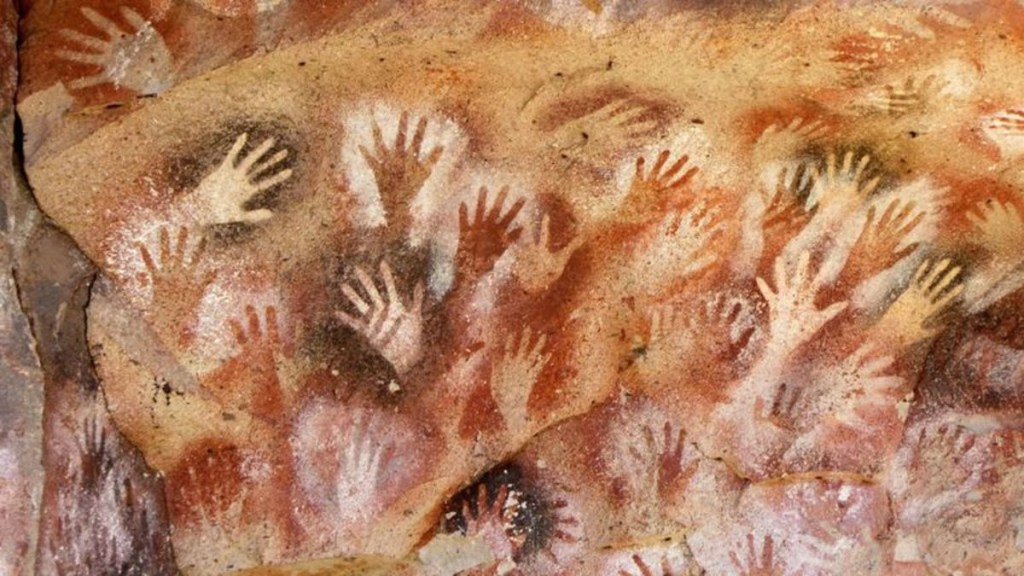
    Some of the earliest images that have been discovered are rudimentary, simple handprints. Today, we create prints by dipping our hands in ink or paint. These prints can be found hanging on our refrigerators or marking our walls. Some can even be found safely tucked away in case of an emergency (fingerprinting children for identification). Unlike the prints we envision today, prehistoric handprints were made in a completely different way. The hands themselves were used as stencils, and pigments blown through hollow sticks created a lasting outline. The hand was a symbol of power. Hands could create, perform tasks, and be used for communication. Hands fashioned the bone tubes used to distribute the pigments that made these prints possible, hands were also necessary to create the pigments themselves; the stained tubes which survived thousands of years on the floors in caves contained powder… and the powder didn’t get there by itself.

    Basic finger painting was the artist’s best friend, and the images left behind denote a masterful beauty. Over the years, new mediums of application were implemented ~ fur, sticks, feathers, and leather became desirable tools. Funny, many people using these same tools while painting their walls as a modern discovery. They would be wrong!

    Paint itself was created in a variety of different ways. Minerals were crushed and applied to wet surfaces. Crushed rock, clay, soil, chalk, and the charcoal that remained after the burning of wood and bones supplied new color to the artist’s palate. Experiments were conducted with wax and oils in order to change consistency, which enabled the artist to paint on new surfaces such as animal skins and wood. The hollow bones used for the application of pigments were also used to store them. The artist had supplies, but each artist could only work with the supplies that the environment gave them. All materials were not readily available. They used what they had, and that is one of the reasons that the cave paintings, which have been found all over the world, are so different in appearance. Some areas were abundant in the greens and blues found in specific rocks, others in the magnificent purples produced by manganese. How wondrous the imaginations of these artists. How wondrous the legacy they’ve left behind.

    Simplicity ~ Serra da Capivara in Brazil

    Origins

    The oldest known art was created in the Old Stone Age. During this time period the extensive movement of the hunter-gatherer society was based on survival, warming trends, and the availability of food sources. Animal migration was a factor, as was the ability to gather the nuts, berries, and roots needed for sustenance. People didn’t move from desire, they moved from place to place out of necessity, and through their early artwork they tell us their stories… something we’d never have experienced without the symbols they’ve left behind for us to decipher.

    The first Paleolithic cave paintings were found in France and Spain. Artists show us the hunt and the animals they hunted; bison and bulls, animals we’re well acquainted with, and the fearsome wooly mammoth we can only envision through pictures or the incomplete remains displayed at the exhibits in modern day museums. Did the artists really believe that to paint an animal was to capture its soul? Why would the artists isolate themselves deep within the caves that would have been devoid of natural light? Who was the first to discover that a lamp could be created by filling a hollow rock or the smooth shell of a skull with animal fat and locks of hair for burning? Who discovered that wicks could be created from pieces of dried moss? Did they truly believe themselves to be working some ancient form of magic, or were they merely men entranced by the realities of their own lives? We’ll never know. We can look for the symbols of things we’ll never understand, we can imagine their purposes, and through them we can see a world that no longer exists outside of the paintings that have miraculously escaped the passing of time.

    Lascaux Cave Painting

    Human Depiction

    Prehistoric cave paintings are virtually devoid of any human portrayal beyond that of the hunter, and he is seldom seen as more than a shadow, a part of the landscape. For years, it seems that the artists’ superstition that painting an animal robbed it of its soul also applied to humans. Therefore, individuals were not portrayed in that way. To paint was to do magic, to accurately depict an individual’s image would rob them of their soul. Superstitions originated in fear, and think about it… who would want to carry the fear of having stolen someone’s soul? Who would have believed themselves powerful enough to take on that responsibility or to test the anger of the gods? Who walked without fear.

    As the Paleolithic Era came to a close, new eras would move beyond those fears and dabble in forms of portraiture… but we will save that for another day.
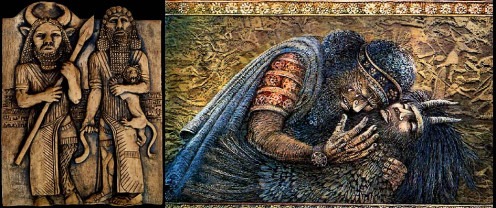
    Magura Cave ~ Bulgaria

  • Hull House in Chicago, Illinois

    Jane Addams’ Settlement House

    On September 18, 1889, Hull House, which would eventually become America’s most influential settlement house, opened its doors. The project, initially funded with the inheritance left to (Laura) Jane Addams by her late father, John H. Adams, a prosperous miller who served in the United States Senate for sixteen years, would soon expand to become the Jane Addams Hull House Association.

    Notably, Jane’s dedication would make her the first woman in America to be honored with the Nobel Peace Prize.

    The Early Years

    Born in Cedarville, Illinois, Jane was the family’s youngest daughter. Her mother, Sarah, passed away when Jane was only three years old. After her mother’s death, Jane’s oldest sister Martha took on the role of caregiver, but Jane soon became her father’s shadow. She worked alongside him in the mill and became a voracious reader. It was only John Addams’ eventual remarriage in 1868 that separated the two, a separation that caused her to resent her new stepmother.

    During their marriage, John and Sarah Addams agreed that their daughters would attend college. Jane’s first choices were the eastern colleges of Mount Holyoke or Smith. Nonetheless, she would follow in her sisters’ footsteps and enroll at the Rockford Female Seminary. While there, Jane involved herself in everything from school politics to journalism and graduated at the head of her class. The years that followed would be full of self-reflection, travel, and the discovery of what she truly wanted to do with her life and of who she really wanted to be.

    Jane Addams and Ellen Starr

    Europe

    At the age of twenty-seven, Jane, at the urging of her family, toured Europe shortly after her father’s death. Her companion, Ellen Starr, was a friend from school. While in London, the two women visited a settlement house called Toynbee Hall, and it was there that Jane and Ellen realized their futures. Upon their return, they expressed their newfound purpose, which was to “provide a center for a higher civic and social life; to institute and maintain educational and philanthropic enterprises and to investigate and improve the conditions in the industrial districts of Chicago.” (1)

    Chicago- 1871- Chicago Fire

    19th-Century Chicago

    Chicago was a bastion of progress during the late 1800s, and the years following the Great Chicago Fire in 1871 found its boundaries expanding both vertically and horizontally. The Home Insurance Building claimed the honor of the tallest building (ten stories) and made its mark as the world’s first skyscraper. Business tycoons, George Pullman, Marshall Field, and Phillip Armour all called Chicago home and provided a wealth of jobs for its residents.

    Unfortunately, the boom in real estate, manufacturing, and transportation wasn’t enough to provide jobs for the mass of immigrants arriving in the city, hoping to fulfill their dreams. Poverty was abundant, and in response, Jane and Emma tackled the needs of the people living in the industrial neighborhoods of the city.

    Hull House

    After what seemed like a neverending search, the two women came across the Charles Hull Mansion, built-in 1856. Located at Polk and Halsted, the mansion, once home to Charles J. Hull, a wealthy real estate developer, was deserted, spacious and available for lease. It was also dilapidated and rumored to be haunted.

    Tales of the supernatural would lead numerous visitors to the settlement’s doors, only to be turned away. But the story of a “devil baby,” complete with cloven hooves, tail, and horns would continue to circulate and eventually make it onto Hollywood’s big-screen…… the title, “Rosemary’s Baby.”

    In the beginning, Addams’ primary goal was to lessen the effects of poverty on those less fortunate. The doors of Hull House were open to everyone. Emma and Jane both believed that positive changes could be made in the Near West Side neighborhood, which would be beneficial to all. That they were correct in their beliefs is an understatement, and within a year, Hull House would be visited by more than 2,000 people per week.

    Hull House provided food for the hungry, clothing for the needy, and medical attention to the sick and weary. A multitude of different ethnic groups learned about and from each other, at a time when 50,000 of the residents living in the 19th Ward were unable to speak English. In time, the Hull House settlement would expand to include thirteen separate buildings, which included a bathhouse, gymnasium, women’s lodgings, and Chicago’s first kindergarten. Its staff was hands-on and lived on site.

    By 1920, five hundred settlements would be founded across America based on the Hull House prototype. Jane Addams would remain at Hull House and serve as its head resident until her death in 1935; Hull House would continue her legacy and provide services to the area until it was pushed aside to make room for the University of Illinois campus in the 1960s. The Jane Addams Hull House Association was active until January of 2012, when it ceased operating.

    Today, the Jane Addams Hull-House Museum is open to the public, and visitors are welcome to peruse two of the original settlement buildings, the Hull Home and the Resident’s Dining Hall. Group tours are welcome.

    Sources

    (1) Addams, Jane. “Page 112.” Twenty Years at Hull-House, with Autobiographical Notes . New York: Macmillan, 1910. N. pag. Print.

    “Rosehill Cemetery and Mausoleum.” : Charles J. Hull . N.p., n.d. Web. 20 June 2014.

    “Jane Addams.” Jane Addams . N.p., n.d. Web. 20 June 2014.

  • The British Museum, London

    Mesopotamia

    When we first think of modern-day Western Asia, our first thoughts are of a region barren of trees, a hot dry desert, a place of heat and sand, but it wasn’t always that way.

    History knows this region as Mesopotamia, the Land Between Two Rivers. It was a beautiful place, lush a green, a land of forests complimented by the two rivers that ran between its boundaries. Originating in the Taurus Mountains of what is now Turkey, the Tigris and Euphrates Rivers run through the plateau of northern Iraq, flowing southward into the Persian Gulf. These two rivers made it possible for one of the world’s first great civilizations to develop. Civilizations require water, as water is integral to survival, the development of agriculture, and also for transportation. The Fertile Crescent was rich with greenery and fresh water, but the water didn’t always cooperate. It wasn’t always easy.

    Euphrates River Ancient Mesopotamia

    The Tigris and Euphrates

    The Tigris and Euphrates Rivers made life possible in what was a very dry land, but they also caused destruction. Silt deposits, carried by the rivers, made the soil perfect for farming, but the rivers were needed for much more than the rich soil they provided. Rain was sparse during the spring and summer months, and the fear of drought was always a worry, but worse than the droughts were the floods that overflowed the banks of the river each fall just in time for the harvest. Flooding that not only destroyed crops, but lives and homes as well.

    Over time, the Mesopotamians learned to use the environment to their benefit. In order to protect themselves from flood waters, they built levees to hold back the water, which enabled farmers to supply their crops with the water they needed to flourish.

    Agriculture

    Archeologists have traced the first known instances of surplus farming to about 8,500 years ago. The Fertile Crescent boasted an abundance of wild plants, two of these plants being wheat and barley, which went on to become the region’s most important crops. The Tigris and Euphrates, combined with the development of irrigation, meant that farmers could harvest surplus crops, which in turn, supported larger populations. Small villages became cities, and those cities evolved into an established civilization.

    With the domestication of crops came new forms of domestication, and the domestication of animals expanded, something that was accompanied by the expansion of the people’s diets. Cattle, sheep, and pigs were found living in the wild and on the homesteads. Gardens reaped beans, onions, lettuce, cucumbers, and herbs that were used for cooking. Sheep could be found grazing in the fields and wandering throughout the orchards of date palm, apple, and pomegranate trees.

    Shepherds cared for the cattle and the sheep, as predators made it necessary for them to constantly stand guard. Loss of livestock was common, and those losses affected their owners greatly. Sheep supplied both milk and wool, cattle were needed as laborers, milk producers, and as a source of meat. Amazingly, lions were one of the area’s most common predators… you’d never find one there today. They moved onto other parts of the world… I wonder why?
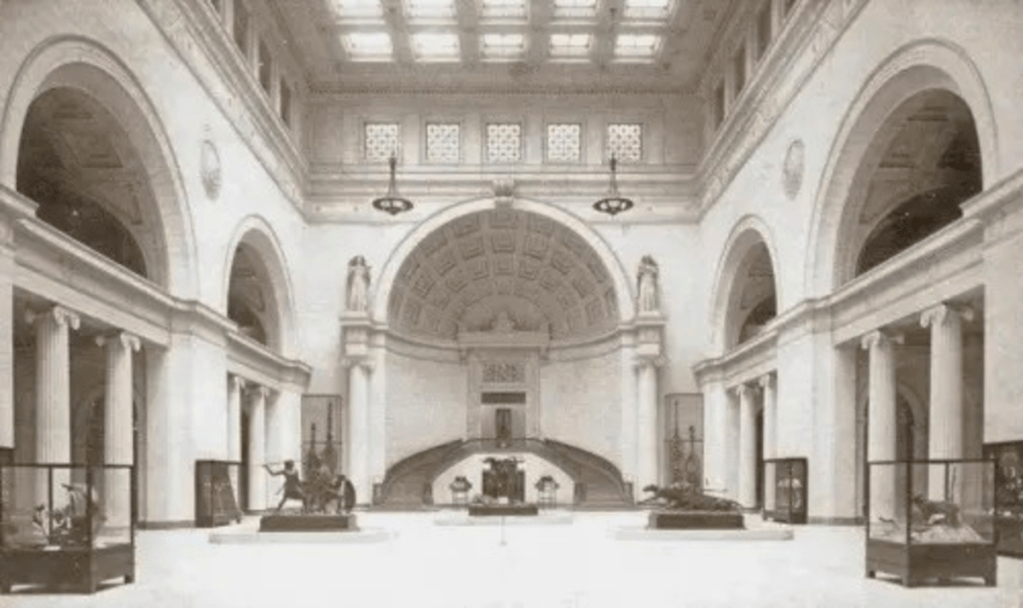
    Cuneiform

    The early civilization of Mesopotamia was made up of a group of city states. The region of southern Mesopotamia was known as Sumer. One might wonder how this successful civilization came to be. The answer to that would be found in its people.

    Sumerians were great inventors. Think about the irrigation methods they conceived to promote successful farming, as well as the fact that it was the Sumerians who created some of the first wheeled vehicles.

    Wheels were used to transport goods and people; chariots allowed for quicker travel and gave their armies an advantage during times of war. They also invented sailboats, the pottery wheel, and contributed innovative ideas in the fields of math and science, but their most important invention of all is the written word. Their writing was called cuneiform.

    Cuneiform, one of the earliest writing systems in the world, allowed the Sumerian people to keep written records. Written law, a letter from one ruler to another, business records, and even riddles have been unearthed. The oldest tablets originating from around the year 3500 BC.

    Cuneiform is made up of a series of approximately 500 symbols, all formed by picture writing, and similar to the pictographs we continue to use with young students today. The symbols depicted the things they described, but there were also symbols used to show sound or other objects. Simplification allowed for time efficiency; it made the art just a bit easier… a form of ancient shorthand, but I’m dating myself… we don’t use shorthand anymore, do we?
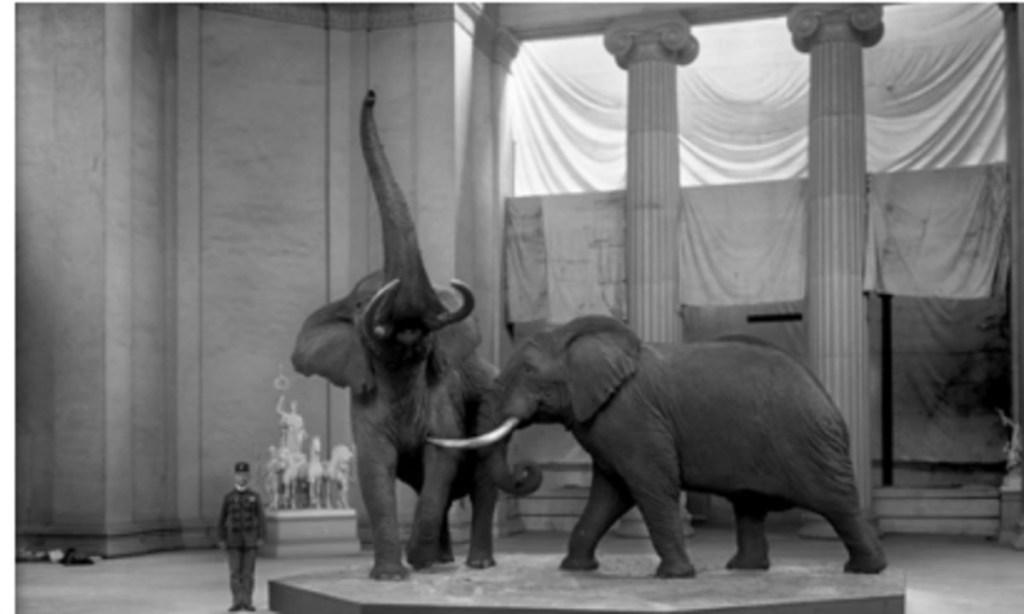
    Many scribes also served as teachers, but the students were most always boys. Girls weren’t allowed, and it would have been a rarity to see one in school. Student studies began with becoming adept at making clay tablets, as well as creating the pens that were made from the reeds growing along the riverbanks. After they conquered the art of tool making, they would move on to practicing the symbols and studying math in order to create accurate records. Graduation marked the students as scribes, official writers, and honor members of the community.
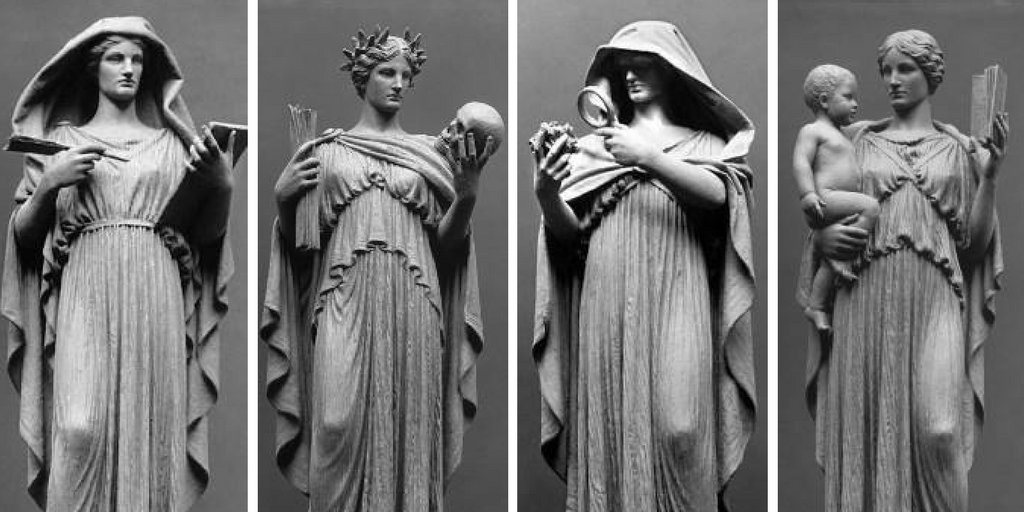
    Sumerian Daily Life

    The city-states of Sumeria flourished for a thousand years. Each city-state was self-governing, but they were often at war with each other. The constant battle for power amongst the city-states themselves caused the people to erect walls for protection, but the true reason behind their conflicts were the rivers. Everyone wanted control of the rivers, and there were specific areas along the rivers that were more desirable than others.
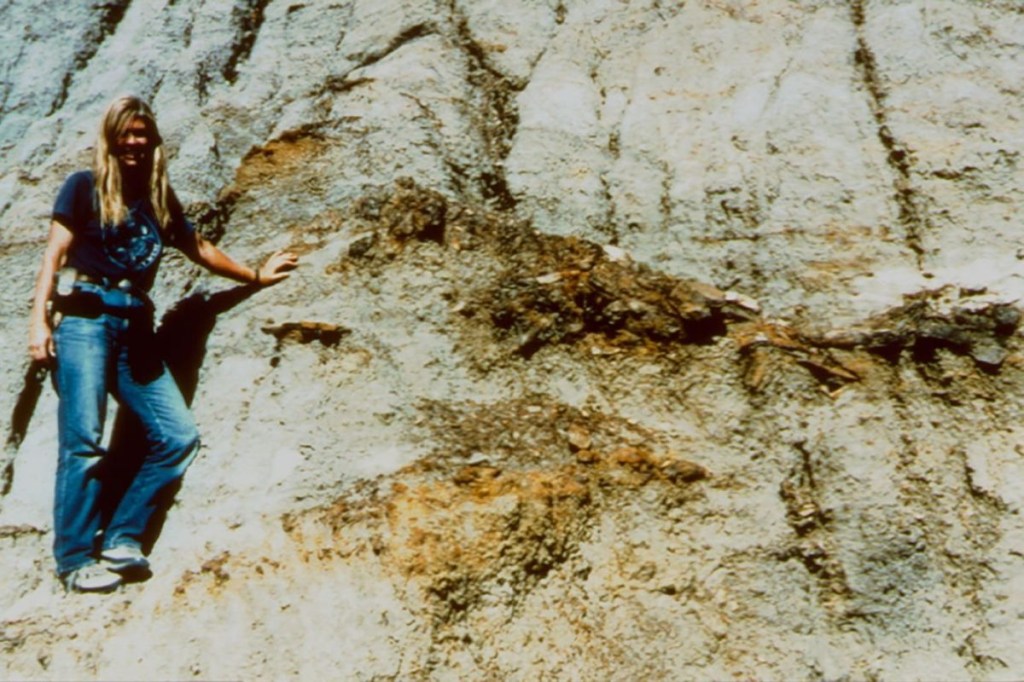
    So, the city-states began surrounding themselves with mud/brick walls. Gates were put in place to allow for easy entrance and exit. Local businesses would gather around the gates to sell produce and household wares, and the king’s palace… it stood in clear view of the gates and could be seen from most any part of the city.

    The Ziggurat of Ur

    At the center of the Sumerian city was the ziggurat, a tall pyramid-like structure that housed a temple on its flattened top. The Sumerians were polytheistic, and they worshipped many gods and goddesses, but each city had a special god, a god that they believed protected them from harm. One Sumerian temple hired nearly 6,000 women and children to weave cloth. The cloth was used to honor their goddess, and it went on to clothe both the workers in the temples and the statues housed within its walls.

    City life was simple. The wealthy lived in large houses, and their slaves and servants lived with them. Merchants arrived on a regular basis to sell prisoners taken during war, and those slaves were identified by the specific way their hair was cut… an ancient form of branding.

    Poor families worked. Everyone worked. Mud walled huts were called home, crafts were handed down from generation to generation, and reed mats were used for sleeping. Fathers were the head of the household in both rich and poor families. Wives were expected to be obedient, and they were expected to teach their daughters that same submission to the male authority figure.

    A woman might be allowed to conduct business, she might even be allowed to own land, but under no circumstances would she be allowed to divorce her husband. Only a husband could do that, and it was as easy as paying a fine. If you had the money, you could eliminate the wife.

    Drudgery and hard work were a huge part of daily life for the citizens of Sumer, but they did make time for leisure. Festivals often filled the city landscape and were enjoyed by all, as were parades, dancing, and feasts. Board games became a popular way to spend the time, and storytellers drew enormous crowds. Gilgamesh, the greatest of the surviving stories, is still enjoyed today. Just think about the hero who began his journey seeking immortality… he never found what he was looking for, but his story is indeed immortal.

    Sargon

    In 2300 B.C., a new king came to rule in the state of Kush, his name was Sargon. Under Sargon, Mesopotamia became an empire. Sumer was united for the first time and war between the city-states ended. Soon after accomplishing peace in his homeland, Sargon went on to expand his dominion over a span of 900 miles. He compiled what became one of the first sets of laws, sent messages to ensure that his realm remained unified, and he opened up trade routes along the river. His empire thrived during the fifty-six years of his reign, but after his death it fell apart. Peace would endure for approximately another fifty years before a man called Hammurabi would come to power some 400 miles away, but that’s another story.

    So, we end with an excerpt from the poetry of Sargon’s daughter, Enheduana, one of the rare Sumerian women permitted to train as a scribe. The following is just a short portion of a poem she wrote in honor of the goddess, Inninshagurra.

    “The great-hearted mistress, the impetuous lady, proud among the Anuna gods and pre-eminent in all lands, the great daughter of Suen, exalted among the Great Princes (a name of the Igigi gods), the magnificent lady who gathers up the divine powers of heaven and earth and rivals great An, is mightiest among the great gods — she makes their verdicts final. The Anuna gods crawl before her august word whose course she does not let An know; he dares not proceed against her command. She changes her own action, and no one knows how it will occur. She makes perfect the great divine powers, she holds a shepherd’s crook, and she is their magnificent pre-eminent one. She is a huge shackle clamping down upon the gods of the Land. Her great awesomeness covers the great mountain and levels the roads.”

    In this passage, I think Enheduana speaks for the women of the time… of all time. She wasn’t just the daughter of a great man; she was a woman of great intelligence and foresight. She deserved to be trained, and she did herself proud. Sadly, most women weren’t afforded the opportunity. I wonder what history would reveal to us if they’d had that opportunity.

  • The Black Hawk War

    The Black Hawk War, like other wars throughout history, was not fought because of hatred and love for violence, but rather, for land. The US government wanted to expand its territory, and the Native Americans wished to retain their homeland. Treaties were signed, often peaceably, and yet, those same treaties were signed by individuals, who in some cases didn’t understand what they were signing… individuals who communicated the wrong information to their people.

    That Black Hawk despised those who accommodated the government’s demands is without question. Keokuk became his enemy, their enmity reaching as far back as the War of 1812 when Black Hawk left his village to fight on behalf of the British, while Keokuk remained behind looking to usurp Black Hawk’s position amongst his people. Black Hawk would take up arms, whereas Keokuk was showered with gifts. Keokuk led his people down the road of concession, all while Black Hawk staunchly supported resistance.

    Black Hawk, Painting by George Catlin

    The Treaty of 1804

    Black Hawk’s participation in the War of 1812 was preempted by one important ideal, land ownership, something that Black Hawk did not believe in and refused to acknowledge. The Treaty of 1804, upon which the US government laid claim to fifty million acres of land was hotly contested by Black Hawk and his followers, who saw the treaty as invalid, something that was signed as a result of misunderstanding, miscommunication, or possibly, something that was pure and intended deception from the start.

    Only five Native American leaders were present at the negotiations initiated by William Henry Harrison, the governor of the Indiana territory, and their presence in St. Louis had nothing to do with land. These representatives attended the discussions for one reason, and only one reason, the dispensation of justice and perusal of peace after an attack on settlers at the Cuivre River. The head men attended in order to pay retribution for the murder of three settlers, all men, who’d settled near the river illegally on Sauk land. As was the custom, the Native American leadership was prepared to offer compensation to the victims’ families, which if accepted, would settle the issue. Over and done… but it wasn’t.

    During this meeting Governor Harrison would play negotiator, promising things he had no right to promise and bargaining with men, who according to custom, had no right to be sitting in attendance, let alone putting quill to paper. Legal treaties required protocol. Invitations to the Tribal Council were a necessity not a choice, tribal meetings attended by all members of the tribe were mandatory not voluntary. Every man, woman, and child of the tribe were to attend, and everyone played a role in deciding the amount of land to be negotiated, as well as the selling price. Note, if the women were not included, not informed, or opposed the sale, the treaty would be deemed invalid. None of these protocols were followed in the signing of the Treaty of 1804, supporting Black Hawk’s claims that the treaty was fraudulent.

    Hope, Determination, and Betrayal

    Between the years of 1830 and 1832, Black Hawk’s people crossed back and forth over the Mississippi River multiple times. In 1832, he returned to his homeland with what is said to have been one-thousand men, women, and children, carrying with them stores of seed. His followers, who represented the Sauk, Fox and Kickapoo tribes, fully intended to resettle in the area they’d left behind. The land dispute continued, and war would ensue.

    Black Hawk, however, had no desire to wage war, and his decision to return was based upon promises of assistance by other Native American leaders. As additional militia arrived to assist Brigadier-General Atkinson at Rock Island, Black Hawk made it clear that he would not brook opposition to his people’s return. As Atkinson’s numbers grew, Black Hawk’s would diminish. Promises made to Black Hawk by White Cloud would be broken; he had no backing, no one would join him, and in response, Black Hawk knew that he had no other choice but to withdraw.

    The Battle of Stillman’s Run

    On May 14, 1832, Black Hawk’s tribe was in the midst of preparing for their journey back down the Rock River when they learned that Atkinson’s men were nearby. Black Hawk, who in his own words had already “resolved at once to send a flag of truce to Gen. Atkinson and ask permission to descend Rock river, re-cross the Mississippi and go back to their country….” then sent three of his warriors, carrying a white flag of truce, to arrange negotiations for their safe return. These negotiations never occurred, and the Battle of Stillman’s Run would ensue.

    This battle would be a distinct loss for the US militia, but in the end, the US government had no intention of being defeated. Hence, the name it will be remembered by in history, the Battle of Stillman’s Run, is a tribute (or mark of shame) to Stillman’s panicked flight toward Dixon’s Ferry, and the many men who were initially listed as missing, but who had in reality run back to their homes. Even Black Hawk was amazed by the fact that so few warriors could defeat the attacking militia, but in the end, he knew that his dream for peace had come to an end. This knowledge led to his retreat, which was hastily set upon to ensure the safety of the elderly, the women, and the children, all for whom he was inherently responsible.

    Black Hawk would take his people north, searching for food and sanctuary. According to Black Hawk, “This violation of a flag of truce, the wanton murder of its bearers, and the attack upon a mere remnant of Black Hawk’s band when suing for peace, precipitated a war that should have been avoided.” Sadly, he could no longer avoid the repercussions that would follow any more than he could avoid the militia that pursued him.

    Apple River Fort Historical Site

    The Battle of Apple River Fort

    Black Hawk received no support from the other tribes, but then again, he did not expect it. White Cloud’s lies had placed Black Hawk in a precarious situation that left him biding his time. Well aware that he couldn’t hide forever, Black Hawk continued his trip north. During this time, skirmishes and attacks on white settlements would ensue. Small groups of warriors from other tribes would defy their leader’s pledges “to take no part in the war,” attacking settlements, taking hostages, and stealing horses.

    In June of 1832, these rogue bands would keep the militia busy, all while Black Hawk continued moving. This isn’t to say that he didn’t participate. On June 23, 1832, Black Hawk and his warriors attacked Apple River Fort near Galena, and while the braves surrounded the fort, the militia, under command of Captain Stone, prepared their defenses. Every port hole was manned by a sharp-shooter, and while some of the women busied themselves melting lead for bullets, others conveyed those same bullets to the men during the hour-long battle. Aware that he couldn’t impregnate the fort without drawing a larger group of militaries, Black Hawk decided that pillage was his only choice, thus, he ordered his men to take whatever they could carry before removing themselves from the area.

    Kellogg’s Grove Battle Site

    Kellogg’s Grove

    Rumors of sightings would lead the militia to Kellogg’s Grove, where Black Hawk’s men would attempt to ambush a group of soldiers as they departed the fort. The ambush was unsuccessful, an event that would lead to the pursuit of Black Hawk by Major John Dement and the soldiers under his command. Shortly thereafter, General Winfield Scott was ordered to travel with an additional eight hundred members of the U.S. Army via the Great Lakes to Chicago. His troops would never join Dement because of a cholera outbreak onboard the ship that would claim the lives of more than three-quarters of his troops.

    On July 21, 1832, General James Henry and Colonel Henry Dodge would find evidence of Black Hawk’s tribe near the Wisconsin River. The evidence itself spoke to the condition of Black Hawk’s people. Pots, blankets, and other items littered the path on which they departed, hunger and exhaustion had forced them to lighten their loads in order to keep moving. Those who couldn’t keep up were left behind, dead or dying, and those who were dying were promptly killed by their pursuers.

    Many of those who survived the initial flight were killed in battle or drowned while attempting to cross the river. Mirroring the violence attributed to the Native American warriors, Dodge and Henry’s men would take tokens from the battlefield, the scalps of nearly forty braves. Napope sought Dodge out early the next morning to attempt negotiations. Henry Dodge’s response, “Be assured that every possible exertion will Be made to destroy the Enemy crippled as they must be with their wounded and families as well as their want [lack] of provision supplies.”

    The Battle of Bad Axe

    The disintegration of Black Hawk’s men wouldn’t deter the militia from achieving their purpose. His people, starving, exhausted, and without hope, would continue on their way toward the banks of the Mississippi, and the militia, well fed and well cared for would continue to follow. On August 1, 1832, Black Hawk and his people would arrive on the eastern bank of the Mighty Mississippi near Bad Axe, where a council would be held. Leaders present at the council advised breaking up the group and heading north in smaller bands. The people, however, disagreed and immediately began to construct rafts and canoes, some even managing to set off for the other side before the arrival of the Warrior, an armed steamboat that was returning from its mission to deliver a message to the Sioux.

    The steamboat’s arrival changed everything. Faced with the arrival of the boat, artillery, and twenty soldiers, the attempts to evacuate were aborted. More importantly, Black Hawk would step forward once again to give himself up… to surrender for the good of his people, and once again his attempts would be misunderstood, ignored, or possibly both. What we know is that Black Hawk himself waded into the water carrying a white flag, as he tried to communicate with the soldiers manning the steamboat. It is well recorded that he remained there for ten to fifteen minutes, with his white flag raised, before the men on the ship, unprovoked, opened fire on the nearby Sauks and Foxes, killing at least twenty-five before the Warrior was forced to disengage and return downriver to refuel. For the third time, Black Hawk’s attempts to surrender had been ignored, and as noted in his autobiography, “After the boat started down the evening before, Black Hawk and a few of his people left for the lodge of a Winnebago friend, and gave himself up. Thus ended a bloody war which had been forced upon Black Hawk by Stillman’s troops violating a flag of truce, which was contrary to the rules of war of all civilized nations, and one that had always been respected by the Indians. And thus, by the treachery or ignorance of the Winnebago interpreter on board of the Warrior, it was brought to a close in the same ignoble way it commenced—disregarding a flag of truce—and by which Black Hawk lost more than half of his army. But in justice to Lieut. Kingsbury, who commanded the troops on the Warrior, and to his credit it must be said, that Black Hawk’s flag would have been respected if the Winnebago, who acted as his interpreter on the boat, had reported him correctly.”

    The End of the War

    The morning after Black Hawk’s attempted surrender, the Native American leader would once again find himself traveling northward, hoping to take refuge among the Ho-Chunk and Ojibwe, where he would officially surrender a few days later. Those who refused to accompany him faced another battle, waged or not waged against the troops that had gathered along the bluffs during the night to attack them from behind. Taking no prisoners seems to have been a priority for the militia, as anyone present on the shoreline was indiscriminately killed, men, women, and children. Later that morning, the Warrior would reappear firing its cannon at those who attempted to swim to safety. Those who made it to safety were summarily killed by the Sioux who were working with the Americans against their long-time enemies.

    Although this battle ultimately marked the end of the war, the search continued. It would be almost a month before Black Hawk and White Cloud would officially surrender to the Winnebago agent, Joseph Street, at Prairie du Chien. Afterward, the Native Americans would be transported by steamboat to Jefferson Barracks in St. Louis where they would remain for seven months before an official visit in Washington D.C. and their final journey to Fortress Monroe in Virginia.

    Sketch by George Catlin

    The End of the Story and The Birth of a Legacy

    Along the way, the prisoners would be greeted by huge crowds and lauded individuals like writer Washington Irving, and the artist, George Catlin, who sketched the men and portrayed them as instructed… in their chains.¹ They would meet with then President Andrew Jackson and be taken on a tour that included Baltimore, Philadelphia, and New York before journeying further west over the Erie Canal and into the Great Lakes region. Black Hawk would recount his life story while imprisoned at Fort Armstrong, leaving behind his version of the events that shaped his life, as shared with Antoine LeClair, a mixed-race interpreter, and later translated for publication by J. P. Patterson, a newspaper editor. The autobiography is authentic and subjective, how could it not be? As for reliability, it is only as reliable as its translation and the intent of its translators allows. Regardless, it is a fascinating read.

    Black Hawk was released from prison in 1833. He spent the rest of his life living quietly in Iowa amongst his people, where he was admired by his neighboring settlers, and often invited to attend legislative hearings at the territorial capital. Black’s last public appearance would take place on July 4, 1837. A year later, he gave a speech in which he conceded, “I thank the Great Spirit that I am now friendly with my white brethren”.

    Black Hawk died on October 3, 1838, and was buried on the banks of the Des Moines River. Buried in full military uniform, a gift from General Jackson during a visit to Washington D.C., an American flag was raised at the head of his burial plot. Black Hawk’s story on the other hand, will live forever.

    Sources:

    ¹ Special note: I was unable to find even one sketch portraying Black Hawk in chains.

    blackhawkpark.org

    digital.lib.niu.edu

    wisconsinhistory.org

    Autobiography of Ma-ka-tai-me-she-kia-kiak, or Black Hawk

    britannica.com